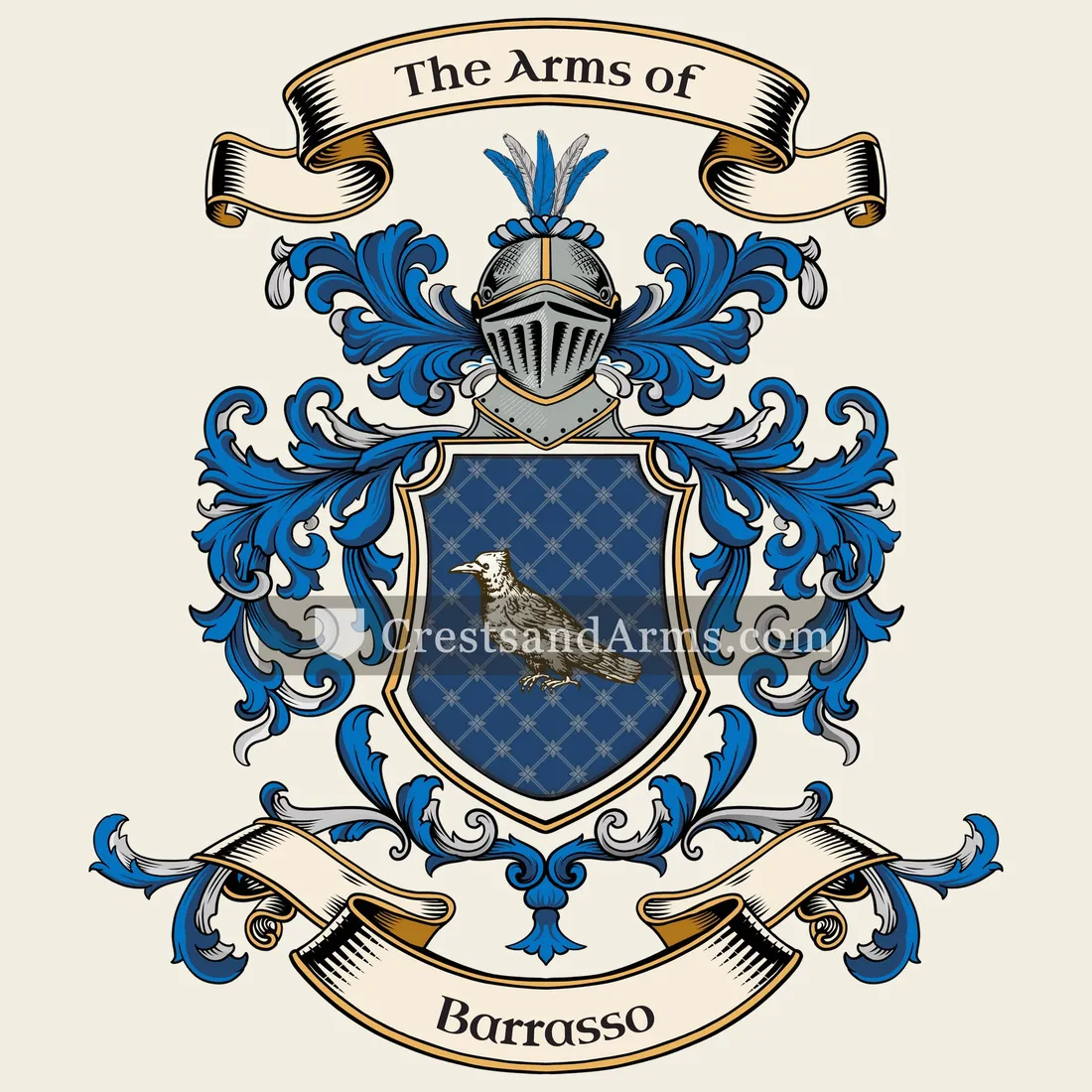
A record of documented arms, meaning and origin, researched for the Barrasso family lines. Documented in 2 countries.
Reg. 4185 · Austrian, A–C
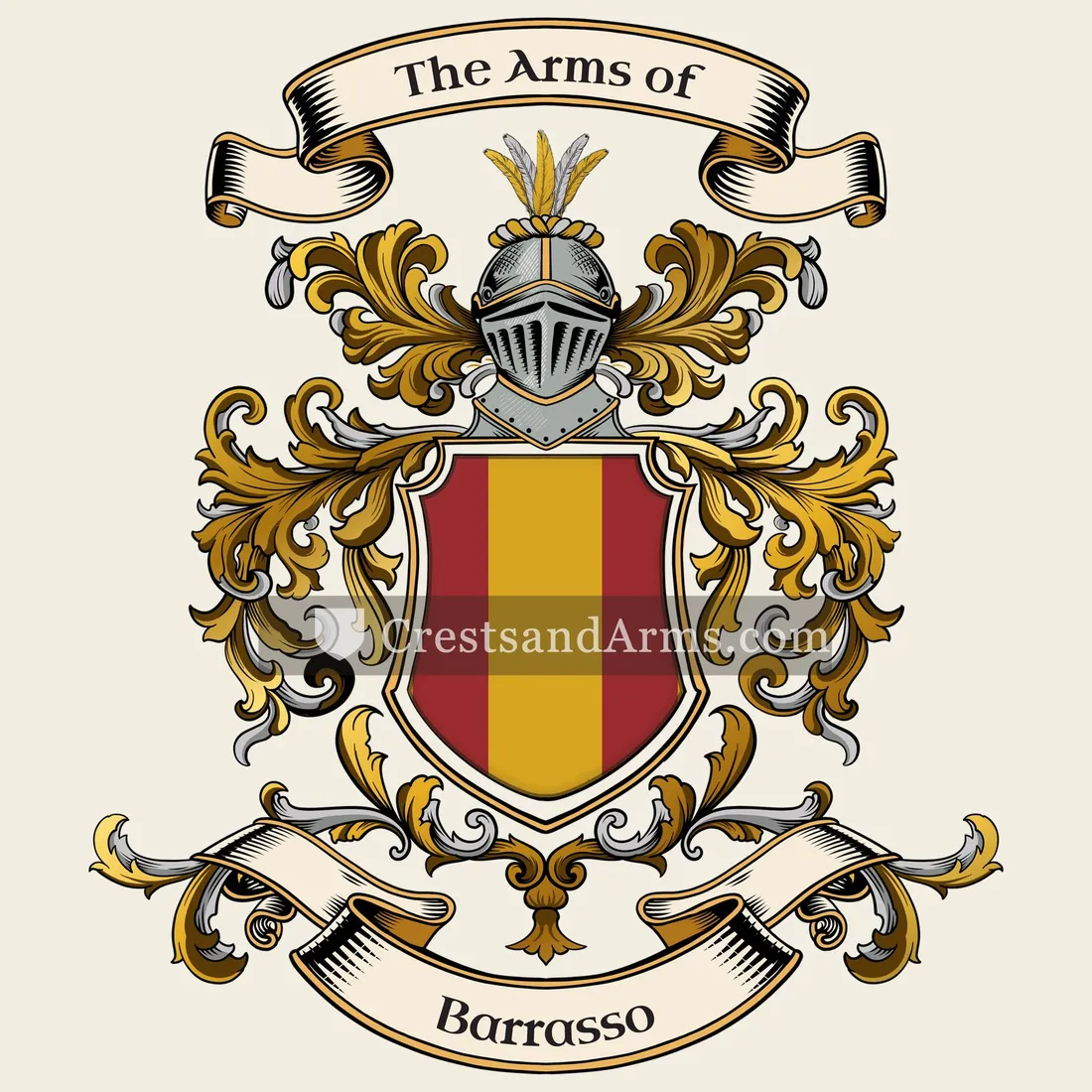
Meaning of the Barrasso family crest colors & symbols
Colours
Gold (Or)Means: Generosity
Red (Gules)Means: Military strength
Historical info
Source
J. B. Rietstap, Armorial Général, Gouda: G. B. van Goor Zonen, 1884–87
Blazon (the actual original written record)
“une d'or entre deux de gu. Deux cq. cour. C.: 1º l'aigle; 1. d'or et de sa.; 2º le chevalier, iss., entre deux prob. coupées, à dextre d'or sur sa., à sen. de gu. sur arg.; 1. d'arg. et de gu.”
Austriac. 1772
Digital archive packCoat of arms PNG, gold border print PDF, vector SVG and the certificate of authenticity. Sent to your email in minutes.
Map of Austria showing where the Barrasso arms are recorded
The Barrasso arms were recorded in Austria, c. 1772.
Arms such as these were typically recorded in Tyrol.
Tyrol was mountain country in western Austria, where the valleys were held by families who had been there a very long time. Old tenure counted for more than money, and old families carried arms.
This is where the arms were entered in the register. Families often moved to other parts of the country, so the same name can turn up in more than one region.
Region
Tyrol
First recorded
1772
Granting Authority for the Barrasso Arms
Imperial and Royal chancery
Sodacan · CC BY-SA 3.0
The body that granted and recorded arms in Austria in this period.
Joseph II, Holy Roman Emperor
Sovereign of the period
Joseph II, Holy Roman Emperor
1765–1790
Reigning in Austria when the Barrasso arms are first recorded.
How Arms Worked in Austria
Austrian coats of arms were often linked directly to noble titles granted by the Emperor. These symbols belonged to the entire family line rather than just one individual. When a family grew, new branches kept the original design without needing to change it. This system allowed all members of a noble house to share the same identity across many generations.
Granting authority
The Imperial and Royal chancery managed all heraldic matters and controlled the official granting of arms throughout the Austrian lands.
How they got arms
Families typically received their arms through a formal imperial decree that often accompanied the elevation of a person to noble status.
Where arms were recorded
Official records of these grants were kept in the Imperial Register of Nobility which began its formal documentation process in 1453.
The family's standing
Recorded among the armigerous families of Austria.
Origin & History of the Barrasso Family in Austria
The history of the Barrasso family in the Austrian region of Tyrol begins with records confirming their presence there by 1772. During this period, Tyrol was a vital part of the Habsburg Monarchy, serving as a mountainous crossroads for trade and cultural exchange between the German-speaking lands and Northern Italy. The name itself suggests a connection to these southern influences, as it likely evolved from regional dialects or topographical descriptions common in the Alpine borderlands. Families in this area often worked in agriculture, forestry, or local administration, contributing to the development of small mountain communities. By establishing themselves in Tyrol during the late 18th century, the Barrasso family became part of a resilient population that navigated the complex social and political changes of the Enlightenment era. Their presence in these rugged highlands reflects a history of migration and adaptation within the heart of Central Europe.
Meaning of the Barrasso family crest colors & symbols
Symbols on this shield
dovePeace, love and the Holy Spirit
Colours
Blue (Azure)Means: Loyalty and truth
Silver (Argent)Means: Peace and sincerity
Historical info
Source
J. B. Rietstap, Armorial Général, Gouda: G. B. van Goor Zonen, 1884–87
Blazon (the actual original written record)
“D'azur à une colombe d'arg.”
FranceToulouse, c. 1663
Digital archive packCoat of arms PNG, gold border print PDF, vector SVG and the certificate of authenticity. Sent to your email in minutes.
Map of France showing where the Barrasso arms are recorded
The Barrasso arms were recorded in Toulouse, c. 1663.
This is where the arms were entered in the register. Families often moved to other parts of the country, so the same name can turn up in more than one region.
The body that granted and recorded arms in France in this period.
Louis XIV of France
Sovereign of the period
Louis XIV of France
1643–1715
Reigning in Austria when the Barrasso arms are first recorded.
How Arms Worked in France
In France, a coat of arms was a mark of honor that passed down through the male line to all legitimate descendants. Families often used the same shield without changes to show their shared heritage. If a branch wanted to stand out, they could add a small mark to their shield to show their specific place in the family tree.
Granting authority
The Juge d'armes de France acted as the official authority that regulated and verified coats of arms across the country.
How they got arms
Families typically inherited their arms from ancestors, though they could also receive them through royal grants or by proving their noble status.
Where arms were recorded
Coats of arms were officially recorded in the Armorial Général de France, which began its main collection in the year 1696.
The family's standing
Recorded among the armigerous families of France.
Origin & History of the Barrasso Family in France
The history of the Barrasso family in France is deeply rooted in the vibrant cultural landscape of the Languedoc region. By the year 1663, records confirm that members of the family were well-established residents of Toulouse. During this period, Toulouse served as a major center for trade, law, and academic study in southern France. Families living in the city at that time often participated in the local merchant guilds or held positions within the regional administration. The name itself reflects the linguistic traditions of the area, where Occitan influences frequently shaped the development of surnames. As the family navigated life in seventeenth-century Toulouse, they contributed to the social fabric of a city defined by its proximity to the Garonne River and its status as a gateway to the Pyrenees. This early presence suggests that the Barrasso family was integrated into the urban life of one of France's most historic and influential provincial capitals.
Barrasso Meaning & Related Branches
Root word
barrus
Latin term meaning a wild boar or a person with boar-like traits.
This name
BarrassoA topographic or occupational surname likely denoting someone who lived near a boar-frequented area.
also spelled
Barrassie
Barrassih
Barasee
Documented Sources
J. B. Rietstap, Armorial Général, Gouda: G. B. van Goor Zonen, 1884–87




 dovePeace, love and the Holy Spirit