Map of Spain showing where the Barro arms are recorded
The Barro arms were recorded in Castile, c. 1722.
Castile was the heart of Spain and the source of most of its noble families. Land won in the long wars against the Moors was granted out to fighting men, and a man granted land was granted arms along with it.
This is where the arms were entered in the register. Families often moved to other parts of the country, so the same name can turn up in more than one region.
The body that granted and recorded arms in Spain in this period.
Philip V of Spain
Sovereign of the period
Philip V of Spain
1714–1724
Reigning in Spain when the Barro arms are first recorded.
How Arms Worked in Spain
In Spain, a coat of arms was considered a form of property that belonged to the entire family line. These arms were passed down from a father to all his children equally. Younger branches of the family usually kept the original design without needing to add any special marks to distinguish their specific line.
Granting authority
The Cronista Rey de Armas was the official body that regulated and granted coats of arms throughout Spain.
How they got arms
Families often obtained their arms through royal grants or by proving their noble status to the official heraldic authority.
Where arms were recorded
Coats of arms were officially recorded in the registers of the Cronista Rey de Armas starting in 1496.
The family's standing
Recorded among the armigerous families of Castile.
Origin & History of the Barro Family in Spain
The surname Barro finds its roots in the northern regions of Spain, where it likely originated as a topographic name. In the Spanish language, the word *barro* translates to clay or mud, suggesting that the earliest ancestors to carry this name may have lived near clay-rich soil or worked as potters. By the early 18th century, the family had established a documented presence in the region of Castile. During this period, Castile was the heart of the Spanish kingdom, and families living there were often involved in the agricultural development of the central plateau. As the family grew, they integrated into the local social fabric of the Castilian landscape, moving through the rural villages that defined the economy of the era. This connection to the land remained a central part of their identity as they transitioned from their early origins into the structured society of 1722 Spain.
Meaning of the Barro family crest colors & symbols
Symbols on this shield
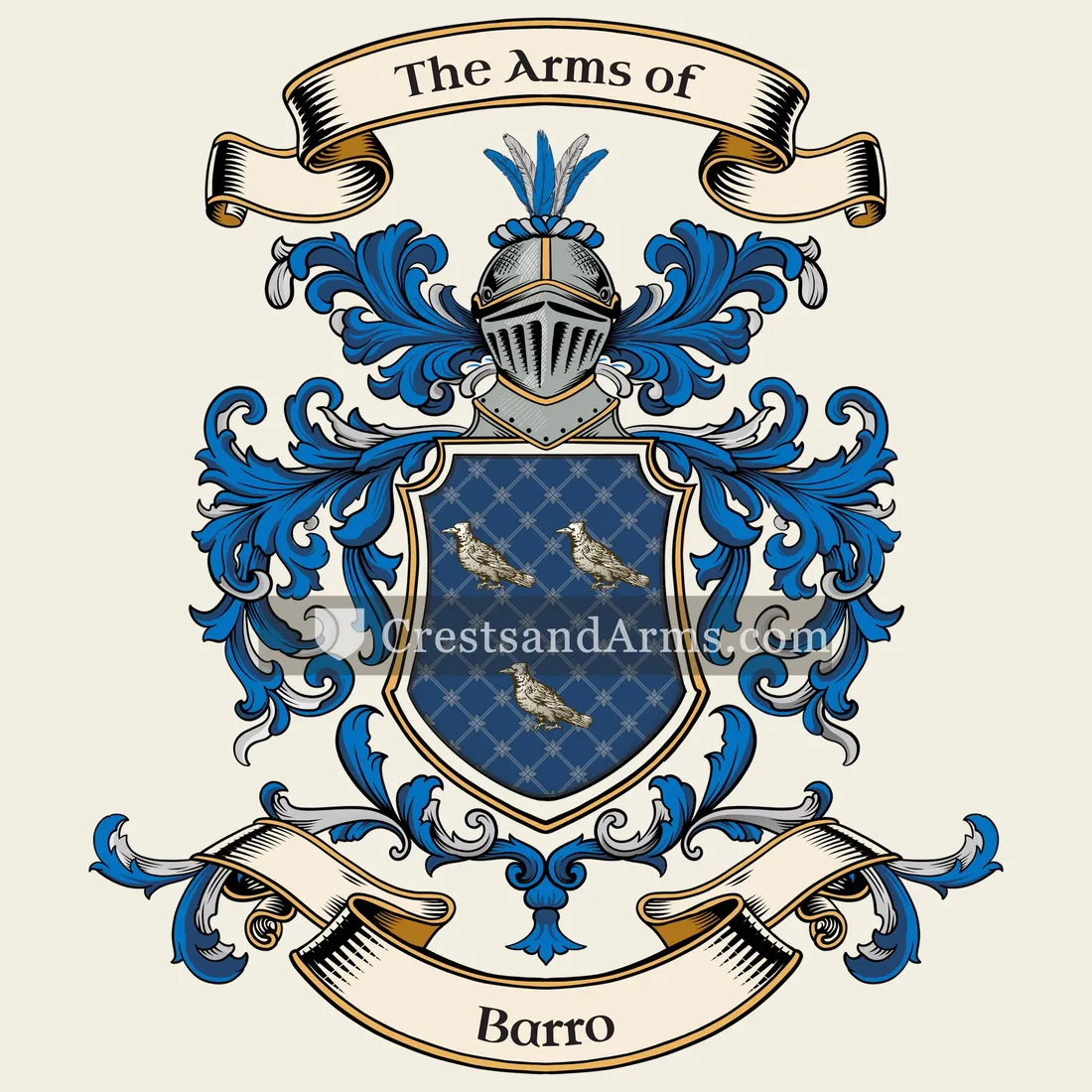
dovePeace, love and the Holy Spirit
Colours
Blue (Azure)Means: Loyalty and truth
Silver (Argent)Means: Peace and sincerity
Historical info
Source
J. B. Rietstap, Armorial Général, Gouda: G. B. van Goor Zonen, 1884–87
Blazon (the actual original written record)
“D'azur à trois colombes d'arg.”
DauphineDauphine, c. 1663
Digital archive packCoat of arms PNG, gold border print PDF, vector SVG and the certificate of authenticity. Sent to your email in minutes.
Map of France showing where the Barro arms are recorded
The Barro arms were recorded in Dauphine, c. 1663.
Dauphine lay in the mountains of south-eastern France, a country of small estates and scattered valleys. Its gentry were many and mostly modest, and even a small landholding was enough to justify arms.
This is where the arms were entered in the register. Families often moved to other parts of the country, so the same name can turn up in more than one region.
The body that granted and recorded arms in France in this period.
Louis XIV of France
Sovereign of the period
Louis XIV of France
1643–1715
Reigning in Spain when the Barro arms are first recorded.
How Arms Worked in France
In France, a coat of arms was a mark of honor that passed down through the male line to all legitimate descendants. Families often used the same shield without changes to show their shared heritage. If a branch wanted to stand out, they could add a small mark to their shield to show their specific place in the family tree.
Granting authority
The Juge d'armes de France acted as the official authority that regulated and verified coats of arms across the country.
How they got arms
Families typically inherited their arms from ancestors, though they could also receive them through royal grants or by proving their noble status.
Where arms were recorded
Coats of arms were officially recorded in the Armorial Général de France, which began its main collection in the year 1696.
The family's standing
Recorded among the armigerous families of Dauphine.
Origin & History of the Barro Family in France
The family name Barro has deep roots in the historical province of Dauphiné, a rugged and mountainous region in southeastern France. By the year 1663, records confirm that members of the Barro family were already established within this area, living among the valleys of the Western Alps. During the seventeenth century, life in Dauphiné was defined by a mix of agricultural work and the influence of local trade routes that connected France to Italy. Families like the Barro line often lived in small, tightly knit communities where they relied on the land and local traditions to sustain their households. Because the region was geographically isolated by high peaks, families in this area developed distinct customs and social ties that persisted for generations. The presence of the Barro name in these early records suggests that they were part of the foundational population that helped shape the social and economic life of the Dauphiné province during the transition into the modern era.
Meaning of the Barro family crest colors & symbols
Symbols on this shield
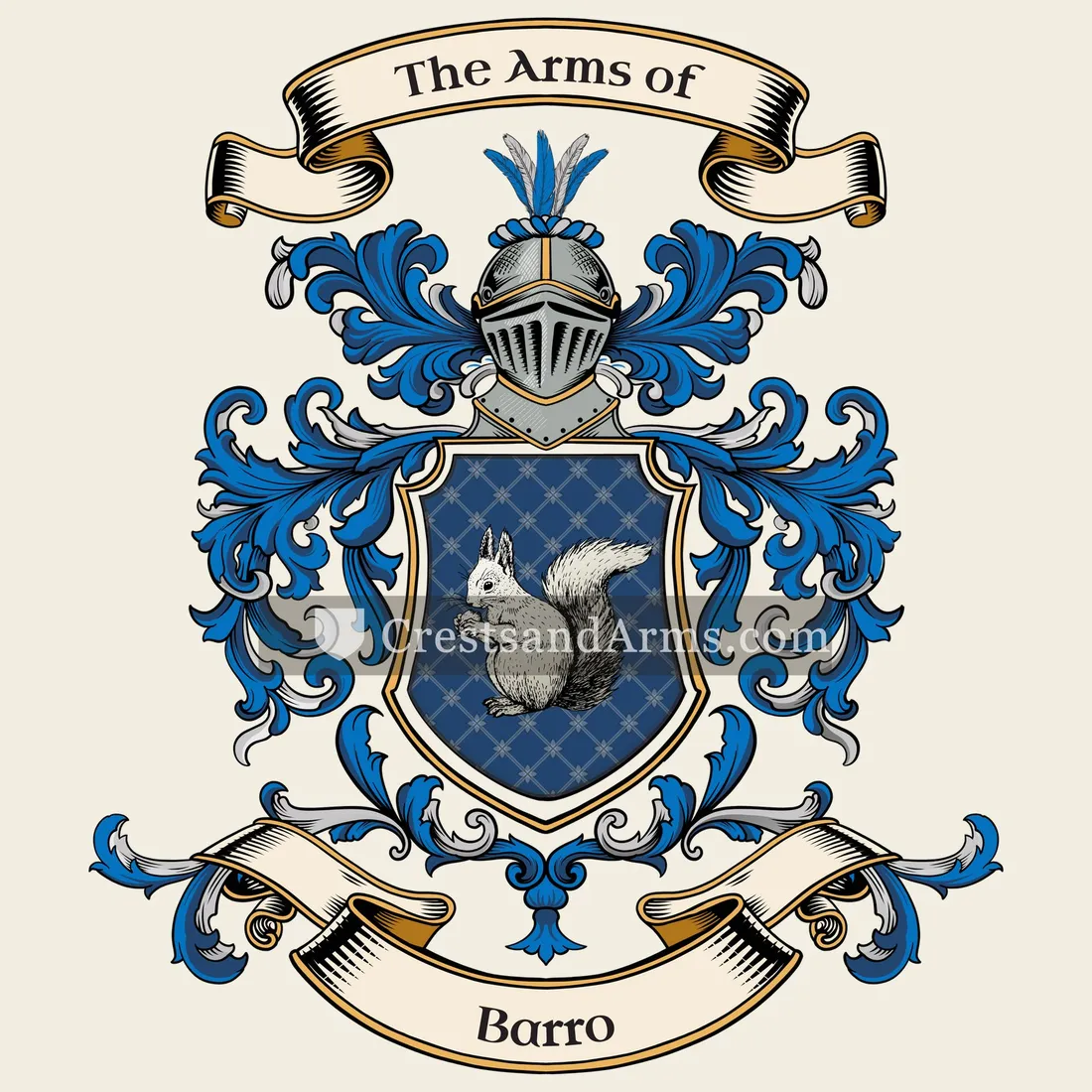
squirrelPatience and foresight in gathering
Colours
Blue (Azure)Means: Loyalty and truth
Silver (Argent)Means: Peace and sincerity
Historical info
Source
Sir Bernard Burke, The General Armory of England, Scotland, Ireland and Wales, London: Harrison & Sons, 1884
Blazon (the actual original written record)
“Az. a squirrel erect ar. armed sa”
JerseyJersey, c. 1688
Digital archive packCoat of arms PNG, gold border print PDF, vector SVG and the certificate of authenticity. Sent to your email in minutes.
The body that granted and recorded arms in Jersey in this period.
James II of England
Sovereign of the period
James II of England
1685–1688
Reigning in Spain when the Barro arms are first recorded.
How Arms Worked in Jersey
Arms in the Channel Islands were granted and recorded by the College of Arms in London, under the same law of arms as England. They could be used by all legitimate descendants of the original owner: the eldest son kept the original design, and other family members used the same shield without registering a version of their own.
Granting authority
The College of Arms in London has regulated the use of coats of arms for Jersey and the other Channel Islands since 1484.
How they got arms
Families typically obtained their coats of arms through a formal grant from the Crown or by proving their ancient right to them.
Where arms were recorded
All official coats of arms are recorded in the registers kept at the College of Arms, which date back to the fifteenth century.
The family's standing
Recorded among the armigerous families of Jersey.
Origin & History of the Barro Family in Jersey
The history of the Barro family in Jersey begins to emerge clearly in the late seventeenth century, with records confirming their presence on the island by 1688. During this period, Jersey served as a unique cultural bridge between France and England, and the Barro name likely arrived as part of the movement of people across the English Channel. Families like the Barros often integrated into the local parish systems, which acted as the center of social and administrative life on the island. Because Jersey maintained its own legal customs and local government, the early members of the family would have lived under a distinct set of traditions that blended Norman heritage with British influence. By establishing themselves in the island’s tight-knit communities, the Barros participated in the maritime and agricultural activities that defined Jersey life during the late 1600s, helping to shape the demographic landscape of the island during a time of significant political change.
Barro Meaning & Related Branches
Root word
Barro
Derived from the Latin word barra meaning bar or barrier.
This name
BarroRefers to a person who lived near a barrier, gate, or clay-rich soil.
also spelled
Barro
Barrow
Documented Sources
J. B. Rietstap, Armorial Général, Gouda: G. B. van Goor Zonen, 1884–87
Moll, Francesc de B., Els llinatges catalans: Catalunya, País Valencià, Illes Balears, 1959
Archivo General de Simancas, Registro del Sello de Corte, 1722
Pescador del Hoyo, María del Carmen, Apellidos en España, 1996
Digital archive packCoat of arms PNG, gold border print PDF, vector SVG and the certificate of authenticity. Sent to your email in minutes.


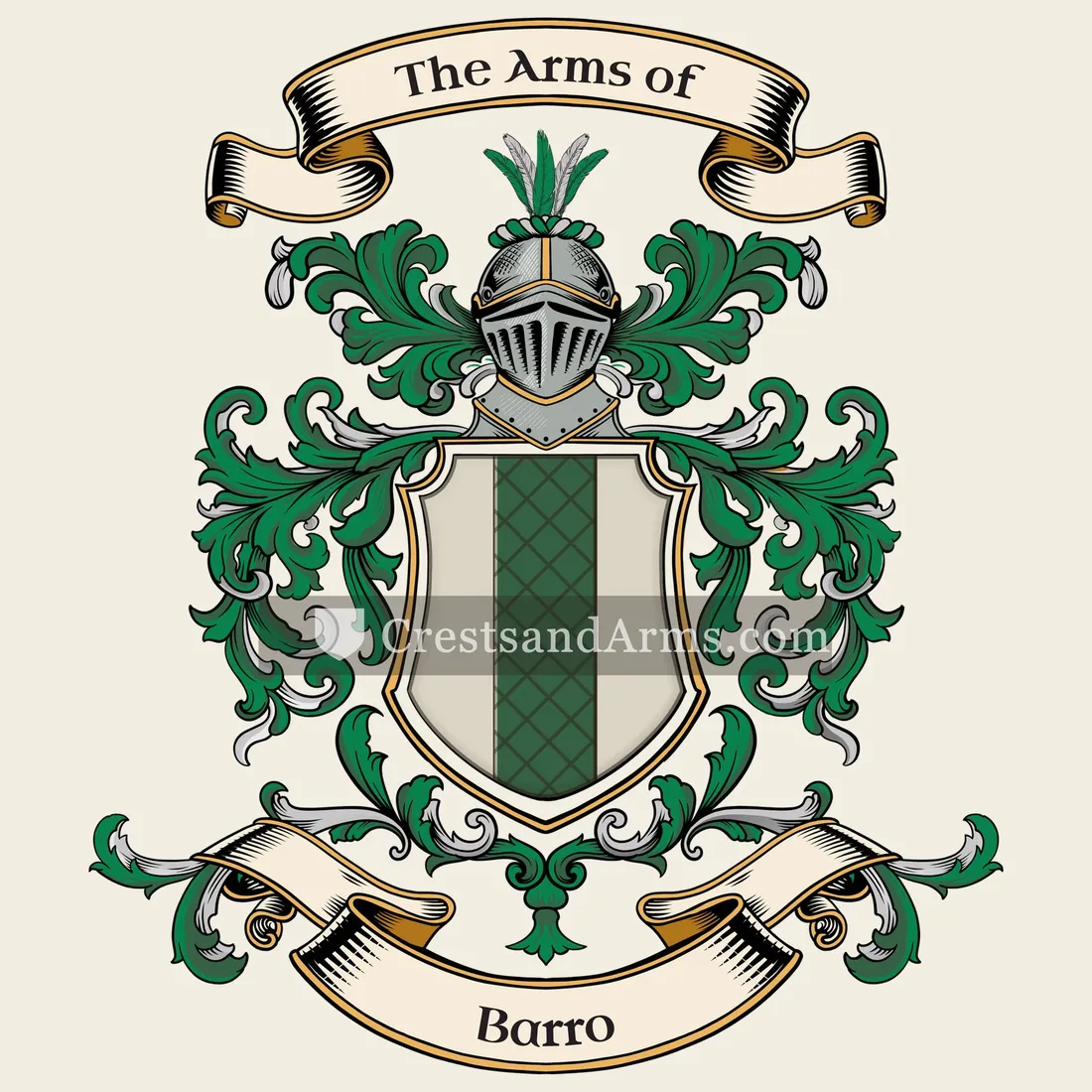
 paleMilitary strength, and a fortified defence
 paleMilitary strength, and a fortified defence


 dovePeace, love and the Holy Spirit


 squirrelPatience and foresight in gathering