A record of documented arms, meaning and origin, researched for the Bartsch family lines. Documented in 3 countries.
Reg. 4974 · German, A–C
Coat of Arms & Family Crest Details
Symbols on this shield
bowReadiness, and the strength held in reserve
arrowReadiness for battle, and affliction endured
crescentHonour by the sovereign, and the second son
mulletThe third son, and a divine quality from above
Colours
Blue (Azure)Means: Loyalty and truth
Gold (Or)Means: Generosity
Silver (Argent)Means: Peace and sincerity
Historical info
Source
J. B. Rietstap, Armorial Général, Gouda: G. B. van Goor Zonen, 1884–87
Blazon (the actual original written record)
“D'azur à un arc d'or, posé en fasce, la corde supp. trois flèches du même, une en pal accostée des deux autres en bande et en barre; le tout acc. en p. d'un croiss. versé et figuré d'arg., surmontant une étoile d'or. Cq. cour. C.: un croiss. montant et figuré d'arg., supp. une flèche d'or, posée en pal. L. d'arg. et d'azur.”
PomeraniaPomerania, c. 1765
Digital archive packCoat of arms PNG, gold border print PDF, vector SVG and the certificate of authenticity. Sent to your email in minutes.
Map of Germany showing where the Bartsch arms are recorded
The Bartsch arms were recorded in Pomerania, c. 1765.
Pomerania was flat farming country on the Baltic coast, held in large estates by a small number of families. They kept their land for generations, and generations of landholding is what fills the registers.
This is where the arms were entered in the register. Families often moved to other parts of the country, so the same name can turn up in more than one region.
The body that granted and recorded arms in Germany in this period.
Francis I, Holy Roman Emperor
Sovereign of the period
Francis I, Holy Roman Emperor
1745–1765
Reigning in Germany when the Bartsch arms are first recorded.
How Arms Worked in Germany
In the Holy Roman Empire, coats of arms were often granted to individuals by the Emperor or his representatives. These arms were then passed down through the generations to all legitimate descendants of the original holder. Younger branches of a family usually kept the same shield design without needing to change it, as the arms belonged to the entire lineage.
Granting authority
The Holy Roman Emperor held the sole power to grant new coats of arms throughout his vast imperial territories.
How they got arms
Families typically obtained their coats of arms through a formal imperial grant or by proving their noble status to the authorities.
Where arms were recorded
These grants were officially recorded in the Imperial Chancery registers, which began keeping formal records of such honors during the Middle Ages.
The family's standing
Recorded among the armigerous families of Pomerania.
Origin & History of the Bartsch Family in Germany
The surname Bartsch is a shortened form of the name Bartholomaeus, which was a popular given name during the Middle Ages. As people across the German-speaking lands began to adopt permanent family names, many individuals took this shortened version to identify their lineage. By the mid-18th century, the family had established a notable presence in the region of Pomerania. Records confirm that members of the Bartsch family were living there by 1765, likely working as farmers or tradespeople in the rural communities of the Baltic coast. During this era, families often stayed in the same villages for generations, which allowed the name to become deeply rooted in the local culture and history of the Prussian provinces. The name reflects a long tradition of naming customs that evolved from religious roots into the hereditary surnames used by families today.
Coat of Arms & Family Crest Details
Symbols on this shield
mountThe ground held, and steadfastness upon it
squirrelPatience and foresight in gathering
Colours
Silver (Argent)Means: Peace and sincerity
Green (Vert)Means: Hope
Historical info
Source
J. B. Rietstap, Armorial Général, Gouda: G. B. van Goor Zonen, 1884–87
Blazon (the actual original written record)
“D'arg. à un écureuil au nat., assis sur une terrasse de sin. Cq. cour. C.: l'écureuil.”
Polandc. 1772
Digital archive packCoat of arms PNG, gold border print PDF, vector SVG and the certificate of authenticity. Sent to your email in minutes.
Map of Poland showing where the Bartsch arms are recorded
The Bartsch arms were recorded in Poland, c. 1772.
Arms such as these were typically recorded in Mazovia.
Mazovia held Warsaw, the Polish court and the assemblies where the szlachta met. Poland's nobles were unusually numerous and every one of them bore arms, and Warsaw is where those arms were argued over and recorded.
This is where the arms were entered in the register. Families often moved to other parts of the country, so the same name can turn up in more than one region.
Region
Mazovia
First recorded
1772
Granting Authority for the Bartsch Arms
Ennoblement by the Sejm
Author: Olek Remesz · CC BY-SA 3.0
The body that granted and recorded arms in Poland in this period.
Stanisław August Poniatowski
Sovereign of the period
Stanisław August Poniatowski
1764–1795
Reigning in Germany when the Bartsch arms are first recorded.
How Arms Worked in Poland
Polish noble families shared a single coat of arms across many different surnames, creating large clans rather than individual designs. These symbols were held collectively by all members of the clan regardless of their specific family name. When a new family joined the nobility, they were adopted into an existing clan and began using that group's established shield.
Granting authority
The Sejm, which was the Polish parliament, held the power to grant noble status and the right to bear arms.
How they got arms
Families typically received their coat of arms through a formal act of ennoblement granted by the Sejm for distinguished service.
Where arms were recorded
These grants were officially recorded in the Crown Metrica, which served as the central archive for state documents starting in the sixteenth century.
The family's standing
Recorded among the armigerous families of Poland.
Origin & History of the Bartsch Family in Poland
The family name Bartsch has deep roots in the region of Mazovia, where records confirm members of the family were living by 1772. The name itself is a German diminutive form of the name Bartholomew, which suggests that the family likely descended from individuals who moved into Polish territories during periods of migration or trade. By the late 18th century, families with this name were well-established within the social and agricultural landscape of central Poland. They lived through a time of significant political change as the region navigated the partitions of the Polish-Lithuanian Commonwealth. Because the name was common among settlers and craftsmen in the borderlands, the Bartsch family became part of the diverse cultural fabric of the Mazovian plains. Over time, these families integrated into the local community while maintaining their distinct ancestral identity through their surname.
Coat of Arms & Family Crest Details
Symbols on this shield
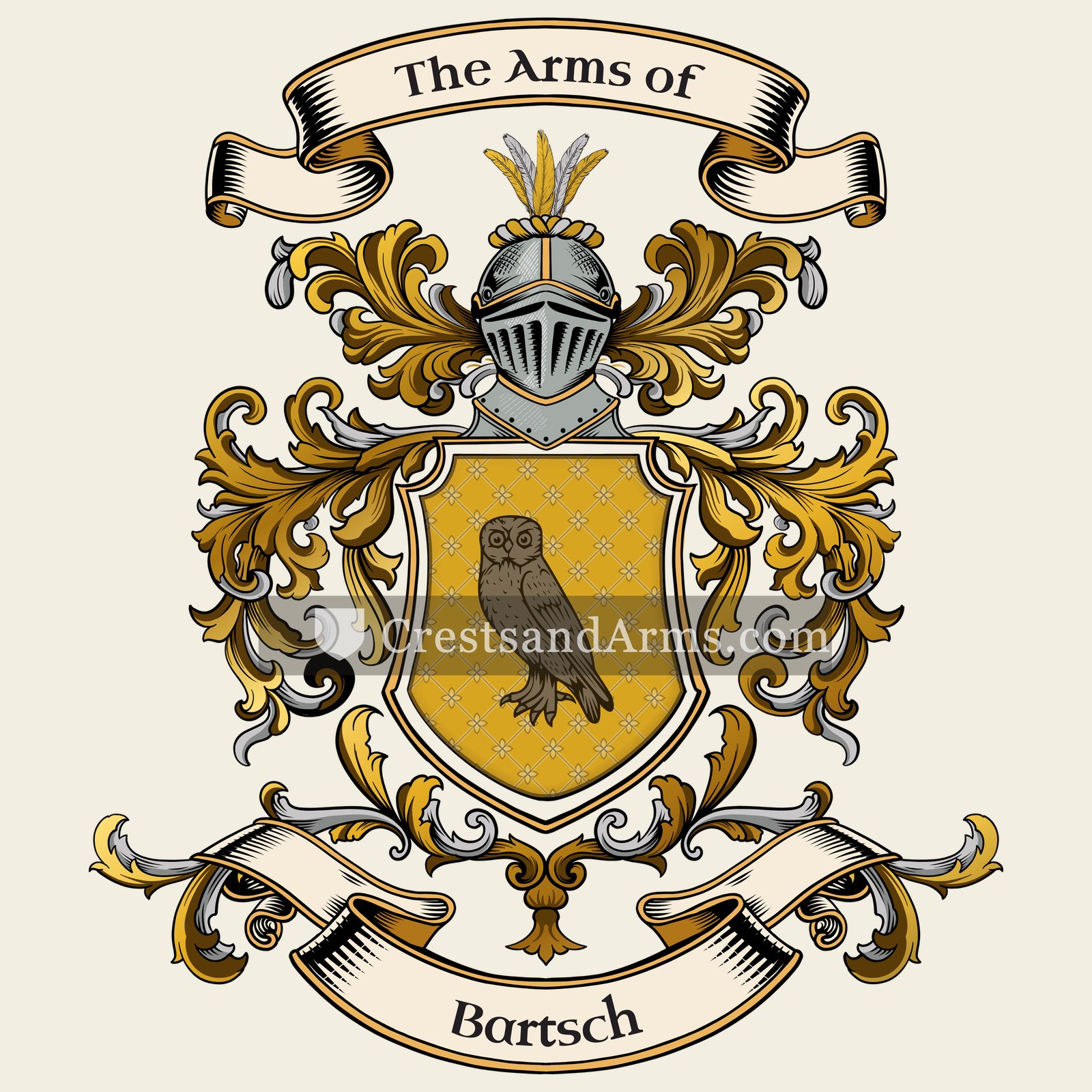
owlWisdom and vigilance by night
Colours
Gold (Or)Means: Generosity
Historical info
Source
J. B. Rietstap, Armorial Général, Gouda: G. B. van Goor Zonen, 1884–87
Blazon (the actual original written record)
“D'or ch. en p. d'une chouette au nat.; le champ cha[?]”
AustriaVienne, c. 1812
Digital archive packCoat of arms PNG, gold border print PDF, vector SVG and the certificate of authenticity. Sent to your email in minutes.
Map of Austria showing where the Bartsch arms are recorded
The Bartsch arms were recorded in Vienne, c. 1812.
This is where the arms were entered in the register. Families often moved to other parts of the country, so the same name can turn up in more than one region.
Region
Vienne
Town
Vienne
First recorded
1812
Granting Authority for the Bartsch Arms
Imperial and Royal chancery
Sodacan · CC BY-SA 3.0
The body that granted and recorded arms in Austria in this period.
Francis II, Holy Roman Emperor
Sovereign of the period
Francis II, Holy Roman Emperor
1804–1835
Reigning in Germany when the Bartsch arms are first recorded.
How Arms Worked in Austria
Austrian coats of arms were often linked directly to noble titles granted by the Emperor. These symbols belonged to the entire family line rather than just one individual. When a family grew, new branches kept the original design without needing to change it. This system allowed all members of a noble house to share the same identity across many generations.
Granting authority
The Imperial and Royal chancery managed all heraldic matters and controlled the official granting of arms throughout the Austrian lands.
How they got arms
Families typically received their arms through a formal imperial decree that often accompanied the elevation of a person to noble status.
Where arms were recorded
Official records of these grants were kept in the Imperial Register of Nobility which began its formal documentation process in 1453.
The family's standing
Recorded among the armigerous families of Austria.
Origin & History of the Bartsch Family in Austria
The surname Bartsch is a Germanized form of the name Bartolomäus, which traces its roots back to the ancient Aramaic name Bar-Talmai. By the early 19th century, the family had established a notable presence in Vienna, a city that served as the cultural and administrative heart of the Austrian Empire. During this era, Vienna was a melting pot of people from across Central Europe, and families like the Bartschs were often integrated into the city’s growing professional and artistic circles. Records from 1812 indicate that members of the family were already well-settled in the capital, likely participating in the vibrant urban life that defined the Napoleonic period in Austria. As the name spread through the region, it became associated with the middle-class expansion that characterized the transition from the old imperial order to the modern industrial age. The family history in Vienna reflects the broader movement of people who helped shape the city into a center of European intellect and bureaucracy.
Bartsch Meaning & Related Branches
Root word
Bartholomaeus
Aramaic name meaning son of Talmai or son of the furrow.
This name
BartschA German patronymic diminutive form derived from the personal name Bartholomew.
also spelled
Bartsh
Related arms
Georgin de Mardignysimilar arms
Documented Sources
J. B. Rietstap, Armorial Général, Gouda: G. B. van Goor Zonen, 1884–87
Bahlow, Hans, Deutsches Namenlexikon: Familien- und Vornamen nach Ursprung und Sinn erklärt, 1967
Heintze, Albert, Die deutschen Familien-Namen: geschichtlich, geographisch, sprachlich, 1903
Landesarchiv Greifswald, Kirchenbücher der Provinz Pommern, 1765
Digital archive packCoat of arms PNG, gold border print PDF, vector SVG and the certificate of authenticity. Sent to your email in minutes.


 bowReadiness, and the strength held in reserve
 arrowReadiness for battle, and affliction endured
 crescentHonour by the sovereign, and the second son
 mulletThe third son, and a divine quality from above
 bowReadiness, and the strength held in reserve
 arrowReadiness for battle, and affliction endured
 crescentHonour by the sovereign, and the second son
 mulletThe third son, and a divine quality from above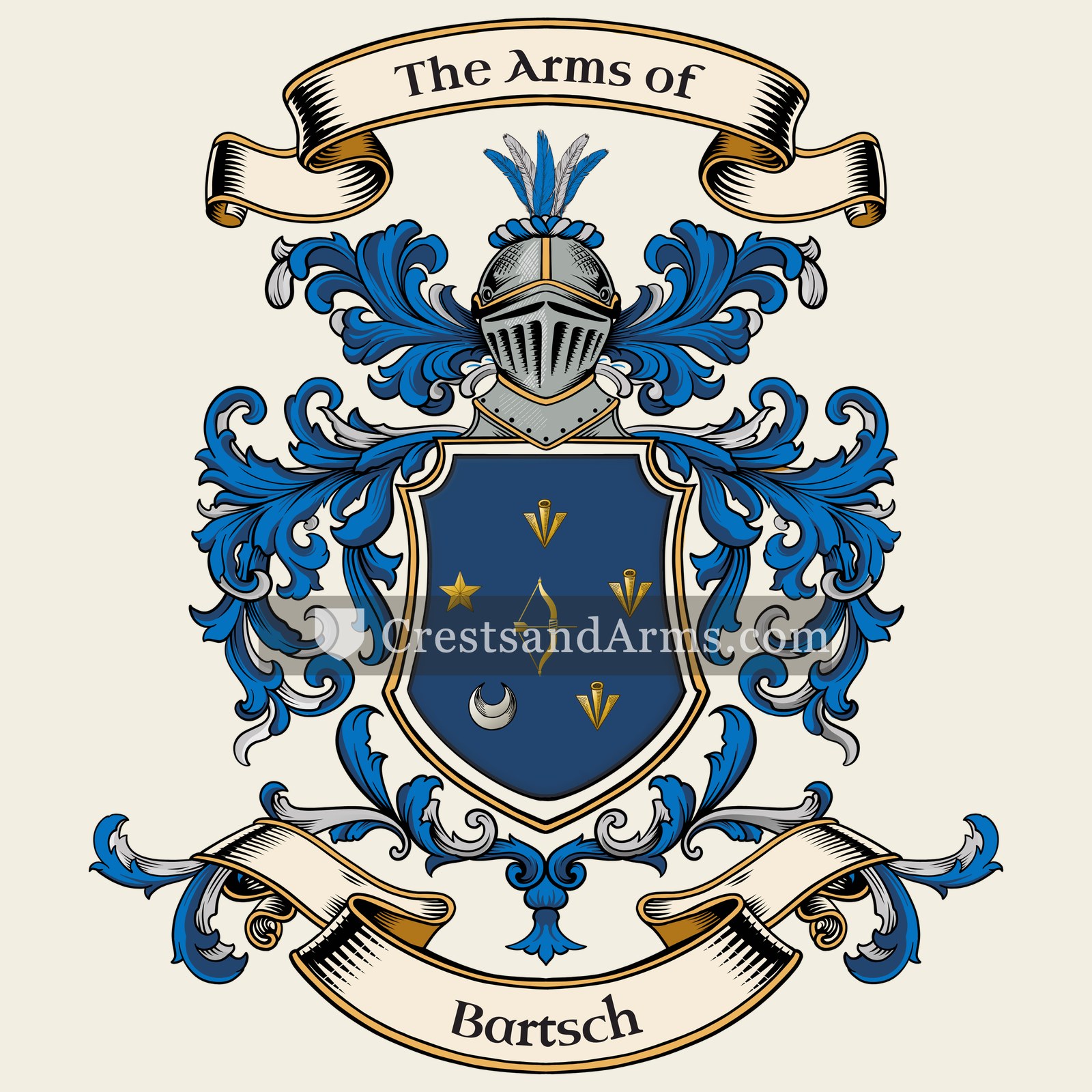


 mountThe ground held, and steadfastness upon it
 squirrelPatience and foresight in gathering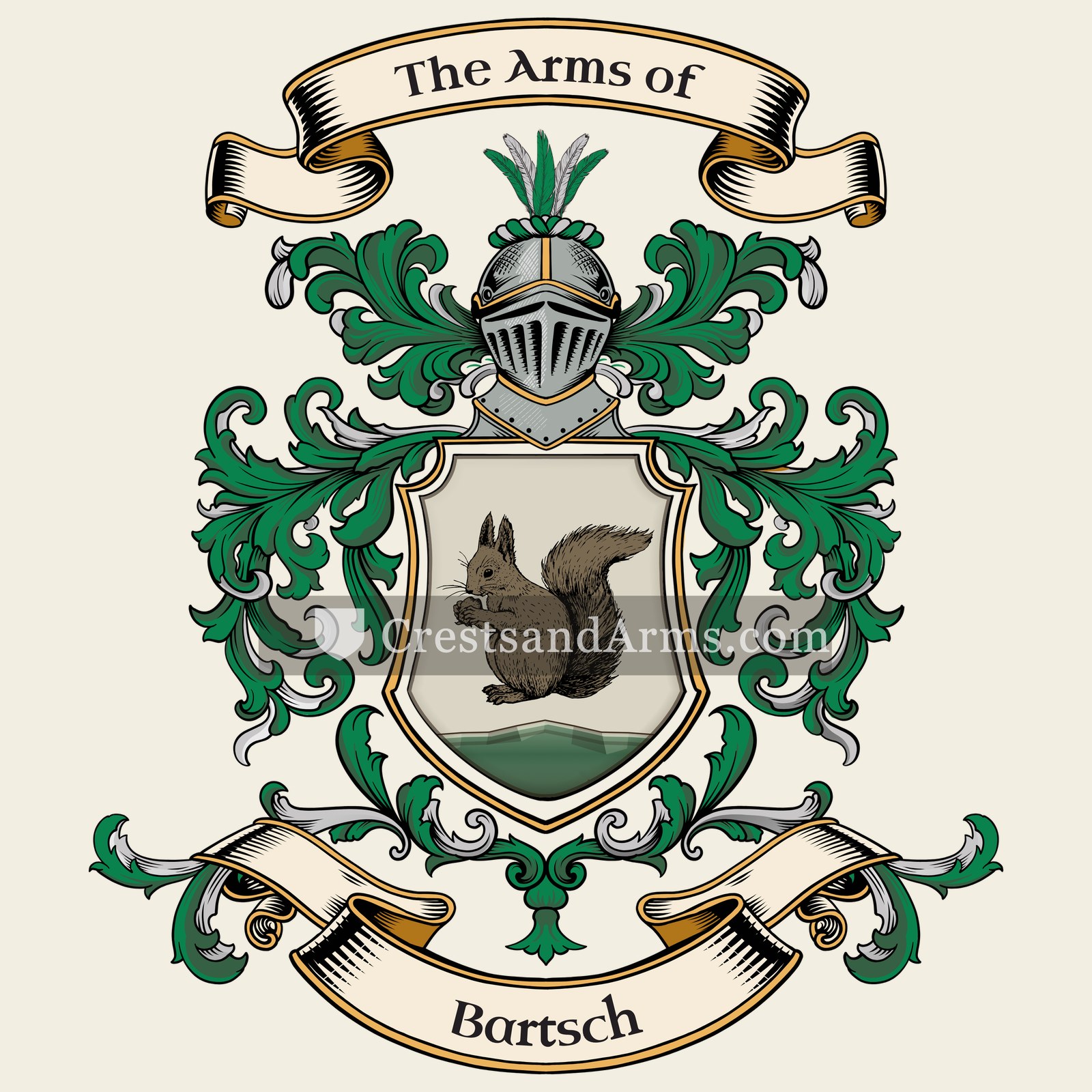


 owlWisdom and vigilance by night