Map of France showing where the Baruch arms are recorded
The Baruch arms were recorded in France, c. 1663.
Arms such as these were typically recorded in Bretagne.
More families held coats of arms in Bretagne than anywhere else in France. The land was divided into many small estates rather than a few large ones, so far more households counted as gentry, and each needed a shield of its own to be told apart.
This is where the arms were entered in the register. Families often moved to other parts of the country, so the same name can turn up in more than one region.
The body that granted and recorded arms in France in this period.
Louis XIV of France
Sovereign of the period
Louis XIV of France
1643–1715
Reigning in France when the Baruch arms are first recorded.
How Arms Worked in France
In France, a coat of arms was a mark of honor that passed down through the male line to all legitimate descendants. Families often used the same shield without changes to show their shared heritage. If a branch wanted to stand out, they could add a small mark to their shield to show their specific place in the family tree.
Granting authority
The Juge d'armes de France acted as the official authority that regulated and verified coats of arms across the country.
How they got arms
Families typically inherited their arms from ancestors, though they could also receive them through royal grants or by proving their noble status.
Where arms were recorded
Coats of arms were officially recorded in the Armorial Général de France, which began its main collection in the year 1696.
The family's standing
Recorded among the armigerous families of France.
Origin & History of the Baruch Family in France
The family name Baruch carries a deep history that traces back to the Hebrew word for blessed. In the context of France, the name reflects the complex experiences of Jewish families who navigated shifting social and religious landscapes over many centuries. By 1663, records confirm that members of the Baruch family were established in the region of Bretagne. During this period, families with this name often lived as part of small, tight-knit communities that maintained their cultural traditions despite the pressures of the era. Their presence in western France suggests a history of migration and adaptation as they moved through different provinces to find stability. The survival of these early records in Bretagne provides a rare glimpse into the lives of ancestors who helped shape the local history of the region while keeping their family identity intact across generations.
Meaning of the Baruch family crest colors & symbols
Symbols on this shield
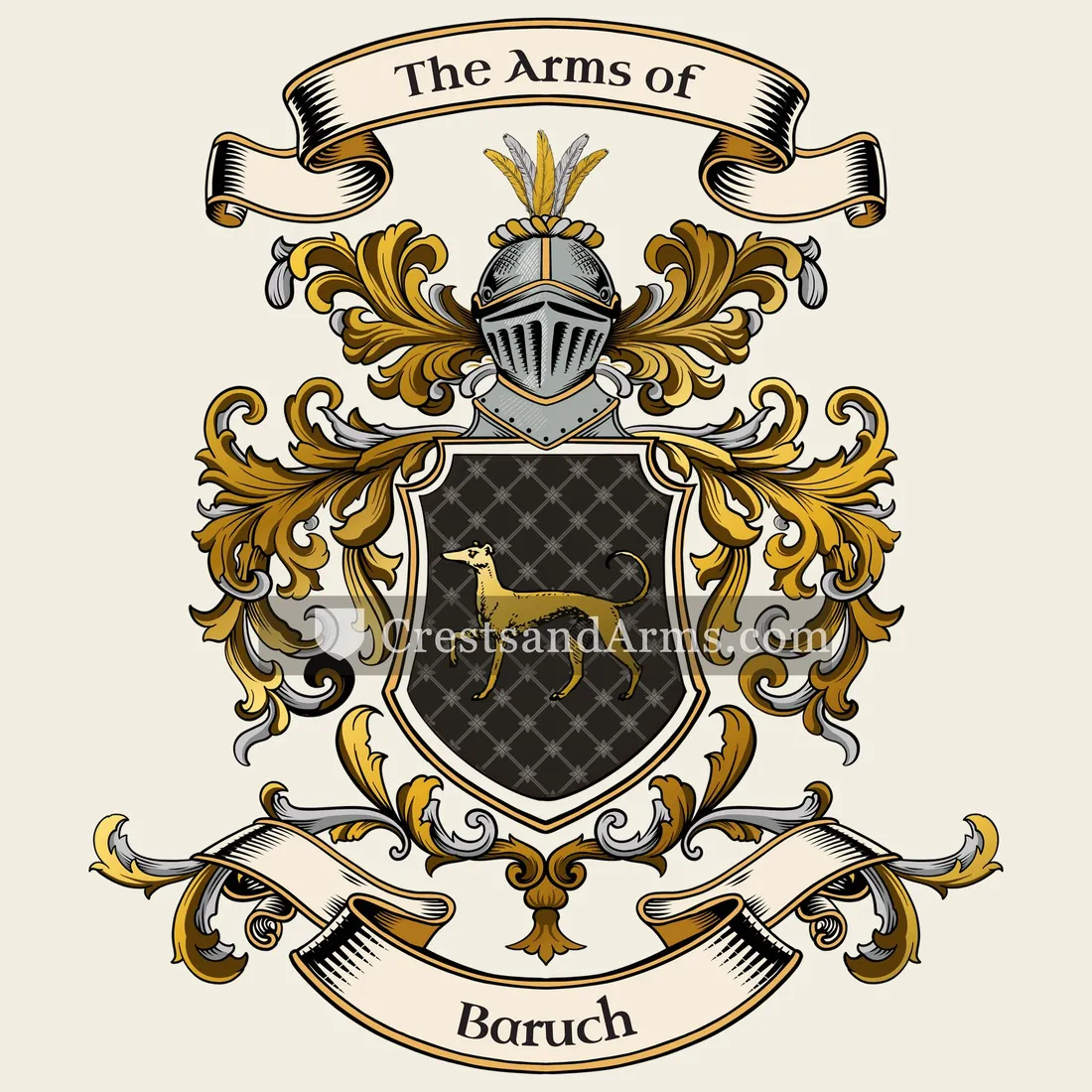
greyhoundCourage, vigilance and loyalty
Colours
Black (Sable)Means: Constancy
Gold (Or)Means: Generosity
Historical info
Source
J. B. Rietstap, Armorial Général, Gouda: G. B. van Goor Zonen, 1884–87
Blazon (the actual original written record)
“De sa. semé de bill. d'or; au chien braque pass. du même. Cq. cour. C.: le chien, entre un vol de sa., semé de bill. d'or.”
WestphaliaWestphalia, c. 1765
Digital archive packCoat of arms PNG, gold border print PDF, vector SVG and the certificate of authenticity. Sent to your email in minutes.
Map of Germany showing where the Baruch arms are recorded
The Baruch arms were recorded in Westphalia, c. 1765.
Westphalia was a land of small estates and fortified farmhouses in western Germany. Its families were numerous and not especially rich, but each held its own ground, and holding ground was what brought arms.
This is where the arms were entered in the register. Families often moved to other parts of the country, so the same name can turn up in more than one region.
The body that granted and recorded arms in Germany in this period.
Francis I, Holy Roman Emperor
Sovereign of the period
Francis I, Holy Roman Emperor
1745–1765
Reigning in France when the Baruch arms are first recorded.
How Arms Worked in Germany
In the Holy Roman Empire, coats of arms were often granted to individuals by the Emperor or his representatives. These arms were then passed down through the generations to all legitimate descendants of the original holder. Younger branches of a family usually kept the same shield design without needing to change it, as the arms belonged to the entire lineage.
Granting authority
The Holy Roman Emperor held the sole power to grant new coats of arms throughout his vast imperial territories.
How they got arms
Families typically obtained their coats of arms through a formal imperial grant or by proving their noble status to the authorities.
Where arms were recorded
These grants were officially recorded in the Imperial Chancery registers, which began keeping formal records of such honors during the Middle Ages.
The family's standing
Recorded among the armigerous families of Westphalia.
Origin & History of the Baruch Family in Germany
The surname Baruch originates from the Hebrew name meaning blessed, and it became a prominent family name among Jewish communities in Germany. By the mid-eighteenth century, historical records confirm that members of the Baruch family were well-established in the Westphalia region. During this era, families in Germany often adopted fixed surnames to comply with new government registration laws that required Jews to take permanent family names for tax and census purposes. Living in Westphalia, the Baruch family would have navigated the complex social and legal landscape of the Holy Roman Empire, where they likely participated in the vibrant trade and intellectual life of the local Jewish congregations. Over time, the name served as a link to their ancestral heritage while marking their integration into the evolving administrative systems of the German states.
Meaning of the Baruch family crest colors & symbols
Symbols on this shield
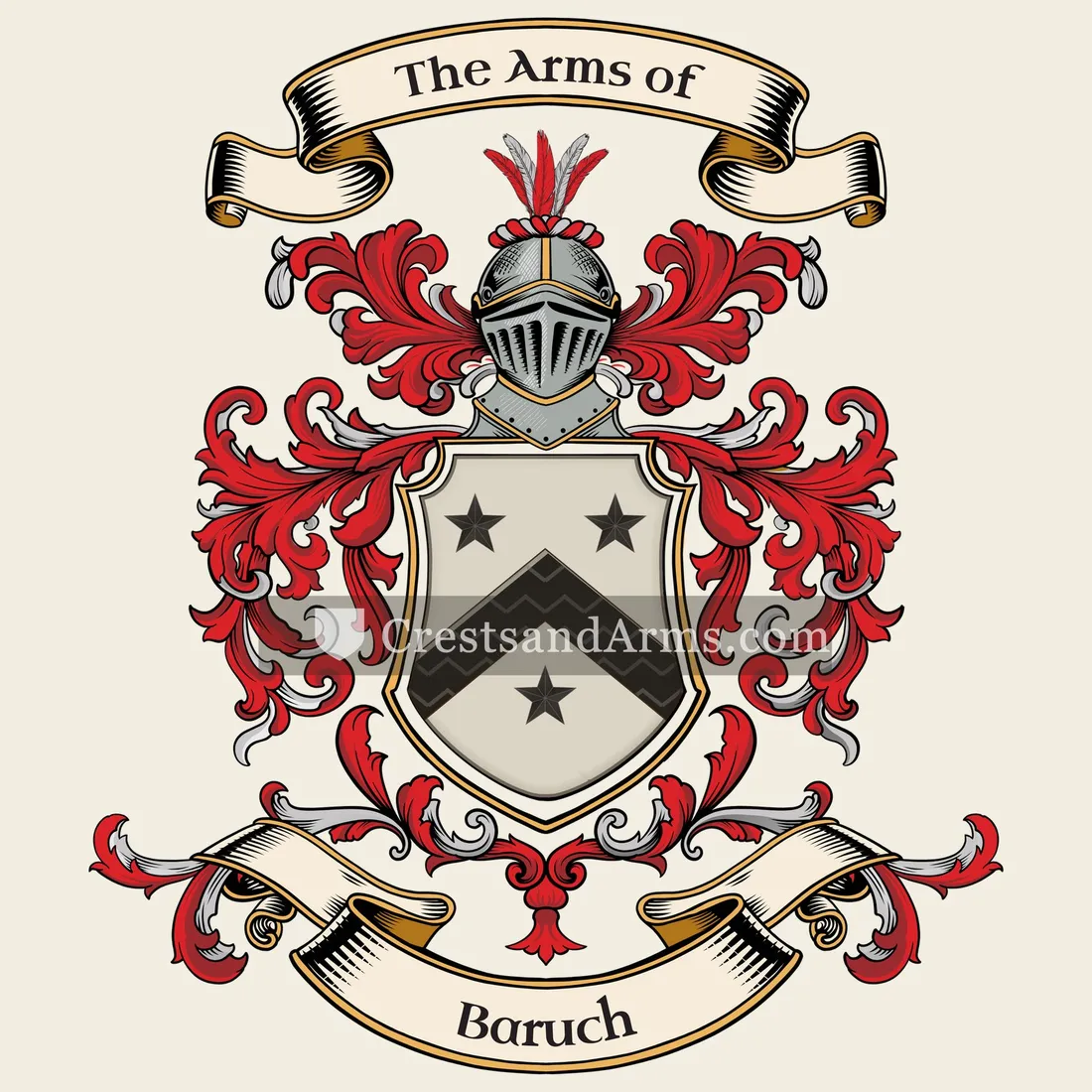
chevronProtection, and faithful service completed
mulletThe third son, and a divine quality from above
Colours
Silver (Argent)Means: Peace and sincerity
Black (Sable)Means: Constancy
Historical info
Source
Sir Bernard Burke, The General Armory of England, Scotland, Ireland and Wales, London: Harrison & Sons, 1884
Blazon (the actual original written record)
“Ar. a chev. betw. three mullets sa”
LancashireBruch · Lancashire, c. 1620
Digital archive packCoat of arms PNG, gold border print PDF, vector SVG and the certificate of authenticity. Sent to your email in minutes.
Map of England showing where the Baruch arms are recorded
The Baruch arms were recorded in Lancashire, c. 1620.
This is where the arms were entered in the register. Families often moved to other parts of the country, so the same name can turn up in more than one region.
The body that granted and recorded arms in England in this period.
James VI and I
Sovereign of the period
James VI and I
1603–1625
Reigning in France when the Baruch arms are first recorded.
How Arms Worked in England
English heraldry allowed arms to be shared by all legitimate descendants of the original owner. These symbols were treated as personal property that moved through the generations to all children. While the eldest son kept the original design, other family members could use the same shield without needing to change it or register their own unique versions.
Granting authority
The College of Arms in London has regulated the use of coats of arms throughout England and Wales since 1484.
How they got arms
Families typically obtained their coats of arms through a formal grant from the Crown or by proving their ancient right to them.
Where arms were recorded
All official coats of arms are recorded in the registers kept at the College of Arms, which date back to the fifteenth century.
The family's standing
Recorded among the armigerous families of Lancashire.
Origin & History of the Baruch Family in England
The name Baruch carries a deep historical resonance, rooted in the Hebrew word for blessed. While the name is ancient in origin, its presence in England became more notable during the seventeenth century. By 1620, records indicate that members of the family were established in the county of Lancashire. During this period, Lancashire was a region defined by its transition from a traditional agricultural society to one increasingly involved in trade and local industry. Families like the Baruchs often integrated into these local communities as merchants or skilled craftsmen. Their presence in the north of England during this time suggests they were part of the broader movement of families seeking stability and opportunity in the growing provincial towns. Over the following decades, the family name became a quiet but persistent part of the English landscape, reflecting the diverse origins of those who contributed to the local history of the region.
Baruch Meaning & Related Branches
Root word
Barukh
A Hebrew term derived from the root for blessing or praise.
This name
BaruchA name of Hebrew origin meaning blessed or one who is praised.
also spelled
Bruck
Brook
Brukh
Documented Sources
J. B. Rietstap, Armorial Général, Gouda: G. B. van Goor Zonen, 1884–87
Archives départementales d'Ille-et-Vilaine, Registres paroissiaux et d'état civil, 1663
Bernheim, Gilles, Le judaïsme en France, 2008
Schwarzfuchs, Simon, Les Juifs de France, 1975
Digital archive packCoat of arms PNG, gold border print PDF, vector SVG and the certificate of authenticity. Sent to your email in minutes.


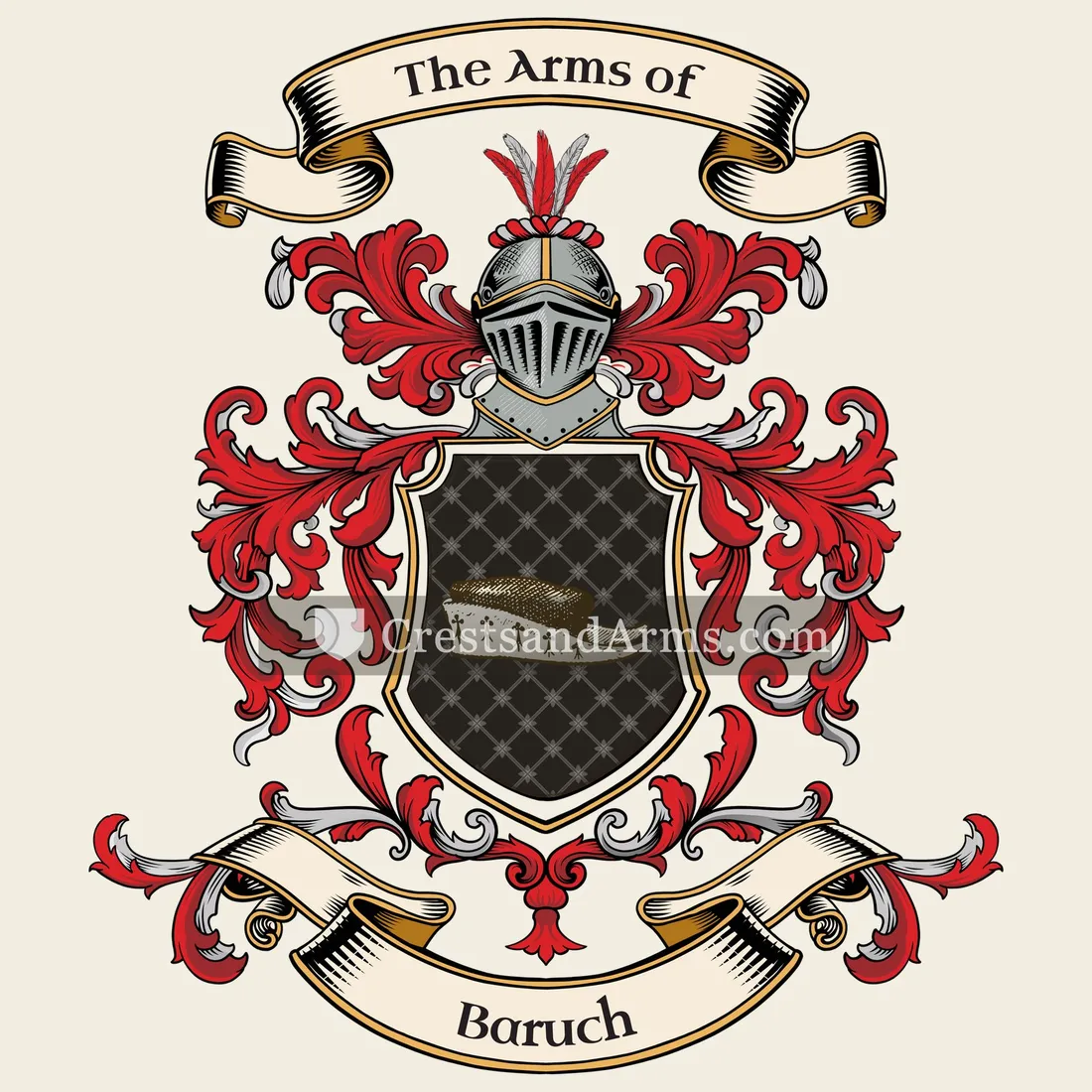
 hat or capDignity, and the honour of office
 hat or capDignity, and the honour of office


 greyhoundCourage, vigilance and loyalty


 chevronProtection, and faithful service completed
 mulletThe third son, and a divine quality from above