Map of England showing where the Basiri arms are recorded
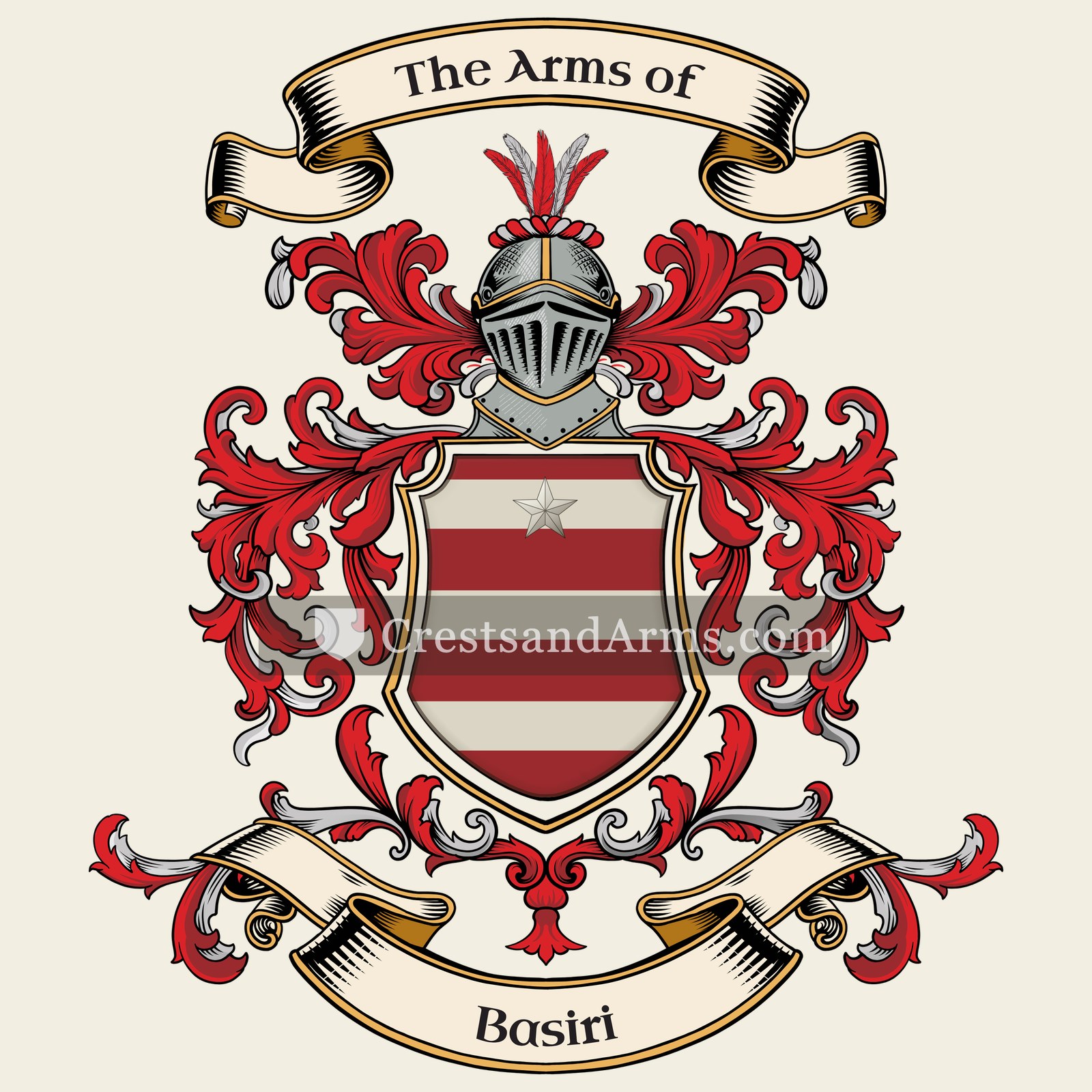
The Basiri arms were recorded in England, c. 1620.
Arms such as these were typically recorded in York.
Yorkshire is the largest of the English counties, and it held more gentry families than any other. Land there was split among a great many households rather than a few, so a great many of them carried arms.
This is where the arms were entered in the register. Families often moved to other parts of the country, so the same name can turn up in more than one region.
The body that granted and recorded arms in England in this period.
James VI and I
Sovereign of the period
James VI and I
1603–1625
Reigning in England when the Basiri arms are first recorded.
How Arms Worked in England
English heraldry allowed arms to be shared by all legitimate descendants of the original owner. These symbols were treated as personal property that moved through the generations to all children. While the eldest son kept the original design, other family members could use the same shield without needing to change it or register their own unique versions.
Granting authority
The College of Arms in London has regulated the use of coats of arms throughout England and Wales since 1484.
How they got arms
Families typically obtained their coats of arms through a formal grant from the Crown or by proving their ancient right to them.
Where arms were recorded
All official coats of arms are recorded in the registers kept at the College of Arms, which date back to the fifteenth century.
The family's standing
Recorded among the armigerous families of England.
Origin & History of the Basiri Family in England
The history of the Basiri name in England is closely linked to the arrival of Isaac Basire, a notable scholar and clergyman who settled in the country during the early seventeenth century. While the name originates from roots in the Middle East, the family established a firm presence in the city of York by 1620. Isaac Basire became a prominent figure in the Church of England and served as a chaplain to King Charles I. His career took him across Europe and the Near East, where he acted as a diplomat and educator, yet his descendants remained deeply connected to the academic and religious life of northern England. This migration pattern highlights how individual scholars often acted as bridges between different cultures during the Renaissance period, eventually integrating their unique heritage into the local history of Yorkshire.
Related Branches & Arms
Root word
Basir
Arabic term meaning one who sees or possesses deep insight.
This name
BasiriA surname indicating a descendant of someone with great wisdom or keen perception.
also spelled
Basier
Documented Sources
Sir Bernard Burke, The General Armory of England, Scotland, Ireland and Wales, London: Harrison & Sons, 1884
Darnell, William Nicholas, The Correspondence of Isaac Basire, D.D., Archdeacon of Northumberland and Prebendary of Durham, in the Reigns of Charles I and Charles II, 1831
The National Archives, State Papers Domestic, SP 16
Borthwick Institute for Archives, York Diocesan Records, Archbishops' Registers
Digital archive packCoat of arms PNG, gold border print PDF, vector SVG and the certificate of authenticity. Sent to your email in minutes.


 mulletThe third son, and a divine quality from above
 mulletThe third son, and a divine quality from above