Map of France showing where the Basset arms are recorded
The Basset arms were recorded in Berry, c. 1663.
Berry was central French farming country, quiet and long-settled. Its estates were modest and stayed in the same hands for centuries, and steady landholding of that kind is exactly what puts a name into the heraldic records.
This is where the arms were entered in the register. Families often moved to other parts of the country, so the same name can turn up in more than one region.
The body that granted and recorded arms in France in this period.
Louis XIV of France
Sovereign of the period
Louis XIV of France
1643–1715
Reigning in France when the Basset arms are first recorded.
How Arms Worked in France
In France, a coat of arms was a mark of honor that passed down through the male line to all legitimate descendants. Families often used the same shield without changes to show their shared heritage. If a branch wanted to stand out, they could add a small mark to their shield to show their specific place in the family tree.
Granting authority
The Juge d'armes de France acted as the official authority that regulated and verified coats of arms across the country.
How they got arms
Families typically inherited their arms from ancestors, though they could also receive them through royal grants or by proving their noble status.
Where arms were recorded
Coats of arms were officially recorded in the Armorial Général de France, which began its main collection in the year 1696.
The family's standing
Recorded among the armigerous families of Berry.
Origin & History of the Basset Family in France
The Basset family name has deep roots in the historical province of Berry, located in the heart of France. The name itself is derived from the Old French word "basset," which served as a descriptive nickname meaning low or short in stature. By the middle of the seventeenth century, records confirm that members of the family were well-established residents within this region. During this era, families in Berry often lived in rural communities centered around agriculture and local trade. The presence of the Basset name in 1663 suggests that the family was part of the long-standing social fabric of central France, living through a period of significant political change under the reign of King Louis XIV. These early ancestors likely contributed to the local economy and community life long before the name spread further across the country.
Coat of Arms & Family Crest Details
Symbols on this shield
bendDefence, and the scarf of a commander
eagleNobility, strength and a keen mind
Colours
Red (Gules)Means: Military strength
Gold (Or)Means: Generosity
Black (Sable)Means: Constancy
Historical info
Source
J. B. Rietstap, Armorial Général, Gouda: G. B. van Goor Zonen, 1884–87
Blazon (the actual original written record)
“De gu. à la bande d'or, ch. d'une tête d'aigle de sa.”
Spainc. 1722
Digital archive packCoat of arms PNG, gold border print PDF, vector SVG and the certificate of authenticity. Sent to your email in minutes.
Map of Spain showing where the Basset arms are recorded
The Basset arms were recorded in Spain, c. 1722.
Arms such as these were typically recorded in Castile.
Castile was the heart of Spain and the source of most of its noble families. Land won in the long wars against the Moors was granted out to fighting men, and a man granted land was granted arms along with it.
This is where the arms were entered in the register. Families often moved to other parts of the country, so the same name can turn up in more than one region.
The body that granted and recorded arms in Spain in this period.
Philip V of Spain
Sovereign of the period
Philip V of Spain
1714–1724
Reigning in France when the Basset arms are first recorded.
How Arms Worked in Spain
In Spain, a coat of arms was considered a form of property that belonged to the entire family line. These arms were passed down from a father to all his children equally. Younger branches of the family usually kept the original design without needing to add any special marks to distinguish their specific line.
Granting authority
The Cronista Rey de Armas was the official body that regulated and granted coats of arms throughout Spain.
How they got arms
Families often obtained their arms through royal grants or by proving their noble status to the official heraldic authority.
Where arms were recorded
Coats of arms were officially recorded in the registers of the Cronista Rey de Armas starting in 1496.
The family's standing
Recorded among the armigerous families of Spain.
Origin & History of the Basset Family in Spain
The Basset family name in Spain represents a fascinating intersection of migration and social integration during the eighteenth century. By 1722, records confirm that members of the Basset family were established in the region of Castile, a central heartland of Spanish history. The name itself is thought to derive from terms describing physical stature, likely originating from older linguistic roots that traveled across European borders before taking hold in the Iberian Peninsula. As these early family members settled into Castilian life, they became part of the local administrative and social fabric, moving away from their origins as newcomers to become active participants in their communities. Their presence in Castile suggests they were part of a broader movement of families who sought new opportunities in the Spanish interior during a time of significant political and social transition. This period of residency laid the foundation for the family's long-term connection to the region, marking the beginning of their documented history within the Spanish cultural landscape.
Coat of Arms & Family Crest Details
Symbols on this shield
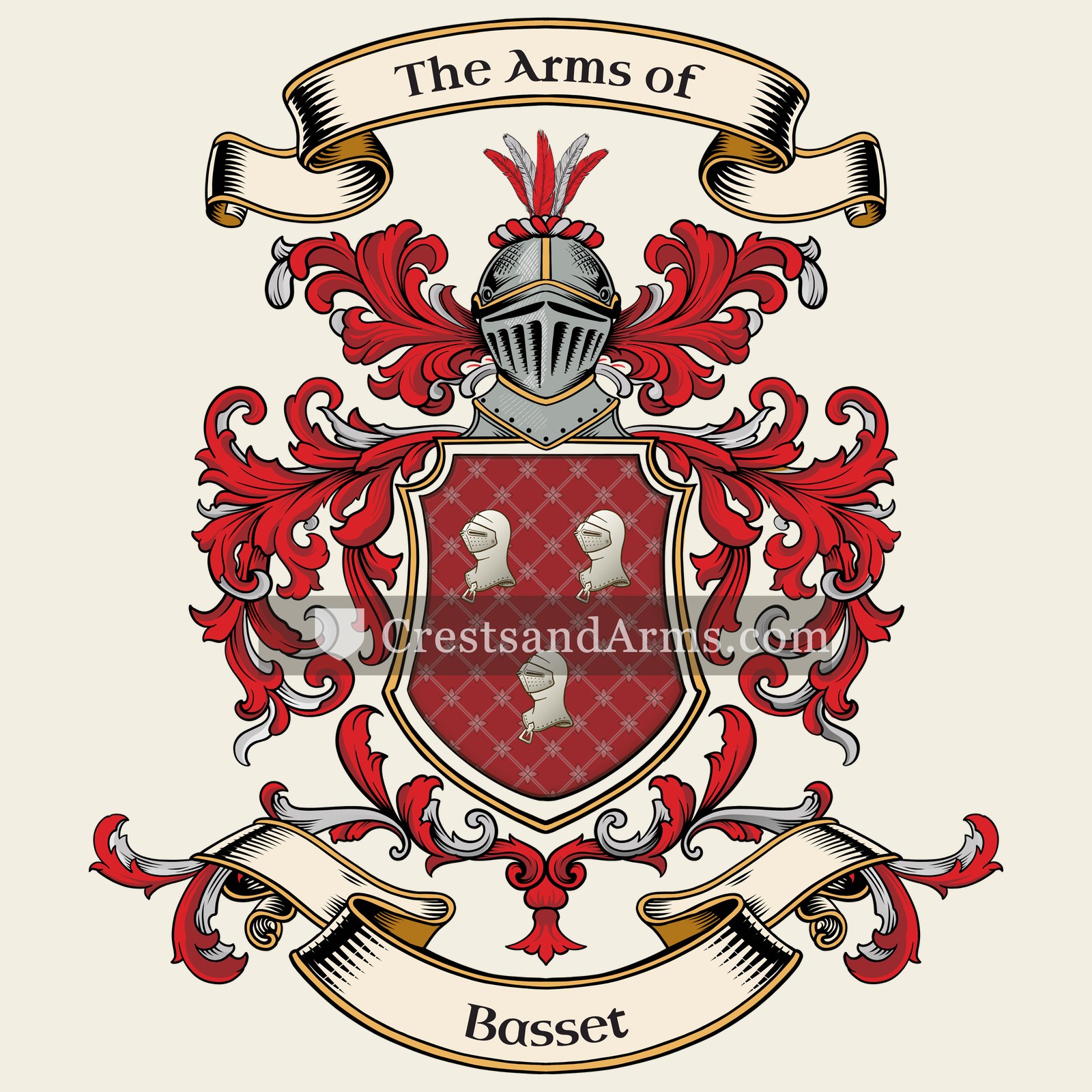
helmetWisdom and security in defence
Colours
Red (Gules)Means: Military strength
Silver (Argent)Means: Peace and sincerity
Historical info
Source
Sir Bernard Burke, The General Armory of England, Scotland, Ireland and Wales, London: Harrison & Sons, 1884
Blazon (the actual original written record)
“Gu. three helmets ar. vizors and garnishing or”
EnglandLondon, c. 1475
Digital archive packCoat of arms PNG, gold border print PDF, vector SVG and the certificate of authenticity. Sent to your email in minutes.
Map of England showing where the Basset arms are recorded
The Basset arms were recorded in London, c. 1475.
This is where the arms were entered in the register. Families often moved to other parts of the country, so the same name can turn up in more than one region.
The body that granted and recorded arms in England in this period.
Edward IV of England
Sovereign of the period
Edward IV of England
1471–1483
Reigning in France when the Basset arms are first recorded.
How Arms Worked in England
English heraldry allowed arms to be shared by all legitimate descendants of the original owner. These symbols were treated as personal property that moved through the generations to all children. While the eldest son kept the original design, other family members could use the same shield without needing to change it or register their own unique versions.
Granting authority
The College of Arms in London has regulated the use of coats of arms throughout England and Wales since 1484.
How they got arms
Families typically obtained their coats of arms through a formal grant from the Crown or by proving their ancient right to them.
Where arms were recorded
All official coats of arms are recorded in the registers kept at the College of Arms, which date back to the fifteenth century.
The family's standing
Recorded among the armigerous families of England.
Origin & History of the Basset Family in England
The Basset name arrived in England following the Norman Conquest of 1066. It is derived from the Old French word "basset," which translates to "low" or "short." Early members of the family quickly rose to positions of significant power and influence within the royal administration. They served as prominent judges and high-ranking officials for the English crown during the twelfth century. By the time the family was firmly established in London by 1475, they had transitioned from their origins as Norman landowners into a well-connected part of the urban merchant and professional class. Their presence in the capital during the late fifteenth century reflects the broader movement of established families toward the growing economic and political center of the nation.
Basset Meaning & Related Branches
Root word
bassus
Latin term meaning low, thick, or short in stature.
This name
BassetA nickname for a person of short or low physical stature.
also spelled
Baset
Bassetts
Bassit
Related arms
Bosfortsimilar arms
Büttnersimilar arms
Kabisch de Lindenthalsimilar arms
Basséevariant spelling
Documented Sources
J. B. Rietstap, Armorial Général, Gouda: G. B. van Goor Zonen, 1884–87
Archives départementales du Cher, Registres paroissiaux et d'état civil, 1663
Moréri, Louis, Le Grand Dictionnaire historique, ou le mélange curieux de l'histoire sacrée et profane, 1759
Dauzat, Albert, Dictionnaire étymologique des noms et prénoms de France, 1951
Digital archive packCoat of arms PNG, gold border print PDF, vector SVG and the certificate of authenticity. Sent to your email in minutes.


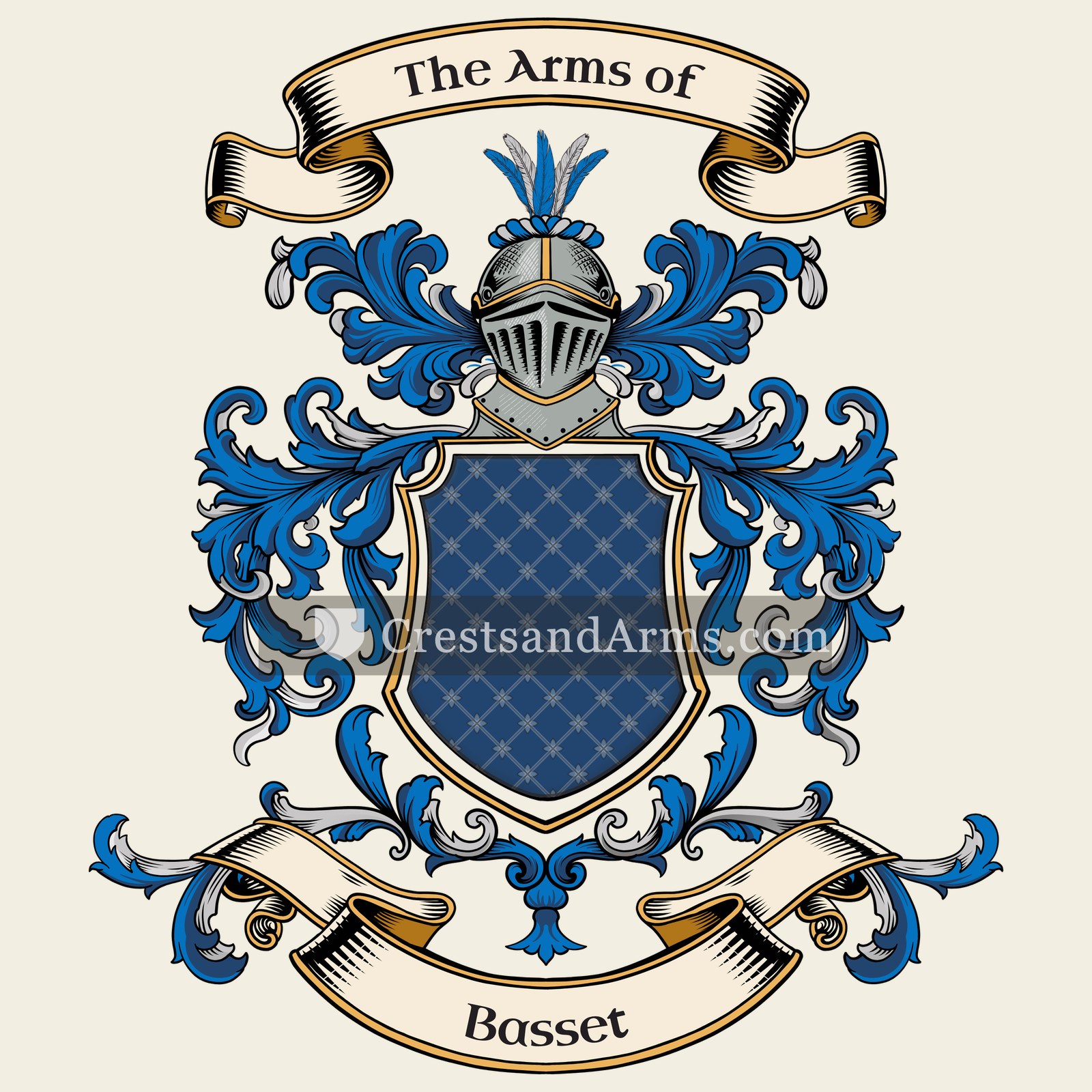


 bendDefence, and the scarf of a commander
 eagleNobility, strength and a keen mind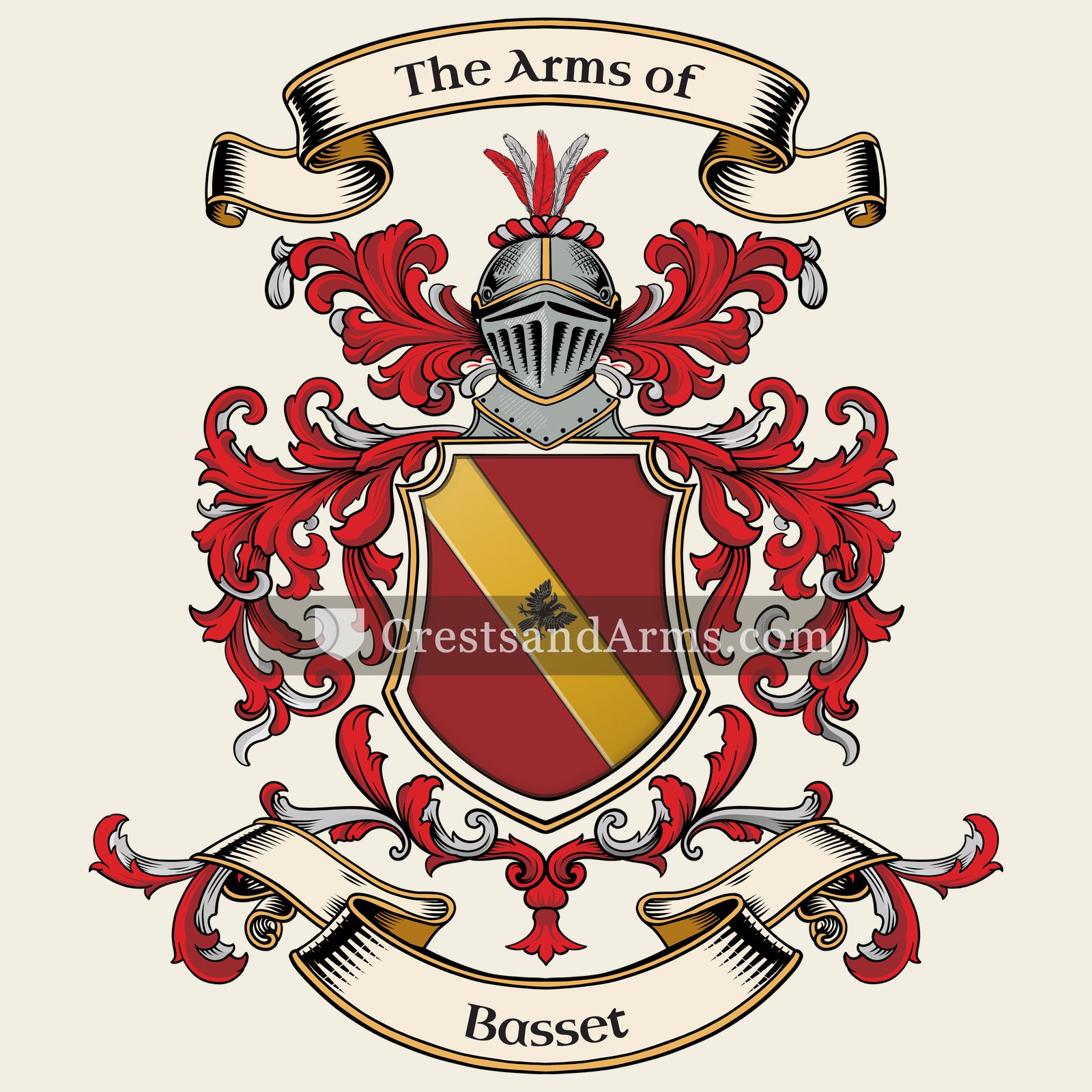


 helmetWisdom and security in defence