Map of France showing where the Baudouin arms are recorded
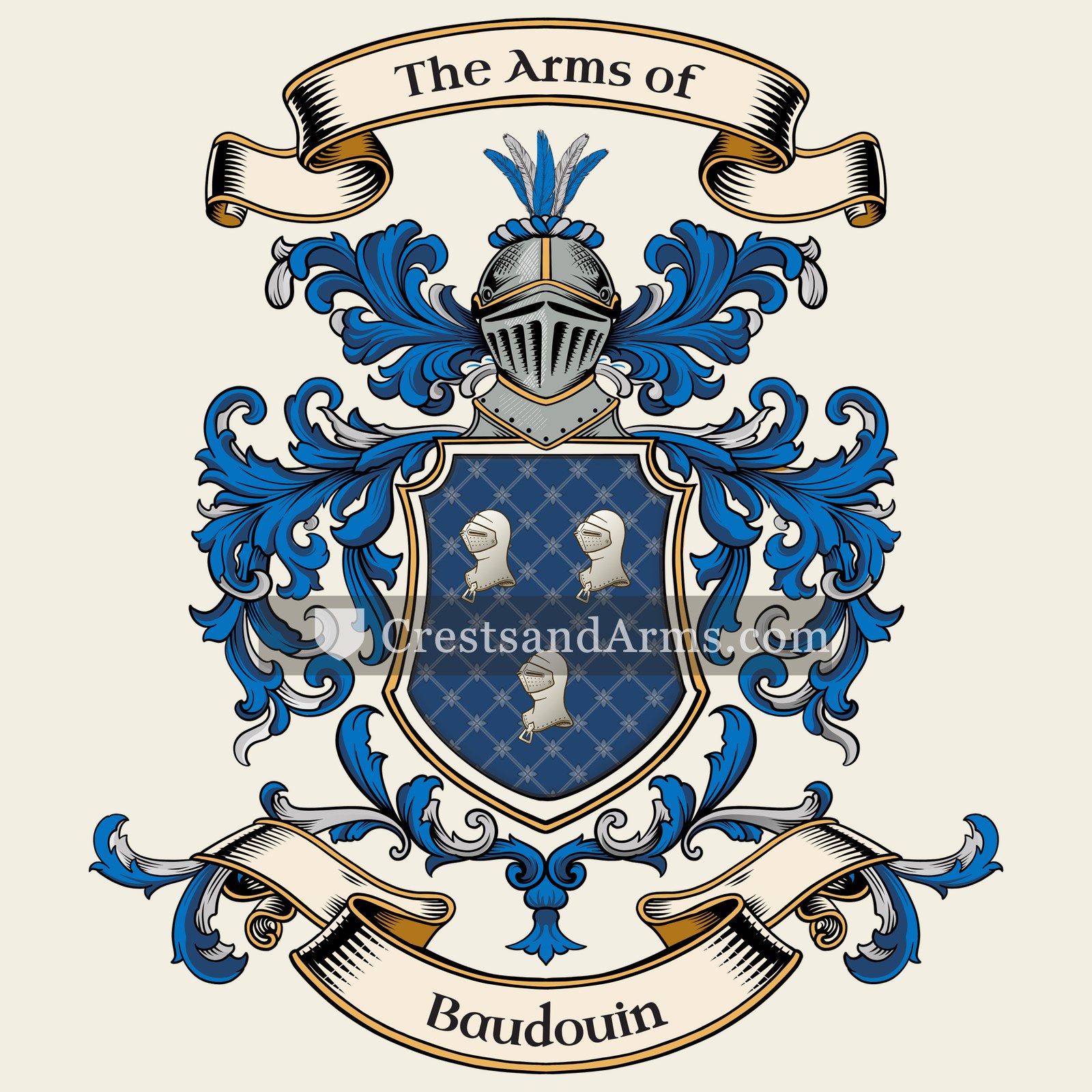
The Baudouin arms were recorded in Lorraine, c. 1489.
Lorraine sat on the border between France and the German lands, and border country bred soldiers. Families here held small estates and served in arms, and a fighting man was exactly the sort who carried a shield of his own.
This is where the arms were entered in the register. Families often moved to other parts of the country, so the same name can turn up in more than one region.
The body that granted and recorded arms in France in this period.
Charles VIII of France
Sovereign of the period
Charles VIII of France
1483–1498
Reigning in France when the Baudouin arms are first recorded.
How Arms Worked in France
In France, a coat of arms was a mark of honor that passed down through the male line to all legitimate descendants. Families often used the same shield without changes to show their shared heritage. If a branch wanted to stand out, they could add a small mark to their shield to show their specific place in the family tree.
Granting authority
The Juge d'armes de France acted as the official authority that regulated and verified coats of arms across the country.
How they got arms
Families typically inherited their arms from ancestors, though they could also receive them through royal grants or by proving their noble status.
Where arms were recorded
Coats of arms were officially recorded in the Armorial Général de France, which began its main collection in the year 1696.
The family's standing
Recorded among the armigerous families of Lorraine.
Origin & History of the Baudouin Family in France
The family name Baudouin traces its roots back to the Germanic name Baldwin, which translates to brave friend. By the late fifteenth century, the family had established a notable presence in the Lorraine region of France. Records from 1489 confirm that members of the family were active in this area during a time when the Duchy of Lorraine was a significant political power in Europe. Because Lorraine served as a crossroads between French and German cultures, the family name evolved alongside the shifting borders and languages of the region. Early ancestors were often involved in local administration or land management, which allowed the family to maintain a stable social standing across several generations. This geographic placement in the heart of Europe meant that the Baudouin name became deeply connected to the history of the borderlands between the Holy Roman Empire and the Kingdom of France.
Baudouin Meaning & Related Branches
Root word
Baldwin
Derived from Germanic elements meaning bold or brave friend.
This name
BaudouinA French surname originating from the Germanic given name meaning brave friend.
also spelled
Baudoin
Baudouyn
Bodan
Bodeen
Baldwin
Related arms
Georgetsame arms
van Baerlandsame arms
Heerdegen dit Gebhardsimilar arms
Baudoinvariant spelling
Documented Sources
J. B. Rietstap, Armorial Général, Gouda: G. B. van Goor Zonen, 1884–87
Bouteiller, Ernest de. Dictionnaire topographique de l'ancien département de la Moselle. 1874
Digital archive packCoat of arms PNG, gold border print PDF, vector SVG and the certificate of authenticity. Sent to your email in minutes.


 helmetWisdom and security in defence
 helmetWisdom and security in defence