Map of Germany showing where the Bauer arms are recorded
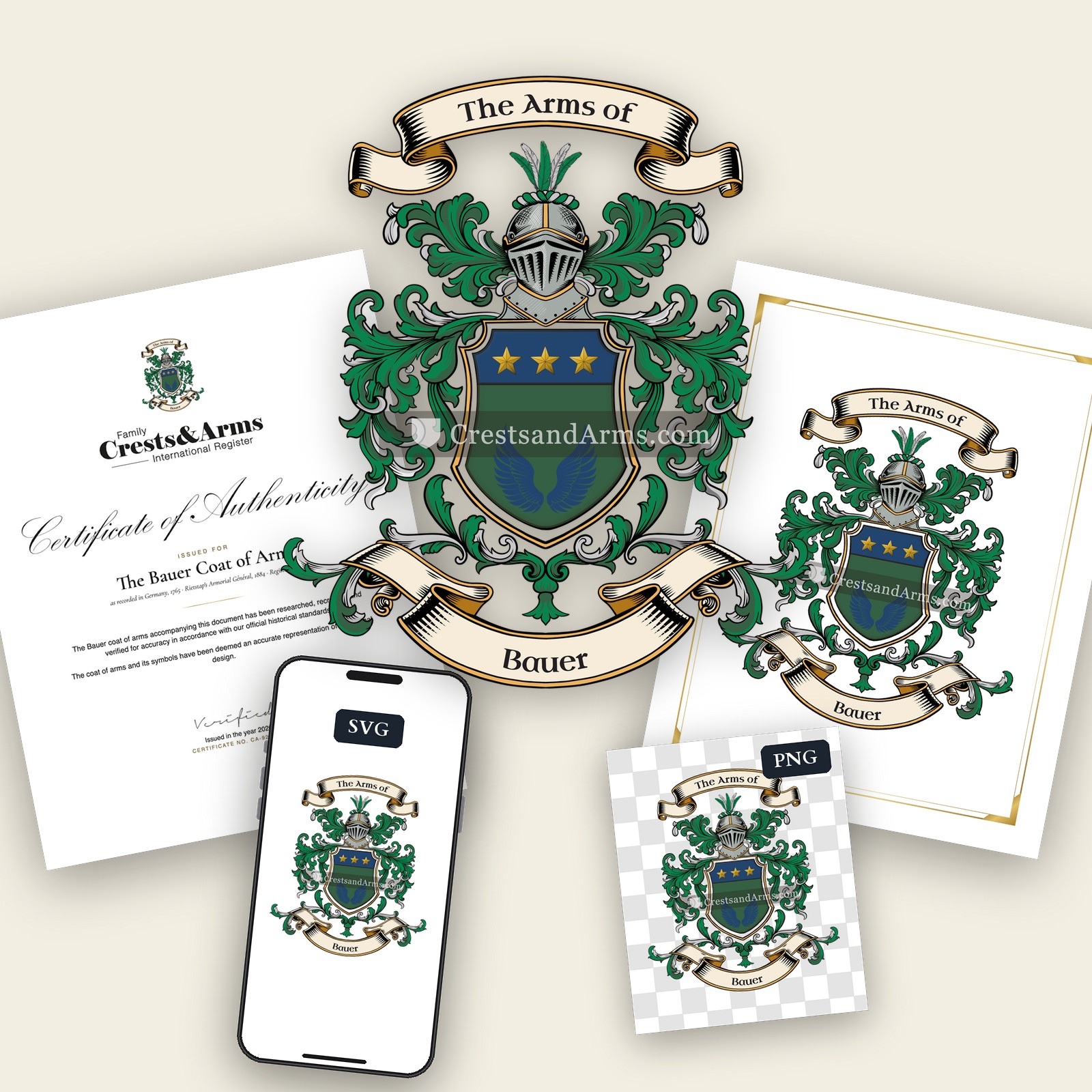
The Bauer arms were recorded in Francfort s, c. 1765.
This is where the arms were entered in the register. Families often moved to other parts of the country, so the same name can turn up in more than one region.
The body that granted and recorded arms in Germany in this period.
Francis I, Holy Roman Emperor
Sovereign of the period
Francis I, Holy Roman Emperor
1745–1765
Reigning in Germany when the Bauer arms are first recorded.
How Arms Worked in Germany
In the Holy Roman Empire, coats of arms were often granted to individuals by the Emperor or his representatives. These arms were then passed down through the generations to all legitimate descendants of the original holder. Younger branches of a family usually kept the same shield design without needing to change it, as the arms belonged to the entire lineage.
Granting authority
The Holy Roman Emperor held the sole power to grant new coats of arms throughout his vast imperial territories.
How they got arms
Families typically obtained their coats of arms through a formal imperial grant or by proving their noble status to the authorities.
Where arms were recorded
These grants were officially recorded in the Imperial Chancery registers, which began keeping formal records of such honors during the Middle Ages.
The family's standing
Recorded among the armigerous families of Germany.
Origin & History of the Bauer Family in Germany
The surname Bauer is a classic example of an occupational name that emerged during the Middle Ages in German-speaking regions. Derived from the Middle High German word *gebure*, the name originally identified a person who worked the land or lived in a rural community. As surnames became necessary for tax records and legal identification, families often adopted this term to describe their status as farmers or free peasants. By the time your ancestors were documented in Frankfurt in 1765, the name had been established for centuries as a common identifier across central Europe. During this era, Frankfurt served as a major center for trade and record-keeping, which helped solidify the family identity within the city’s growing urban population. The transition from a simple description of labor to a formal family name reflects the broader social changes in Germany as people moved from small villages into more structured city environments.
Meaning of the Bauer family crest colors & symbols
Symbols on this shield
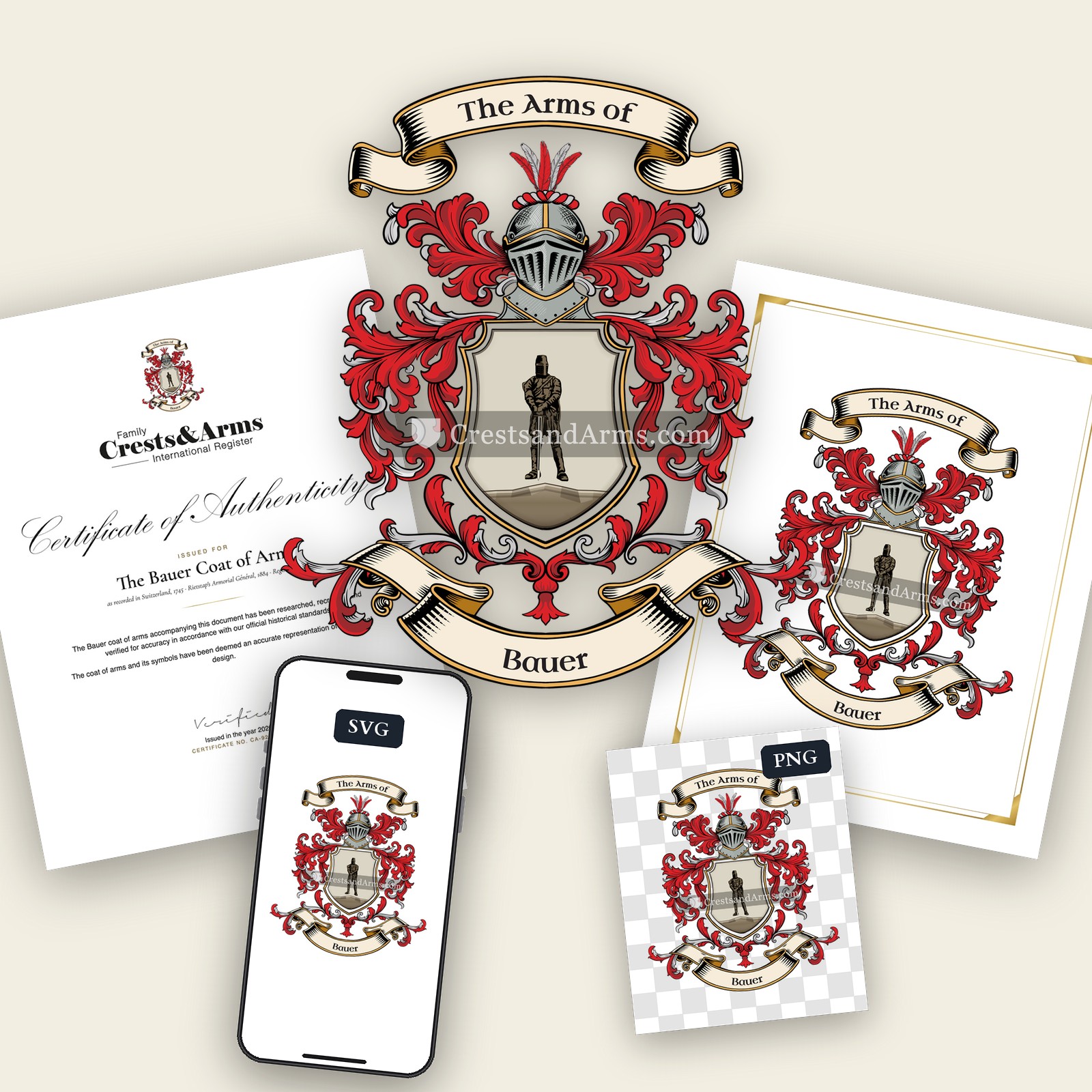
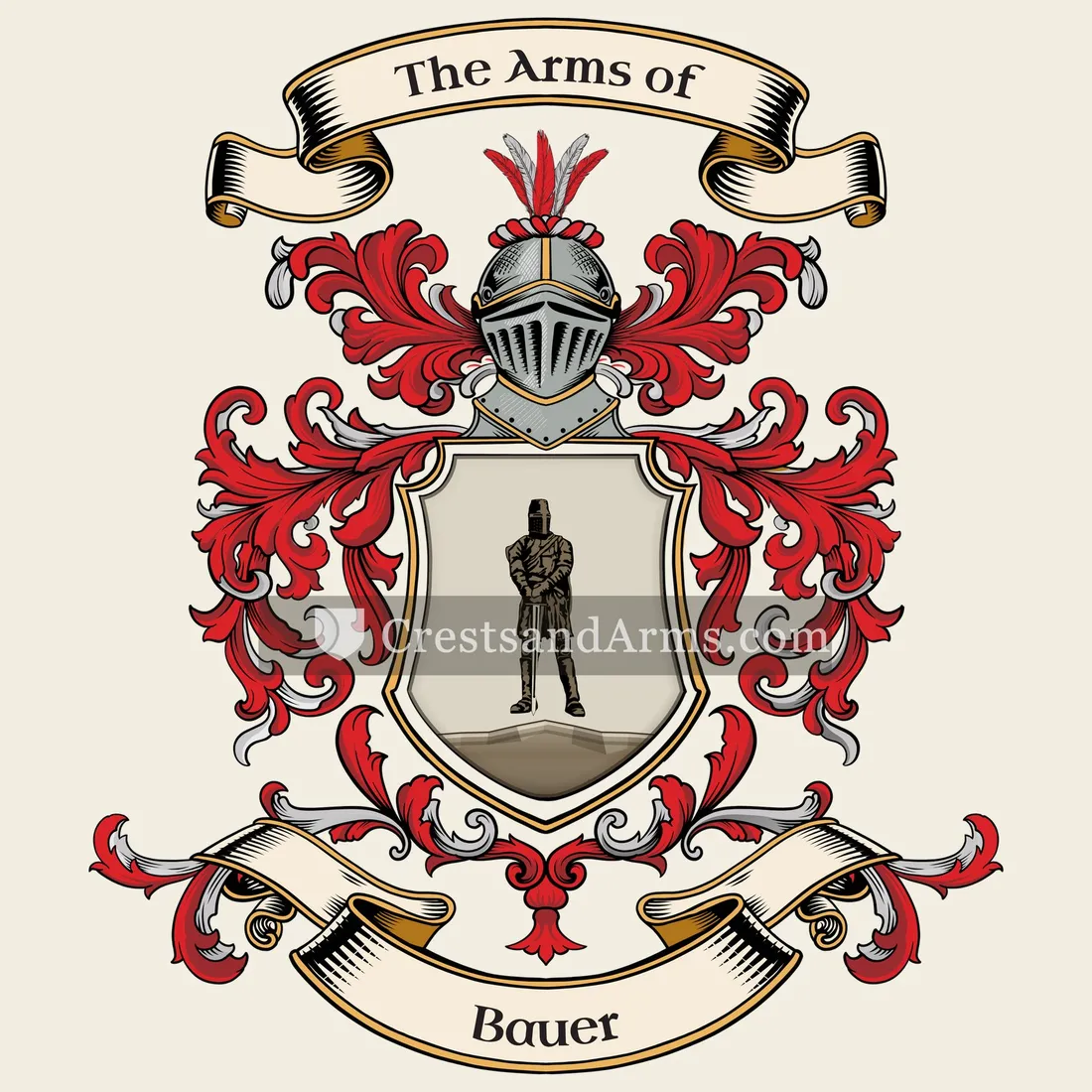
mountThe ground held, and steadfastness upon it
knightChivalry and service in arms
Colours
Silver (Argent)Means: Peace and sincerity
Historical info
Source
J. B. Rietstap, Armorial Général, Gouda: G. B. van Goor Zonen, 1884–87
Blazon (the actual original written record)
“D'arg. à un homme iss., hab. d'une tunique brune, au rabat de gu., ceint et rebr. du même, coiffé d'un bonnet pointu de gu. et mouv. d'un tertre du même, les bras levés, tenant de chaque main une faucille de sa., le tranchant du sec. vers sen. Cq. cour. C.: l'homme (moins le tertre). L. d'arg. et de gu.”
SwitzerlandFribourg-en-Breisgau, c. 1745
Digital archive packCoat of arms PNG, gold border print PDF, vector SVG and the certificate of authenticity. Sent to your email in minutes.
Map of Switzerland showing where the Bauer arms are recorded
The Bauer arms were recorded in Fribourg-en-Breisgau, c. 1745.
This is where the arms were entered in the register. Families often moved to other parts of the country, so the same name can turn up in more than one region.
The body that granted and recorded arms in Switzerland in this period.
How Arms Worked in Switzerland
In Switzerland, coats of arms were not restricted to the nobility and were often adopted by common citizens and families. These symbols were passed down through generations to show family identity. When branches of a family grew, they often changed small details of the design to distinguish their own line from the original group.
Granting authority
Cantonal and civic authorities managed the use of coats of arms within their specific regions and local jurisdictions.
How they got arms
Families typically assumed their own coats of arms based on local custom rather than receiving them from a central monarch.
Where arms were recorded
Arms were recorded in various cantonal and civic registers starting from the fourteenth century throughout the Swiss region.
The family's standing
Recorded among the armigerous families of Switzerland.
Origin & History of the Bauer Family in Switzerland
The surname Bauer originates from the Middle High German word *bur*, which translates to a farmer or a dweller. In the context of Swiss and neighboring regions, this name was frequently used as a descriptive occupational title for individuals who worked the land or managed small agricultural holdings. By the mid-eighteenth century, families bearing this name were well-established across the border regions near the Rhine, including the city of Fribourg-en-Breisgau. As these families moved through the Swiss cantons and surrounding territories, they often integrated into local agrarian communities where their name served as a clear identifier of their trade. This professional designation eventually transitioned into a permanent hereditary surname as record-keeping practices became more standardized in parish and municipal registers throughout the region.
Meaning of the Bauer family crest colors & symbols
Symbols on this shield
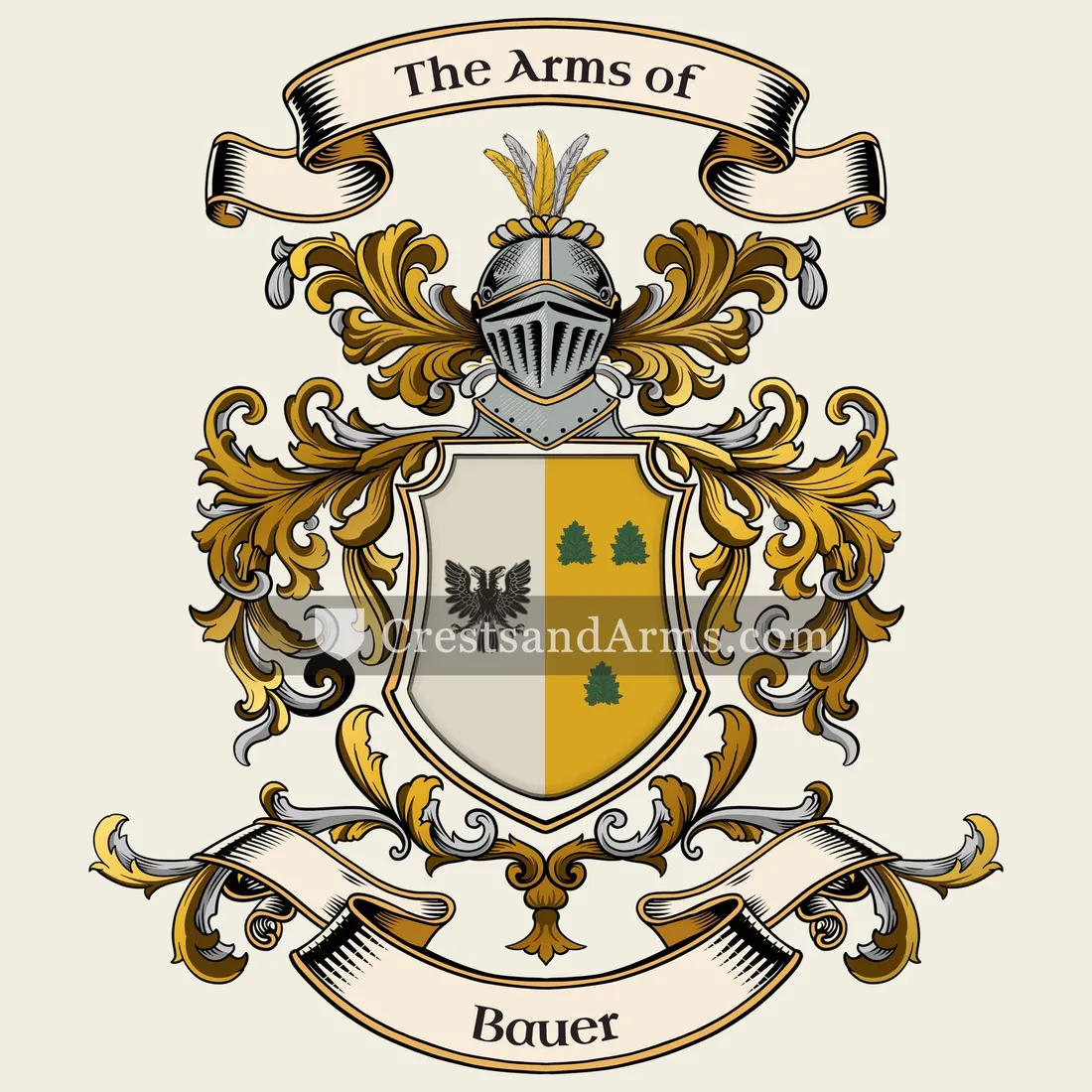
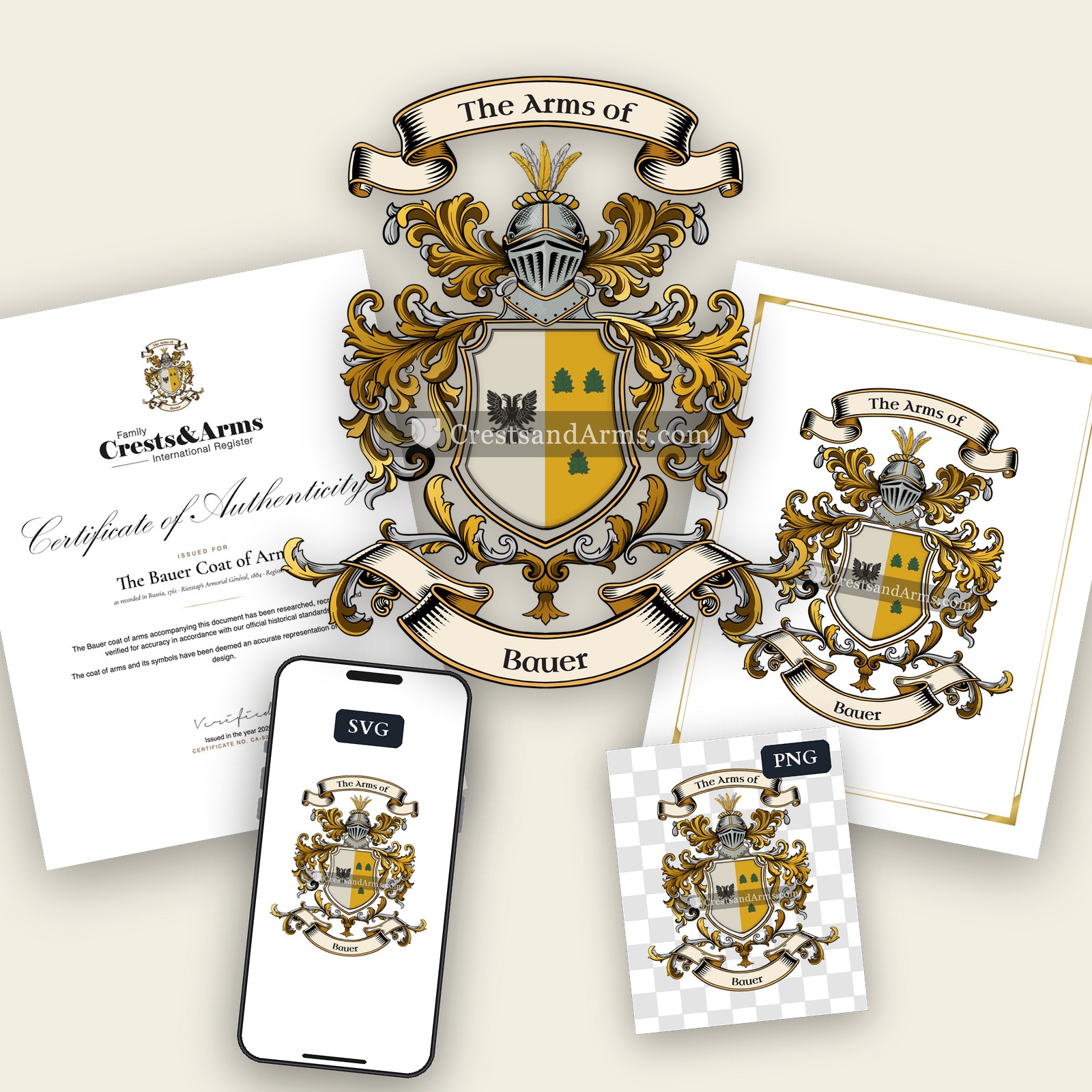
eagleNobility, strength and a keen mind
leafHappiness and abundance
Colours
Silver (Argent)Means: Peace and sincerity
Gold (Or)Means: Generosity
Black (Sable)Means: Constancy
Green (Vert)Means: Hope
Historical info
Source
J. B. Rietstap, Armorial Général, Gouda: G. B. van Goor Zonen, 1884–87
Blazon (the actual original written record)
“Parti: au 1 d'arg. à la demi-aigle de Prusse, mouv. du parti; au 2 d'or à trois feuilles de peuplier mal-ordonnées de sin., les tiges en bas. Cq. cour. C.: un cheval iss. d'arg., entre un vol de sa. L.: d'arg. et de sa.”
Russiac. 1761
Digital archive packCoat of arms PNG, gold border print PDF, vector SVG and the certificate of authenticity. Sent to your email in minutes.
Map of Russia showing where the Bauer arms are recorded
The Bauer arms were recorded in Russia, c. 1761.
Arms such as these were typically recorded in Moscow.
Moscow held the Russian court, and rank there came from service rather than land. Families who served the Tsar were entered in the registers of nobility, and that entry is where their arms are recorded.
This is where the arms were entered in the register. Families often moved to other parts of the country, so the same name can turn up in more than one region.
The body that granted and recorded arms in Russia in this period.
Elizabeth I of Russia
Sovereign of the period
Elizabeth I of Russia
1741–1762
Reigning in Germany when the Bauer arms are first recorded.
How Arms Worked in Russia
Russian heraldry was strictly tied to the nobility and the state service system. Families proved their ancient status or earned new rank to receive an official grant from the Tsar. These symbols were then inherited by all legitimate children of the noble line. If a family lacked proof of their status, they were often excluded from the official records entirely.
Granting authority
The Herald Master's Office acted as the central state body that strictly regulated and verified all noble heraldic symbols.
How they got arms
Families typically received their arms through a formal state grant or by proving their noble status to the government authorities.
Where arms were recorded
All approved coats of arms were officially recorded in the General Armorial of the Noble Families of the Russian Empire starting in 1797.
The family's standing
Recorded among the armigerous families of Russia.
Origin & History of the Bauer Family in Russia
The surname Bauer is of German origin and translates to the word farmer. While the name began in German-speaking lands, it spread across Europe as people moved to find new opportunities. By 1761, records confirm that members of the Bauer family were living in Moscow. During this period, Russia actively invited skilled workers and professionals from Western Europe to settle in its cities. These immigrants often served as craftsmen, doctors, or teachers who helped modernize the Russian Empire. The Bauers who settled in Moscow likely integrated into this growing community of foreign experts. Over time, they adopted the local customs and language while maintaining their family identity. This movement of people helped bridge the cultural gap between Russia and the rest of Europe during the eighteenth century.
Bauer Meaning & Related Branches
Root word
bur
Old High German term referring to a dwelling or small house.
This name
BauerA person who works on a farm or a peasant farmer.
also spelled
Baur
Bower
Power
Related arms
Brassacsimilar arms
Lichtenausimilar arms
Röhlsimilar arms
Baurvariant spelling
Documented Sources
J. B. Rietstap, Armorial Général, Gouda: G. B. van Goor Zonen, 1884–87
Bahlow, Hans, Deutsches Namenlexikon: Familien- und Vornamen nach Ursprung und Sinn erklärt, 1967
Heintze, Albert, Die deutschen Familien-Namen: geschichtlich, geographisch, sprachlich, 1903
Institut für Stadtgeschichte Frankfurt am Main, Bürgerbücher der Stadt Frankfurt am Main
Digital archive packCoat of arms PNG, gold border print PDF, vector SVG and the certificate of authenticity. Sent to your email in minutes.


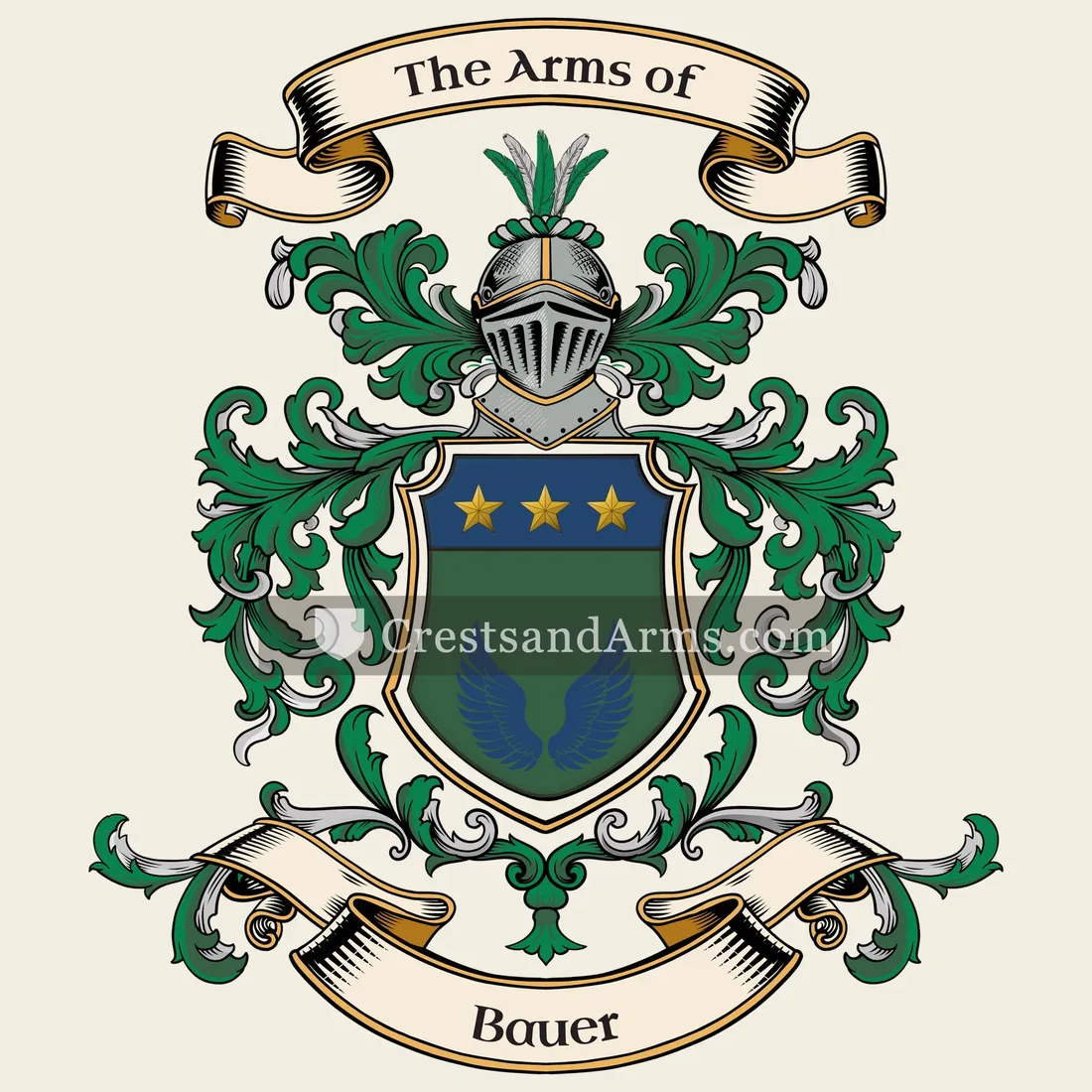
 chiefAuthority, wisdom and dominion
 vol / wingsSwiftness and protection
 mulletThe third son, and a divine quality from above
 chiefAuthority, wisdom and dominion
 vol / wingsSwiftness and protection
 mulletThe third son, and a divine quality from above


 mountThe ground held, and steadfastness upon it
 knightChivalry and service in arms

 eagleNobility, strength and a keen mind
 leafHappiness and abundance