A record of documented arms, meaning and origin, researched for the Baumgarten family lines. Documented in 3 countries.
Reg. 6883 · German, A–C
Coat of Arms & Family Crest Details
Symbols on this shield
mountThe ground held, and steadfastness upon it
lionCourage, strength and royalty
roseThe seventh son, and beauty with grace
Colours
Blue (Azure)Means: Loyalty and truth
Green (Vert)Means: Hope
Gold (Or)Means: Generosity
Silver (Argent)Means: Peace and sincerity
Historical info
Source
J. B. Rietstap, Armorial Général, Gouda: G. B. van Goor Zonen, 1884–87
Blazon (the actual original written record)
“D'azur au lion d'or, soutenu d'un tertre de sin. et tenant une corne d'abondance d'or en pal, reposant sur le tertre; à trois roses tigées, iss. de la corne, celle du milieu d'arg., les deux autres de gu. Cq. cour. C.:”
BavariaBavaria, c. 1675
Digital archive packCoat of arms PNG, gold border print PDF, vector SVG and the certificate of authenticity. Sent to your email in minutes.
Map of Germany showing where the Baumgarten arms are recorded
The Baumgarten arms were recorded in Bavaria, c. 1675.
Bavaria was a country of old landed families and walled market towns. Estates passed down the same line for centuries, and both the landowners and the leading townsmen kept arms, which is why so many Bavarian names sit in the registers.
This is where the arms were entered in the register. Families often moved to other parts of the country, so the same name can turn up in more than one region.
The body that granted and recorded arms in Germany in this period.
Leopold I, Holy Roman Emperor
Sovereign of the period
Leopold I, Holy Roman Emperor
1658–1705
Reigning in Germany when the Baumgarten arms are first recorded.
How Arms Worked in Germany
In the Holy Roman Empire, coats of arms were often granted to individuals by the Emperor or his representatives. These arms were then passed down through the generations to all legitimate descendants of the original holder. Younger branches of a family usually kept the same shield design without needing to change it, as the arms belonged to the entire lineage.
Granting authority
The Holy Roman Emperor held the sole power to grant new coats of arms throughout his vast imperial territories.
How they got arms
Families typically obtained their coats of arms through a formal imperial grant or by proving their noble status to the authorities.
Where arms were recorded
These grants were officially recorded in the Imperial Chancery registers, which began keeping formal records of such honors during the Middle Ages.
The family's standing
Recorded among the armigerous families of Bavaria.
Origin & History of the Baumgarten Family in Germany
The surname Baumgarten is a classic example of a topographic name, which means it was originally given to people based on the landscape where they lived. In German, the word "Baum" means tree and "Garten" means garden or orchard, so the name literally translates to "tree garden." By the time the family was firmly established in Bavaria in 1675, this name likely identified individuals who lived near or worked in a cultivated orchard or a fruit tree nursery. During the seventeenth century, such names were common in rural German regions as families became more settled and needed ways to distinguish themselves from their neighbors. As the family grew, they became part of the local agricultural fabric of the Bavarian countryside, where the management of orchards was a vital part of the regional economy. This connection to the land suggests that the early Baumgartens were likely farmers or landowners who took their identity from the specific plot of earth they tended for generations.
Coat of Arms & Family Crest Details
Symbols on this shield
chevronProtection, and faithful service completed
Colours
Red (Gules)Means: Military strength
Silver (Argent)Means: Peace and sincerity
Historical info
Source
J. B. Rietstap, Armorial Général, Gouda: G. B. van Goor Zonen, 1884–87
Blazon (the actual original written record)
“De gu. au chev. ployé d'arg. C.: un buste d'homme, hab. aux armes de l'écu, tort. d'arg.”
RussiaEsthonie, c. 1784
Digital archive packCoat of arms PNG, gold border print PDF, vector SVG and the certificate of authenticity. Sent to your email in minutes.
Map of Russia showing where the Baumgarten arms are recorded
The Baumgarten arms were recorded in Esthonie, c. 1784.
Arms such as these were typically recorded in Moscow.
Moscow held the Russian court, and rank there came from service rather than land. Families who served the Tsar were entered in the registers of nobility, and that entry is where their arms are recorded.
This is where the arms were entered in the register. Families often moved to other parts of the country, so the same name can turn up in more than one region.
The body that granted and recorded arms in Russia in this period.
Catherine II of Russia
Sovereign of the period
Catherine II of Russia
1762–1796
Reigning in Germany when the Baumgarten arms are first recorded.
How Arms Worked in Russia
Russian heraldry was strictly tied to the nobility and the state service system. Families proved their ancient status or earned new rank to receive an official grant from the Tsar. These symbols were then inherited by all legitimate children of the noble line. If a family lacked proof of their status, they were often excluded from the official records entirely.
Granting authority
The Herald Master's Office acted as the central state body that strictly regulated and verified all noble heraldic symbols.
How they got arms
Families typically received their arms through a formal state grant or by proving their noble status to the government authorities.
Where arms were recorded
All approved coats of arms were officially recorded in the General Armorial of the Noble Families of the Russian Empire starting in 1797.
The family's standing
Recorded among the armigerous families of Russia.
Origin & History of the Baumgarten Family in Russia
The history of the Baumgarten family in Russia began to take shape during the late eighteenth century as members of the family established a presence in Moscow by 1784. The name itself is of German origin, meaning orchard or tree garden, and it likely arrived in Russia as part of a broader wave of migration involving professionals, scholars, and military officers invited by the Russian state to modernize the empire. By settling in Moscow, the family integrated into the social and administrative fabric of the city during a time of significant cultural growth. They often served in various official capacities, which allowed them to become part of the educated elite who helped bridge the gap between European traditions and Russian society. Over time, the family name became associated with the professional class that navigated the complex bureaucracy of the Russian Empire, marking their transition from newcomers to established residents of the capital.
Coat of Arms & Family Crest Details
Symbols on this shield
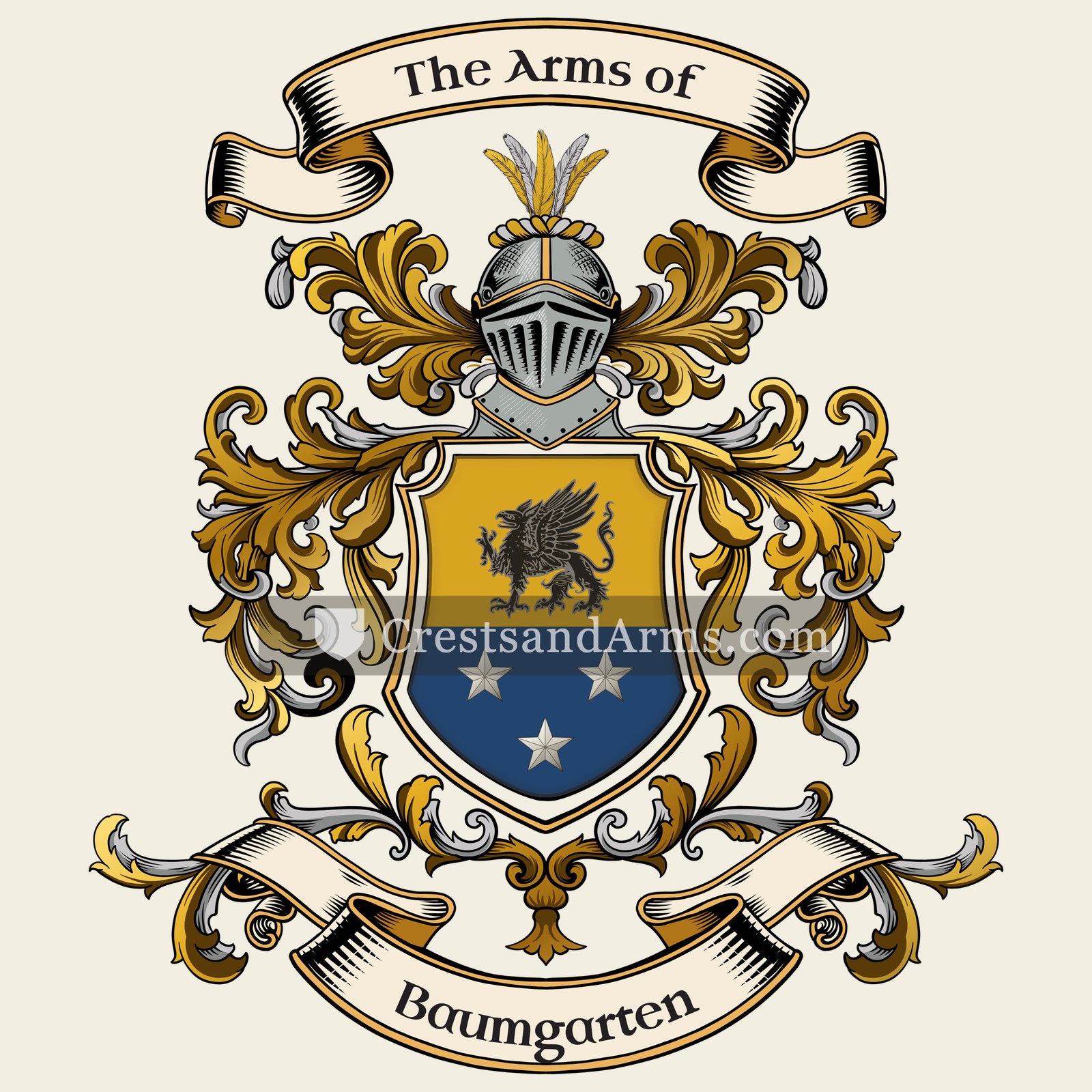
griffinValour and vigilance, guarding great treasure
mulletThe third son, and a divine quality from above
Colours
Gold (Or)Means: Generosity
Blue (Azure)Means: Loyalty and truth
Black (Sable)Means: Constancy
Silver (Argent)Means: Peace and sincerity
Historical info
Source
J. B. Rietstap, Armorial Général, Gouda: G. B. van Goor Zonen, 1884–87
Blazon (the actual original written record)
“Coupé: au 1 d'or au griffon naiss. de sa., mouv. du coupé; au 2 d'azur à trois étoiles d'arg. C.: un arbre de sin., entre deux bannières, d'or et d'azur, celle d'azur ch. d'un croiss. montant d'arg.; lesdites bannières frangées et houppées d'or, attachées à des lances de tournoi du même.”
Finlandc. 1712
Digital archive packCoat of arms PNG, gold border print PDF, vector SVG and the certificate of authenticity. Sent to your email in minutes.
Map of Finland showing where the Baumgarten arms are recorded
The Baumgarten arms were recorded in Finland, c. 1712.
Arms such as these were typically recorded in Uusimaa.
Uusimaa was the Finnish coast facing Sweden, and the part of the country most closely tied to Stockholm. Its landowners and officers served the Swedish crown, and that service is what put their arms on record.
This is where the arms were entered in the register. Families often moved to other parts of the country, so the same name can turn up in more than one region.
The body that granted and recorded arms in Finland in this period.
How Arms Worked in Finland
Nobility in Finland held the exclusive right to register their coats of arms with the House of Nobility. These symbols were tied to the family name and were inherited by all members of the noble house. If a family branch moved or changed status, they kept their original design to maintain their identity within the official records.
Granting authority
The Finnish House of Nobility served as the official body that managed and protected all noble coats of arms.
How they got arms
Families received their arms through formal letters of nobility or by having their existing ancestral symbols confirmed by the House.
Where arms were recorded
All approved coats of arms were officially recorded in the Finnish House of Nobility Armorial starting in 1818.
The family's standing
Recorded among the armigerous families of Finland.
Origin & History of the Baumgarten Family in Finland
The family name Baumgarten first appears in the historical records of Finland in the Uusimaa region during the year 1712. At that time, the name was associated with individuals who were integrated into the administrative and military structures of the Swedish realm, which then included Finland. The name itself is of German origin and translates to tree garden or orchard, suggesting that the earliest ancestors may have been associated with land management or horticulture before moving north. As these early family members settled in the coastal areas of Uusimaa, they became part of the local bureaucracy and professional classes that helped shape the region during the eighteenth century. Their presence in the area reflects the broader movement of people across the Baltic Sea who brought new surnames and professional skills to Finnish society during a period of significant political change.
Baumgarten Meaning & Related Branches
Root word
Baum and Garten
Tree and garden or orchard
This name
BaumgartenRefers to a person who lived near or worked in a tree orchard.
also spelled
Baumgartenn
Baumgartene
Bowmgarten
Related arms
Dietterichsimilar arms
Effinger de Zürchsimilar arms
Harsanysimilar arms
Aheimrecorded with Baumgarten, same area
Documented Sources
J. B. Rietstap, Armorial Général, Gouda: G. B. van Goor Zonen, 1884–87
Bahlow, Hans, Deutsches Namenlexikon: Familien- und Vornamen nach Ursprung und Sinn erklärt, 1967
Heintze, Albert, Die deutschen Familien-Namen: geschichtlich, geographisch, sprachlich, 1903


 mountThe ground held, and steadfastness upon it
 lionCourage, strength and royalty
 roseThe seventh son, and beauty with grace
 mountThe ground held, and steadfastness upon it
 lionCourage, strength and royalty
 roseThe seventh son, and beauty with grace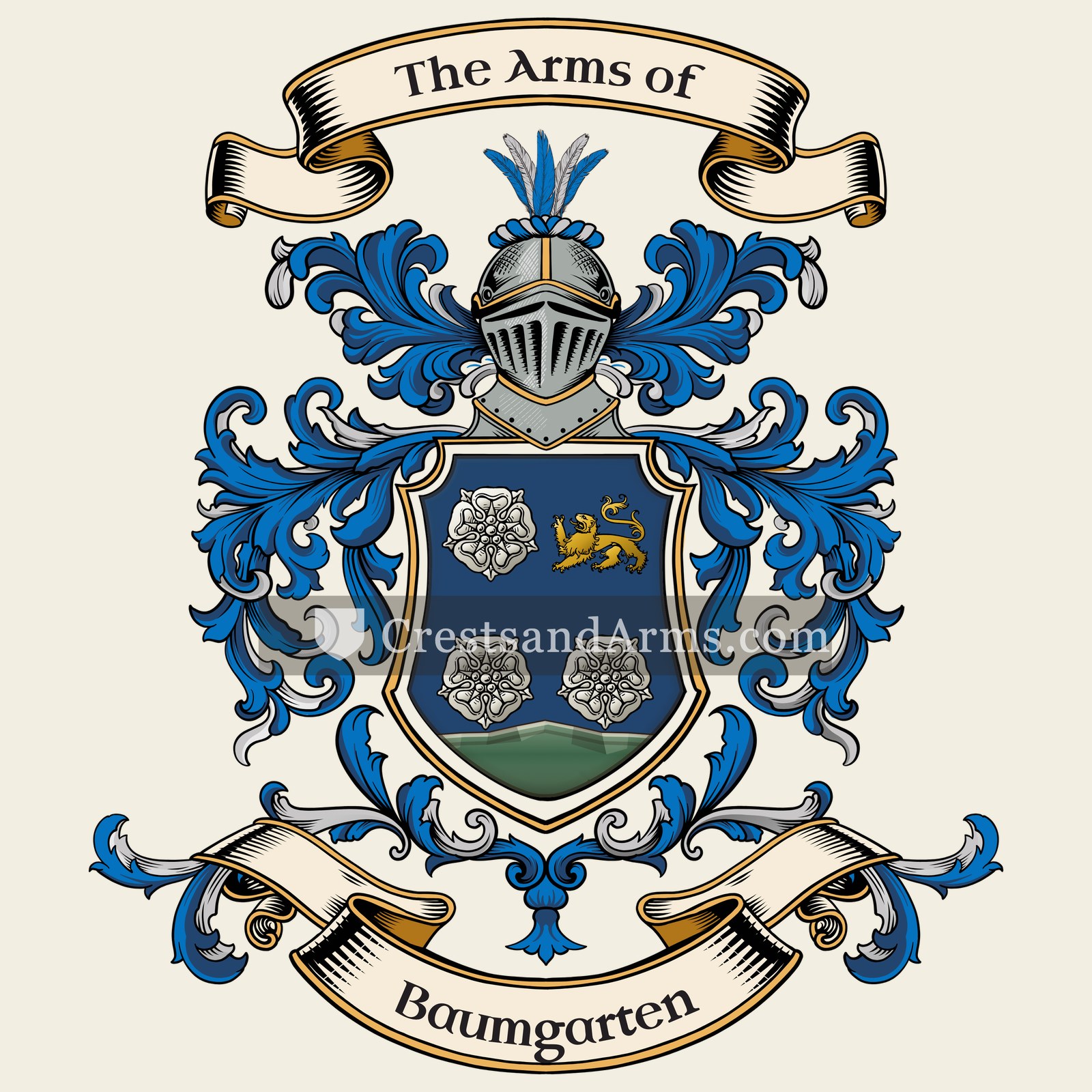


 chevronProtection, and faithful service completed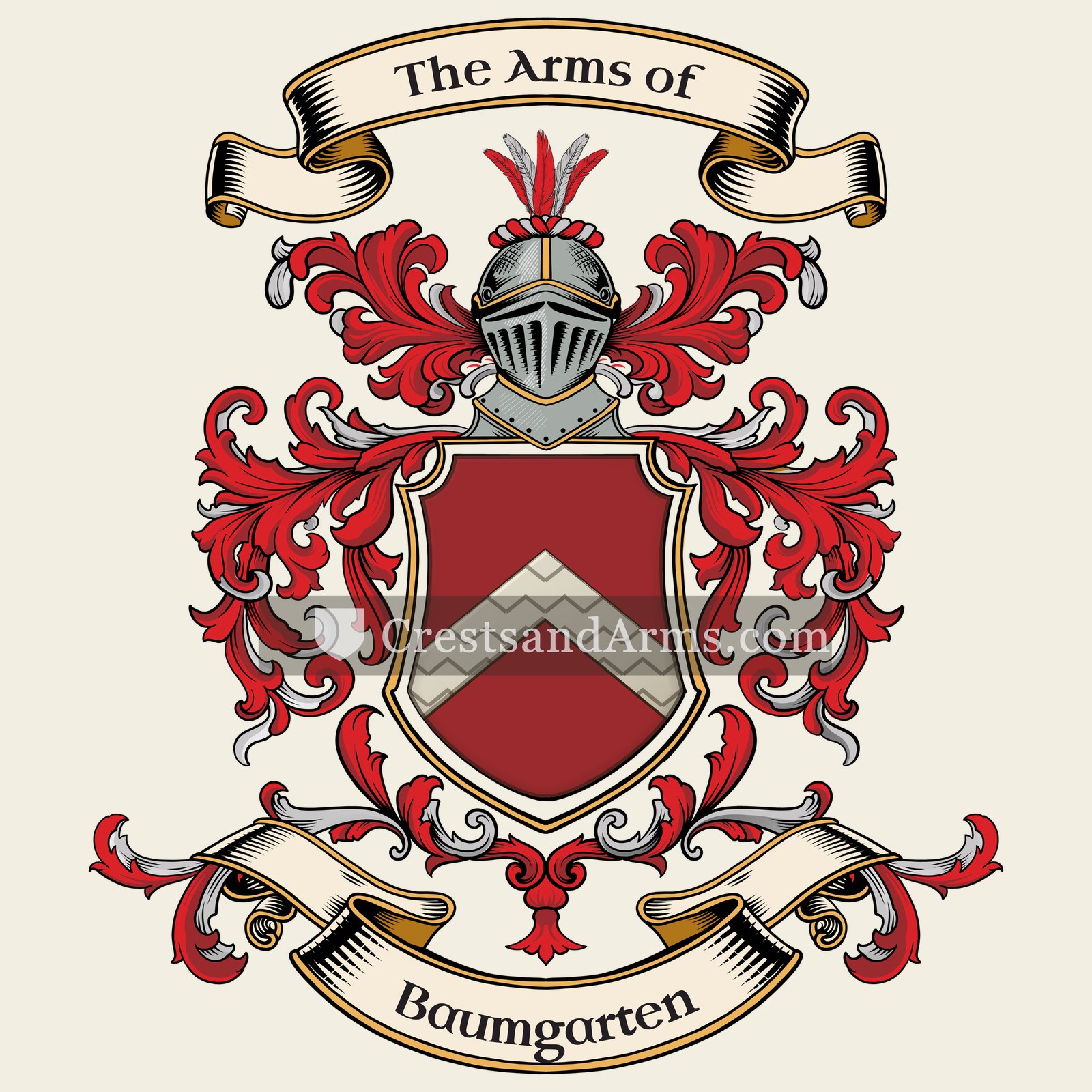


 griffinValour and vigilance, guarding great treasure
 mulletThe third son, and a divine quality from above