A record of documented arms, meaning and origin, researched for the Baumgartner family lines. Documented in 2 countries.
Reg. 8332 · Swiss, A–C
Coat of Arms & Family Crest Details
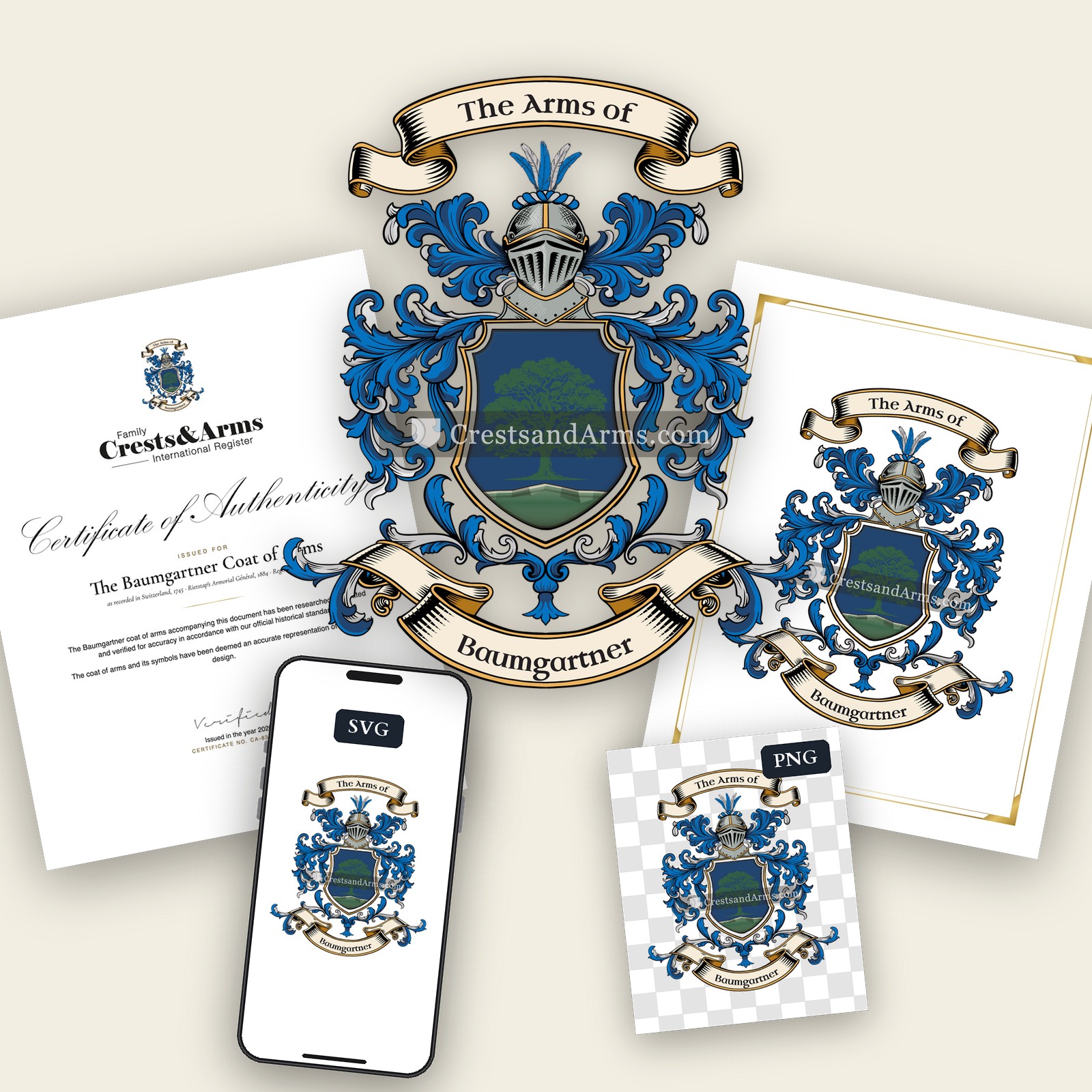
Symbols on this shield
mountThe ground held, and steadfastness upon it
treeLife, endurance and deep roots
Colours
Blue (Azure)Means: Loyalty and truth
Green (Vert)Means: Hope
Historical info
Source
J. B. Rietstap, Armorial Général, Gouda: G. B. van Goor Zonen, 1884–87
Blazon (the actual original written record)
“D'azur à un arbre de sin., mouv. d'un enclos de pieux d'or, réunis par des traverses; le tout soutenu d'une terrasse de sin. C.: un sauvage iss. de carn., ceint et cour. de lierre, posé de profil, tenant un pin arr. au nat. sur son épaule dextre. L. d'or et d'azur.”
SwitzerlandBâle, c. 1745
Digital archive packCoat of arms PNG, gold border print PDF, vector SVG and the certificate of authenticity. Sent to your email in minutes.
Map of Switzerland showing where the Baumgartner arms are recorded
The Baumgartner arms were recorded in Bâle, c. 1745.
This is where the arms were entered in the register. Families often moved to other parts of the country, so the same name can turn up in more than one region.
The body that granted and recorded arms in Switzerland in this period.
How Arms Worked in Switzerland
In Switzerland, coats of arms were not restricted to the nobility and were often adopted by common citizens and families. These symbols were passed down through generations to show family identity. When branches of a family grew, they often changed small details of the design to distinguish their own line from the original group.
Granting authority
Cantonal and civic authorities managed the use of coats of arms within their specific regions and local jurisdictions.
How they got arms
Families typically assumed their own coats of arms based on local custom rather than receiving them from a central monarch.
Where arms were recorded
Arms were recorded in various cantonal and civic registers starting from the fourteenth century throughout the Swiss region.
The family's standing
Recorded among the armigerous families of Switzerland.
Origin & History of the Baumgartner Family in Switzerland
The surname Baumgartner is a classic example of a topographic name, derived from the German words "Baum," meaning tree, and "Garten," meaning garden. In the context of medieval Switzerland, this name was typically given to individuals who worked as orchard keepers or who lived near a prominent garden or fruit grove. By the time members of the family were documented in Bâle in 1745, the name had already been established for centuries across various Swiss cantons. These early ancestors were often part of the hardworking middle class, serving as skilled tradespeople or farmers who were deeply integrated into the local guild systems of their cities. Because the name describes a specific profession or location, it emerged independently in several different regions rather than originating from a single family line. This widespread usage reflects the importance of agriculture and land management in the daily lives of early Swiss citizens.
Coat of Arms & Family Crest Details
Symbols on this shield
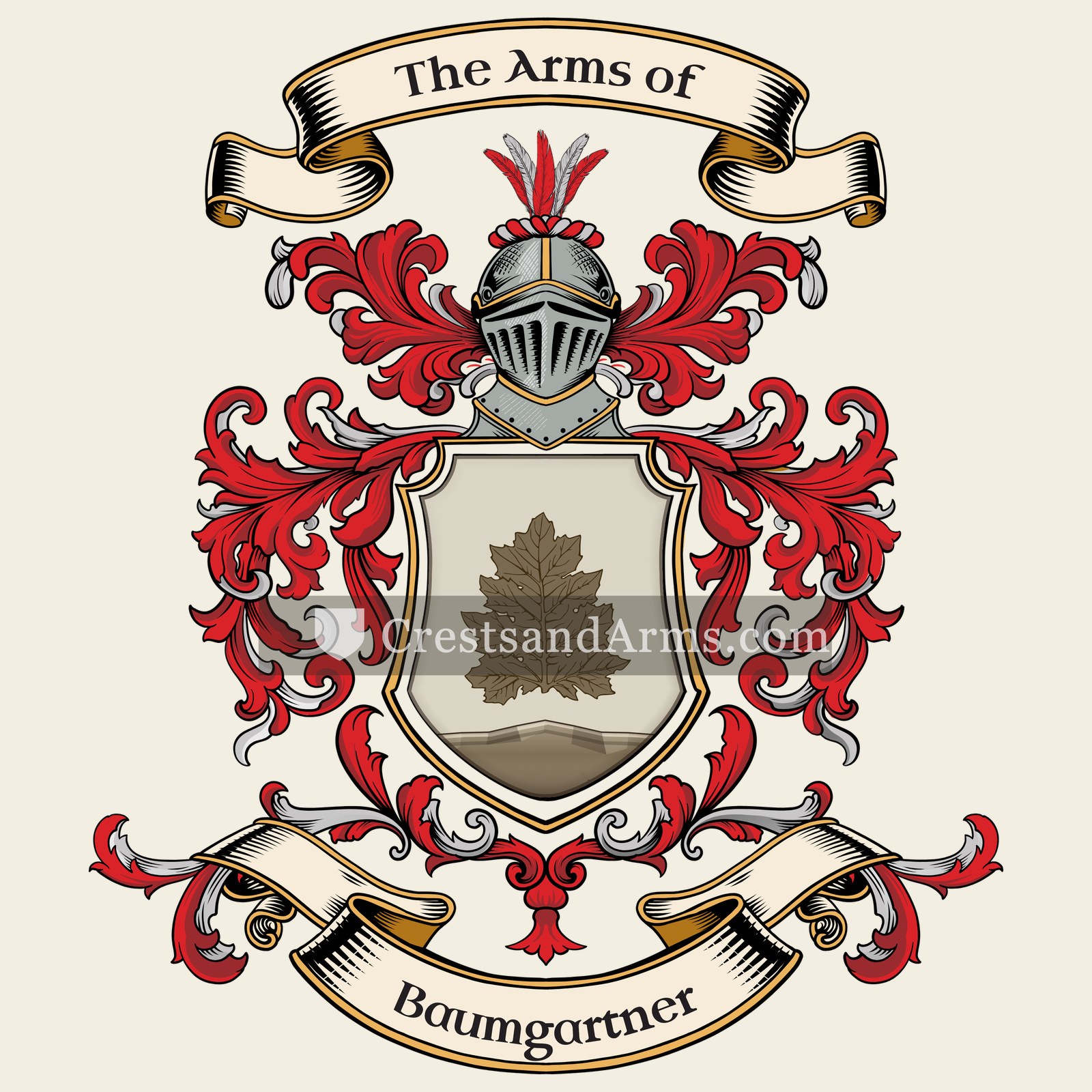
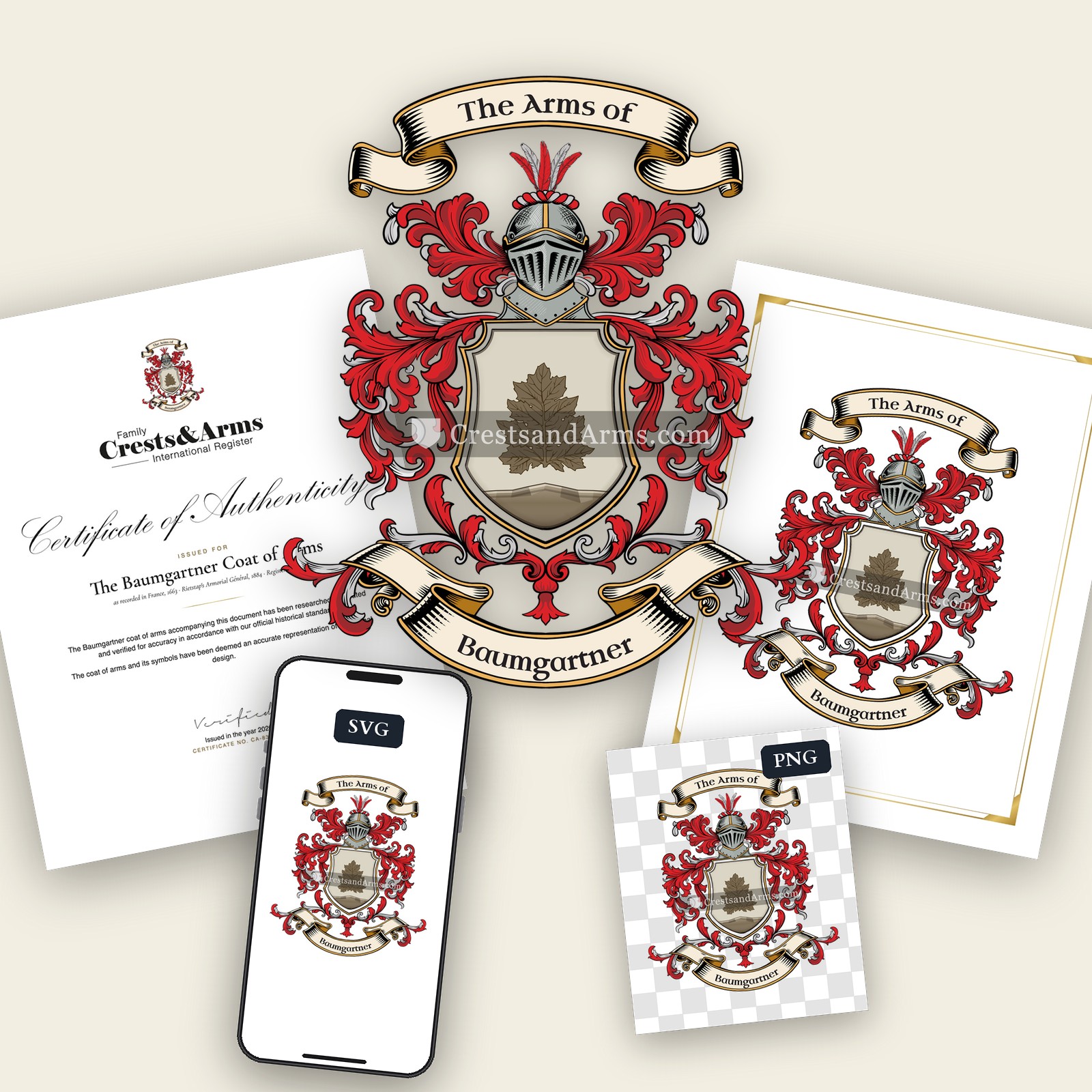
mountThe ground held, and steadfastness upon it
leafHappiness and abundance
Colours
Silver (Argent)Means: Peace and sincerity
Historical info
Source
J. B. Rietstap, Armorial Général, Gouda: G. B. van Goor Zonen, 1884–87
Blazon (the actual original written record)
“D'arg. à une fougère au nat., mouv. d'une montagne de trois coupeaux de gu.”
FranceStrasbourg, c. 1663
Digital archive packCoat of arms PNG, gold border print PDF, vector SVG and the certificate of authenticity. Sent to your email in minutes.
Map of France showing where the Baumgartner arms are recorded
The Baumgartner arms were recorded in Strasbourg, c. 1663.
This is where the arms were entered in the register. Families often moved to other parts of the country, so the same name can turn up in more than one region.
The body that granted and recorded arms in France in this period.
Louis XIV of France
Sovereign of the period
Louis XIV of France
1643–1715
Reigning in Switzerland when the Baumgartner arms are first recorded.
How Arms Worked in France
In France, a coat of arms was a mark of honor that passed down through the male line to all legitimate descendants. Families often used the same shield without changes to show their shared heritage. If a branch wanted to stand out, they could add a small mark to their shield to show their specific place in the family tree.
Granting authority
The Juge d'armes de France acted as the official authority that regulated and verified coats of arms across the country.
How they got arms
Families typically inherited their arms from ancestors, though they could also receive them through royal grants or by proving their noble status.
Where arms were recorded
Coats of arms were officially recorded in the Armorial Général de France, which began its main collection in the year 1696.
The family's standing
Recorded among the armigerous families of France.
Origin & History of the Baumgartner Family in France
The surname Baumgartner originates from the German language, where it translates to "orchard keeper" or "tree gardener." While the name is deeply rooted in Germanic traditions, its presence in France is tied closely to the complex history of the Alsace region. By 1663, records confirm that members of the Baumgartner family were established in the city of Strasbourg. During this era, Strasbourg served as a vital cultural bridge between the French Kingdom and the Holy Roman Empire. Families like the Baumgartners often moved between these shifting political borders as the region transitioned under the influence of the French Crown. Because the name describes a specific profession, it suggests that early ancestors were likely skilled agriculturalists or landowners who managed fruit orchards. Their settlement in a major urban center like Strasbourg indicates that they were integrated into the local economy as merchants or tradespeople during a time of significant regional change.
Baumgartner Meaning & Related Branches
Root word
Baum and Garten
Tree and enclosed garden or orchard.
This name
BaumgartnerAn occupational surname for someone who worked in or managed an orchard.
also spelled
Baumgardner
Bowmgartner
Related arms
Berrirecorded with Baumgartner, same area
Brunrecorded with Baumgartner, same area
Mathisrecorded with Baumgartner, same area
Stecherrecorded with Baumgartner, same area
Documented Sources
J. B. Rietstap, Armorial Général, Gouda: G. B. van Goor Zonen, 1884–87
Bahlow, Hans. Deutsches Namenlexikon: Familien- und Vornamen nach Ursprung und Sinn erklärt. 1967
Müller, Josef. Schweizerisches Idiotikon: Wörterbuch der schweizerdeutschen Sprache. 1881
Staatsarchiv Basel-Stadt, Bürgerverzeichnisse und Einwohnerregister
Digital archive packCoat of arms PNG, gold border print PDF, vector SVG and the certificate of authenticity. Sent to your email in minutes.


 mountThe ground held, and steadfastness upon it
 treeLife, endurance and deep roots
 mountThe ground held, and steadfastness upon it
 treeLife, endurance and deep roots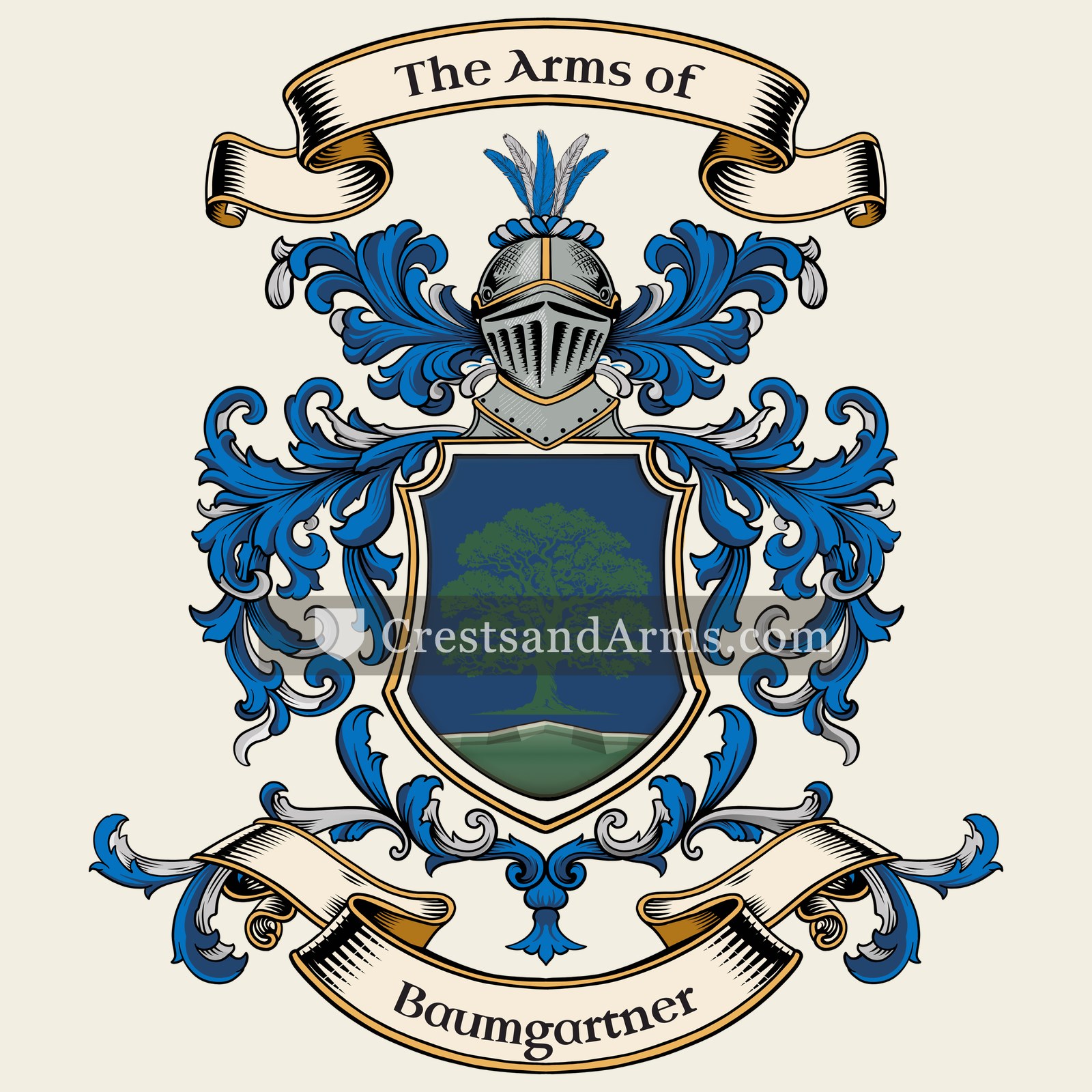

 leafHappiness and abundance