Map of Germany showing where the Baunach arms are recorded
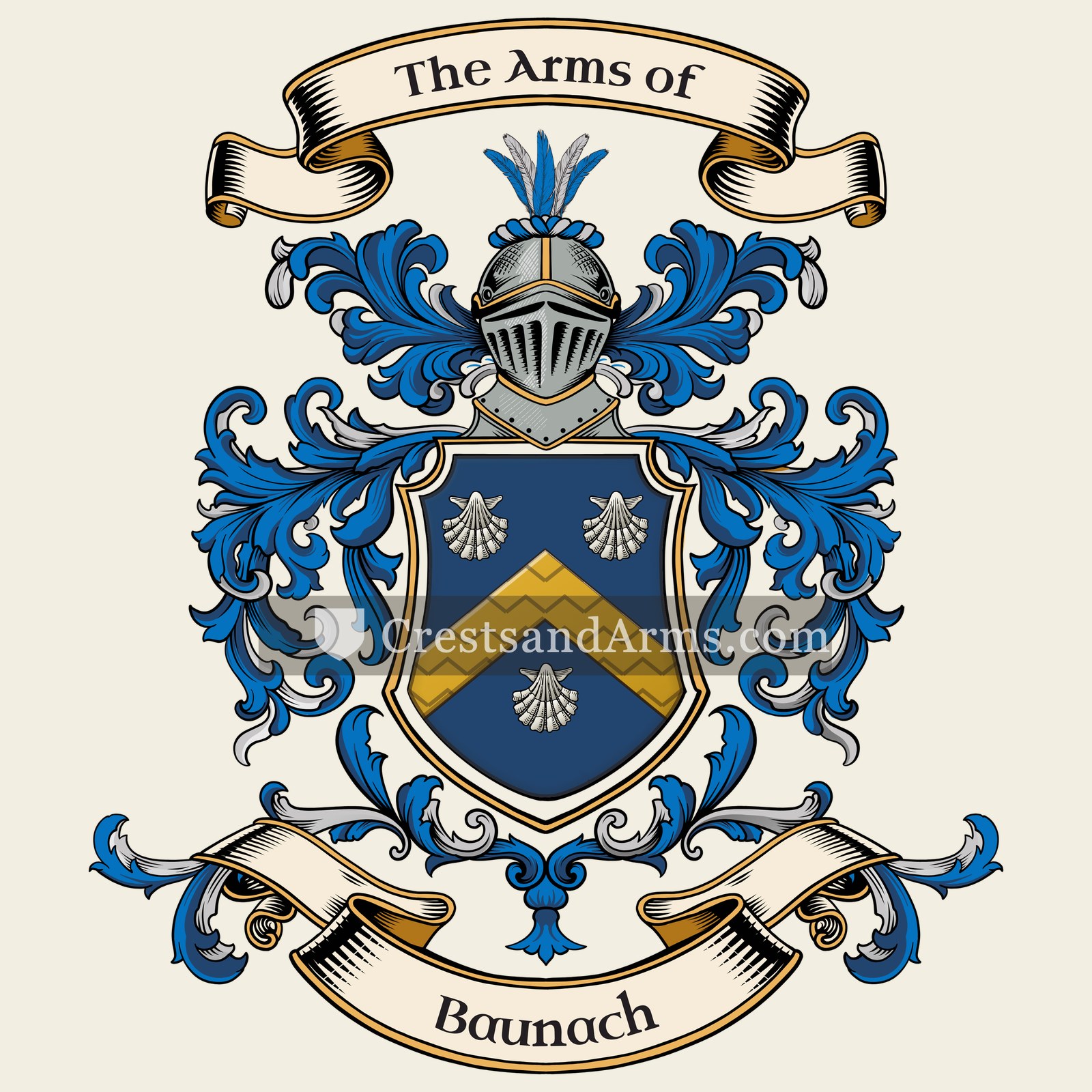
The Baunach arms were recorded in Franconia, c. 1765.
Franconia was a patchwork of small territories in central Germany, full of minor landowners and prosperous market towns. So many separate households held land there that the region produced a great many coats of arms.
This is where the arms were entered in the register. Families often moved to other parts of the country, so the same name can turn up in more than one region.
The body that granted and recorded arms in Germany in this period.
Francis I, Holy Roman Emperor
Sovereign of the period
Francis I, Holy Roman Emperor
1745–1765
Reigning in Germany when the Baunach arms are first recorded.
How Arms Worked in Germany
In the Holy Roman Empire, coats of arms were often granted to individuals by the Emperor or his representatives. These arms were then passed down through the generations to all legitimate descendants of the original holder. Younger branches of a family usually kept the same shield design without needing to change it, as the arms belonged to the entire lineage.
Granting authority
The Holy Roman Emperor held the sole power to grant new coats of arms throughout his vast imperial territories.
How they got arms
Families typically obtained their coats of arms through a formal imperial grant or by proving their noble status to the authorities.
Where arms were recorded
These grants were officially recorded in the Imperial Chancery registers, which began keeping formal records of such honors during the Middle Ages.
The family's standing
Recorded among the armigerous families of Franconia.
Origin & History of the Baunach Family in Germany
The family name Baunach originates from the Franconia region of Germany, a territory historically defined by its rolling hills and strong ties to the Holy Roman Empire. The name is locational, meaning it was likely adopted by families living near the Baunach River or the town of the same name. By 1765, records confirm that members of the family were well-established residents in this area, living as part of a society deeply rooted in agriculture and local trade. During this period, the region was governed by the Prince-Bishopric of Bamberg, which influenced the daily lives and social standing of the families living there. As the family grew, they became part of the local fabric of Franconian life, contributing to the development of their specific communities through generations of craftsmanship and farming.
Baunach Meaning & Related Branches
Root word
Bunach
Derived from a Germanic personal name meaning friend or companion.
This name
BaunachA topographic name referring to someone who lived near the Baunach river in Bavaria.
also spelled
Baunak
Bownak
Related arms
Houzeausimilar arms
Surhonsimilar arms
Documented Sources
J. B. Rietstap, Armorial Général, Gouda: G. B. van Goor Zonen, 1884–87
Bayerisches Staatsarchiv Bamberg, Standesbuch der Pfarrei Baunach, 1765
Duden, Duden Familiennamen: Herkunft und Bedeutung von 20.000 Nachnamen, 2005
Kohl, Wilhelm, Das Bistum Bamberg, 1996
Digital archive packCoat of arms PNG, gold border print PDF, vector SVG and the certificate of authenticity. Sent to your email in minutes.


 chevronProtection, and faithful service completed
 escallopThe pilgrim's shell, and a long journey made
 chevronProtection, and faithful service completed
 escallopThe pilgrim's shell, and a long journey made