Map of Denmark showing where the Bdeir arms are recorded
The Bdeir arms were recorded in Denmark, c. 1722.
Arms such as these were typically recorded in Sjaælland.
Zealand held the Danish court, the crown's offices and Copenhagen itself. Families who served the king kept estates within reach of it, and royal service was the ordinary route to a coat of arms.
This is where the arms were entered in the register. Families often moved to other parts of the country, so the same name can turn up in more than one region.
The body that granted and recorded arms in Denmark in this period.
Frederik IV of Denmark
Sovereign of the period
Frederik IV of Denmark
1699–1730
Reigning in Denmark when the Bdeir arms are first recorded.
How Arms Worked in Denmark
Danish heraldry during this period was closely tied to noble status and royal favor rather than being open to all citizens. Arms were typically granted by the monarch to individuals, and these symbols were then shared by all members of the noble house. If a family line died out, the right to use those specific arms ended with them.
Granting authority
The Danish royal chancery held the power to issue and regulate official coats of arms for the kingdom.
How they got arms
Families usually received their arms through a formal royal grant that confirmed their noble status and rights.
Where arms were recorded
These grants were officially recorded in the Danish Royal Chancery records starting in the sixteenth century.
The family's standing
Recorded among the armigerous families of Denmark.
Origin & History of the Bdeir Family in Denmark
The history of the Bdeir family in Denmark begins with the arrival of its early members on the island of Sjælland by the year 1722. During this period, Denmark was a hub for international trade and cultural exchange, which likely facilitated the movement of families from diverse regions into the Danish capital and its surrounding areas. Settling in Sjælland placed the family at the center of Danish administrative and economic life during the eighteenth century. While the name carries deep historical roots outside of Scandinavia, its presence in early Danish records highlights the family’s integration into a society that was rapidly modernizing. These early ancestors navigated the complexities of life in a new land, contributing to the local community while maintaining the identity associated with their name. By establishing themselves in Sjælland, the Bdeir family became part of the long and varied history of migration that has shaped the demographic landscape of Denmark over the last three centuries.
Meaning of the Bdeir family crest colors & symbols
Symbols on this shield
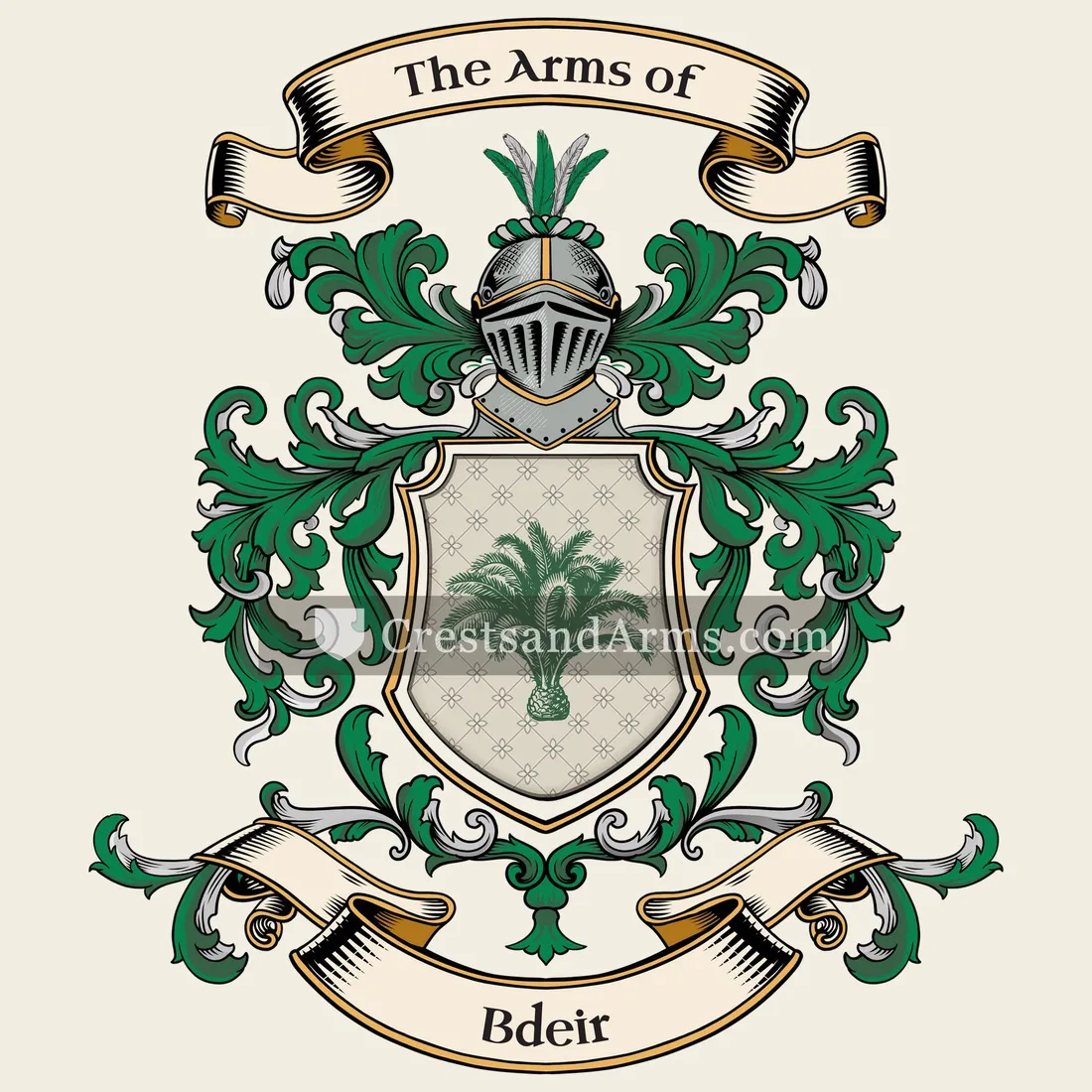
palm treeVictory, and righteousness that flourishes
Colours
Silver (Argent)Means: Peace and sincerity
Green (Vert)Means: Hope
Historical info
Source
J. B. Rietstap, Armorial Général, Gouda: G. B. van Goor Zonen, 1884–87
Blazon (the actual original written record)
“D'arg. au palmier de sin.,”
GermanyFrancfort s, c. 1765
Digital archive packCoat of arms PNG, gold border print PDF, vector SVG and the certificate of authenticity. Sent to your email in minutes.
Map of Germany showing where the Bdeir arms are recorded
The Bdeir arms were recorded in Francfort s, c. 1765.
This is where the arms were entered in the register. Families often moved to other parts of the country, so the same name can turn up in more than one region.
The body that granted and recorded arms in Germany in this period.
Francis I, Holy Roman Emperor
Sovereign of the period
Francis I, Holy Roman Emperor
1745–1765
Reigning in Denmark when the Bdeir arms are first recorded.
How Arms Worked in Germany
In the Holy Roman Empire, coats of arms were often granted to individuals by the Emperor or his representatives. These arms were then passed down through the generations to all legitimate descendants of the original holder. Younger branches of a family usually kept the same shield design without needing to change it, as the arms belonged to the entire lineage.
Granting authority
The Holy Roman Emperor held the sole power to grant new coats of arms throughout his vast imperial territories.
How they got arms
Families typically obtained their coats of arms through a formal imperial grant or by proving their noble status to the authorities.
Where arms were recorded
These grants were officially recorded in the Imperial Chancery registers, which began keeping formal records of such honors during the Middle Ages.
The family's standing
Recorded among the armigerous families of Germany.
Origin & History of the Bdeir Family in Germany
The Bdeir family name carries a history that reaches back into the heart of eighteenth-century Germany. Records confirm that members of the family were established in Frankfurt as early as 1765, a time when the city served as a major hub for trade and cultural exchange in the Holy Roman Empire. During this period, Frankfurt was a center for merchants and families who navigated the complex social structures of the German states. The presence of the Bdeir name in such a prominent urban center suggests that the family was likely integrated into the professional or mercantile circles that defined the city’s growth. By living in Frankfurt, these early family members were part of a vibrant environment that connected Central Europe to broader international networks. This early residency highlights the family's long-standing history of mobility and their ability to adapt to the changing landscape of German society during the Enlightenment era.
Meaning of the Bdeir family crest colors & symbols
Symbols on this shield
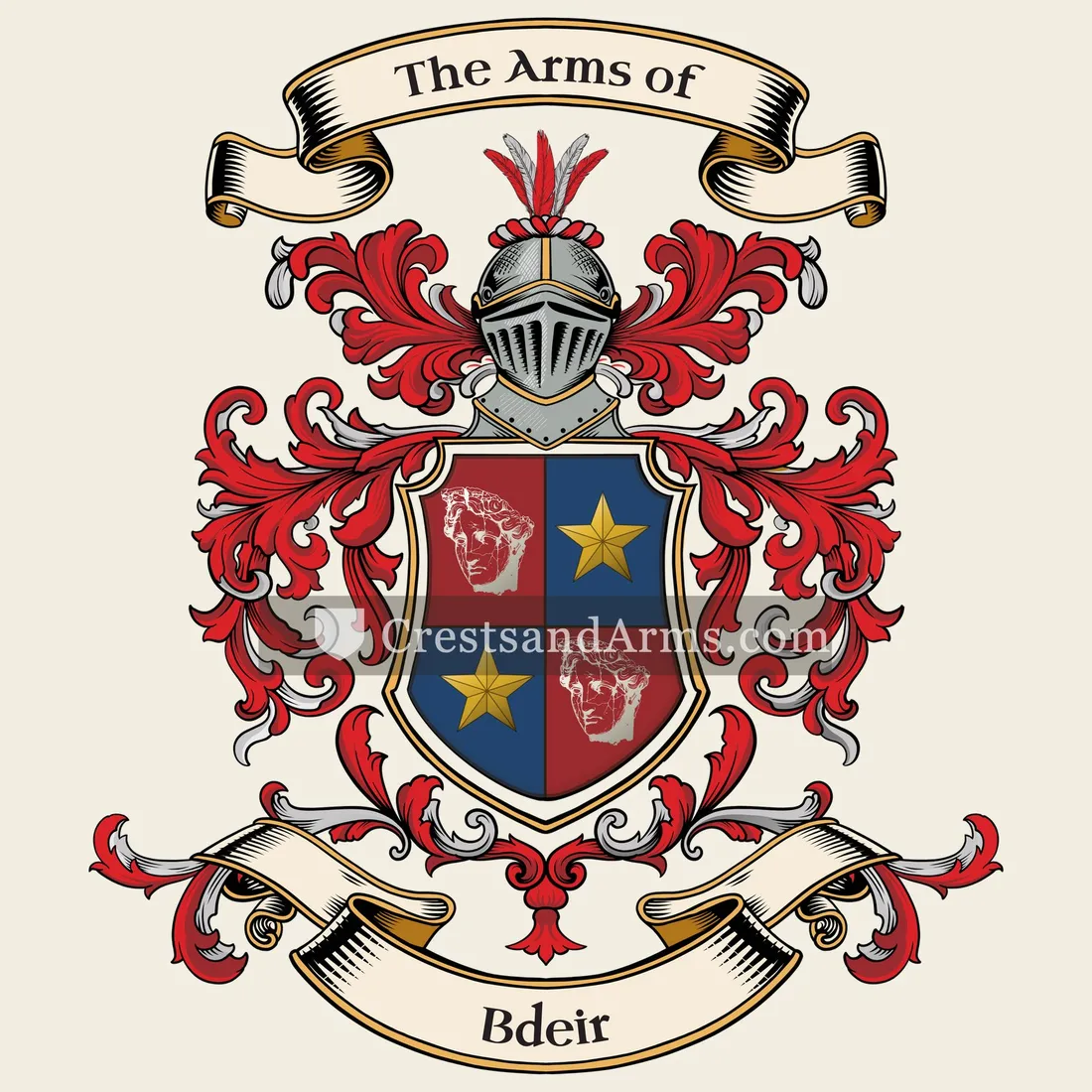
womanGrace, and the founding of a house
mulletThe third son, and a divine quality from above
Colours
Red (Gules)Means: Military strength
Blue (Azure)Means: Loyalty and truth
Gold (Or)Means: Generosity
Historical info
Source
J. B. Rietstap, Armorial Général, Gouda: G. B. van Goor Zonen, 1884–87
Blazon (the actual original written record)
“Ec.: aux 1 et 4 de gu. à une femme iss. de carn., les cheveux épars, les bras étendus, coiffée d'un chapeau d'homme d'or; aux 2 et 3 d'azur à une étoile (5) d'or. Cq. cour. C.: la femme iss., entre un vol coupé, à dextre d'arg. sur gu., à sen. d'or sur azur. L. conformes aux émaux du vol.”
SwitzerlandBâle, c. 1745
Digital archive packCoat of arms PNG, gold border print PDF, vector SVG and the certificate of authenticity. Sent to your email in minutes.
Map of Switzerland showing where the Bdeir arms are recorded
The Bdeir arms were recorded in Bâle, c. 1745.
This is where the arms were entered in the register. Families often moved to other parts of the country, so the same name can turn up in more than one region.
The body that granted and recorded arms in Switzerland in this period.
How Arms Worked in Switzerland
In Switzerland, coats of arms were not restricted to the nobility and were often adopted by common citizens and families. These symbols were passed down through generations to show family identity. When branches of a family grew, they often changed small details of the design to distinguish their own line from the original group.
Granting authority
Cantonal and civic authorities managed the use of coats of arms within their specific regions and local jurisdictions.
How they got arms
Families typically assumed their own coats of arms based on local custom rather than receiving them from a central monarch.
Where arms were recorded
Arms were recorded in various cantonal and civic registers starting from the fourteenth century throughout the Swiss region.
The family's standing
Recorded among the armigerous families of Switzerland.
Origin & History of the Bdeir Family in Switzerland
The history of the Bdeir family in Switzerland begins in the mid-eighteenth century, specifically appearing in the records of Bâle by 1745. During this period, Bâle served as a vital hub for trade and intellectual exchange, attracting families who were often involved in merchant networks or specialized craft guilds. The presence of the Bdeir name in these early Swiss archives suggests that the family integrated into the local urban structure during a time of significant economic growth. While the name itself carries roots that stretch far beyond the borders of Switzerland, its appearance in Bâle highlights the family's role as part of the diverse population that helped shape the city’s commercial identity. By establishing themselves in this region, early members of the family navigated the complex social and legal systems of the time, leaving behind a documented legacy that marks their place in Swiss history.
Bdeir Meaning & Related Branches
Root word
Badr
Arabic term referring to the full moon.
This name
BdeirA surname derived from the Arabic word for full moon, often signifying brightness or beauty.
also spelled
Baeder
Baddar
Baderre
Documented Sources
J. B. Rietstap, Armorial Général, Gouda: G. B. van Goor Zonen, 1884–87
Rigsarkivet (Danish National Archives), Kirkebøger for Sjællands Stift (Church records for the Diocese of Sjælland), 1722
Trap, J.P., Statistisk-topographisk Beskrivelse af Kongeriget Danmark, 1858
Digital archive packCoat of arms PNG, gold border print PDF, vector SVG and the certificate of authenticity. Sent to your email in minutes.


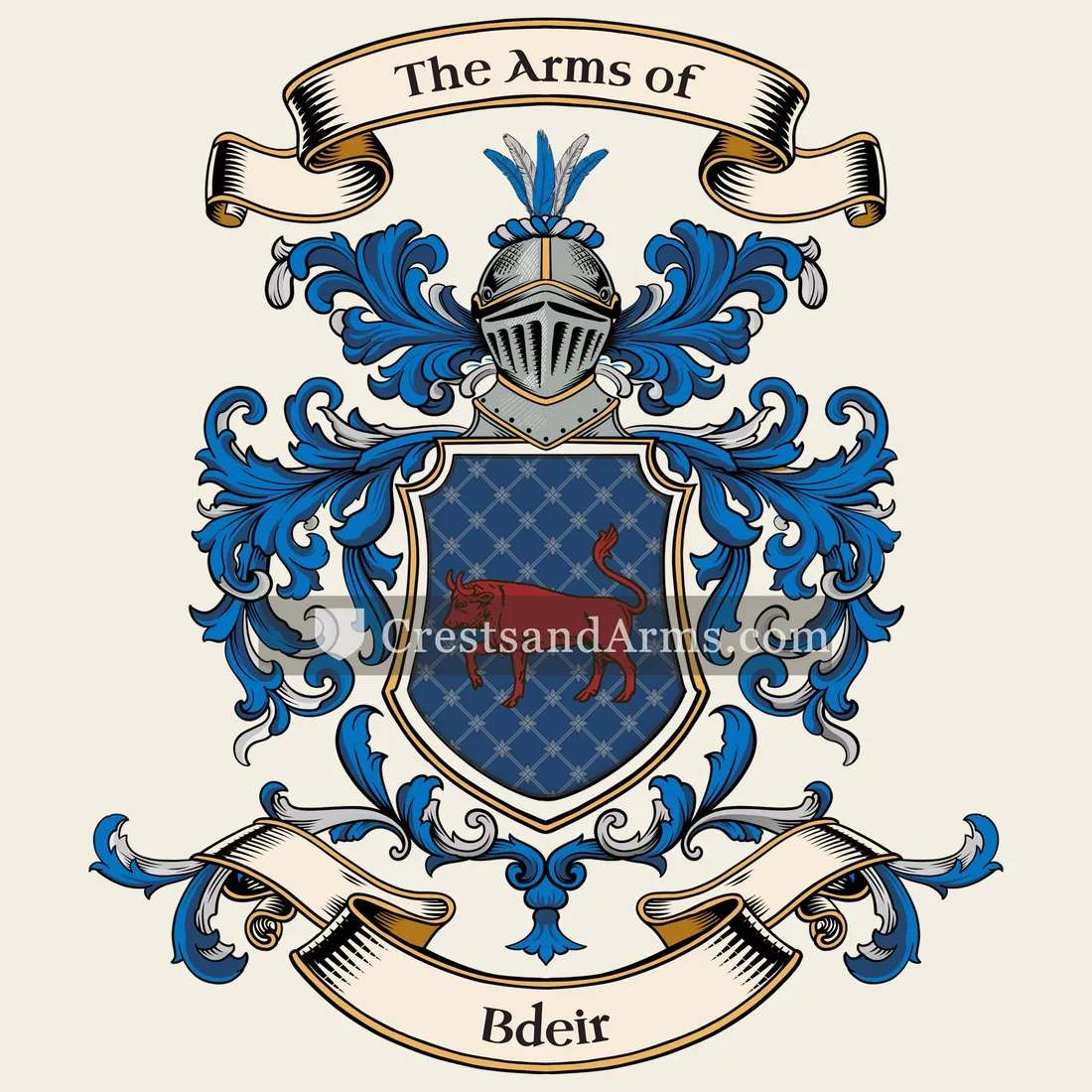
 bullValour and generosity
 bullValour and generosity


 palm treeVictory, and righteousness that flourishes


 womanGrace, and the founding of a house
 mulletThe third son, and a divine quality from above