A record of documented arms, meaning and origin, researched for the Beaufort family lines. Documented in 3 countries.
Reg. 0390 · French, A–C
Coat of Arms & Family Crest Details
Symbols on this shield
fessThe military belt, and readiness to serve
lionCourage, strength and royalty
Colours
Black (Sable)Means: Constancy
Gold (Or)Means: Generosity
Historical info
Source
J. B. Rietstap, Armorial Général, Gouda: G. B. van Goor Zonen, 1884–87
Blazon (the actual original written record)
“De sa. à la fasce vivrée d'or, acc. de deux léopards du même, arm. et lamp. de gu., 1 en chef et 1 en p., celui de la p. cont. [Une branche obtint la permission de prendre le nom et les armes de Gellenoncourt qui sont d'or au léopard de gu. Une famille Pigenet obtint le 22 sept. 1616 l'autorisation de prendre le nom et les armes de Beaufort.]”
LorraineLorraine, c. 1539
Digital archive packCoat of arms PNG, gold border print PDF, vector SVG and the certificate of authenticity. Sent to your email in minutes.
Map of France showing where the Beaufort arms are recorded
The Beaufort arms were recorded in Lorraine, c. 1539.
Lorraine sat on the border between France and the German lands, and border country bred soldiers. Families here held small estates and served in arms, and a fighting man was exactly the sort who carried a shield of his own.
This is where the arms were entered in the register. Families often moved to other parts of the country, so the same name can turn up in more than one region.
The body that granted and recorded arms in France in this period.
Francis I of France
Sovereign of the period
Francis I of France
1515–1547
Reigning in France when the Beaufort arms are first recorded.
How Arms Worked in France
In France, a coat of arms was a mark of honor that passed down through the male line to all legitimate descendants. Families often used the same shield without changes to show their shared heritage. If a branch wanted to stand out, they could add a small mark to their shield to show their specific place in the family tree.
Granting authority
The Juge d'armes de France acted as the official authority that regulated and verified coats of arms across the country.
How they got arms
Families typically inherited their arms from ancestors, though they could also receive them through royal grants or by proving their noble status.
Where arms were recorded
Coats of arms were officially recorded in the Armorial Général de France, which began its main collection in the year 1696.
The family's standing
Recorded among the armigerous families of Lorraine.
Origin & History of the Beaufort Family in France
The name Beaufort originates from the French words for beautiful and fortress, suggesting that the family’s earliest ancestors likely lived near or held authority over a prominent, well-built castle. By the time the family appears in the historical records of Lorraine in 1539, they were already established within a region known for its complex political landscape between the French kingdom and the Holy Roman Empire. During this era, families with names tied to specific locations often gained social standing by managing land or serving as local officials for regional lords. The Beauforts in Lorraine were part of this rising class of administrators and landholders who navigated the shifting borders of the sixteenth century. Their presence in this specific area indicates that they were deeply integrated into the local economy and social hierarchy of the time. This foundation allowed the family to maintain a consistent identity as they moved through the turbulent political changes that defined the history of eastern France.
Coat of Arms & Family Crest Details
Symbols on this shield
womanGrace, and the founding of a house
Colours
Blue (Azure)Means: Loyalty and truth
Historical info
Source
J. B. Rietstap, Armorial Général, Gouda: G. B. van Goor Zonen, 1884–87
Blazon (the actual original written record)
“D'azur à une femme de carn., posée de front, hab. d'or, ceinte de gu., les cheveux épars, tenant de sa main dextre un miroir ovale d'arg. et iss. des créneaux d'une tour d'arg., maçonnée de sa., ouv. du champ, la herse levée. Brl. d'arg. et d'azur. C. : les meubles de l'écu, entre un vol coupé, à dextre d'or sur azur, à sen. d'azur sur arg. L. : à dextre d'arg. et d'azur, à sen. d'or et d'azur. D. : LA VERTU EST UN BEAU FORT. S. : deux lions, au nat.”
Belgiumc. 1710
Digital archive packCoat of arms PNG, gold border print PDF, vector SVG and the certificate of authenticity. Sent to your email in minutes.
Map of Belgium showing where the Beaufort arms are recorded
The Beaufort arms were recorded in Belgium, c. 1710.
Arms such as these were typically recorded in Brabant.
Brabant lay at the heart of the Low Countries, where the trade routes met. Its towns were wealthy and its landowners many, and both kinds of family kept arms, which is why the region is so heavily represented.
This is where the arms were entered in the register. Families often moved to other parts of the country, so the same name can turn up in more than one region.
The body that granted and recorded arms in Belgium in this period.
Philip V of Spain
Sovereign of the period
Philip V of Spain
1700–1714
Reigning in France when the Beaufort arms are first recorded.
How Arms Worked in Belgium
In Belgium, a coat of arms is considered personal property that is passed down through the male line to legitimate descendants. Families often use the same shield design across generations to show their shared heritage. If a branch of the family wants to change the design, they must apply for an official update to their specific version of the arms.
Granting authority
The Conseil héraldique is the official body that regulates and approves all coats of arms in Belgium.
How they got arms
Families obtain their coats of arms through formal royal grants or by confirming their historical right to use existing designs.
Where arms were recorded
All approved coats of arms are officially recorded in the public registers of the Conseil héraldique since 1844.
The family's standing
Recorded among the armigerous families of Belgium.
Origin & History of the Beaufort Family in Belgium
The history of the Beaufort family in Belgium is deeply rooted in the historical region of Brabant, where records confirm their presence by the year 1710. During this period, the family established themselves within the social and administrative fabric of the Low Countries, likely benefiting from the complex political landscape that defined the region under Austrian rule. The name itself suggests a connection to a "beautiful fort" or a strategic location, which was a common way for families to identify their ancestral lands or professional roles in local governance. As the family settled into the towns and rural districts of Brabant, they integrated into the local economy and community life. Their early years were marked by the transition from the turbulent conflicts of the seventeenth century toward a more stable era of development in the eighteenth century. By maintaining a consistent presence in the area, the Beauforts became part of the long-standing tradition of families who helped shape the cultural identity of modern-day Belgium.
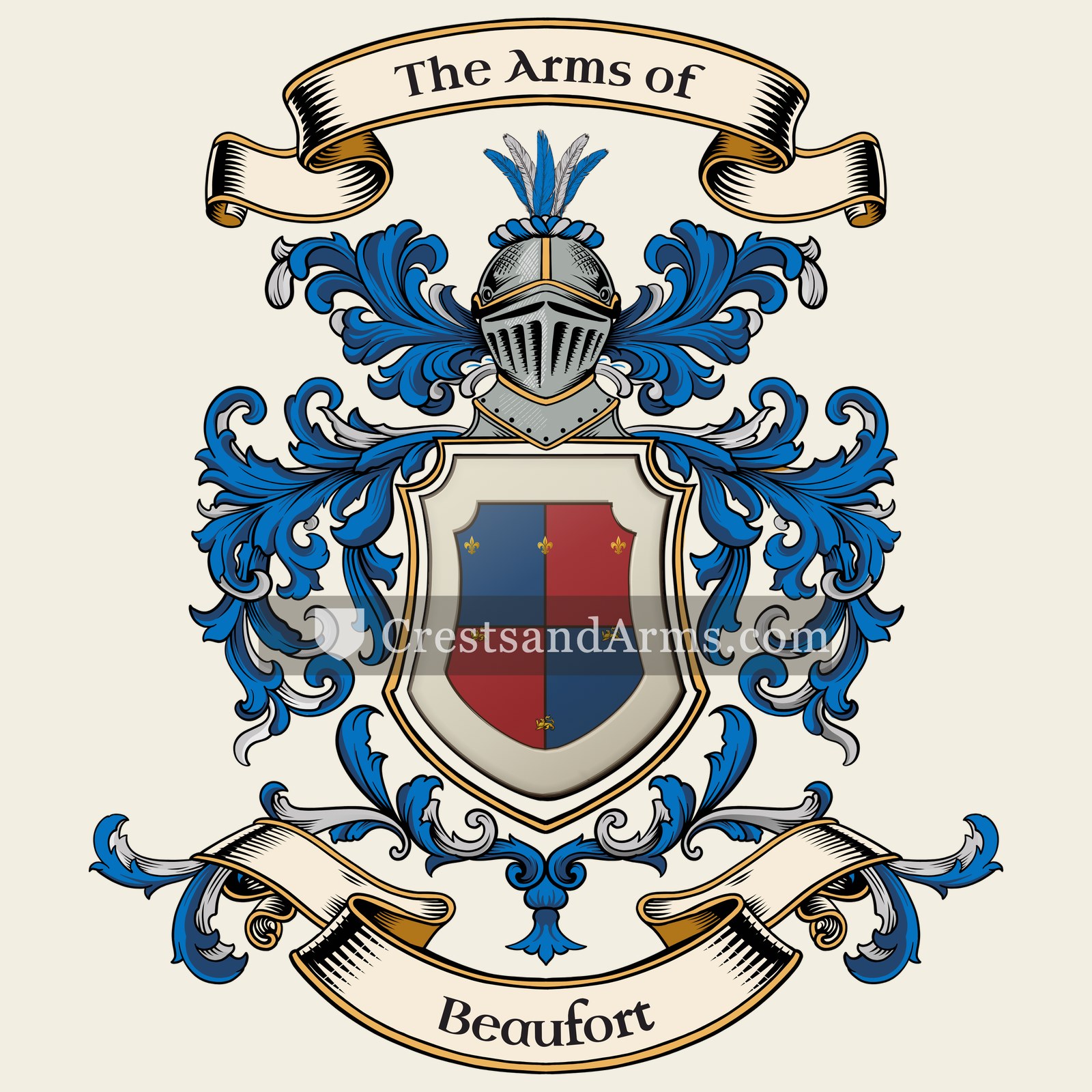
Coat of Arms & Family Crest Details
Symbols on this shield
bordureA difference between branches of one family
fleur de lisPurity, light, and the sixth son
lionCourage, strength and royalty
Colours
Blue (Azure)Means: Loyalty and truth
Red (Gules)Means: Military strength
Silver (Argent)Means: Peace and sincerity
Gold (Or)Means: Generosity
Historical info
Source
Sir Bernard Burke, The General Armory of England, Scotland, Ireland and Wales, London: Harrison & Sons, 1884
Blazon (the actual original written record)
“Quarterly, France and England within a bordure gobony ar. and az. flowered or”
EnglandExeter, c. 1620
Digital archive packCoat of arms PNG, gold border print PDF, vector SVG and the certificate of authenticity. Sent to your email in minutes.
Map of England showing where the Beaufort arms are recorded
The Beaufort arms were recorded in Exeter, c. 1620.
Arms such as these were typically recorded in York.
Yorkshire is the largest of the English counties, and it held more gentry families than any other. Land there was split among a great many households rather than a few, so a great many of them carried arms.
This is where the arms were entered in the register. Families often moved to other parts of the country, so the same name can turn up in more than one region.
The body that granted and recorded arms in England in this period.
James VI and I
Sovereign of the period
James VI and I
1603–1625
Reigning in France when the Beaufort arms are first recorded.
How Arms Worked in England
English heraldry allowed arms to be shared by all legitimate descendants of the original owner. These symbols were treated as personal property that moved through the generations to all children. While the eldest son kept the original design, other family members could use the same shield without needing to change it or register their own unique versions.
Granting authority
The College of Arms in London has regulated the use of coats of arms throughout England and Wales since 1484.
How they got arms
Families typically obtained their coats of arms through a formal grant from the Crown or by proving their ancient right to them.
Where arms were recorded
All official coats of arms are recorded in the registers kept at the College of Arms, which date back to the fifteenth century.
The family's standing
Recorded among the armigerous families of England.
Origin & History of the Beaufort Family in England
The Beaufort name carries a deep connection to the history of England, though its origins are rooted in the French language as a term meaning beautiful fortress. While the name is famously associated with high-ranking nobility during the Middle Ages, many branches of the family eventually settled into more modest lives across the English countryside. By the year 1620, records confirm that members of the family were firmly established in the city of York. During this era, York served as a vital northern hub for trade and administration, suggesting that these early residents were likely involved in the local merchant class or skilled trades. This transition from the grand political stage to the bustling streets of a northern city highlights how family names often moved through different social layers as generations passed. The presence of the Beaufort name in York during the early seventeenth century reflects the broader movement of families who sought new opportunities in England’s growing urban centers.
Beaufort Meaning & Related Branches
Root word
Beau and Fort
Beautiful or fair and strong or fortified.
This name
BeaufortRefers to someone living near a beautiful fortress or a fortified settlement.
also spelled
Beaufor
Bofor
Bofort
Beauford
Related arms
Coudercsame arms
Beauffortvariant spelling
Befortvariant spelling
Beaufordvariant spelling
Documented Sources
J. B. Rietstap, Armorial Général, Gouda: G. B. van Goor Zonen, 1884–87
Archives départementales de Meurthe-et-Moselle, Série B: Cours et juridictions
Cabourdin, Guy, Histoire de la Lorraine, 1991
Lepage, Henri, Les communes de la Meurthe: journal historique des villes, bourgs, villages, hameaux et censes de ce département, 1853
Digital archive packCoat of arms PNG, gold border print PDF, vector SVG and the certificate of authenticity. Sent to your email in minutes.


 fessThe military belt, and readiness to serve
 lionCourage, strength and royalty
 fessThe military belt, and readiness to serve
 lionCourage, strength and royalty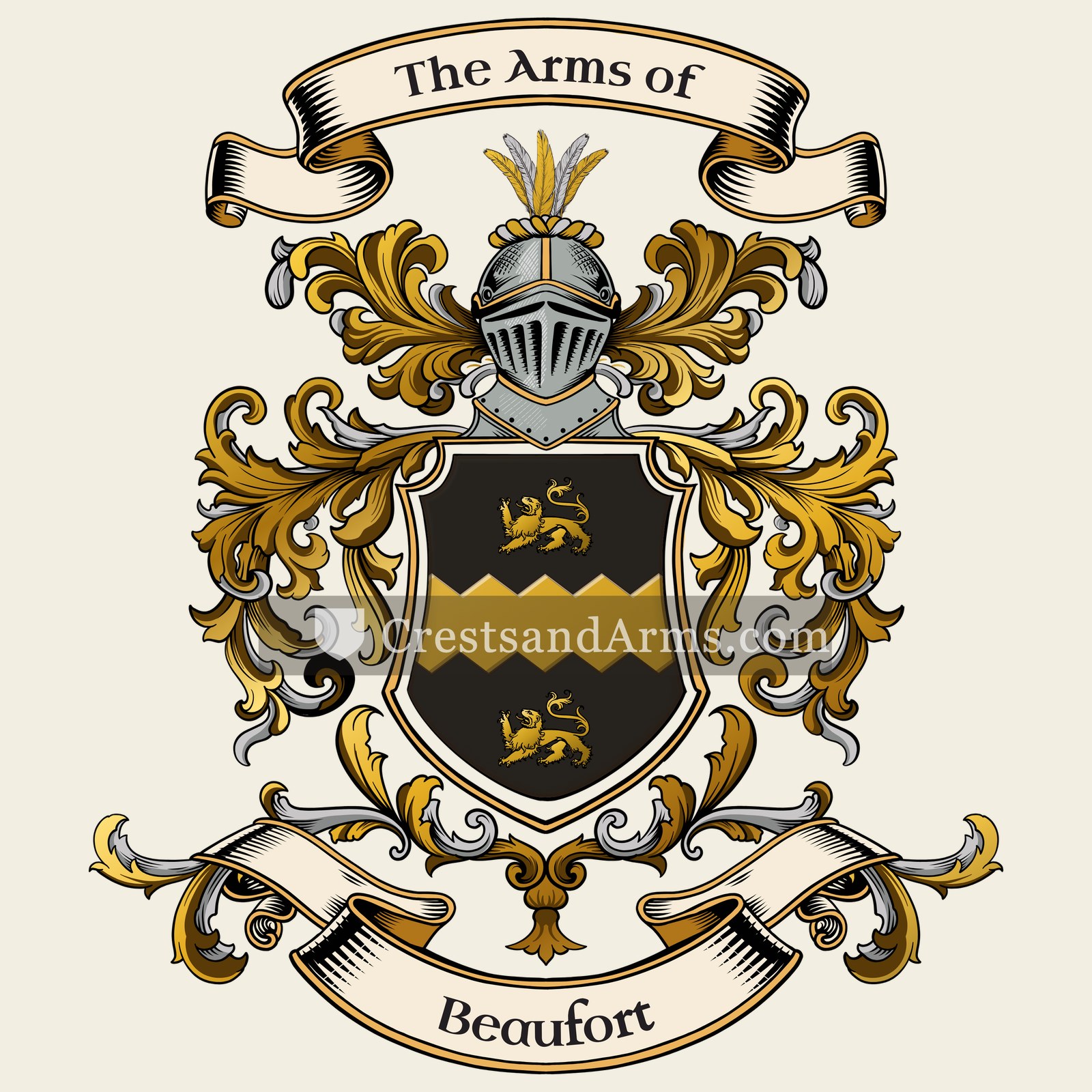


 womanGrace, and the founding of a house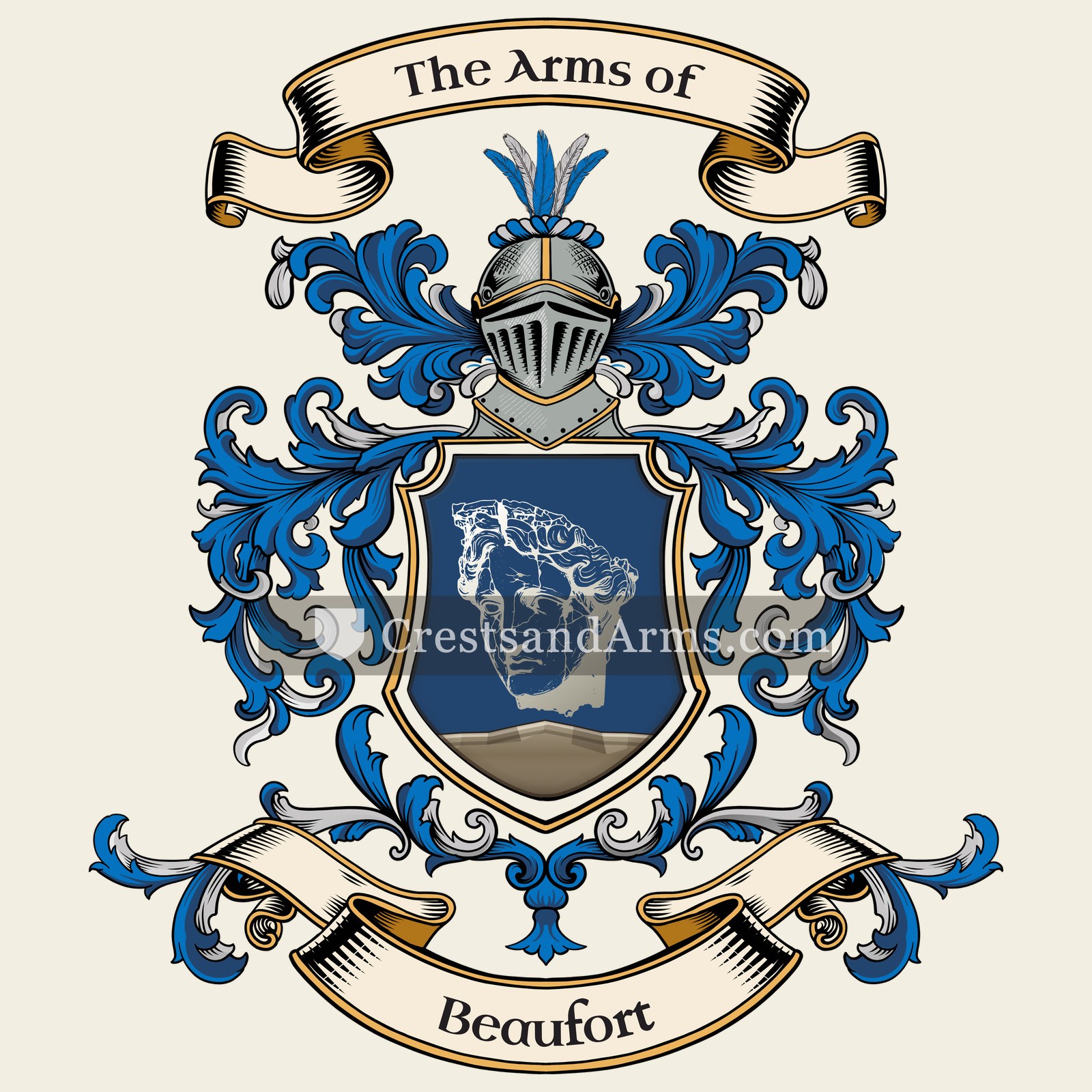


 bordureA difference between branches of one family
 fleur de lisPurity, light, and the sixth son