Map of France showing where the Bednar arms are recorded
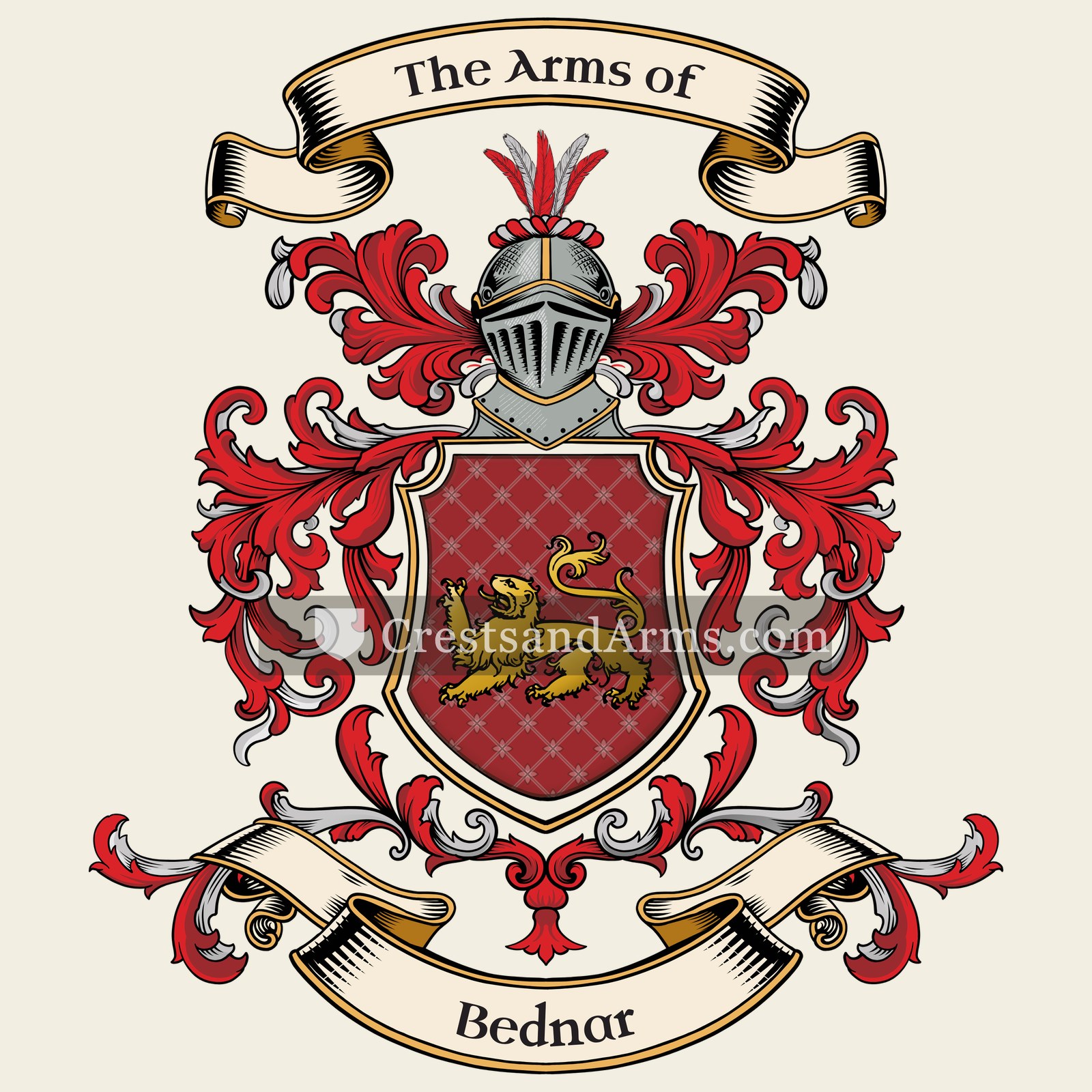
The Bednar arms were recorded in Provence, c. 1663.
Provence was old country, with towns dating to the Romans and families who traced their land back nearly as far. Its gentry were many and long-settled, and long settlement is what fills a register.
This is where the arms were entered in the register. Families often moved to other parts of the country, so the same name can turn up in more than one region.
The body that granted and recorded arms in France in this period.
Louis XIV of France
Sovereign of the period
Louis XIV of France
1643–1715
Reigning in France when the Bednar arms are first recorded.
How Arms Worked in France
In France, a coat of arms was a mark of honor that passed down through the male line to all legitimate descendants. Families often used the same shield without changes to show their shared heritage. If a branch wanted to stand out, they could add a small mark to their shield to show their specific place in the family tree.
Granting authority
The Juge d'armes de France acted as the official authority that regulated and verified coats of arms across the country.
How they got arms
Families typically inherited their arms from ancestors, though they could also receive them through royal grants or by proving their noble status.
Where arms were recorded
Coats of arms were officially recorded in the Armorial Général de France, which began its main collection in the year 1696.
The family's standing
Recorded among the armigerous families of Provence.
Origin & History of the Bednar Family in France
The family name Bednar is deeply rooted in the linguistic traditions of Central and Eastern Europe, where it originated as an occupational surname derived from the Slavic word for a cooper or barrel maker. While the name is most commonly associated with regions like Bohemia and Poland, the presence of the family in Provence by 1663 suggests a significant migration pattern during the seventeenth century. During this era, skilled craftsmen often traveled across borders to find work in growing trade hubs or to escape political instability in their homelands. By settling in the south of France, these early ancestors likely integrated their traditional trade skills into the local economy of the region. This transition from a Slavic heartland to a Mediterranean environment highlights the adaptability of the family as they established a new life while carrying their ancestral name forward into a different cultural landscape.
Related Branches & Arms
Root word
Bednář
A Slavic occupational term for a barrel maker or cooper.
This name
BednarAn occupational surname identifying an ancestor who worked as a barrel maker.
also spelled
Baudinar
Beaudinard
Baudinard
Bodeenar
Documented Sources
J. B. Rietstap, Armorial Général, Gouda: G. B. van Goor Zonen, 1884–87
Beneš, Josef. Německá příjmení u Čechů (German Surnames among Czechs). 1962
Moldanová, Dobrava. Naše příjmení (Our Surnames). 1983
Digital archive packCoat of arms PNG, gold border print PDF, vector SVG and the certificate of authenticity. Sent to your email in minutes.


 lionCourage, strength and royalty
 lionCourage, strength and royalty