Map of France showing where the Beere arms are recorded
The Beere arms were recorded in Flandre, c. 1663.
Flandre grew rich on cloth, and its towns were among the busiest in Europe. Merchant families bought land with their profits and took arms to go with it, so trade put as many names in the registers here as land did.
This is where the arms were entered in the register. Families often moved to other parts of the country, so the same name can turn up in more than one region.
The body that granted and recorded arms in France in this period.
Louis XIV of France
Sovereign of the period
Louis XIV of France
1643–1715
Reigning in France when the Beere arms are first recorded.
How Arms Worked in France
In France, a coat of arms was a mark of honor that passed down through the male line to all legitimate descendants. Families often used the same shield without changes to show their shared heritage. If a branch wanted to stand out, they could add a small mark to their shield to show their specific place in the family tree.
Granting authority
The Juge d'armes de France acted as the official authority that regulated and verified coats of arms across the country.
How they got arms
Families typically inherited their arms from ancestors, though they could also receive them through royal grants or by proving their noble status.
Where arms were recorded
Coats of arms were officially recorded in the Armorial Général de France, which began its main collection in the year 1696.
The family's standing
Recorded among the armigerous families of Flandre.
Origin & History of the Beere Family in France
The family name Beere traces its roots to the northern regions of France, particularly within the historical territory of Flandre. By the year 1663, records confirm that members of this family were well-established in this area, which was a vital crossroads for trade and cultural exchange between France and the Low Countries. During the seventeenth century, the region of Flandre was characterized by a blend of French and Flemish influences, and families living there often navigated complex social and political shifts as borders moved. The name itself likely originated as a descriptive term or a nickname, reflecting the linguistic habits of the local population who spoke a mix of dialects. Living in this industrious part of France, the early Beere family members were part of a society deeply connected to agriculture, textile production, and urban commerce, which helped them integrate into the local community during a time of significant regional development.
Coat of Arms & Family Crest Details
Symbols on this shield
saltireResolution, and St Andrew's cross
Colours
Gold (Or)Means: Generosity
Red (Gules)Means: Military strength
Historical info
Source
J. B. Rietstap, Armorial Général, Gouda: G. B. van Goor Zonen, 1884–87
Blazon (the actual original written record)
“D'or au saut. de gu.”
Netherlandsc. 1815
Digital archive packCoat of arms PNG, gold border print PDF, vector SVG and the certificate of authenticity. Sent to your email in minutes.
Map of Netherlands showing where the Beere arms are recorded
The Beere arms were recorded in Netherlands, c. 1815.
Arms such as these were typically recorded in Friesland.
Friesland was low, wet country on the northern coast of the Netherlands, farmed by families who had held the same land for centuries. Free landholders were unusually common there, and a free landholder could carry arms.
This is where the arms were entered in the register. Families often moved to other parts of the country, so the same name can turn up in more than one region.
Region
Friesland
First recorded
1815
Granting Authority for the Beere Arms
Hoge Raad van Adel
Photograph made by me · CC BY-SA 3.0
The body that granted and recorded arms in Netherlands in this period.
William I of the Netherlands
Sovereign of the period
William I of the Netherlands
1815–1840
Reigning in France when the Beere arms are first recorded.
How Arms Worked in Netherlands
In the Netherlands, coats of arms were often used by noble families and those who held specific public offices. These arms were passed down through the generations to legitimate descendants. Younger branches of a family usually kept the original design without needing to add special marks. This system ensured that the family identity remained clear and consistent over many years.
Granting authority
The Hoge Raad van Adel is the official body that regulates and manages noble titles and coats of arms in the Netherlands.
How they got arms
Families typically obtained their coats of arms through official royal grants or by proving their long-standing historical use of the symbols.
Where arms were recorded
Coats of arms are officially recorded in the registers held by the Hoge Raad van Adel, which began its work in 1814.
The family's standing
Recorded among the armigerous families of Netherlands.
Origin & History of the Beere Family in Netherlands
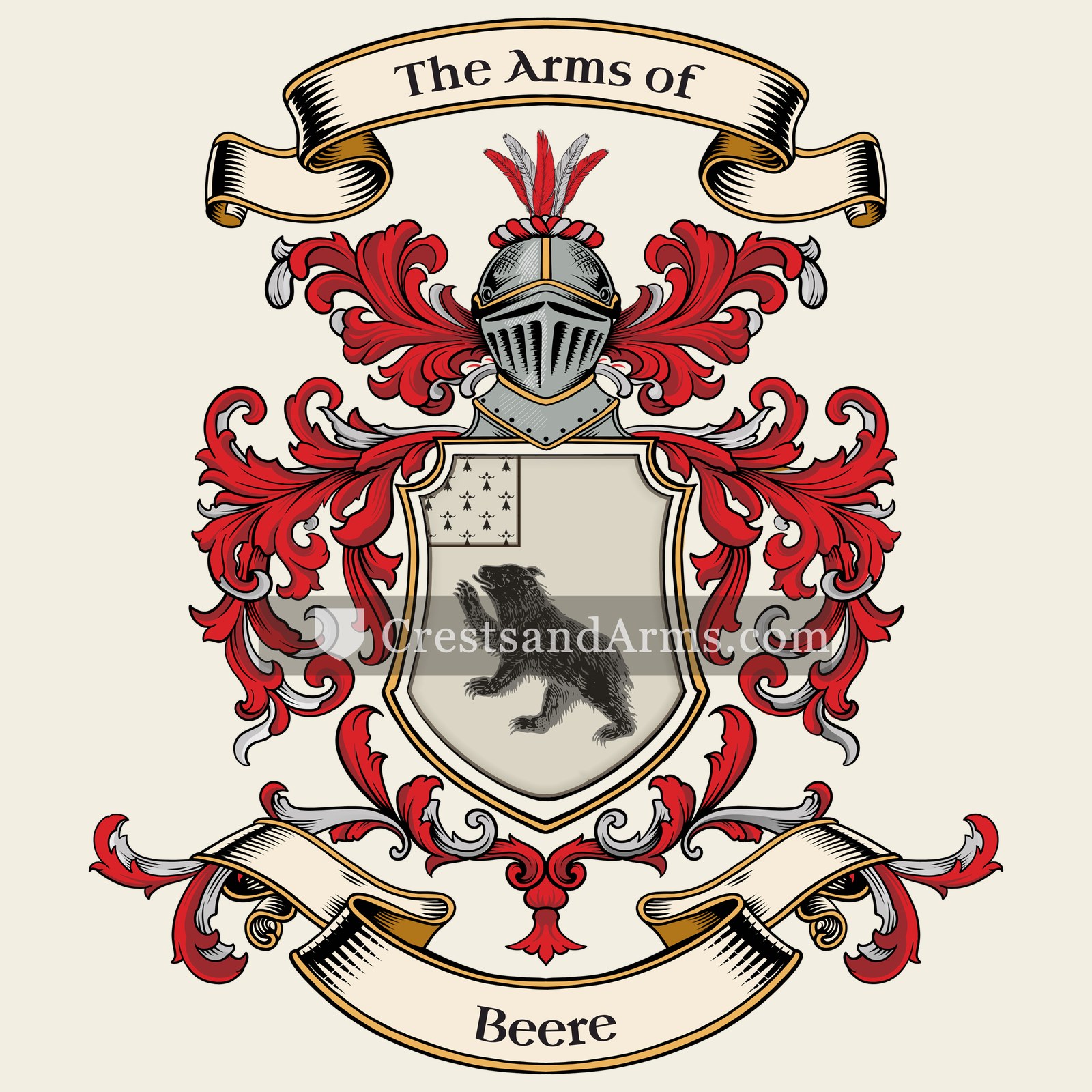
The family name Beere has deep roots in the northern regions of the Netherlands, particularly within the province of Friesland. By the early nineteenth century, records confirm that members of the family were well established in this area, living among the unique cultural landscape of the Frisian people. The name itself likely evolved from older Germanic or Middle Dutch terms related to the bear, which was a common way to describe a person with great strength or a bold personality in early naming traditions. As the family lived in Friesland during the year 1815, they were part of a society that was transitioning through significant political changes following the end of the Napoleonic era. During this time, the Dutch government began to standardize civil registration, which helped solidify the spelling and official documentation of family names across the region. This period marked a shift toward more formal record-keeping, allowing the Beere family to leave a clearer mark on the history of their local community.
Coat of Arms & Family Crest Details
Symbols on this shield
cantonA mark of honour granted by the sovereign
bearStrength, cunning and protection of kin
Colours
Silver (Argent)Means: Peace and sincerity
ErmineMeans: Dignity
Black (Sable)Means: Constancy
Historical info
Source
Sir Bernard Burke, The General Armory of England, Scotland, Ireland and Wales, London: Harrison & Sons, 1884
Blazon (the actual original written record)
“Ar. a bear salient sa. a canton erm”
KentFuneral Certificate · Kent, c. 1620
Digital archive packCoat of arms PNG, gold border print PDF, vector SVG and the certificate of authenticity. Sent to your email in minutes.
Map of England showing where the Beere arms are recorded
The Beere arms were recorded in Kent, c. 1620.
Kent sits between London and the short crossing to Europe, and the trade passing through made it wealthy. Merchant families bought land with that money, and it was landowners who took coats of arms.
This is where the arms were entered in the register. Families often moved to other parts of the country, so the same name can turn up in more than one region.
The body that granted and recorded arms in England in this period.
James VI and I
Sovereign of the period
James VI and I
1603–1625
Reigning in France when the Beere arms are first recorded.
How Arms Worked in England
English heraldry allowed arms to be shared by all legitimate descendants of the original owner. These symbols were treated as personal property that moved through the generations to all children. While the eldest son kept the original design, other family members could use the same shield without needing to change it or register their own unique versions.
Granting authority
The College of Arms in London has regulated the use of coats of arms throughout England and Wales since 1484.
How they got arms
Families typically obtained their coats of arms through a formal grant from the Crown or by proving their ancient right to them.
Where arms were recorded
All official coats of arms are recorded in the registers kept at the College of Arms, which date back to the fifteenth century.
The family's standing
Recorded among the armigerous families of Kent.
Origin & History of the Beere Family in England
The surname Beere is rooted in the landscape of medieval England, where it likely originated as a topographic name for people who lived near a grove or a wooded area. The name is derived from the Old English word "bearu," which refers to a wood or a forest. By the early 17th century, members of the Beere family were firmly established in the county of Kent. This region was a hub of agricultural activity and trade, providing a stable environment for families to settle and grow. Records from 1620 confirm their presence in this area, suggesting that the family had already been part of the local community for generations. As the family moved through the English countryside, they contributed to the social and economic fabric of their parishes, leaving behind a legacy that reflects the long history of rural life in southern England.
Beere Meaning & Related Branches
Root word
Bier
A Germanic term referring to a person who brews or sells beer.
This name
BeereAn occupational surname for a brewer or a tavern keeper.
also spelled
Ber
Beer
Beare
Related arms
Bearevariant spelling
Documented Sources
J. B. Rietstap, Armorial Général, Gouda: G. B. van Goor Zonen, 1884–87
Archives départementales du Nord, Série B, Fonds de la Chambre des comptes de Lille
Lottin, Alain, Histoire des provinces françaises du Nord, 1989
Van der Essen, Léon, La Belgique sous la domination française, 1927
Digital archive packCoat of arms PNG, gold border print PDF, vector SVG and the certificate of authenticity. Sent to your email in minutes.


 bearStrength, cunning and protection of kin
 bearStrength, cunning and protection of kin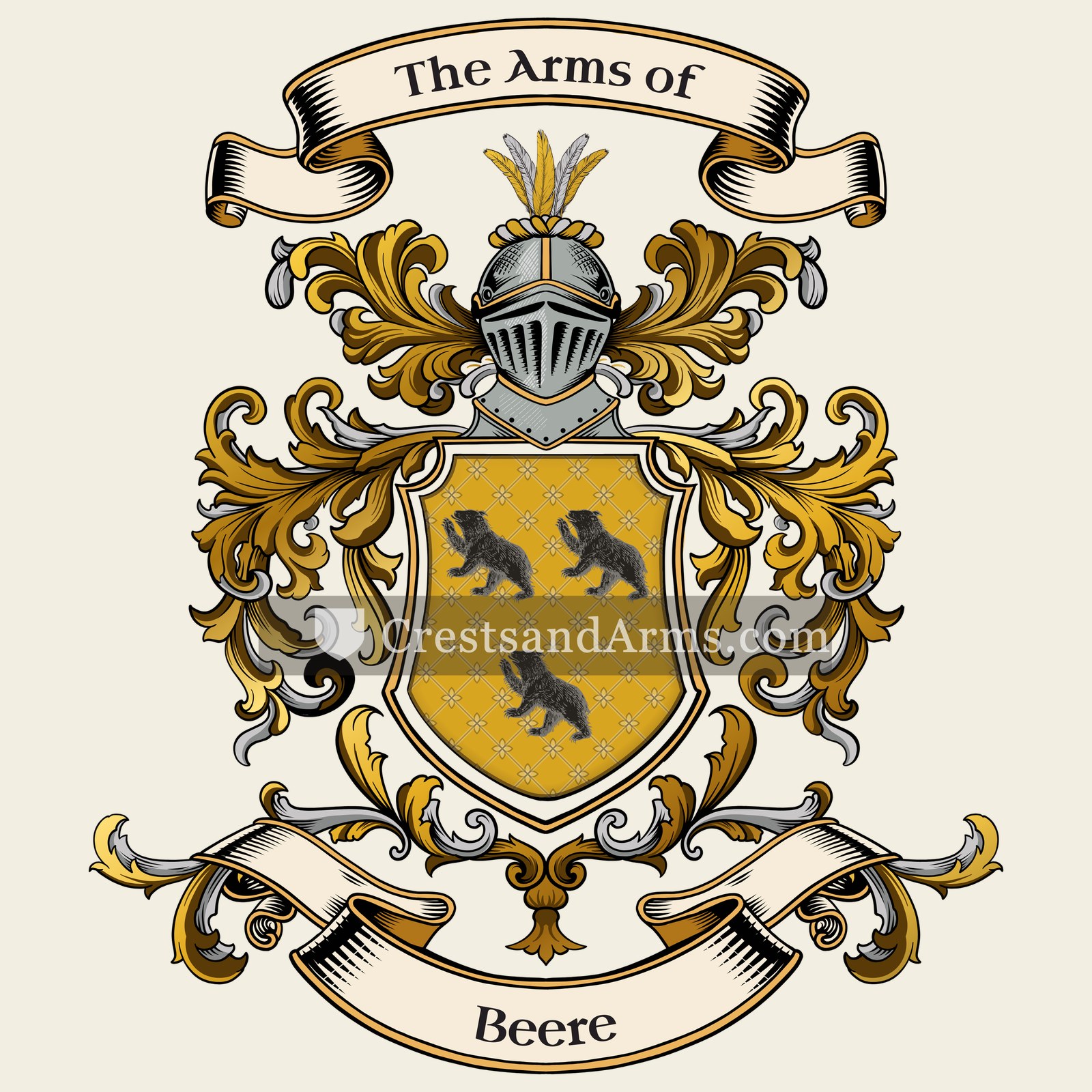


 saltireResolution, and St Andrew's cross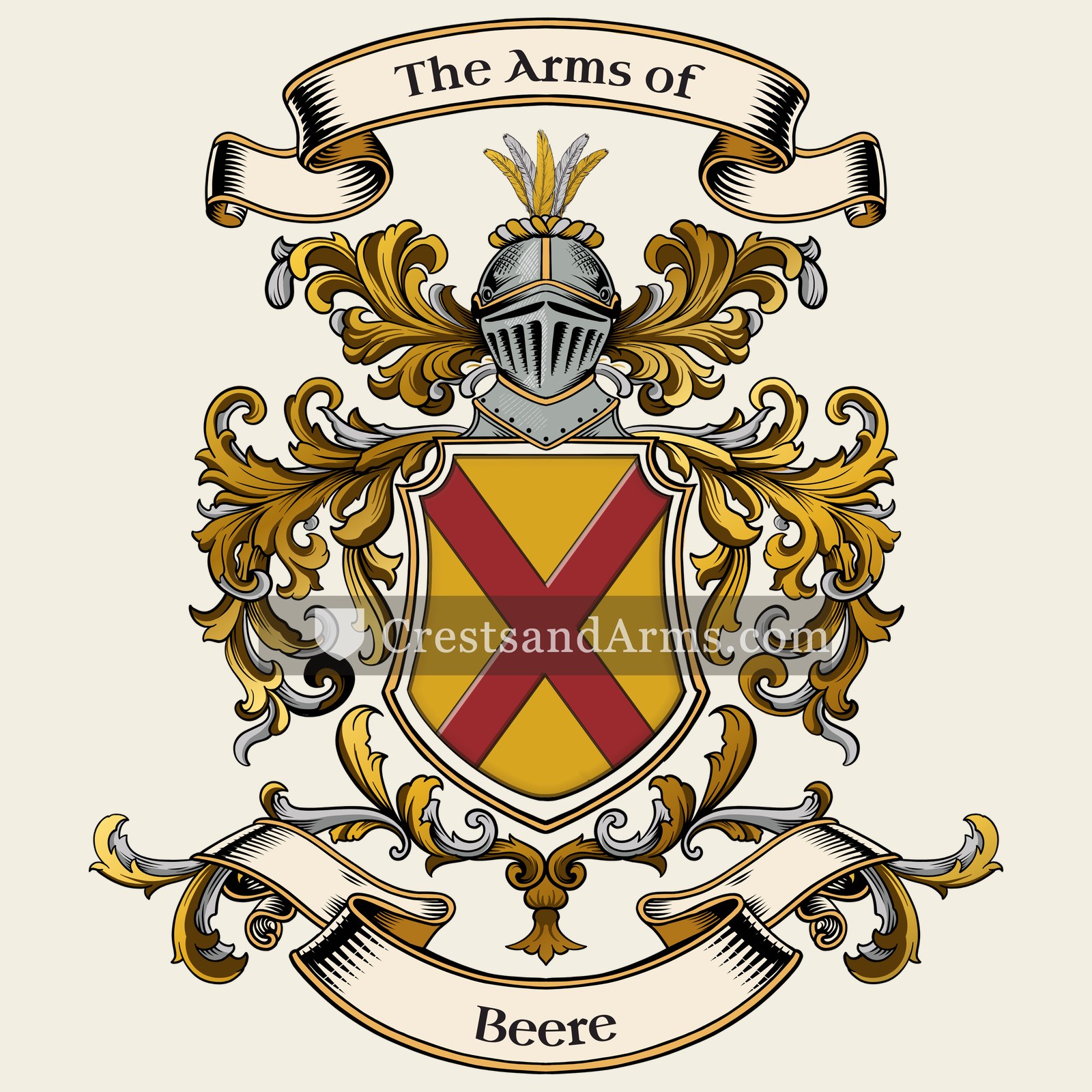


 cantonA mark of honour granted by the sovereign