A record of documented arms, meaning and origin, researched for the Bègue family lines. Documented in 2 countries.
Reg. 3087 · French, A–C
Coat of Arms & Family Crest Details
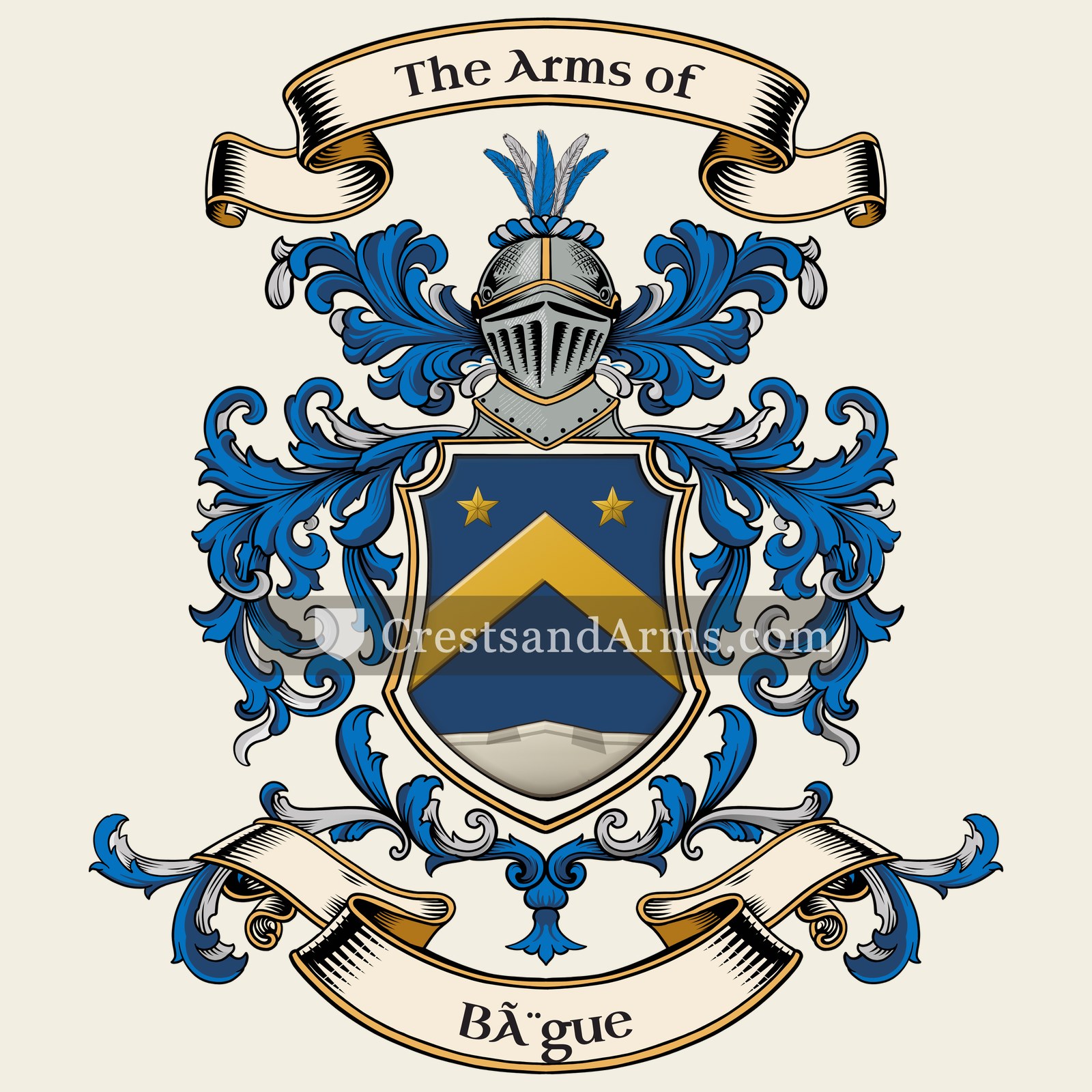
Symbols on this shield
chevronProtection, and faithful service completed
mountThe ground held, and steadfastness upon it
mulletThe third son, and a divine quality from above
Colours
Blue (Azure)Means: Loyalty and truth
Gold (Or)Means: Generosity
Silver (Argent)Means: Peace and sincerity
Historical info
Source
J. B. Rietstap, Armorial Général, Gouda: G. B. van Goor Zonen, 1884–87
Blazon (the actual original written record)
“D'azur au chev., acc. en chef de deux étoiles et en p. d'une bécasse, le tout d'or, ladite bécasse posée sur un rocher d'arg.”
ProvenceMartinique · Provence, c. 1663
Where the Bègue Arms Were Recorded
Provence
Map of France showing where the Bègue arms are recorded
The Bègue arms were recorded in Provence, c. 1663.
Provence was old country, with towns dating to the Romans and families who traced their land back nearly as far. Its gentry were many and long-settled, and long settlement is what fills a register.
This is where the arms were entered in the register. Families often moved to other parts of the country, so the same name can turn up in more than one region.
The body that granted and recorded arms in France in this period.
Louis XIV of France
Sovereign of the period
Louis XIV of France
1643–1715
Reigning in France when the Bègue arms are first recorded.
How Arms Worked in France
In France, a coat of arms was a mark of honor that passed down through the male line to all legitimate descendants. Families often used the same shield without changes to show their shared heritage. If a branch wanted to stand out, they could add a small mark to their shield to show their specific place in the family tree.
Granting authority
The Juge d'armes de France acted as the official authority that regulated and verified coats of arms across the country.
How they got arms
Families typically inherited their arms from ancestors, though they could also receive them through royal grants or by proving their noble status.
Where arms were recorded
Coats of arms were officially recorded in the Armorial Général de France, which began its main collection in the year 1696.
The family's standing
Recorded among the armigerous families of Provence.
Origin & History of the Bègue Family in France
The surname Bègue finds its roots in the medieval French language, where it originated as a descriptive nickname for someone who spoke with a stutter or a stammer. In the social structure of early France, such names were common ways to distinguish individuals within small, growing communities. By the time the family was firmly established in the Provence region in 1663, they were part of a vibrant provincial culture defined by agricultural traditions and local trade. Living in the south of France during the seventeenth century meant the family was likely subject to the shifting political influence of the French monarchy as it consolidated power over the provinces. As the Bègue name persisted through generations in this area, it transitioned from a simple personal descriptor into a stable family identity that reflected the resilience and regional character of the people living in the Mediterranean landscape of Provence.
Coat of Arms & Family Crest Details
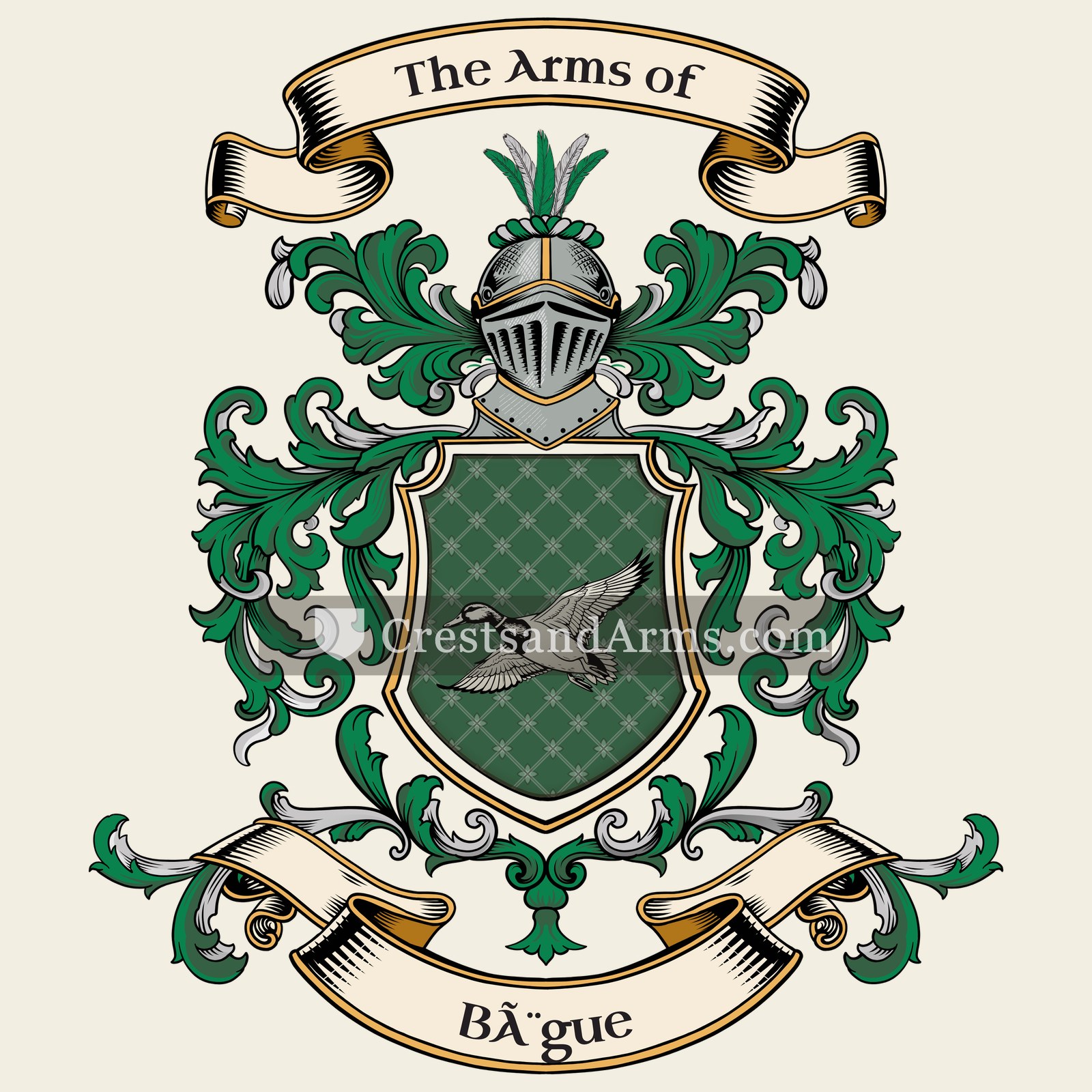
Symbols on this shield
duckResourcefulness on land and water
Colours
Green (Vert)Means: Hope
Silver (Argent)Means: Peace and sincerity
Historical info
Source
J. B. Rietstap, Armorial Général, Gouda: G. B. van Goor Zonen, 1884–87
Blazon (the actual original written record)
“De sin. à une oie pass. d'arg.”
Switzerlandc. 1745
Where the Bègue Arms Were Recorded
Bern
Map of Switzerland showing where the Bègue arms are recorded
The Bègue arms were recorded in Switzerland, c. 1745.
Arms such as these were typically recorded in Bern.
Bern was the largest of the Swiss cantons and ran itself, with its own council and its own courts. Its governing families held office for generations, and office of that kind carried a shield with it.
This is where the arms were entered in the register. Families often moved to other parts of the country, so the same name can turn up in more than one region.
The body that granted and recorded arms in Switzerland in this period.
How Arms Worked in Switzerland
In Switzerland, coats of arms were not restricted to the nobility and were often adopted by common citizens and families. These symbols were passed down through generations to show family identity. When branches of a family grew, they often changed small details of the design to distinguish their own line from the original group.
Granting authority
Cantonal and civic authorities managed the use of coats of arms within their specific regions and local jurisdictions.
How they got arms
Families typically assumed their own coats of arms based on local custom rather than receiving them from a central monarch.
Where arms were recorded
Arms were recorded in various cantonal and civic registers starting from the fourteenth century throughout the Swiss region.
The family's standing
Recorded among the armigerous families of Switzerland.
Origin & History of the Bègue Family in Switzerland
The family name Bègue has deep roots in the historical landscape of Switzerland, particularly within the canton of Bern. By the year 1745, records confirm that members of the Bègue family were established residents in this region. The name itself is thought to have originated as a descriptive nickname in French-speaking territories, likely referring to someone who had a stutter or a distinct way of speaking. As these individuals migrated into the German-speaking environment of Bern, the name remained a marker of their ancestral heritage. Over the following generations, the family integrated into the local community, participating in the social and economic life of the city. Their presence in 18th-century Bern reflects the broader movement of families across linguistic borders in Switzerland during that era. By maintaining their surname, the Bègue family preserved a link to their origins while becoming a permanent part of the Swiss historical narrative.
Related Branches & Arms
Root word
balbus
Latin term meaning stammering or stuttering.
This name
BègueA nickname historically used to describe a person who had a speech impediment.
also spelled
Begu
Beguee
Begay
Documented Sources
J. B. Rietstap, Armorial Général, Gouda: G. B. van Goor Zonen, 1884–87
Dauzat, Albert, Dictionnaire étymologique des noms et prénoms de France, 1951
Morlet, Marie-Thérèse, Dictionnaire étymologique des noms de famille, 1991
Archives départementales des Bouches-du-Rhône, Registres paroissiaux et d'état civil, 1663
Digital archive packCoat of arms PNG, gold border print PDF, vector SVG and the certificate of authenticity. Sent to your email in minutes.


 chevronProtection, and faithful service completed
 mountThe ground held, and steadfastness upon it
 mulletThe third son, and a divine quality from above
 chevronProtection, and faithful service completed
 mountThe ground held, and steadfastness upon it
 mulletThe third son, and a divine quality from above

 duckResourcefulness on land and water