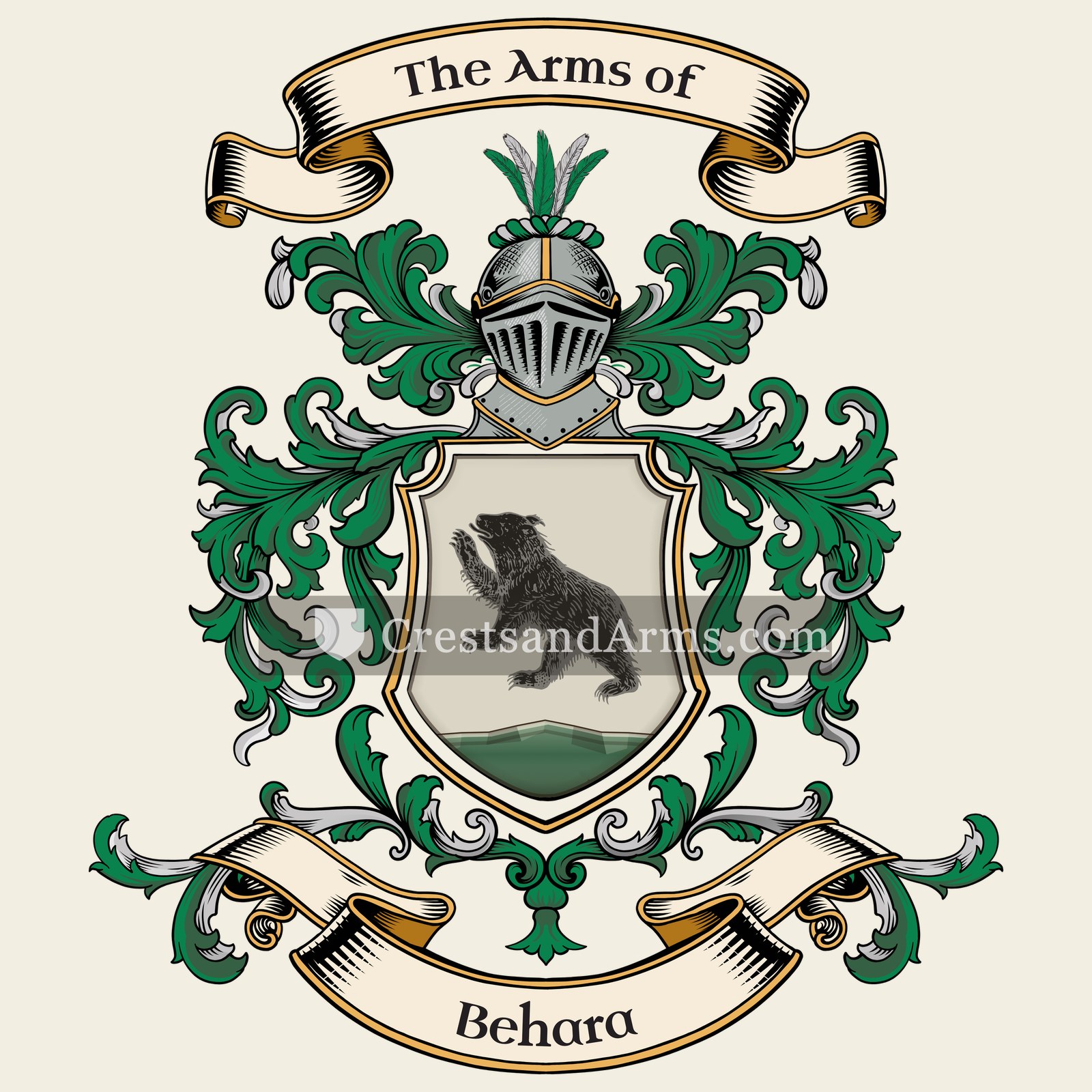
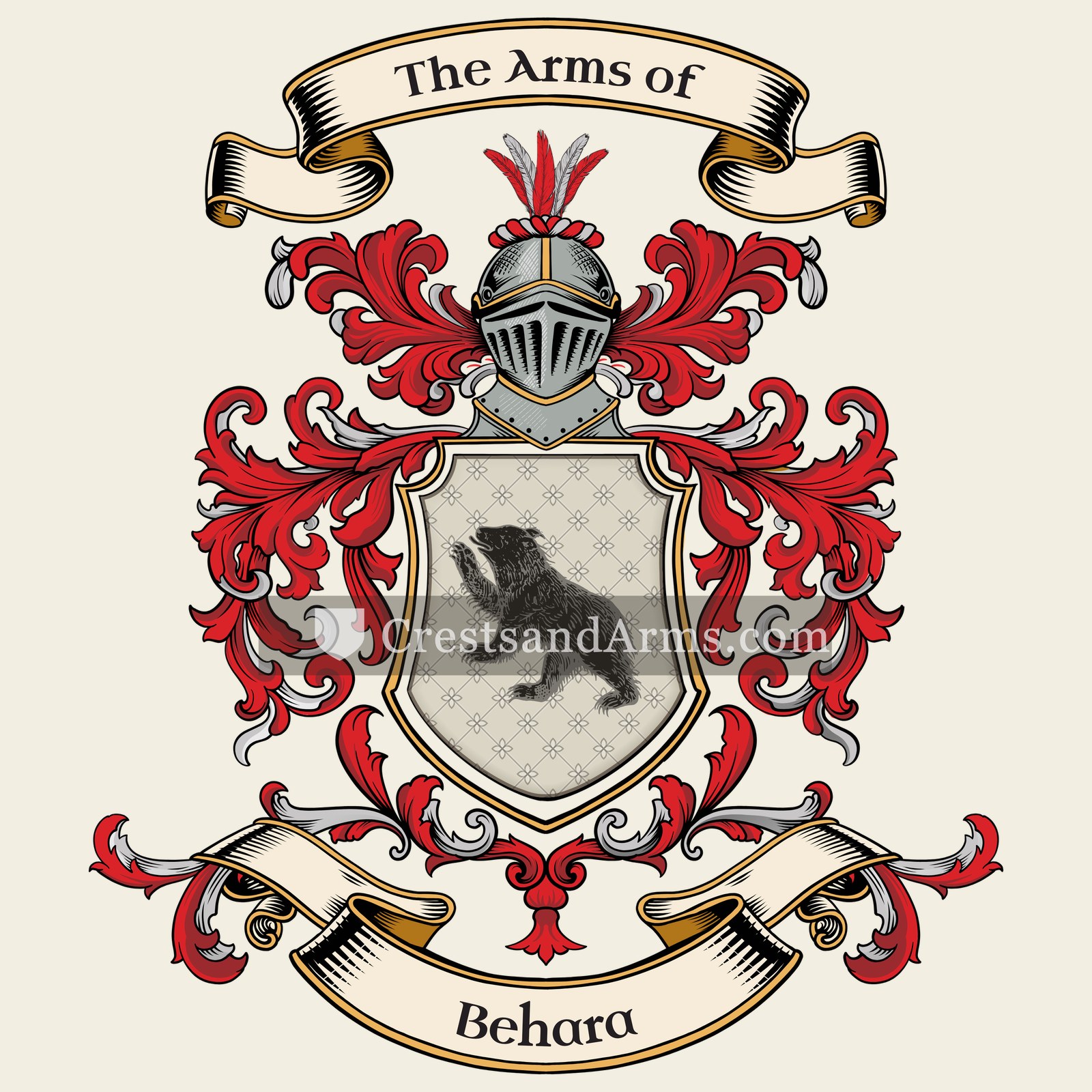
Map of Belgium showing where the Behara arms are recorded
The Behara arms were recorded in Bruxelles, c. 1871.
This is where the arms were entered in the register. Families often moved to other parts of the country, so the same name can turn up in more than one region.
The body that granted and recorded arms in Belgium in this period.
Leopold II of Belgium
Sovereign of the period
Leopold II of Belgium
1865–1909
Reigning in Belgium when the Behara arms are first recorded.
How Arms Worked in Belgium
In Belgium, a coat of arms is considered personal property that is passed down through the male line to legitimate descendants. Families often use the same shield design across generations to show their shared heritage. If a branch of the family wants to change the design, they must apply for an official update to their specific version of the arms.
Granting authority
The Conseil héraldique is the official body that regulates and approves all coats of arms in Belgium.
How they got arms
Families obtain their coats of arms through formal royal grants or by confirming their historical right to use existing designs.
Where arms were recorded
All approved coats of arms are officially recorded in the public registers of the Conseil héraldique since 1844.
The family's standing
Recorded among the armigerous families of Belgium.
Origin & History of the Behara Family in Belgium
The history of the Behara family in Belgium begins to emerge clearly during the late nineteenth century, specifically with documented records of family members living in Brussels by 1871. During this period, Brussels was a rapidly industrializing city that attracted many people seeking new opportunities in trade and urban development. The presence of the Behara name in the capital suggests that the family was part of the growing middle class that helped shape the city during the reign of King Leopold II. While the name itself may have roots that stretch across European borders, its establishment in Brussels marks a transition into the Belgian administrative system. By settling in such a central hub, the family became part of the vibrant social and economic fabric of a nation that was quickly modernizing its infrastructure and expanding its reach on the global stage.
Coat of Arms & Family Crest Details
Symbols on this shield
bearStrength, cunning and protection of kin
Colours
Silver (Argent)Means: Peace and sincerity
Black (Sable)Means: Constancy
Historical info
Source
J. B. Rietstap, Armorial Général, Gouda: G. B. van Goor Zonen, 1884–87
Blazon (the actual original written record)
“D'arg. à l'ours de sa. C.: deux têtes et cols de cygne adossés d'arg.”
MecklenburgMecklenburg, c. 1703
Digital archive packCoat of arms PNG, gold border print PDF, vector SVG and the certificate of authenticity. Sent to your email in minutes.
Map of Germany showing where the Behara arms are recorded
The Behara arms were recorded in Mecklenburg, c. 1703.
Mecklenburg was farming country in the north of Germany, held by a small number of families who kept their estates for generations. Owning land was what entitled a family to arms, so a great many Mecklenburg names ended up in the registers.
This is where the arms were entered in the register. Families often moved to other parts of the country, so the same name can turn up in more than one region.
The body that granted and recorded arms in Germany in this period.
Leopold I, Holy Roman Emperor
Sovereign of the period
Leopold I, Holy Roman Emperor
1658–1705
Reigning in Belgium when the Behara arms are first recorded.
How Arms Worked in Germany
In the Holy Roman Empire, coats of arms were often granted to individuals by the Emperor or his representatives. These arms were then passed down through the generations to all legitimate descendants of the original holder. Younger branches of a family usually kept the same shield design without needing to change it, as the arms belonged to the entire lineage.
Granting authority
The Holy Roman Emperor held the sole power to grant new coats of arms throughout his vast imperial territories.
How they got arms
Families typically obtained their coats of arms through a formal imperial grant or by proving their noble status to the authorities.
Where arms were recorded
These grants were officially recorded in the Imperial Chancery registers, which began keeping formal records of such honors during the Middle Ages.
The family's standing
Recorded among the armigerous families of Mecklenburg.
Origin & History of the Behara Family in Germany
The history of the Behara name in Germany is deeply rooted in the northern region of Mecklenburg, where records confirm the presence of family members as early as 1703. During this period, Mecklenburg was a landscape defined by agricultural traditions and a rigid social structure that tied many families to the land. The name likely emerged as a localized variation of regional surnames, reflecting the linguistic patterns common to the Low German dialects spoken in the Baltic coastal areas. Families living in this region during the early eighteenth century often experienced significant shifts in their daily lives due to the influence of the local nobility and the changing economic demands of the rural economy. As the family established their roots in this northern territory, they became part of the enduring cultural fabric of Mecklenburg, contributing to the agricultural development and community life that characterized the region for generations.
Related Branches & Arms
Root word
Baehr
A Germanic term referring to a bear or a brave warrior.
This name
BeharaA locational or descriptive surname likely derived from a bear-like characteristic or a place name.
also spelled
Beer
Berr
Bear
Documented Sources
J. B. Rietstap, Armorial Général, Gouda: G. B. van Goor Zonen, 1884–87
State Archives in Belgium (Archives de l'État en Belgique), Registres de population de la ville de Bruxelles, 1871
Digital archive packCoat of arms PNG, gold border print PDF, vector SVG and the certificate of authenticity. Sent to your email in minutes.


 mountThe ground held, and steadfastness upon it
 bearStrength, cunning and protection of kin
 mountThe ground held, and steadfastness upon it
 bearStrength, cunning and protection of kin