Map of Belgium showing where the Behr arms are recorded
The Behr arms were recorded in Bruxelles, c. 1871.
This is where the arms were entered in the register. Families often moved to other parts of the country, so the same name can turn up in more than one region.
The body that granted and recorded arms in Belgium in this period.
Leopold II of Belgium
Sovereign of the period
Leopold II of Belgium
1865–1909
Reigning in Belgium when the Behr arms are first recorded.
How Arms Worked in Belgium
In Belgium, a coat of arms is considered personal property that is passed down through the male line to legitimate descendants. Families often use the same shield design across generations to show their shared heritage. If a branch of the family wants to change the design, they must apply for an official update to their specific version of the arms.
Granting authority
The Conseil héraldique is the official body that regulates and approves all coats of arms in Belgium.
How they got arms
Families obtain their coats of arms through formal royal grants or by confirming their historical right to use existing designs.
Where arms were recorded
All approved coats of arms are officially recorded in the public registers of the Conseil héraldique since 1844.
The family's standing
Recorded among the armigerous families of Belgium.
Origin & History of the Behr Family in Belgium
The family name Behr has roots that trace back to the Germanic linguistic tradition, where it functioned as a descriptive surname meaning bear. By the time the family established a documented presence in Brussels in 1871, the name had already spread across various regions of Europe due to migration and trade. In the context of nineteenth-century Belgium, families like the Behrs were often part of the growing urban middle class that thrived during the Industrial Revolution. Brussels was a hub of rapid expansion and cultural change during this period, and the family would have been integrated into the bustling social and economic life of the city. Their arrival in the capital reflects the broader movement of people seeking new opportunities in a nation that was quickly becoming a center for European commerce and politics. By settling in Brussels, the family became part of the diverse tapestry of residents who helped shape the modern identity of the city during a time of significant national growth.
Coat of Arms & Family Crest Details
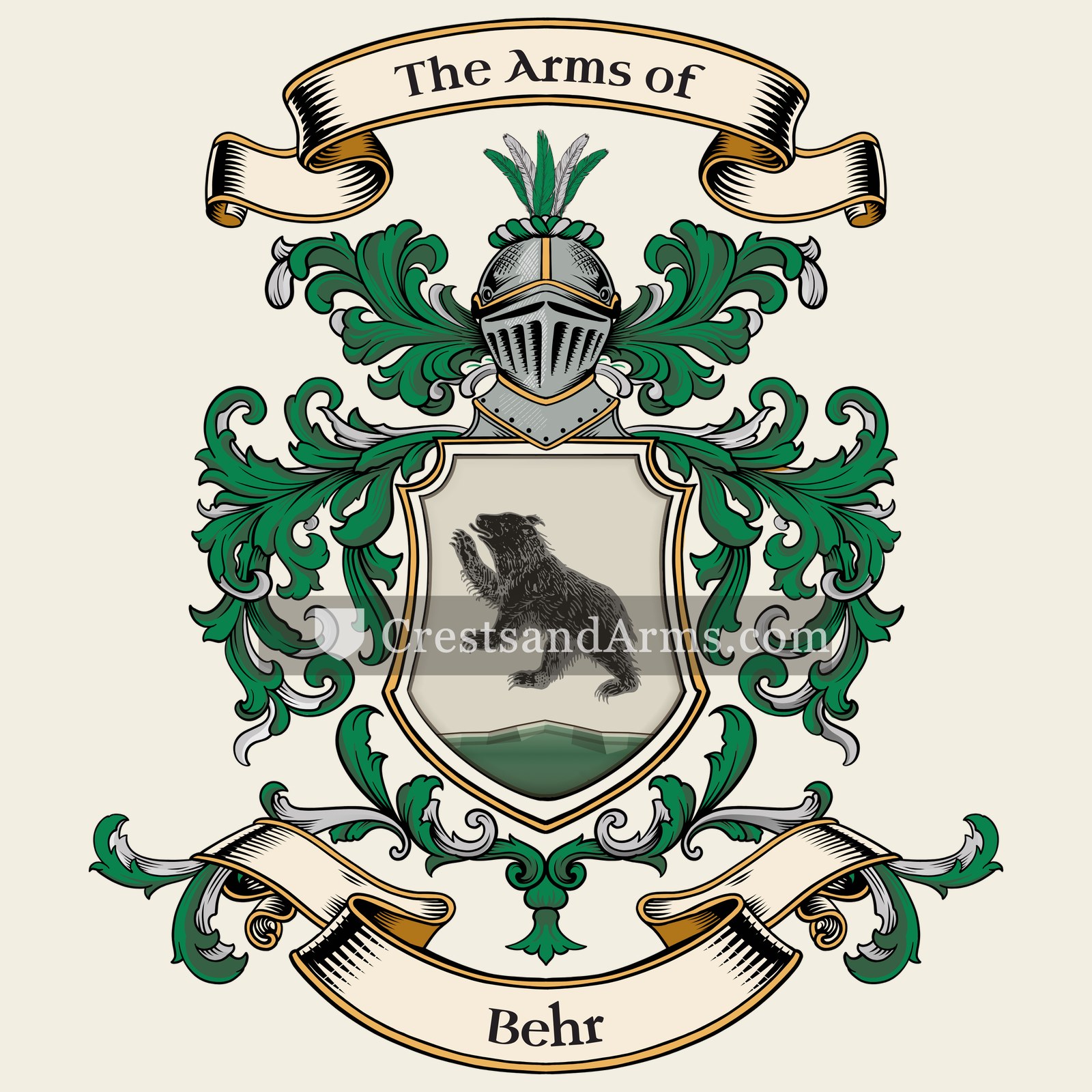
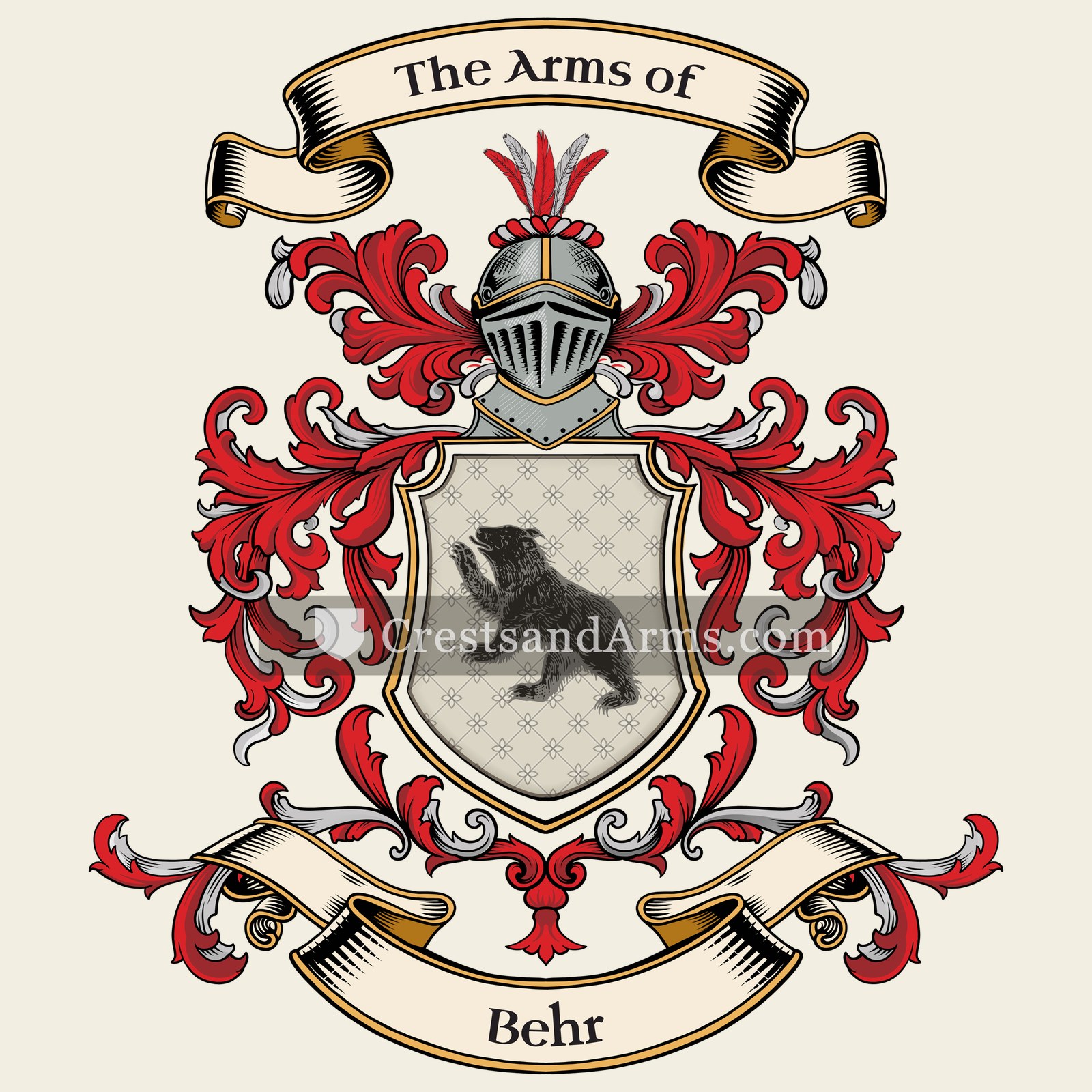
Symbols on this shield
bearStrength, cunning and protection of kin
Colours
Silver (Argent)Means: Peace and sincerity
Black (Sable)Means: Constancy
Historical info
Source
J. B. Rietstap, Armorial Général, Gouda: G. B. van Goor Zonen, 1884–87
Blazon (the actual original written record)
“D'arg. à l'ours de sa. C.: deux têtes et cols de cygne adossés d'arg.”
MecklenburgMecklenburg, c. 1703
Digital archive packCoat of arms PNG, gold border print PDF, vector SVG and the certificate of authenticity. Sent to your email in minutes.
Map of Germany showing where the Behr arms are recorded
The Behr arms were recorded in Mecklenburg, c. 1703.
Mecklenburg was farming country in the north of Germany, held by a small number of families who kept their estates for generations. Owning land was what entitled a family to arms, so a great many Mecklenburg names ended up in the registers.
This is where the arms were entered in the register. Families often moved to other parts of the country, so the same name can turn up in more than one region.
The body that granted and recorded arms in Germany in this period.
Leopold I, Holy Roman Emperor
Sovereign of the period
Leopold I, Holy Roman Emperor
1658–1705
Reigning in Belgium when the Behr arms are first recorded.
How Arms Worked in Germany
In the Holy Roman Empire, coats of arms were often granted to individuals by the Emperor or his representatives. These arms were then passed down through the generations to all legitimate descendants of the original holder. Younger branches of a family usually kept the same shield design without needing to change it, as the arms belonged to the entire lineage.
Granting authority
The Holy Roman Emperor held the sole power to grant new coats of arms throughout his vast imperial territories.
How they got arms
Families typically obtained their coats of arms through a formal imperial grant or by proving their noble status to the authorities.
Where arms were recorded
These grants were officially recorded in the Imperial Chancery registers, which began keeping formal records of such honors during the Middle Ages.
The family's standing
Recorded among the armigerous families of Mecklenburg.
Origin & History of the Behr Family in Germany
The surname Behr is deeply rooted in the history of Northern Germany, particularly within the region of Mecklenburg. The name is derived from the Middle Low German word for bear, which often served as a descriptive nickname for a person known for their physical strength or a bold personality. By the early eighteenth century, the family was well established in the Mecklenburg area, where they participated in the social and agricultural life of the rural landscape. During this period, families in this region were often tied to the land, and their records appear in local parish registers that tracked births, marriages, and deaths. These documents show that the Behr family was integrated into the local community structure long before the modern era. As the family grew, they moved between various towns and villages, helping to shape the cultural identity of the Baltic coast through their work and daily interactions.
Behr Meaning & Related Branches
Root word
bero
A Germanic term referring to a brown-colored animal.
This name
BehrA nickname for a person with a strong or bear-like nature.
also spelled
Beer
Berr
Bear
Related arms
Beervariant spelling
**Albert**recorded with Behr, same area
Brunnrecorded with Behr, same area
Dabelowrecorded with Behr, same area
Documented Sources
J. B. Rietstap, Armorial Général, Gouda: G. B. van Goor Zonen, 1884–87
State Archives in Belgium (Archives de l'État en Belgique), Registres de population de la ville de Bruxelles
City Archives of Brussels (Archives de la Ville de Bruxelles), État civil
Debrabandere, Frans, Woordenboek van de familienamen in België en Noord-Frankrijk, 2003
Duvivier, Charles, La famille et la cité en Belgique, 1894
Digital archive packCoat of arms PNG, gold border print PDF, vector SVG and the certificate of authenticity. Sent to your email in minutes.


 mountThe ground held, and steadfastness upon it
 bearStrength, cunning and protection of kin
 mountThe ground held, and steadfastness upon it
 bearStrength, cunning and protection of kin