Map of Belgium showing where the Bellini arms are recorded
The Bellini arms were recorded in Hainaut, c. 1737.
Hainaut sat on the border between France and the Low Countries and was fought over for centuries. Families there held their land under arms and expected to defend it, so a shield was a working thing.
This is where the arms were entered in the register. Families often moved to other parts of the country, so the same name can turn up in more than one region.
The body that granted and recorded arms in Belgium in this period.
Charles VI, Holy Roman Emperor
Sovereign of the period
Charles VI, Holy Roman Emperor
1711–1740
Reigning in Belgium when the Bellini arms are first recorded.
How Arms Worked in Belgium
In Belgium, a coat of arms is considered personal property that is passed down through the male line to legitimate descendants. Families often use the same shield design across generations to show their shared heritage. If a branch of the family wants to change the design, they must apply for an official update to their specific version of the arms.
Granting authority
The Conseil héraldique is the official body that regulates and approves all coats of arms in Belgium.
How they got arms
Families obtain their coats of arms through formal royal grants or by confirming their historical right to use existing designs.
Where arms were recorded
All approved coats of arms are officially recorded in the public registers of the Conseil héraldique since 1844.
The family's standing
Recorded among the armigerous families of Hainaut.
Origin & History of the Bellini Family in Belgium
The Bellini family name first appears in the historical record of the Hainaut region of Belgium in 1737. While the name is often associated with Italian origins, its presence in this specific area suggests that early family members were likely integrated into the local administrative or merchant classes during the eighteenth century. At that time, Hainaut was a bustling center for trade and agriculture under the rule of the Austrian Netherlands. Families like the Bellinis often moved across European borders to pursue opportunities in craftsmanship or regional governance. By settling in this part of Belgium, these early ancestors became part of a diverse social fabric that defined the region before the industrial changes of the following century. Their documented presence in 1737 serves as a vital link to understanding how families migrated and established roots within the complex political landscape of the Low Countries.
Coat of Arms & Family Crest Details
Symbols on this shield
eagleNobility, strength and a keen mind
legStrength and swiftness
mulletThe third son, and a divine quality from above
Colours
Gold (Or)Means: Generosity
Red (Gules)Means: Military strength
Black (Sable)Means: Constancy
Historical info
Source
J. B. Rietstap, Armorial Général, Gouda: G. B. van Goor Zonen, 1884–87
Blazon (the actual original written record)
“Coupé: au 1 d'or à l'aigle de sa., cour. du champ; au 2 de gu. à une jambe de lion d'or, en barre, les ongles en bas, surm. d'une étoile (8) d'or.”
ItalyMilan, c. 1775
Digital archive packCoat of arms PNG, gold border print PDF, vector SVG and the certificate of authenticity. Sent to your email in minutes.
Map of Italy showing where the Bellini arms are recorded
The Bellini arms were recorded in Milan, c. 1775.
This is where the arms were entered in the register. Families often moved to other parts of the country, so the same name can turn up in more than one region.
The body that granted and recorded arms in Italy in this period.
Alvise Giovanni Mocenigo
Sovereign of the period
Alvise Giovanni Mocenigo
1763–1778
Reigning in Belgium when the Bellini arms are first recorded.
How Arms Worked in Italy
In the Italian states, coats of arms were often used by noble families to show their status and history. These symbols were passed down through the generations to all legitimate male descendants. Younger branches of a family usually kept the original design but sometimes added small changes to distinguish their specific line from the main branch.
Granting authority
Various local rulers and city governments controlled the use of coats of arms across the different Italian states.
How they got arms
Families often assumed their own arms or received them as official grants from local lords, popes, or city councils.
Where arms were recorded
Arms were recorded in local city archives or private family books rather than in one single national register.
The family's standing
Recorded among the armigerous families of Italy.
Origin & History of the Bellini Family in Italy
The Bellini family name has deep roots in the northern regions of Italy, where it evolved as a descriptive surname linked to the Italian word "bello," meaning beautiful or handsome. By the mid-18th century, the family established a notable presence in Milan, a city that served as a major cultural and economic hub under the influence of the Habsburg monarchy. During this era, families like the Bellinis often integrated into the urban fabric of Milan by participating in the city's growing trade networks and administrative life. While the name appears across various Italian provinces, the Milanese branch contributed to the local history of the region during a time of significant social change. Their presence in 1775 highlights a period when families were solidifying their roles within the professional and civic structures of Lombardy.
Coat of Arms & Family Crest Details
Symbols on this shield
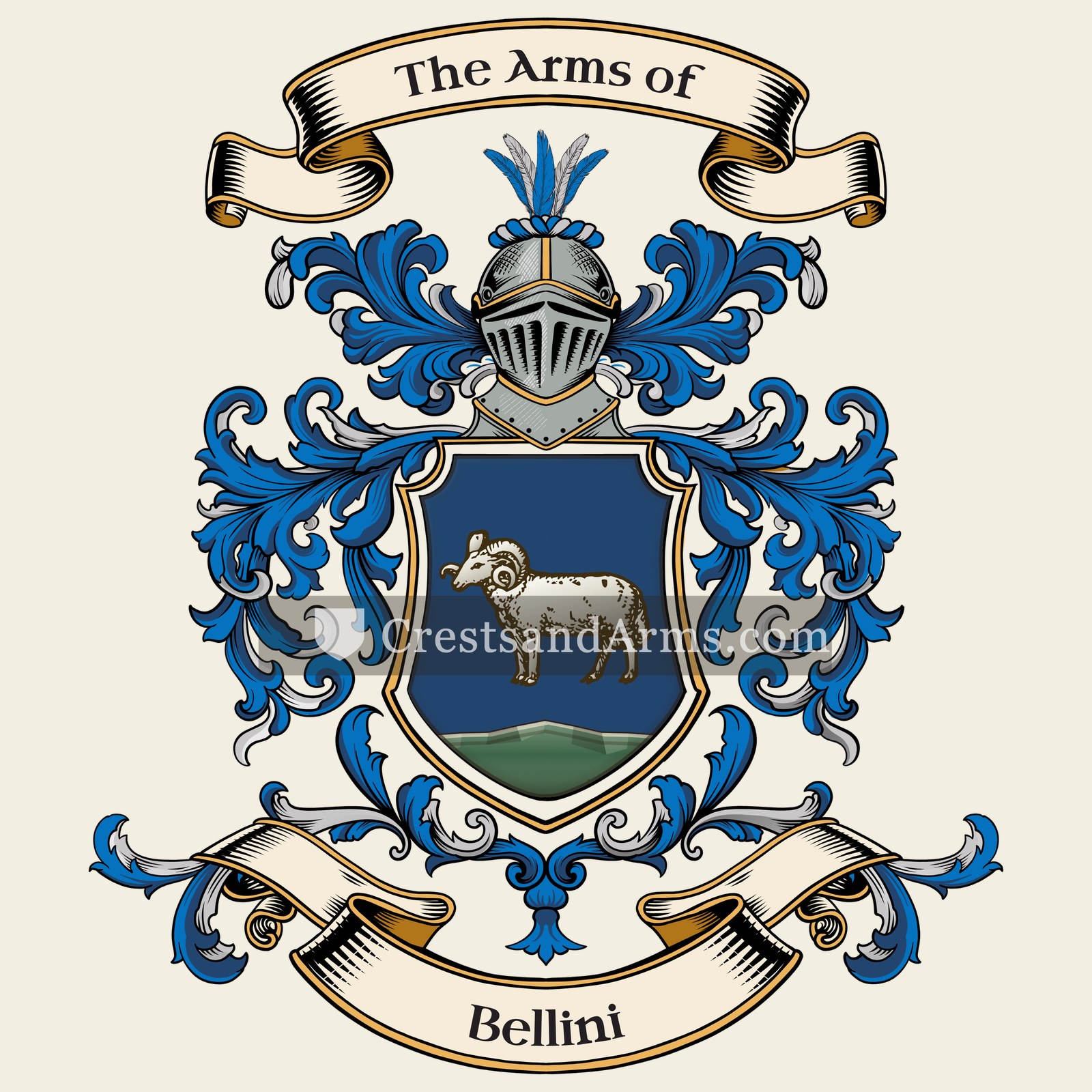
mountThe ground held, and steadfastness upon it
ramLeadership and authority
Colours
Blue (Azure)Means: Loyalty and truth
Green (Vert)Means: Hope
Silver (Argent)Means: Peace and sincerity
Historical info
Source
J. B. Rietstap, Armorial Général, Gouda: G. B. van Goor Zonen, 1884–87
Blazon (the actual original written record)
“D'azur à un bélier courant d'arg. sur un tertre de trois pics de sin.”
SwitzerlandValais, c. 1745
Digital archive packCoat of arms PNG, gold border print PDF, vector SVG and the certificate of authenticity. Sent to your email in minutes.
Map of Switzerland showing where the Bellini arms are recorded
The Bellini arms were recorded in Valais, c. 1745.
This is where the arms were entered in the register. Families often moved to other parts of the country, so the same name can turn up in more than one region.
The body that granted and recorded arms in Switzerland in this period.
How Arms Worked in Switzerland
In Switzerland, coats of arms were not restricted to the nobility and were often adopted by common citizens and families. These symbols were passed down through generations to show family identity. When branches of a family grew, they often changed small details of the design to distinguish their own line from the original group.
Granting authority
Cantonal and civic authorities managed the use of coats of arms within their specific regions and local jurisdictions.
How they got arms
Families typically assumed their own coats of arms based on local custom rather than receiving them from a central monarch.
Where arms were recorded
Arms were recorded in various cantonal and civic registers starting from the fourteenth century throughout the Swiss region.
The family's standing
Recorded among the armigerous families of Switzerland.
Origin & History of the Bellini Family in Switzerland
The Bellini family name has deep roots in the rugged landscape of the Swiss Alps, particularly within the canton of Valais. By the year 1745, records confirm that members of the family were well-established residents in this region. The name itself is of Italian origin, likely derived from the word bello, meaning beautiful or handsome. It is probable that the family moved north from the Italian-speaking regions into the Swiss valleys to seek new opportunities in trade or agriculture. Living in the high-altitude environment of Valais required great resilience and adaptability, as the families had to navigate both the harsh mountain climate and the complex political shifts of the eighteenth century. Over time, the Bellini name became a permanent part of the local community, blending Italian linguistic heritage with the distinct cultural traditions of the Swiss mountain people.
Bellini Meaning & Related Branches
Root word
Bellus
Latin term meaning beautiful, handsome, or fair.
This name
BelliniA diminutive form indicating a beautiful or handsome little one.
also spelled
Belini
Related arms
Avogadrorecorded with Bellini, same area
Brusatirecorded with Bellini, same area
Laghirecorded with Bellini, same area
Documented Sources
J. B. Rietstap, Armorial Général, Gouda: G. B. van Goor Zonen, 1884–87
Archives de l'État à Mons, Registres paroissiaux de la province de Hainaut, 1737
Dion, R., Histoire des communes belges: Hainaut, 1954
Lefèvre, J., Documents relatifs aux relations entre les Pays-Bas et l'Italie, 1935
Digital archive packCoat of arms PNG, gold border print PDF, vector SVG and the certificate of authenticity. Sent to your email in minutes.


 lionCourage, strength and royalty
 lionCourage, strength and royalty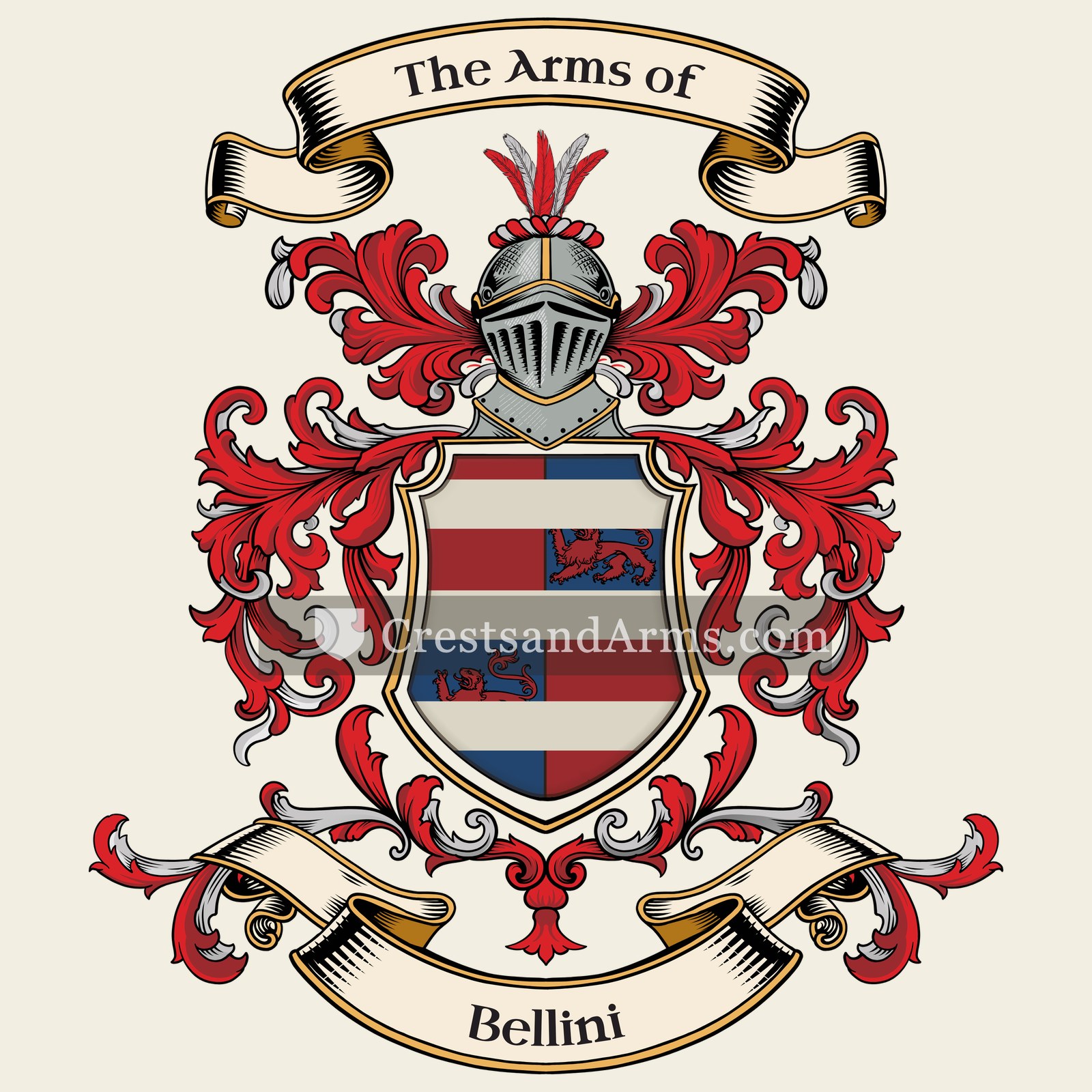


 eagleNobility, strength and a keen mind
 legStrength and swiftness
 mulletThe third son, and a divine quality from above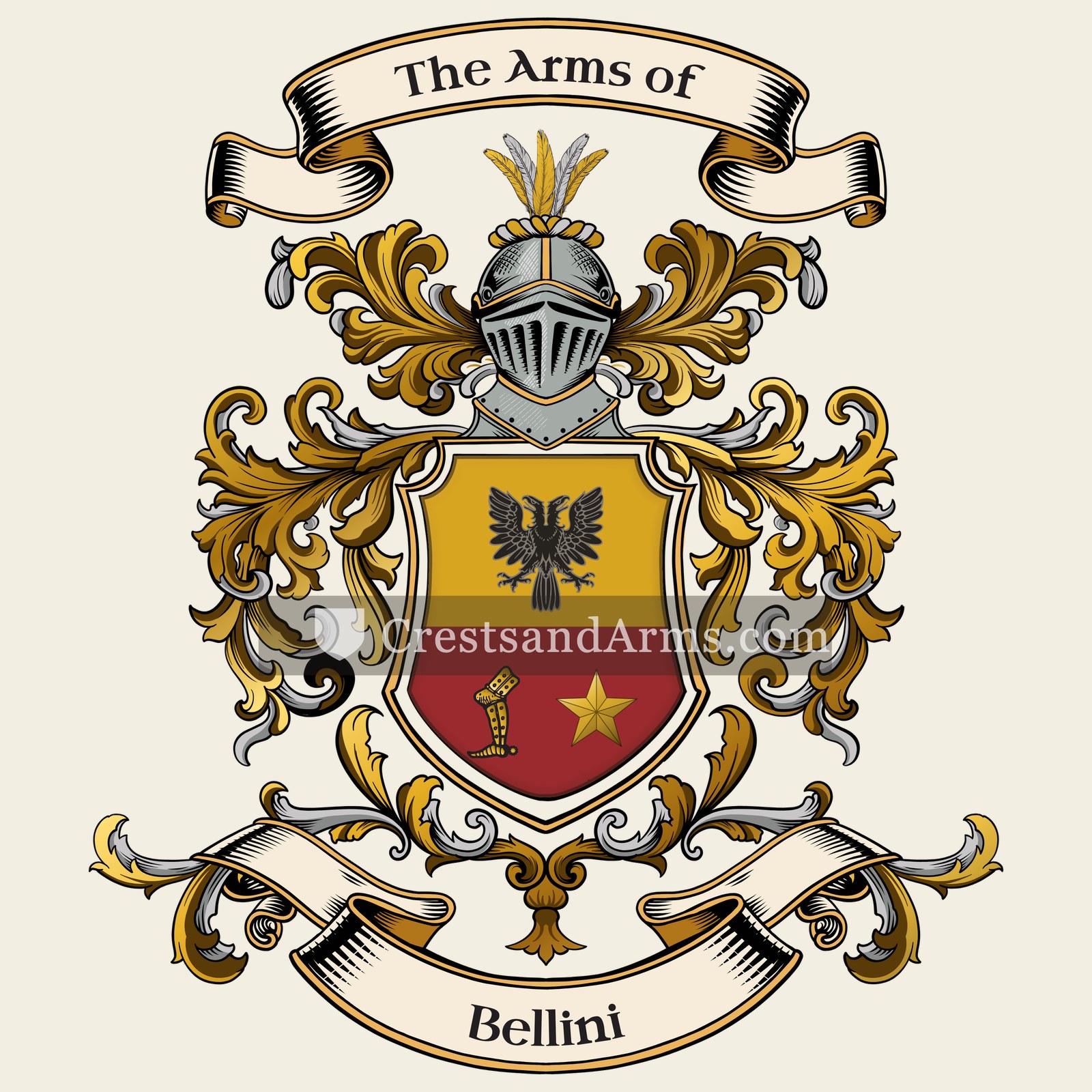


 mountThe ground held, and steadfastness upon it
 ramLeadership and authority