Map of France showing where the Belmont arms are recorded
The Belmont arms were recorded in Lorraine, c. 1636.
Lorraine sat on the border between France and the German lands, and border country bred soldiers. Families here held small estates and served in arms, and a fighting man was exactly the sort who carried a shield of his own.
This is where the arms were entered in the register. Families often moved to other parts of the country, so the same name can turn up in more than one region.
The body that granted and recorded arms in France in this period.
Louis XIII of France
Sovereign of the period
Louis XIII of France
1617–1643
Reigning in France when the Belmont arms are first recorded.
How Arms Worked in France
In France, a coat of arms was a mark of honor that passed down through the male line to all legitimate descendants. Families often used the same shield without changes to show their shared heritage. If a branch wanted to stand out, they could add a small mark to their shield to show their specific place in the family tree.
Granting authority
The Juge d'armes de France acted as the official authority that regulated and verified coats of arms across the country.
How they got arms
Families typically inherited their arms from ancestors, though they could also receive them through royal grants or by proving their noble status.
Where arms were recorded
Coats of arms were officially recorded in the Armorial Général de France, which began its main collection in the year 1696.
The family's standing
Recorded among the armigerous families of Lorraine.
Origin & History of the Belmont Family in France
The name Belmont originates from the French words for beautiful mountain, which suggests that the earliest family members likely lived near a prominent hill or elevated landscape. By the year 1636, records confirm that the family was established in the Lorraine region of northeastern France. This area was a frequent site of conflict during the seventeenth century, particularly during the Thirty Years' War, which forced many families to adapt to shifting borders and political instability. Because Lorraine served as a crossroads between French and Germanic cultures, the Belmont family name often appeared in local parish registers that tracked births, marriages, and deaths. These early ancestors were likely farmers or tradespeople who remained deeply connected to the land and their local communities throughout the turbulent decades of the 1600s. Their presence in this specific region highlights how families during this era relied on strong local roots to survive the pressures of regional warfare and changing national loyalties.
Coat of Arms & Family Crest Details
Symbols on this shield
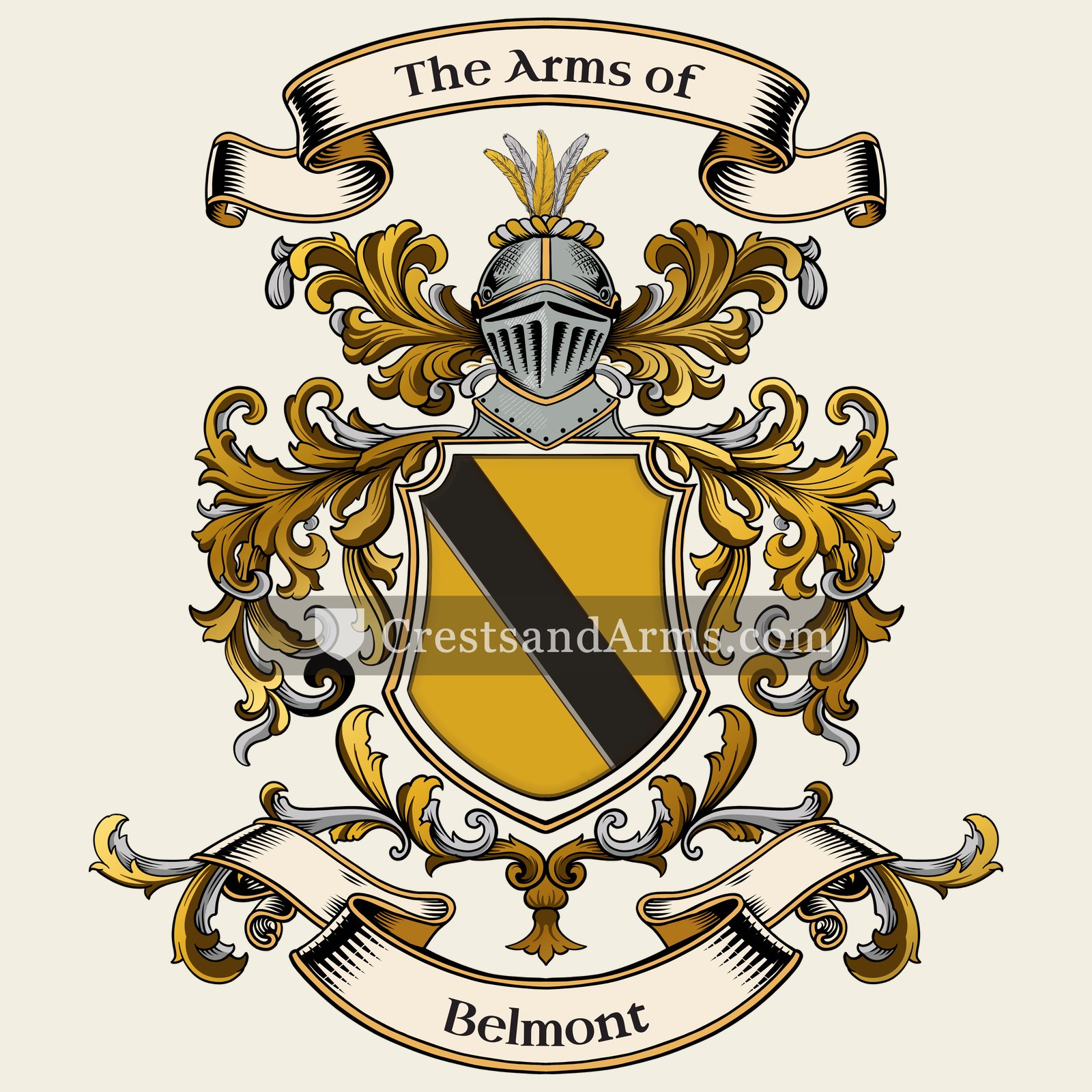
bendDefence, and the scarf of a commander
Colours
Gold (Or)Means: Generosity
Black (Sable)Means: Constancy
Historical info
Source
J. B. Rietstap, Armorial Général, Gouda: G. B. van Goor Zonen, 1884–87
Blazon (the actual original written record)
“D'or à la bande brét. de sa. C.: un mitre épiscopal aux armes de l'écu, les deux sommets ornés chacun d'une boule de gu.”
Switzerlandc. 1745
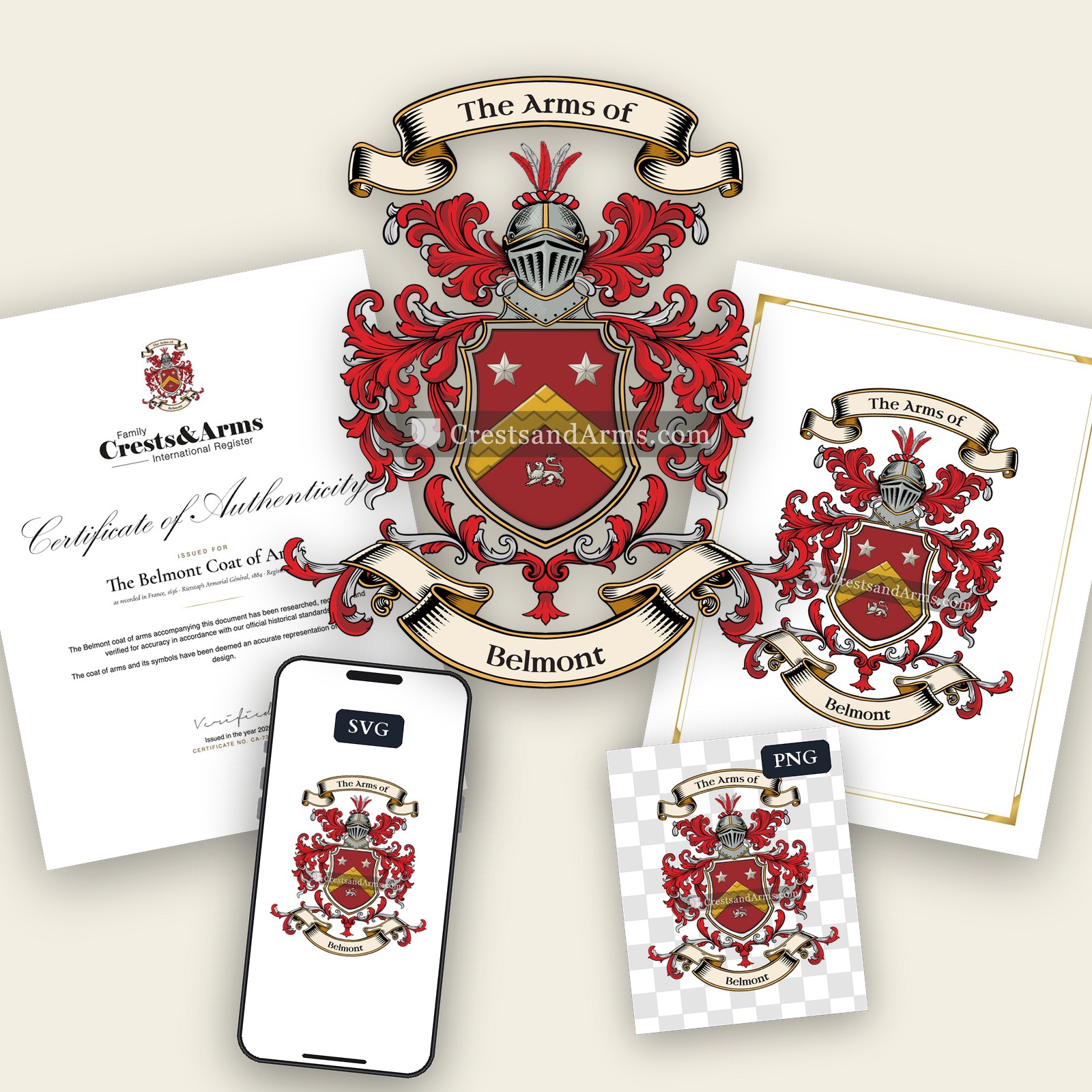
Digital archive packCoat of arms PNG, gold border print PDF, vector SVG and the certificate of authenticity. Sent to your email in minutes.
Map of Switzerland showing where the Belmont arms are recorded
The Belmont arms were recorded in Switzerland, c. 1745.
Arms such as these were typically recorded in Bern.
Bern was the largest of the Swiss cantons and ran itself, with its own council and its own courts. Its governing families held office for generations, and office of that kind carried a shield with it.
This is where the arms were entered in the register. Families often moved to other parts of the country, so the same name can turn up in more than one region.
The body that granted and recorded arms in Switzerland in this period.
How Arms Worked in Switzerland
In Switzerland, coats of arms were not restricted to the nobility and were often adopted by common citizens and families. These symbols were passed down through generations to show family identity. When branches of a family grew, they often changed small details of the design to distinguish their own line from the original group.
Granting authority
Cantonal and civic authorities managed the use of coats of arms within their specific regions and local jurisdictions.
How they got arms
Families typically assumed their own coats of arms based on local custom rather than receiving them from a central monarch.
Where arms were recorded
Arms were recorded in various cantonal and civic registers starting from the fourteenth century throughout the Swiss region.
The family's standing
Recorded among the armigerous families of Switzerland.
Origin & History of the Belmont Family in Switzerland
The family name Belmont carries a rich history rooted in the landscape of Switzerland, where it functioned as a topographic surname describing those who lived near a beautiful mountain. By the middle of the eighteenth century, the family had established a notable presence in the city of Bern. Records from 1745 confirm that members of the Belmont family were active participants in the social and civic life of this influential Swiss canton. During this era, Bern was a center of political power and trade, and families like the Belmonts often integrated into the local merchant and artisan classes. Their movement through the region reflects the broader patterns of Swiss history, where families frequently settled in areas that offered both economic stability and proximity to the alpine terrain that inspired their name. Over time, the family name became synonymous with the rugged and enduring spirit of the Swiss people who helped shape the early development of the city.
Belmont Meaning & Related Branches
Root word
Bellus Mons
Latin for beautiful mountain.
This name
BelmontA topographic name for someone who lived near a beautiful or pleasant mountain.
also spelled
Bellmont
Belmond
Related arms
Bellmontvariant spelling
Documented Sources
J. B. Rietstap, Armorial Général, Gouda: G. B. van Goor Zonen, 1884–87
Bastien, Jean-Pierre, Histoire de la Lorraine, 1998
Cabourdin, Guy, La vie quotidienne en Lorraine au XVIIe siècle, 1984
Archives départementales de Meurthe-et-Moselle, Série E (Registres paroissiaux et d'état civil)
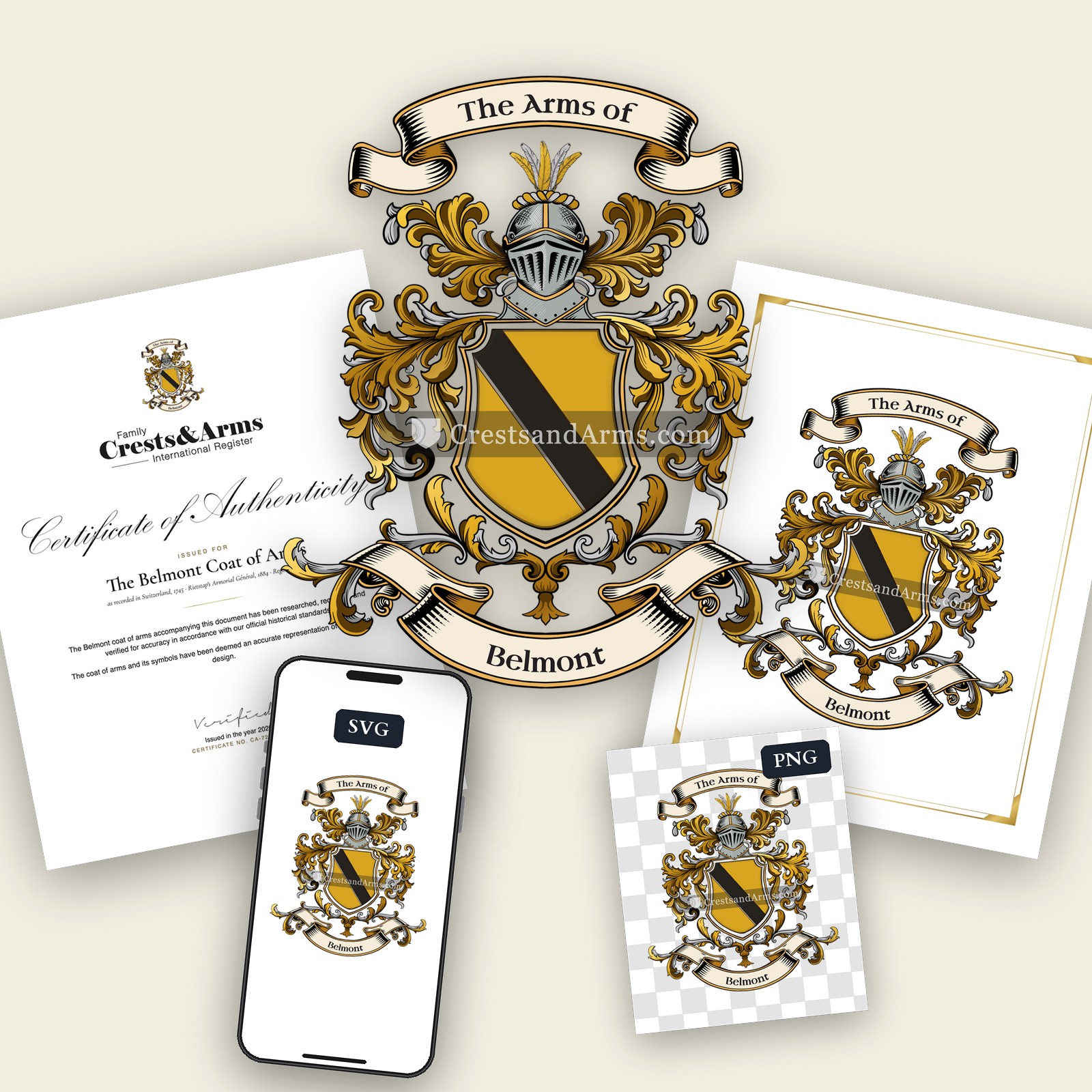
Digital archive packCoat of arms PNG, gold border print PDF, vector SVG and the certificate of authenticity. Sent to your email in minutes.


 chevronProtection, and faithful service completed
 mulletThe third son, and a divine quality from above
 lionCourage, strength and royalty
 chevronProtection, and faithful service completed
 mulletThe third son, and a divine quality from above
 lionCourage, strength and royalty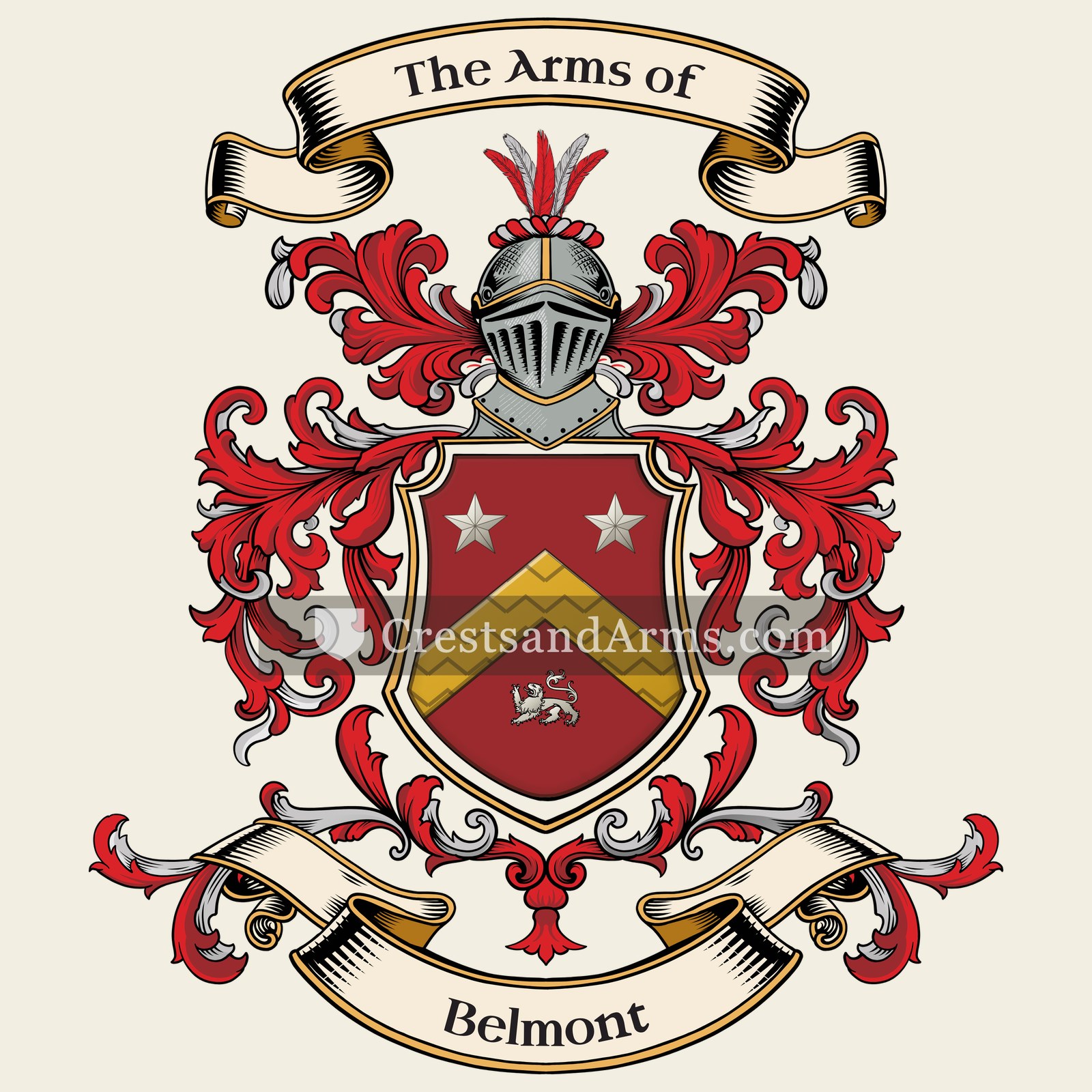


 bendDefence, and the scarf of a commander