Map of Italy showing where the Benigno arms are recorded
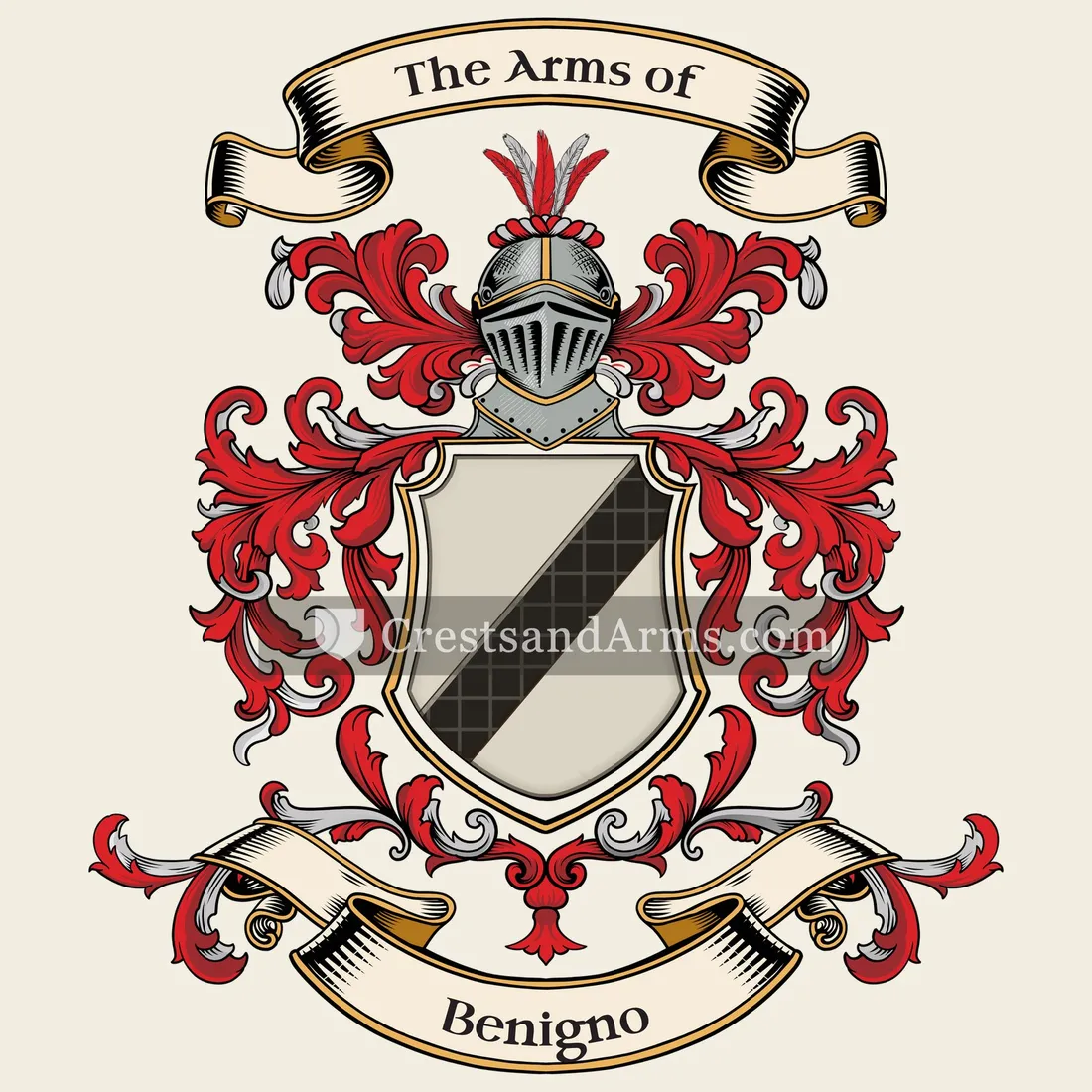
The Benigno arms were recorded in Rome, c. 1775.
This is where the arms were entered in the register. Families often moved to other parts of the country, so the same name can turn up in more than one region.
The body that granted and recorded arms in Italy in this period.
Alvise Giovanni Mocenigo
Sovereign of the period
Alvise Giovanni Mocenigo
1763–1778
Reigning in Italy when the Benigno arms are first recorded.
How Arms Worked in Italy
In the Italian states, coats of arms were often used by noble families to show their status and history. These symbols were passed down through the generations to all legitimate male descendants. Younger branches of a family usually kept the original design but sometimes added small changes to distinguish their specific line from the main branch.
Granting authority
Various local rulers and city governments controlled the use of coats of arms across the different Italian states.
How they got arms
Families often assumed their own arms or received them as official grants from local lords, popes, or city councils.
Where arms were recorded
Arms were recorded in local city archives or private family books rather than in one single national register.
The family's standing
Recorded among the armigerous families of Italy.
Origin & History of the Benigno Family in Italy
The surname Benigno originates from the Latin word benignus, which translates to kind, gentle, or good-natured. Historically, this name began as a descriptive nickname used to identify individuals who were known for their pleasant personality or charitable spirit. By the late 18th century, the family was well-established in the city of Rome, where they were integrated into the local urban community. During this period, families in Rome often lived near the parishes where they registered their births and marriages. The presence of the Benigno name in Roman records from 1775 suggests that the family was part of the stable middle or artisan class that helped maintain the city’s social and economic life during the twilight of the Papal States. As the name spread across the Italian peninsula, it retained its positive meaning, marking the family as people of good standing within their local neighborhoods.
Benigno Meaning & Related Branches
Root word
benignus
Latin adjective meaning kind, gentle, or favorable.
This name
BenignoDerived from the Latin term for a person who is kind, benevolent, or good-natured.
also spelled
Benigny
Beninyi
Documented Sources
J. B. Rietstap, Armorial Général, Gouda: G. B. van Goor Zonen, 1884–87
De Felice, Emidio. Dizionario dei cognomi italiani. 1978
Archivio Storico del Vicariato di Roma, Stato delle Anime
Digital archive packCoat of arms PNG, gold border print PDF, vector SVG and the certificate of authenticity. Sent to your email in minutes.