A record of documented arms, meaning and origin, researched for the Benter family lines. Documented in 3 countries.
Reg. 8685 · German, A–C
Meaning of the Benter family crest colors & symbols
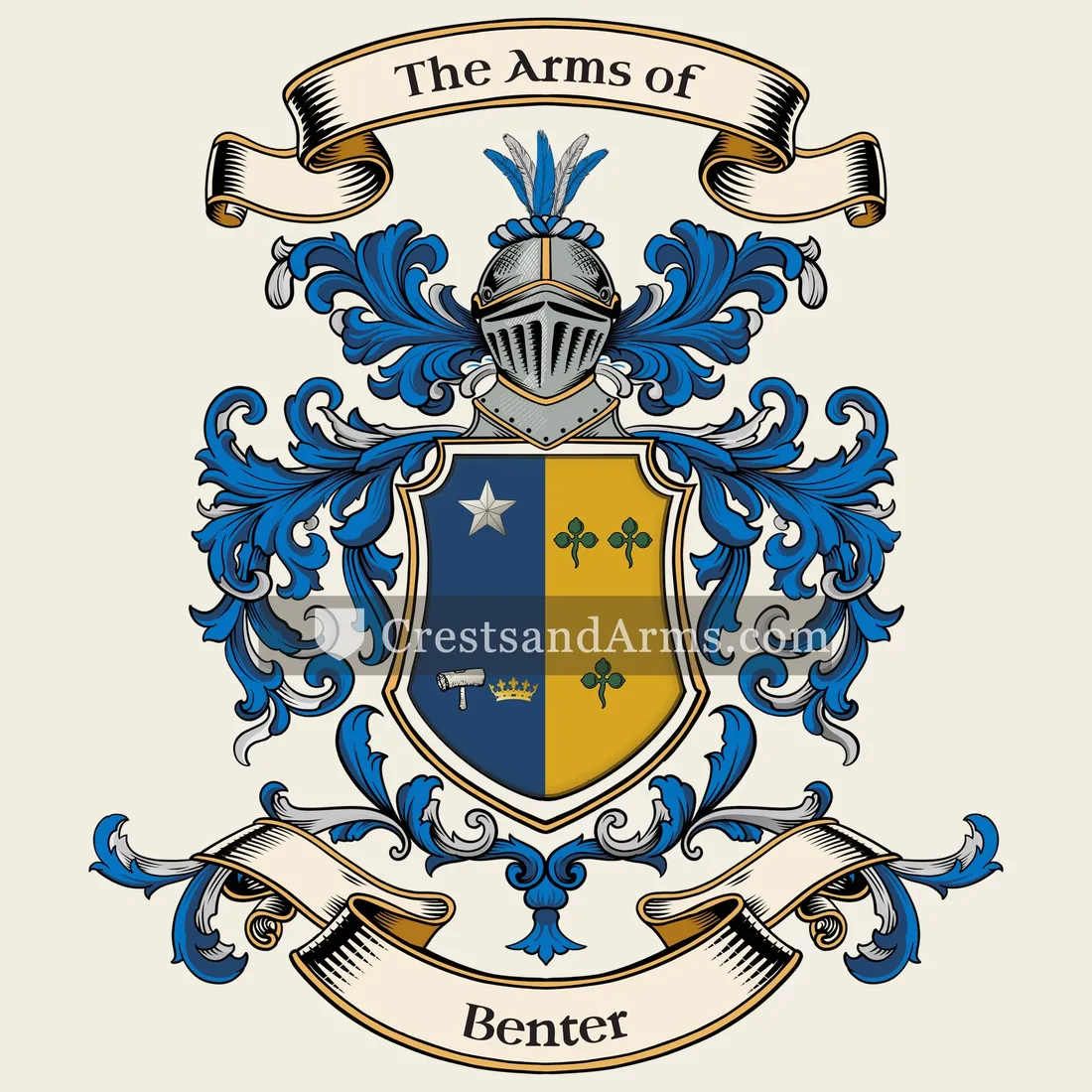
Symbols on this shield
hammerHonest labour, and the smith's craft
crownSovereignty, authority and just reward
mulletThe third son, and a divine quality from above
trefoilPerpetuity, and the Trinity
Colours
Blue (Azure)Means: Loyalty and truth
Gold (Or)Means: Generosity
Silver (Argent)Means: Peace and sincerity
Green (Vert)Means: Hope
Historical info
Source
J. B. Rietstap, Armorial Général, Gouda: G. B. van Goor Zonen, 1884–87
Blazon (the actual original written record)
“Parti: au 1 d'azur à un maillet au nat., posé en pal, le manche passé dans une couronne à l'antique d'or, le maillet acc. en chef d'une étoile d'arg.; au 2 d'or à trois trèfles de sin. Cq. cour. C.: un jeune homme iss., chevelé d'or, cour. à l'antique du même, tenant de sa main dextre trois trèfles de sin. et de sa sen. un maillet au nat., hab. d'un écartelé d'or et d'azur, la poitrine ch. à sen. d'une étoile d'arg. sur l'azur; le bras dextre paré d'azur rebr. d'or et le bras sen. paré d'or rebr. d'azur, au rabat parti d'azur et d'or. L.: à dextre d'arg. et d'azur, à sen. d'or et d'azur.”
GermanyBade, c. 1708
Digital archive packCoat of arms PNG, gold border print PDF, vector SVG and the certificate of authenticity. Sent to your email in minutes.
Map of Germany showing where the Benter arms are recorded
The Benter arms were recorded in Bade, c. 1708.
This is where the arms were entered in the register. Families often moved to other parts of the country, so the same name can turn up in more than one region.
The body that granted and recorded arms in Germany in this period.
Joseph I, Holy Roman Emperor
Sovereign of the period
Joseph I, Holy Roman Emperor
1705–1711
Reigning in Germany when the Benter arms are first recorded.
How Arms Worked in Germany
In the Holy Roman Empire, coats of arms were often granted to individuals by the Emperor or his representatives. These arms were then passed down through the generations to all legitimate descendants of the original holder. Younger branches of a family usually kept the same shield design without needing to change it, as the arms belonged to the entire lineage.
Granting authority
The Holy Roman Emperor held the sole power to grant new coats of arms throughout his vast imperial territories.
How they got arms
Families typically obtained their coats of arms through a formal imperial grant or by proving their noble status to the authorities.
Where arms were recorded
These grants were officially recorded in the Imperial Chancery registers, which began keeping formal records of such honors during the Middle Ages.
The family's standing
Recorded among the armigerous families of Germany.
Origin & History of the Benter Family in Germany
The surname Benter is deeply rooted in the historical landscape of southwestern Germany, particularly within the region of Baden. By the early 18th century, records confirm that families bearing this name were established residents of the area, living through a period defined by the aftermath of major European conflicts and the slow rebuilding of local communities. The name likely originated as a topographic or occupational descriptor, reflecting the way people in rural German villages were identified by their proximity to specific landmarks or their trade within the local guild system. As the Benter family settled into the social structure of Baden in 1708, they became part of the agrarian and artisan classes that formed the backbone of the region. These early ancestors were likely involved in the traditional agricultural cycles of the Rhine Valley, contributing to the local economy while maintaining the cultural and linguistic traditions unique to the Baden territory. Through these generations, the family name became a permanent fixture in the local parish registers, documenting their growth and integration into the fabric of German village life.
Meaning of the Benter family crest colors & symbols
Symbols on this shield
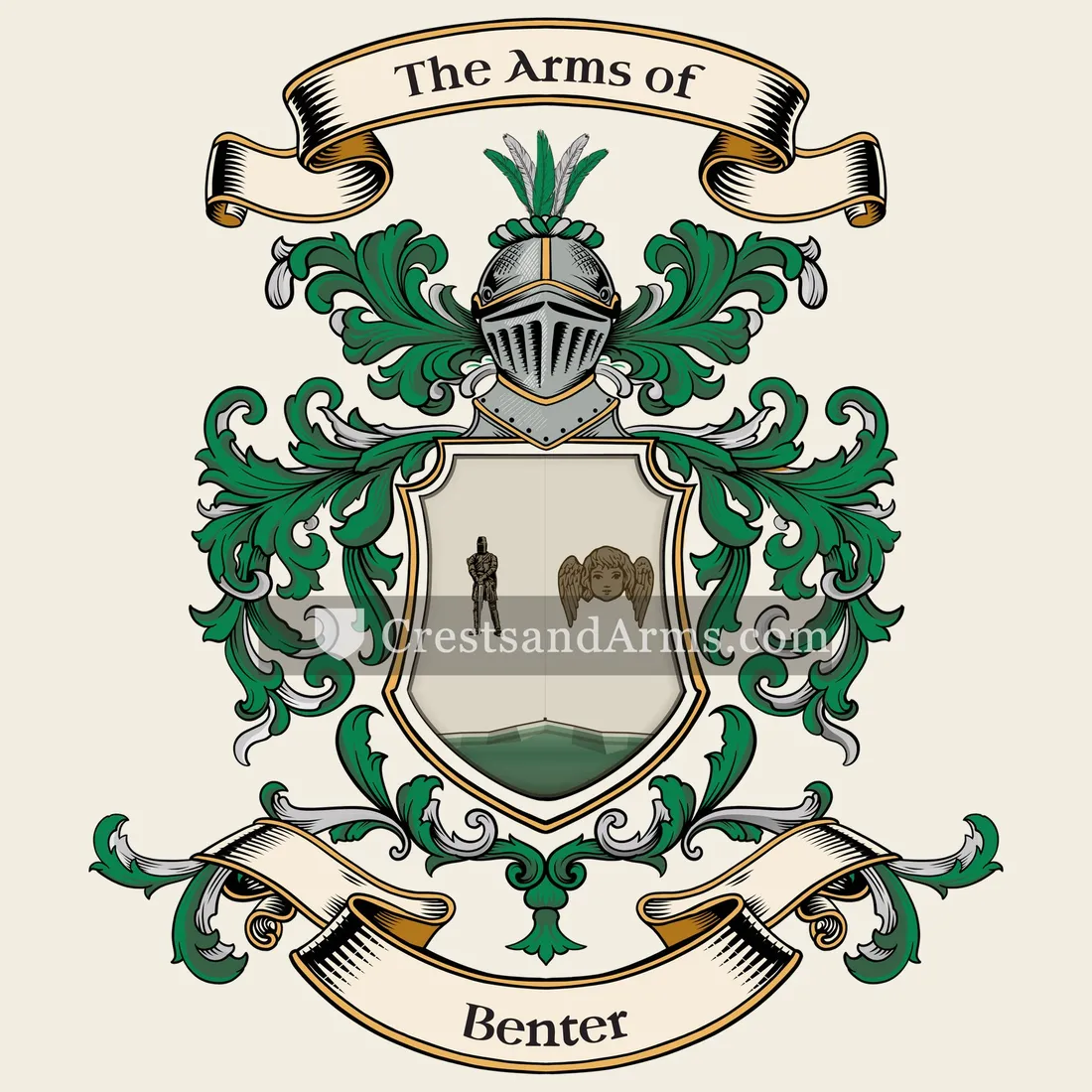
mountThe ground held, and steadfastness upon it
knightChivalry and service in arms
cherubDivine protection over the innocent
Colours
Silver (Argent)Means: Peace and sincerity
Green (Vert)Means: Hope
Historical info
Source
J. B. Rietstap, Armorial Général, Gouda: G. B. van Goor Zonen, 1884–87
Blazon (the actual original written record)
“Parti: au 1 d'arg. à un chevalier iss., arm. au nat., tenant une épée, mouv. du parti; au 2 d'arg. à un ange iss. de carn., la dalmatique d'arg., l'aile abaissée, mouv. du parti et tenant une couronne de laurier de sin.; lesdites figures réunies mouv. d'un tertre de sin. en p., br. sur le parti. Cq. cour. C.: les meubles de l'écu, sauf que l'ange se trouve à dextre et le chevalier à sen. L. d'arg. et de sa.”
StyriaStyria, c. 1772
Digital archive packCoat of arms PNG, gold border print PDF, vector SVG and the certificate of authenticity. Sent to your email in minutes.
Map of Austria showing where the Benter arms are recorded
The Benter arms were recorded in Styria, c. 1772.
Styria was mountain and forest country in southern Austria, with iron in its hills. Mining and landholding both made money, and families who held either kind of property took arms to seal their papers with.
This is where the arms were entered in the register. Families often moved to other parts of the country, so the same name can turn up in more than one region.
Region
Styria
First recorded
1772
Granting Authority for the Benter Arms
Imperial and Royal chancery
Sodacan · CC BY-SA 3.0
The body that granted and recorded arms in Austria in this period.
Joseph II, Holy Roman Emperor
Sovereign of the period
Joseph II, Holy Roman Emperor
1765–1790
Reigning in Germany when the Benter arms are first recorded.
How Arms Worked in Austria
Austrian coats of arms were often linked directly to noble titles granted by the Emperor. These symbols belonged to the entire family line rather than just one individual. When a family grew, new branches kept the original design without needing to change it. This system allowed all members of a noble house to share the same identity across many generations.
Granting authority
The Imperial and Royal chancery managed all heraldic matters and controlled the official granting of arms throughout the Austrian lands.
How they got arms
Families typically received their arms through a formal imperial decree that often accompanied the elevation of a person to noble status.
Where arms were recorded
Official records of these grants were kept in the Imperial Register of Nobility which began its formal documentation process in 1453.
The family's standing
Recorded among the armigerous families of Styria.
Origin & History of the Benter Family in Austria
The Benter family name has deep roots in the mountainous landscape of Styria, where records confirm their presence as early as 1772. During this period, Styria was a vital region within the Habsburg Monarchy, and families like the Benters were often tied to the local agricultural or trade economies that defined rural Austrian life. The name likely evolved from regional dialects or descriptive terms used to identify individuals based on their specific work or the location of their homesteads. As the family established themselves in the Styrian countryside, they participated in the social and economic structures of the late eighteenth century, which were heavily influenced by the reforms of Empress Maria Theresa. By maintaining a consistent presence in this province, the Benter family became part of the long history of families who shaped the local community through generations of labor and regional identity.
Meaning of the Benter family crest colors & symbols
Symbols on this shield
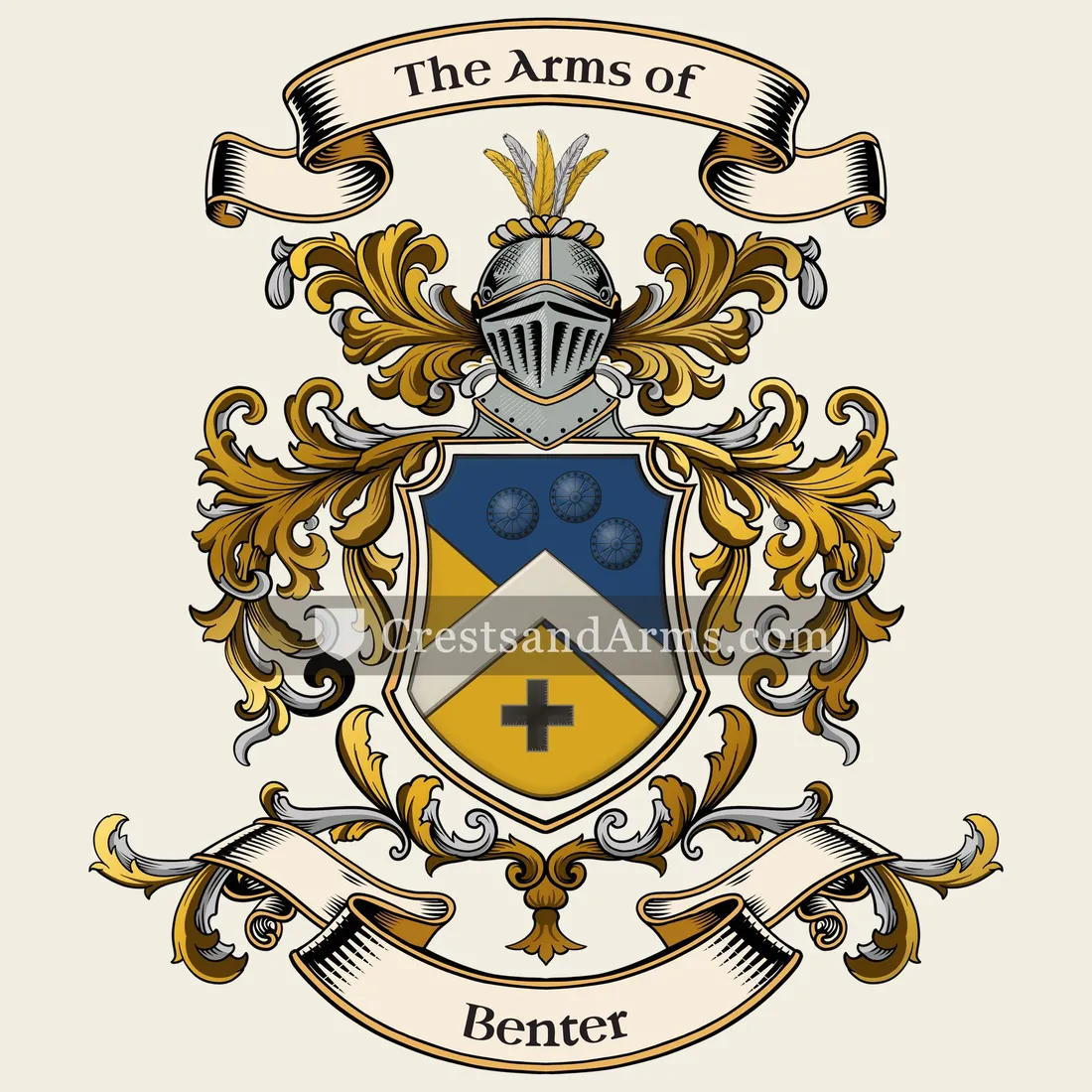
cross symbolChristian faith and service
chevronProtection, and faithful service completed
roundelA coin, and one who has been to the crusades
Colours
Gold (Or)Means: Generosity
Blue (Azure)Means: Loyalty and truth
Silver (Argent)Means: Peace and sincerity
Black (Sable)Means: Constancy
Historical info
Source
J. B. Rietstap, Armorial Général, Gouda: G. B. van Goor Zonen, 1884–87
Blazon (the actual original written record)
“Taillé: au 1 d'or à une croix alésée de sa., le pied fendu en chevron, la branche sen. dudit chevron mouv. du taillé; au 2 d'azur au chev. d'arg., acc. de trois bes. d'or.”
SwitzerlandValais, c. 1745
Digital archive packCoat of arms PNG, gold border print PDF, vector SVG and the certificate of authenticity. Sent to your email in minutes.
Map of Switzerland showing where the Benter arms are recorded
The Benter arms were recorded in Valais, c. 1745.
This is where the arms were entered in the register. Families often moved to other parts of the country, so the same name can turn up in more than one region.
The body that granted and recorded arms in Switzerland in this period.
How Arms Worked in Switzerland
In Switzerland, coats of arms were not restricted to the nobility and were often adopted by common citizens and families. These symbols were passed down through generations to show family identity. When branches of a family grew, they often changed small details of the design to distinguish their own line from the original group.
Granting authority
Cantonal and civic authorities managed the use of coats of arms within their specific regions and local jurisdictions.
How they got arms
Families typically assumed their own coats of arms based on local custom rather than receiving them from a central monarch.
Where arms were recorded
Arms were recorded in various cantonal and civic registers starting from the fourteenth century throughout the Swiss region.
The family's standing
Recorded among the armigerous families of Switzerland.
Origin & History of the Benter Family in Switzerland
The family name Benter traces its roots in Switzerland to the rugged, mountainous region of Valais, where records confirm their presence by 1745. During the eighteenth century, families in this area were often defined by their connection to the land and the specific alpine valleys they inhabited. Life in Valais was shaped by the challenging geography of the high Alps, which encouraged small communities to develop strong local identities and self-sufficient agricultural practices. As the Benter family established themselves in this environment, they likely participated in the traditional communal governance and seasonal livestock migration that defined life in the Swiss cantons during the late Enlightenment period. By settling in this region, the early members of the family became part of a long history of mountain dwellers who adapted their livelihoods to the steep terrain and the unique cultural landscape of southern Switzerland.
Benter Meaning & Related Branches
Root word
Benedictus
Latin for blessed or well spoken of.
This name
BenterA patronymic surname derived from a shortened form of Benedict, signifying the son of the blessed one.
also spelled
Bendar
Documented Sources
J. B. Rietstap, Armorial Général, Gouda: G. B. van Goor Zonen, 1884–87
Badisches Generallandesarchiv, Kirchenbücher der evangelischen und katholischen Pfarreien in Baden (1708)
Hehl, Ulrich von, Geschichte Badens (2005)
Kreutz, Wilhelm, Kleine Geschichte des Landes Baden (2008)
Digital archive packCoat of arms PNG, gold border print PDF, vector SVG and the certificate of authenticity. Sent to your email in minutes.


 hammerHonest labour, and the smith's craft
 crownSovereignty, authority and just reward
 mulletThe third son, and a divine quality from above
 trefoilPerpetuity, and the Trinity
 hammerHonest labour, and the smith's craft
 crownSovereignty, authority and just reward
 mulletThe third son, and a divine quality from above
 trefoilPerpetuity, and the Trinity


 mountThe ground held, and steadfastness upon it
 knightChivalry and service in arms
 cherubDivine protection over the innocent


 cross symbolChristian faith and service
 chevronProtection, and faithful service completed
 roundelA coin, and one who has been to the crusades