A record of documented arms, meaning and origin, researched for the Berge family lines. Documented in 3 countries.
Reg. 7905 · German, A–C
Coat of Arms & Family Crest Details
Symbols on this shield
mountThe ground held, and steadfastness upon it
eagleNobility, strength and a keen mind
mulletThe third son, and a divine quality from above
Colours
Gold (Or)Means: Generosity
Silver (Argent)Means: Peace and sincerity
Green (Vert)Means: Hope
Black (Sable)Means: Constancy
Historical info
Source
J. B. Rietstap, Armorial Général, Gouda: G. B. van Goor Zonen, 1884–87
Blazon (the actual original written record)
“Parti: au 1 d'or à la demi-aigle de sa., mouv. du parti; au 2 d'arg. à trois monts accostés de sin., mouv. de la p., surm. de trois étoiles d'or, 2 et 1. Cq. cour. C.: une queue de paon, entre une ramure de cerf, le tout au nat. L.: à dextre d'or et de sa., à sen. d'arg. et d'or.”
Germanyc. 1580
Digital archive packCoat of arms PNG, gold border print PDF, vector SVG and the certificate of authenticity. Sent to your email in minutes.
Map of Germany showing where the Berge arms are recorded
The Berge arms were recorded in Germany, c. 1580.
Arms such as these were typically recorded in Bavaria.
Bavaria was a country of old landed families and walled market towns. Estates passed down the same line for centuries, and both the landowners and the leading townsmen kept arms, which is why so many Bavarian names sit in the registers.
This is where the arms were entered in the register. Families often moved to other parts of the country, so the same name can turn up in more than one region.
The body that granted and recorded arms in Germany in this period.
Emperor Rudolf II
Sovereign of the period
Emperor Rudolf II
1576–1612
Reigning in Germany when the Berge arms are first recorded.
How Arms Worked in Germany
In the Holy Roman Empire, coats of arms were often granted to individuals by the Emperor or his representatives. These arms were then passed down through the generations to all legitimate descendants of the original holder. Younger branches of a family usually kept the same shield design without needing to change it, as the arms belonged to the entire lineage.
Granting authority
The Holy Roman Emperor held the sole power to grant new coats of arms throughout his vast imperial territories.
How they got arms
Families typically obtained their coats of arms through a formal imperial grant or by proving their noble status to the authorities.
Where arms were recorded
These grants were officially recorded in the Imperial Chancery registers, which began keeping formal records of such honors during the Middle Ages.
The family's standing
Recorded among the armigerous families of Germany.
Origin & History of the Berge Family in Germany
The surname Berge is a topographic name, meaning it was originally used to describe people who lived near a mountain or a prominent hill. In the German language, the word *Berg* translates directly to mountain or hill, and the addition of the letter "e" often served to identify a person based on their specific location in the landscape. By the year 1580, records confirm that families carrying this name were well-established in the region of Bavaria. During this period, Bavaria was a center of significant social and religious change, and families were often tied closely to the land they farmed or managed. Because the name was descriptive rather than tied to a single ancestor, it likely emerged independently in several different villages across the Bavarian countryside. These early family members were typically commoners who lived in rural communities, where their name served as a simple way for neighbors to distinguish one person from another based on the local geography.
Coat of Arms & Family Crest Details
Symbols on this shield
bullValour and generosity
treeLife, endurance and deep roots
Colours
Gold (Or)Means: Generosity
Red (Gules)Means: Military strength
Green (Vert)Means: Hope
Historical info
Source
J. B. Rietstap, Armorial Général, Gouda: G. B. van Goor Zonen, 1884–87
Blazon (the actual original written record)
“D'or au boeuf arrêté de gu., paissant dans un buisson de sin; à la bord. comp. de huit pièces d'or et de sin.”
Spainc. 1722
Digital archive packCoat of arms PNG, gold border print PDF, vector SVG and the certificate of authenticity. Sent to your email in minutes.
Map of Spain showing where the Berge arms are recorded
The Berge arms were recorded in Spain, c. 1722.
Arms such as these were typically recorded in Castile.
Castile was the heart of Spain and the source of most of its noble families. Land won in the long wars against the Moors was granted out to fighting men, and a man granted land was granted arms along with it.
This is where the arms were entered in the register. Families often moved to other parts of the country, so the same name can turn up in more than one region.
The body that granted and recorded arms in Spain in this period.
Philip V of Spain
Sovereign of the period
Philip V of Spain
1714–1724
Reigning in Germany when the Berge arms are first recorded.
How Arms Worked in Spain
In Spain, a coat of arms was considered a form of property that belonged to the entire family line. These arms were passed down from a father to all his children equally. Younger branches of the family usually kept the original design without needing to add any special marks to distinguish their specific line.
Granting authority
The Cronista Rey de Armas was the official body that regulated and granted coats of arms throughout Spain.
How they got arms
Families often obtained their arms through royal grants or by proving their noble status to the official heraldic authority.
Where arms were recorded
Coats of arms were officially recorded in the registers of the Cronista Rey de Armas starting in 1496.
The family's standing
Recorded among the armigerous families of Spain.
Origin & History of the Berge Family in Spain
The surname Berge carries a deep connection to the rugged landscapes of the Iberian Peninsula, where it emerged as a topographic name for families living near mountains or hills. By the early eighteenth century, the family had established a notable presence in the Kingdom of Castile, a region that served as the political and cultural heart of Spain during that era. Records from 1722 confirm that members of the Berge family were integrated into the social fabric of Castilian life, likely participating in the agricultural or administrative systems that defined the local economy at the time. Because the name is rooted in the physical environment, it suggests that the earliest ancestors were tied to specific geographic landmarks that shaped their identity long before they settled into the towns and villages of central Spain. This transition from a descriptive label to a formal family name reflects the broader patterns of migration and social organization that characterized the Spanish interior during the Enlightenment period.
Coat of Arms & Family Crest Details
Symbols on this shield
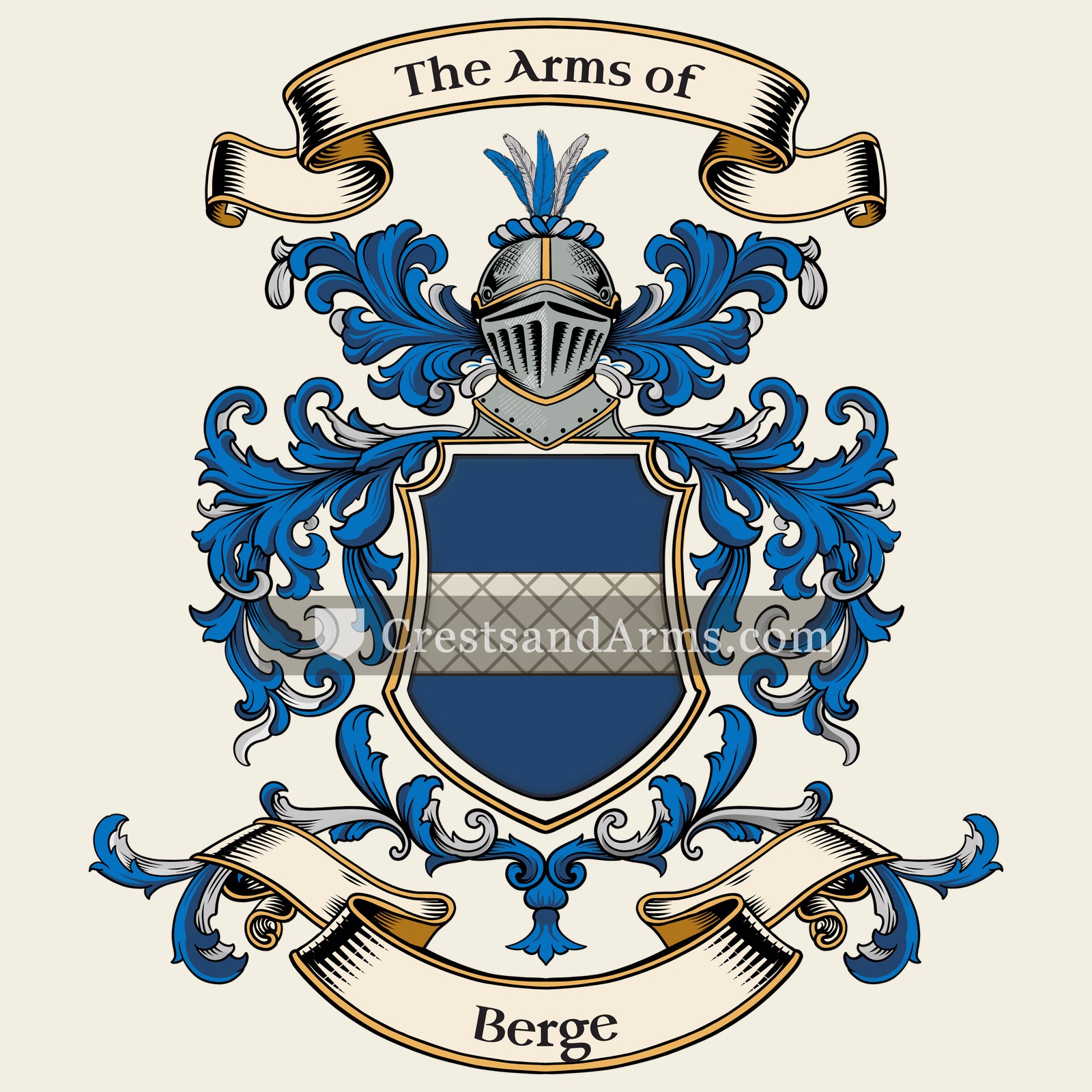
fessThe military belt, and readiness to serve
Colours
Blue (Azure)Means: Loyalty and truth
Historical info
Source
Sir Bernard Burke, The General Armory of England, Scotland, Ireland and Wales, London: Harrison & Sons, 1884
Blazon (the actual original written record)
“Az. a fesse counter compony gu. and ar”
Englandc. 1620
Digital archive packCoat of arms PNG, gold border print PDF, vector SVG and the certificate of authenticity. Sent to your email in minutes.
Map of England showing where the Berge arms are recorded
The Berge arms were recorded in England, c. 1620.
Arms such as these were typically recorded in York.
Yorkshire is the largest of the English counties, and it held more gentry families than any other. Land there was split among a great many households rather than a few, so a great many of them carried arms.
This is where the arms were entered in the register. Families often moved to other parts of the country, so the same name can turn up in more than one region.
The body that granted and recorded arms in England in this period.
James VI and I
Sovereign of the period
James VI and I
1603–1625
Reigning in Germany when the Berge arms are first recorded.
How Arms Worked in England
English heraldry allowed arms to be shared by all legitimate descendants of the original owner. These symbols were treated as personal property that moved through the generations to all children. While the eldest son kept the original design, other family members could use the same shield without needing to change it or register their own unique versions.
Granting authority
The College of Arms in London has regulated the use of coats of arms throughout England and Wales since 1484.
How they got arms
Families typically obtained their coats of arms through a formal grant from the Crown or by proving their ancient right to them.
Where arms were recorded
All official coats of arms are recorded in the registers kept at the College of Arms, which date back to the fifteenth century.
The family's standing
Recorded among the armigerous families of England.
Origin & History of the Berge Family in England
The history of the Berge family in England is deeply rooted in the northern city of York, where records confirm members of the family were living by 1620. During this period, the name was often associated with people who lived near a prominent hill or a mountain, as the word itself derives from Old Germanic and Old English terms for high ground. Life in seventeenth-century York was defined by the city’s role as a bustling center for trade and religious administration. Families like the Berges likely contributed to the local economy as skilled craftsmen or merchants, navigating the social changes of the Stuart era. By settling in such a historically significant location, the family became part of the long tradition of northern English life, where they adapted to the evolving language and customs of the region over many generations.
Berge Meaning & Related Branches
Root word
Berg
A mountain, hill, or elevated piece of land.
This name
BergeA topographic name for someone who lived on or near a mountain or hill.
also spelled
Bergeh
Bergee
Berzhay
Bergg
Related arms
Bergvariant spelling
Blenmanrecorded with Berge, same area
Documented Sources
J. B. Rietstap, Armorial Général, Gouda: G. B. van Goor Zonen, 1884–87
Bahlow, Hans, Deutsches Namenlexikon: Familien- und Vornamen nach Ursprung und Sinn erklärt, 1967
Heintze, Albert, Die deutschen Familien-Namen: geschichtlich, geographisch, sprachlich, 1903
Bayerisches Hauptstaatsarchiv, Kurbayern Hofkammer: Steuer- und Rechnungsbücher, 1580
Digital archive packCoat of arms PNG, gold border print PDF, vector SVG and the certificate of authenticity. Sent to your email in minutes.


 mountThe ground held, and steadfastness upon it
 eagleNobility, strength and a keen mind
 mulletThe third son, and a divine quality from above
 mountThe ground held, and steadfastness upon it
 eagleNobility, strength and a keen mind
 mulletThe third son, and a divine quality from above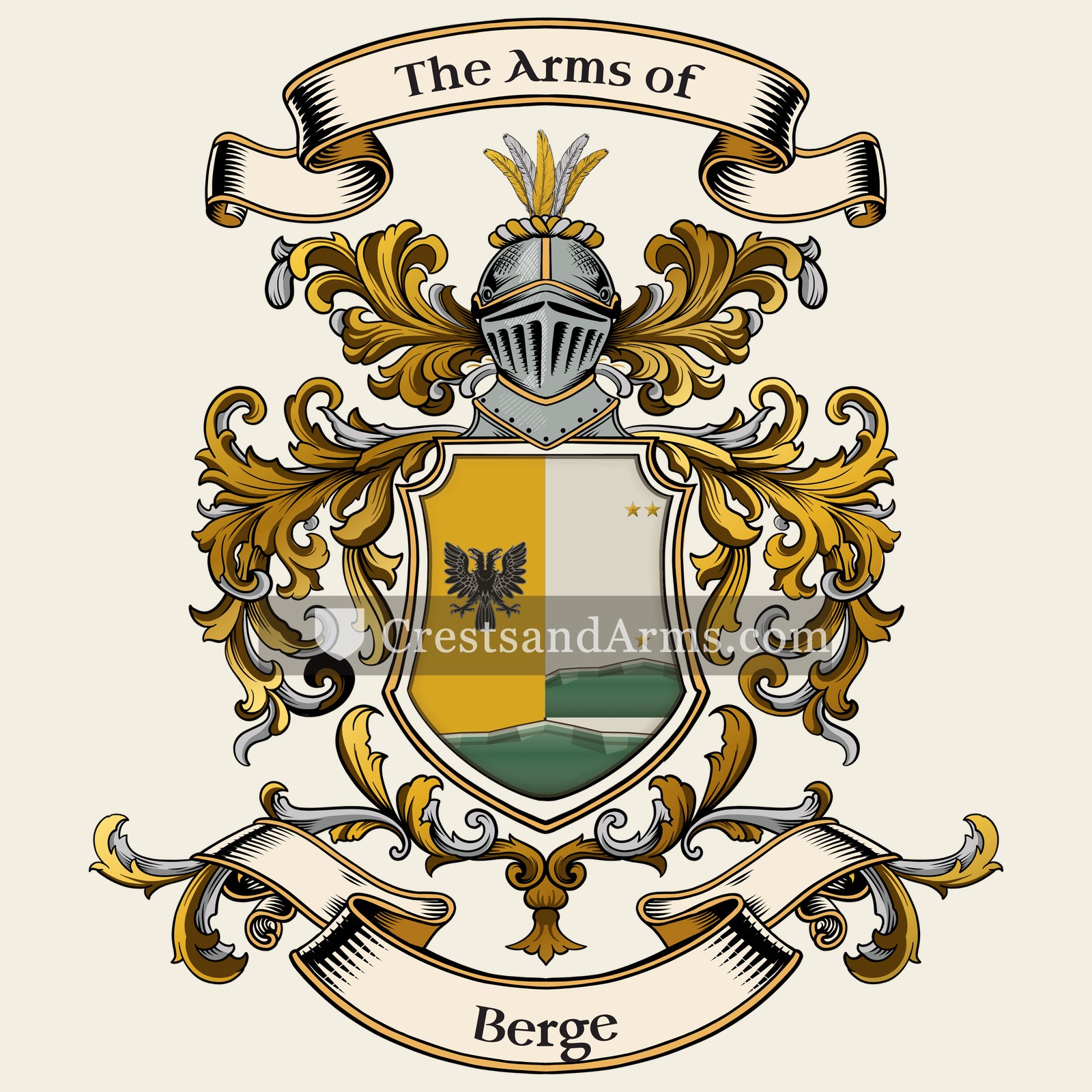


 bullValour and generosity
 treeLife, endurance and deep roots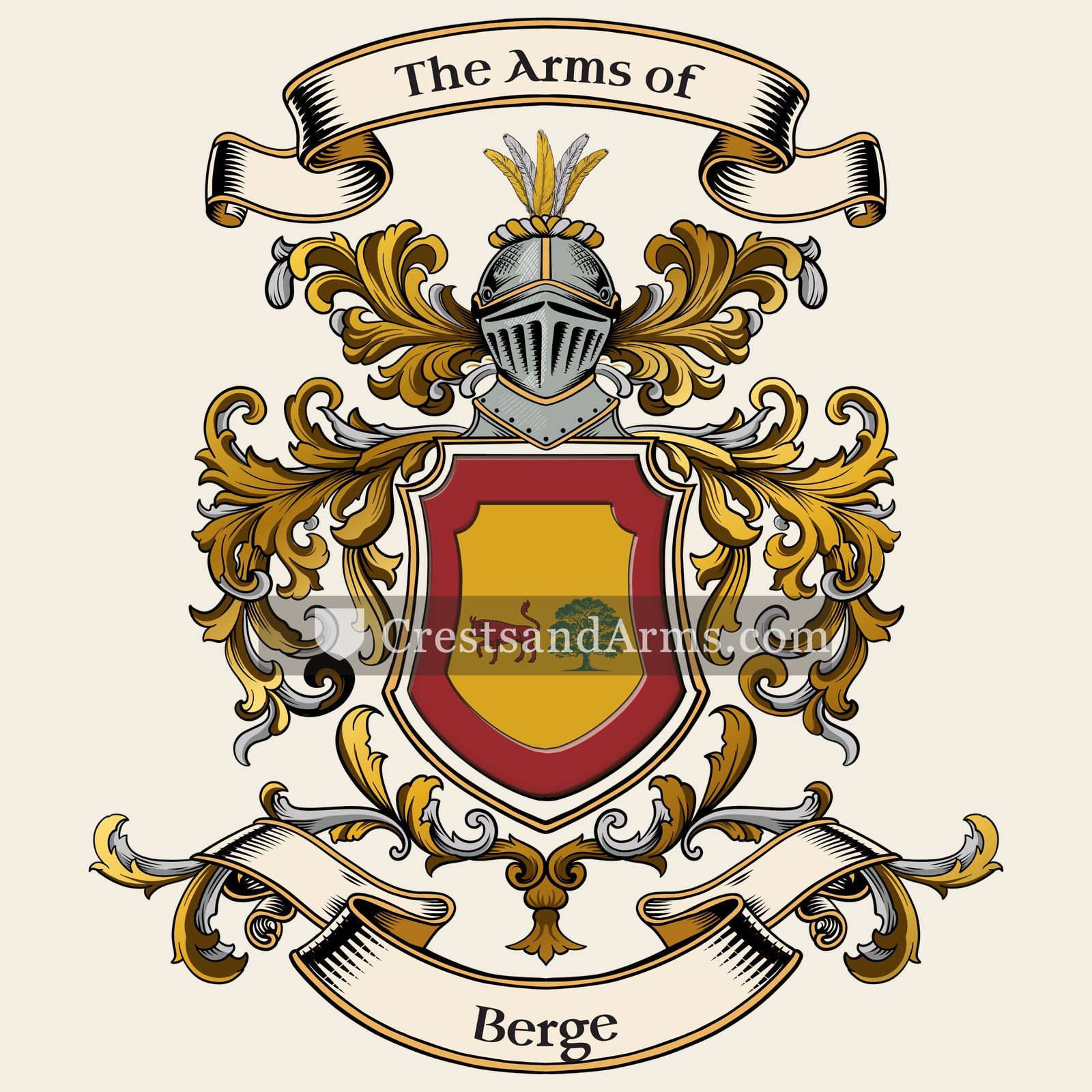


 fessThe military belt, and readiness to serve