Map of Netherlands showing where the Berken arms are recorded
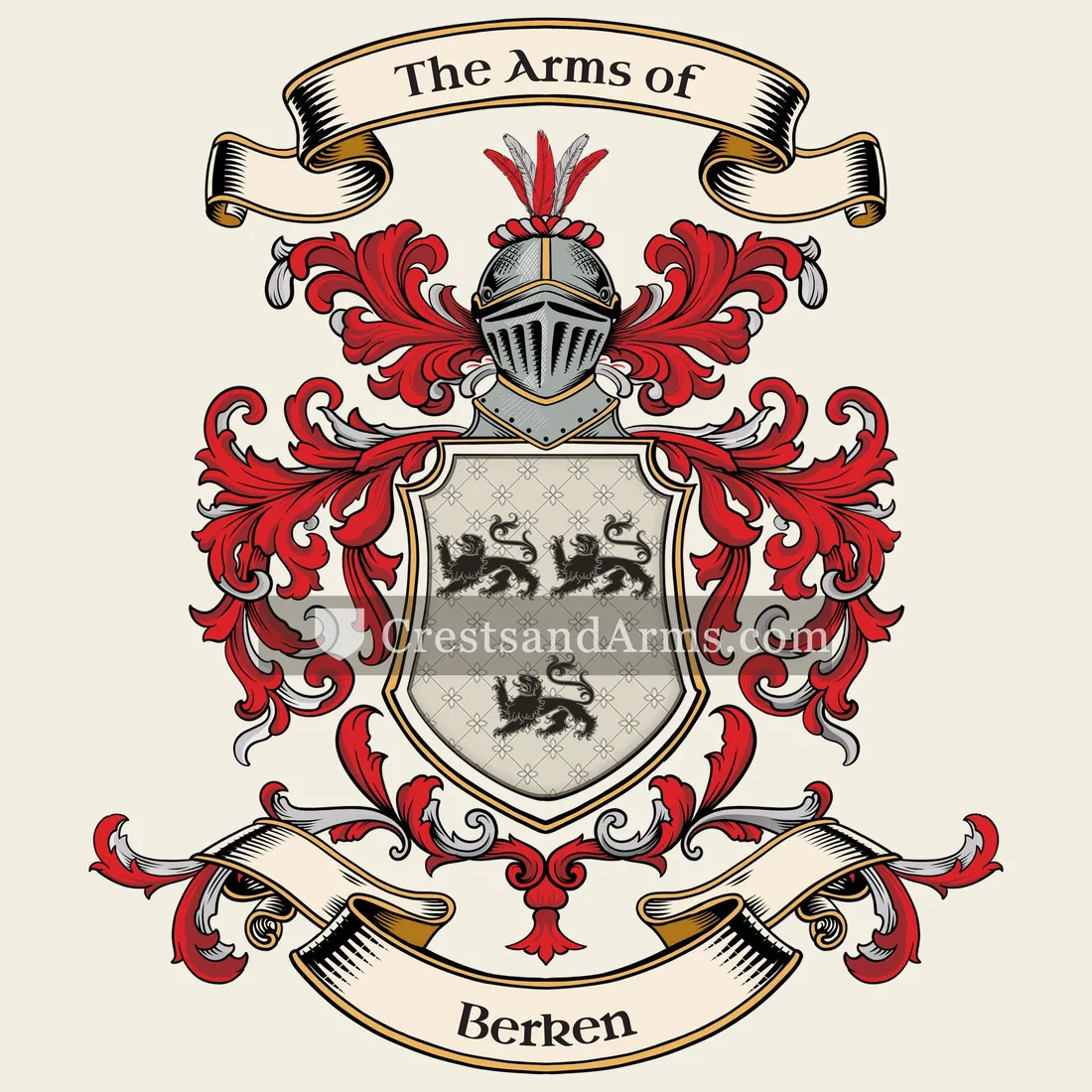
The Berken arms were recorded in Guelders, c. 1815.
Guelders was river country in the east of the Netherlands, held by families whose estates sat along the water. Land there stayed in the same hands for generations, and long tenure is what fills a register of arms.
This is where the arms were entered in the register. Families often moved to other parts of the country, so the same name can turn up in more than one region.
Region
Guelders
First recorded
1815
Granting Authority for the Berken Arms
Hoge Raad van Adel
Photograph made by me · CC BY-SA 3.0
The body that granted and recorded arms in Netherlands in this period.
William I of the Netherlands
Sovereign of the period
William I of the Netherlands
1815–1840
Reigning in Netherlands when the Berken arms are first recorded.
How Arms Worked in Netherlands
In the Netherlands, coats of arms were often used by noble families and those who held specific public offices. These arms were passed down through the generations to legitimate descendants. Younger branches of a family usually kept the original design without needing to add special marks. This system ensured that the family identity remained clear and consistent over many years.
Granting authority
The Hoge Raad van Adel is the official body that regulates and manages noble titles and coats of arms in the Netherlands.
How they got arms
Families typically obtained their coats of arms through official royal grants or by proving their long-standing historical use of the symbols.
Where arms were recorded
Coats of arms are officially recorded in the registers held by the Hoge Raad van Adel, which began its work in 1814.
The family's standing
Recorded among the armigerous families of Guelders.
Origin & History of the Berken Family in Netherlands
The family name Berken is deeply rooted in the historical landscape of the Guelders region, which was a powerful duchy in the Low Countries. The name itself is topographical in origin, likely derived from the Middle Dutch word for birch trees, suggesting that the earliest ancestors lived near a prominent grove or forest. By 1815, when the region became part of the newly formed United Kingdom of the Netherlands, the Berken family was already well-established within the local community. During this era, families in Guelders often lived in rural or semi-rural settings where they worked as farmers or tradespeople. This connection to the land defined their early identity and helped them maintain a consistent presence in the area for generations. As the region transitioned through various political changes, the family remained tied to the local traditions and the specific geography of the Guelders province.
Berken Meaning & Related Branches
Root word
berk
A deciduous tree belonging to the genus Betula.
This name
BerkenRefers to someone who lived near a birch tree or birch forest.
also spelled
Baerkens
Baerkene
Barkin
Berken
Documented Sources
J. B. Rietstap, Armorial Général, Gouda: G. B. van Goor Zonen, 1884–87
Gelders Archief, Burgerlijke Stand Gelderland, 1811-1950
Hofstra, T., Geschiedenis van Gelderland, 2005
Van Berkel, G. and Samplonius, K., Nederlandse plaatsnamen verklaard, 2018
Digital archive packCoat of arms PNG, gold border print PDF, vector SVG and the certificate of authenticity. Sent to your email in minutes.


 lionCourage, strength and royalty
 lionCourage, strength and royalty