A record of documented arms, meaning and origin, researched for the Berne family lines. Documented in 3 countries.
Reg. 1155 · Dutch, A–C
Coat of Arms & Family Crest Details
Symbols on this shield
bendDefence, and the scarf of a commander
billetThe sealed letter, and a message delivered
Colours
Silver (Argent)Means: Peace and sincerity
Red (Gules)Means: Military strength
Historical info
Source
J. B. Rietstap, Armorial Général, Gouda: G. B. van Goor Zonen, 1884–87
Blazon (the actual original written record)
“D'arg. à la bande de gu., acc. de huit bill. du même côtoyant la bande, 3 et 1 de chaque coté. C.: un buste d'homme, hab. aux armes de l'écu, coiffé d'un chapeau de gu. (Arm. v. G.)”
Netherlandsc. 1815
Digital archive packCoat of arms PNG, gold border print PDF, vector SVG and the certificate of authenticity. Sent to your email in minutes.
Map of Netherlands showing where the Berne arms are recorded
The Berne arms were recorded in Netherlands, c. 1815.
Arms such as these were typically recorded in Friesland.
Friesland was low, wet country on the northern coast of the Netherlands, farmed by families who had held the same land for centuries. Free landholders were unusually common there, and a free landholder could carry arms.
This is where the arms were entered in the register. Families often moved to other parts of the country, so the same name can turn up in more than one region.
Region
Friesland
First recorded
1815
Granting Authority for the Berne Arms
Hoge Raad van Adel
Photograph made by me · CC BY-SA 3.0
The body that granted and recorded arms in Netherlands in this period.
William I of the Netherlands
Sovereign of the period
William I of the Netherlands
1815–1840
Reigning in Netherlands when the Berne arms are first recorded.
How Arms Worked in Netherlands
In the Netherlands, coats of arms were often used by noble families and those who held specific public offices. These arms were passed down through the generations to legitimate descendants. Younger branches of a family usually kept the original design without needing to add special marks. This system ensured that the family identity remained clear and consistent over many years.
Granting authority
The Hoge Raad van Adel is the official body that regulates and manages noble titles and coats of arms in the Netherlands.
How they got arms
Families typically obtained their coats of arms through official royal grants or by proving their long-standing historical use of the symbols.
Where arms were recorded
Coats of arms are officially recorded in the registers held by the Hoge Raad van Adel, which began its work in 1814.
The family's standing
Recorded among the armigerous families of Netherlands.
Origin & History of the Berne Family in Netherlands
The family name Berne has deep roots in the northern regions of the Netherlands, particularly within the province of Friesland. By the early 19th century, records confirm that members of the family were well-established in this area, living during a time of significant political transition as the Netherlands emerged as a unified kingdom. The name likely originated as a topographic surname, which was a common naming practice in the Low Countries where families were often identified by the specific landscape features or small settlements near their homes. In the Frisian context, the name may have been linked to the local terrain or small farmsteads that defined the rural landscape of the time. As the family moved through the 1800s, they became part of the distinct cultural fabric of Friesland, contributing to the agricultural and social life of a region known for its strong sense of community and independent history.
Coat of Arms & Family Crest Details
Symbols on this shield
fessThe military belt, and readiness to serve
dovePeace, love and the Holy Spirit
Colours
Blue (Azure)Means: Loyalty and truth
Silver (Argent)Means: Peace and sincerity
Historical info
Source
J. B. Rietstap, Armorial Général, Gouda: G. B. van Goor Zonen, 1884–87
Blazon (the actual original written record)
“D'azur à la fasce d'arg., acc. de deux colombes du même, tenant des rameaux d'or.”
LyonnaisLyonnais, c. 1663
Digital archive packCoat of arms PNG, gold border print PDF, vector SVG and the certificate of authenticity. Sent to your email in minutes.
Map of France showing where the Berne arms are recorded
The Berne arms were recorded in Lyonnais, c. 1663.
Lyonnais centred on Lyon, one of the great banking and silk towns of France. Money made in the city bought estates in the countryside around it, and those estates brought arms with them.
This is where the arms were entered in the register. Families often moved to other parts of the country, so the same name can turn up in more than one region.
The body that granted and recorded arms in France in this period.
Louis XIV of France
Sovereign of the period
Louis XIV of France
1643–1715
Reigning in Netherlands when the Berne arms are first recorded.
How Arms Worked in France
In France, a coat of arms was a mark of honor that passed down through the male line to all legitimate descendants. Families often used the same shield without changes to show their shared heritage. If a branch wanted to stand out, they could add a small mark to their shield to show their specific place in the family tree.
Granting authority
The Juge d'armes de France acted as the official authority that regulated and verified coats of arms across the country.
How they got arms
Families typically inherited their arms from ancestors, though they could also receive them through royal grants or by proving their noble status.
Where arms were recorded
Coats of arms were officially recorded in the Armorial Général de France, which began its main collection in the year 1696.
The family's standing
Recorded among the armigerous families of Lyonnais.
Origin & History of the Berne Family in France
The family name Berne has deep roots in the historical province of Lyonnais, where members of the family were documented as early as 1663. During this period, the region was a bustling hub of trade and silk production, which likely influenced the daily lives and occupations of those living there. The name itself is often linked to geographical features, as it shares a connection with the old French word for a slope or a steep riverbank. Families living near these distinct landscapes frequently adopted such names to identify their home or property. By the mid-seventeenth century, the Berne family was firmly established within the local social fabric of the Lyonnais countryside, participating in the agricultural and craft-based economy that defined the region before the industrial shifts of later centuries. Their presence in the official records of the time suggests they were settled members of the community who contributed to the local culture of eastern France.
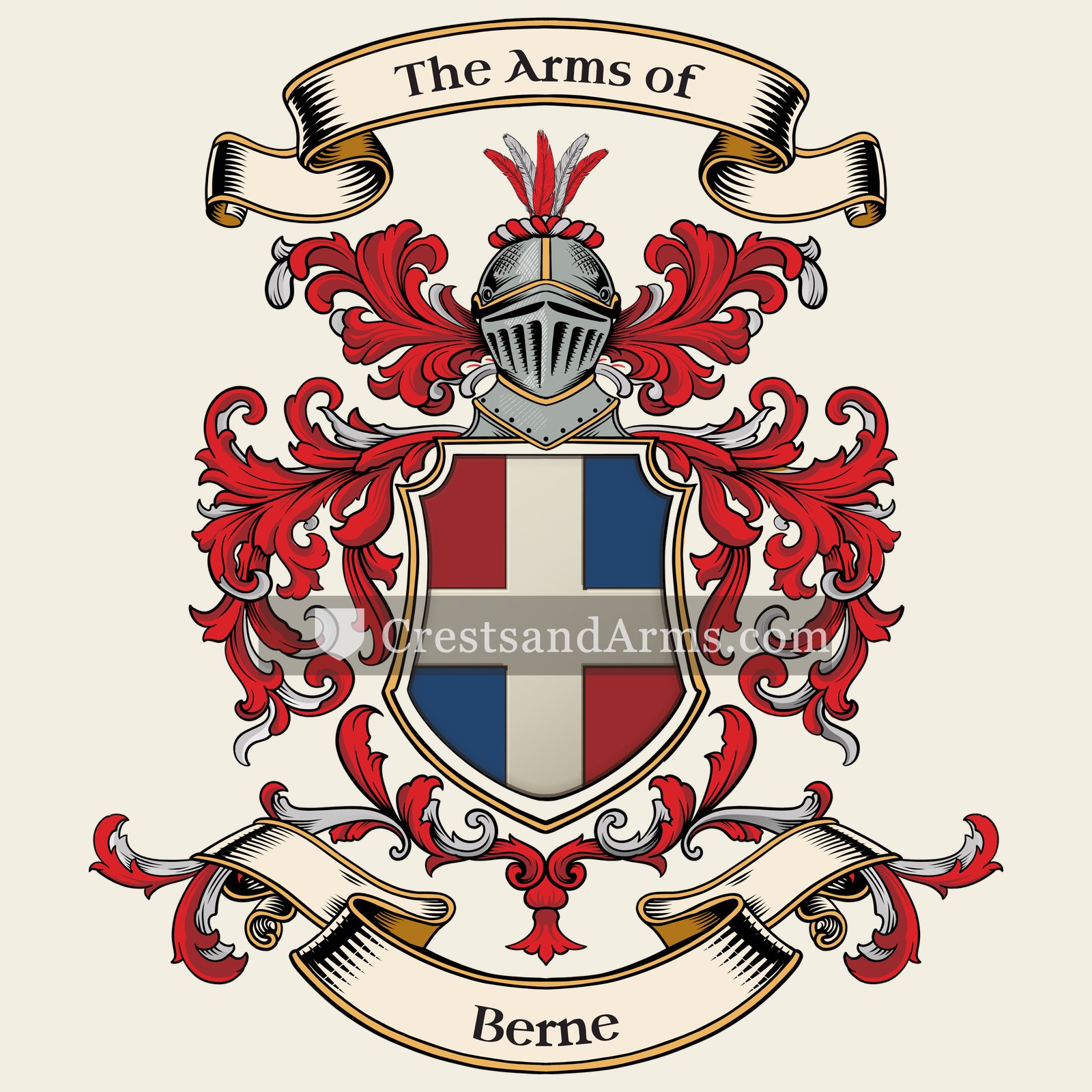
Coat of Arms & Family Crest Details
Symbols on this shield
cross symbolChristian faith and service
Colours
Red (Gules)Means: Military strength
Blue (Azure)Means: Loyalty and truth
Silver (Argent)Means: Peace and sincerity
Historical info
Source
Sir Bernard Burke, The General Armory of England, Scotland, Ireland and Wales, London: Harrison & Sons, 1884
Blazon (the actual original written record)
“Quarterly, gu. and az. a cross engr. ar”
Englandc. 1620
Digital archive packCoat of arms PNG, gold border print PDF, vector SVG and the certificate of authenticity. Sent to your email in minutes.
Map of England showing where the Berne arms are recorded
The Berne arms were recorded in England, c. 1620.
Arms such as these were typically recorded in York.
Yorkshire is the largest of the English counties, and it held more gentry families than any other. Land there was split among a great many households rather than a few, so a great many of them carried arms.
This is where the arms were entered in the register. Families often moved to other parts of the country, so the same name can turn up in more than one region.
The body that granted and recorded arms in England in this period.
James VI and I
Sovereign of the period
James VI and I
1603–1625
Reigning in Netherlands when the Berne arms are first recorded.
How Arms Worked in England
English heraldry allowed arms to be shared by all legitimate descendants of the original owner. These symbols were treated as personal property that moved through the generations to all children. While the eldest son kept the original design, other family members could use the same shield without needing to change it or register their own unique versions.
Granting authority
The College of Arms in London has regulated the use of coats of arms throughout England and Wales since 1484.
How they got arms
Families typically obtained their coats of arms through a formal grant from the Crown or by proving their ancient right to them.
Where arms were recorded
All official coats of arms are recorded in the registers kept at the College of Arms, which date back to the fifteenth century.
The family's standing
Recorded among the armigerous families of England.
Origin & History of the Berne Family in England
The family name Berne has roots that stretch back to the northern regions of England, with a documented presence in the historic city of York by the year 1620. During this period, York served as a vital center for trade and administration, placing the family within a bustling environment of merchants and craftsmen. The name itself is often linked to geographical origins, potentially derived from early settlers who lived near a stream or a specific wooded area. As the family established themselves in the city, they became part of the local social fabric during a time of significant religious and political change in England. By living in York, the early members of the Berne family were likely involved in the daily life of a walled city that had been a major hub since Roman times. Their presence in local records from the early seventeenth century suggests that they were settled members of the community who contributed to the growth and identity of the region.
Berne Meaning & Related Branches
Root word
Bern
Derived from the Germanic word for bear.
This name
BerneRefers to a person originating from the town of Berne or living near a bear habitat.
also spelled
Bernay
Berns
Related arms
Khistalsimilar arms
Langlois de Septenvillesimilar arms
Bernvariant spelling
Bernsvariant spelling
Documented Sources
J. B. Rietstap, Armorial Général, Gouda: G. B. van Goor Zonen, 1884–87
Tresoar (Frisian Historical and Literary Center), Bevolkingsregister van Friesland (1811-1900)
Centraal Bureau voor Genealogie, Nederland's Adelsboek en Genealogische Bronnen
Wumkes, G.A., Stads- en dorpskroniek van Friesland, 1930
Digital archive packCoat of arms PNG, gold border print PDF, vector SVG and the certificate of authenticity. Sent to your email in minutes.


 bendDefence, and the scarf of a commander
 billetThe sealed letter, and a message delivered
 bendDefence, and the scarf of a commander
 billetThe sealed letter, and a message delivered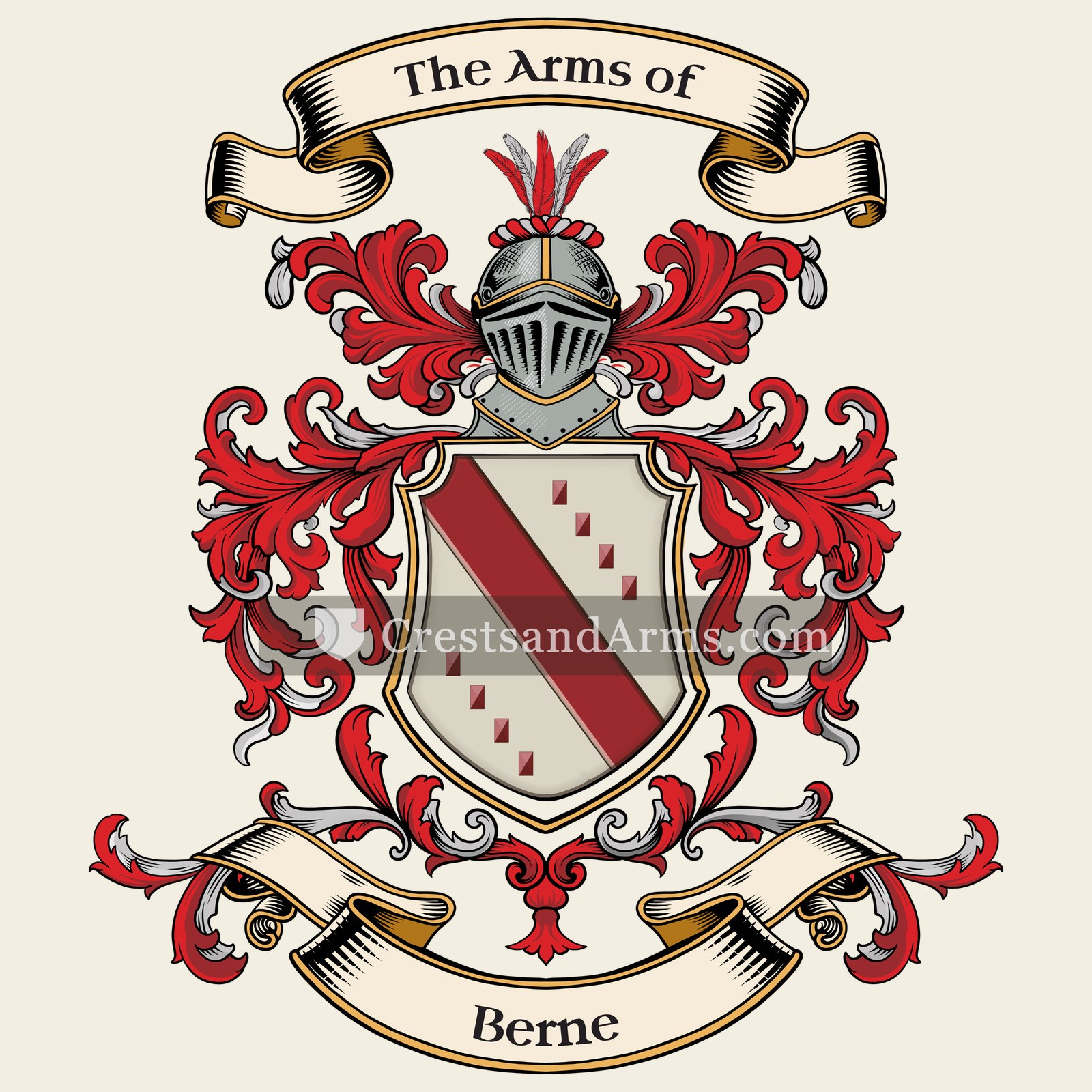


 fessThe military belt, and readiness to serve
 dovePeace, love and the Holy Spirit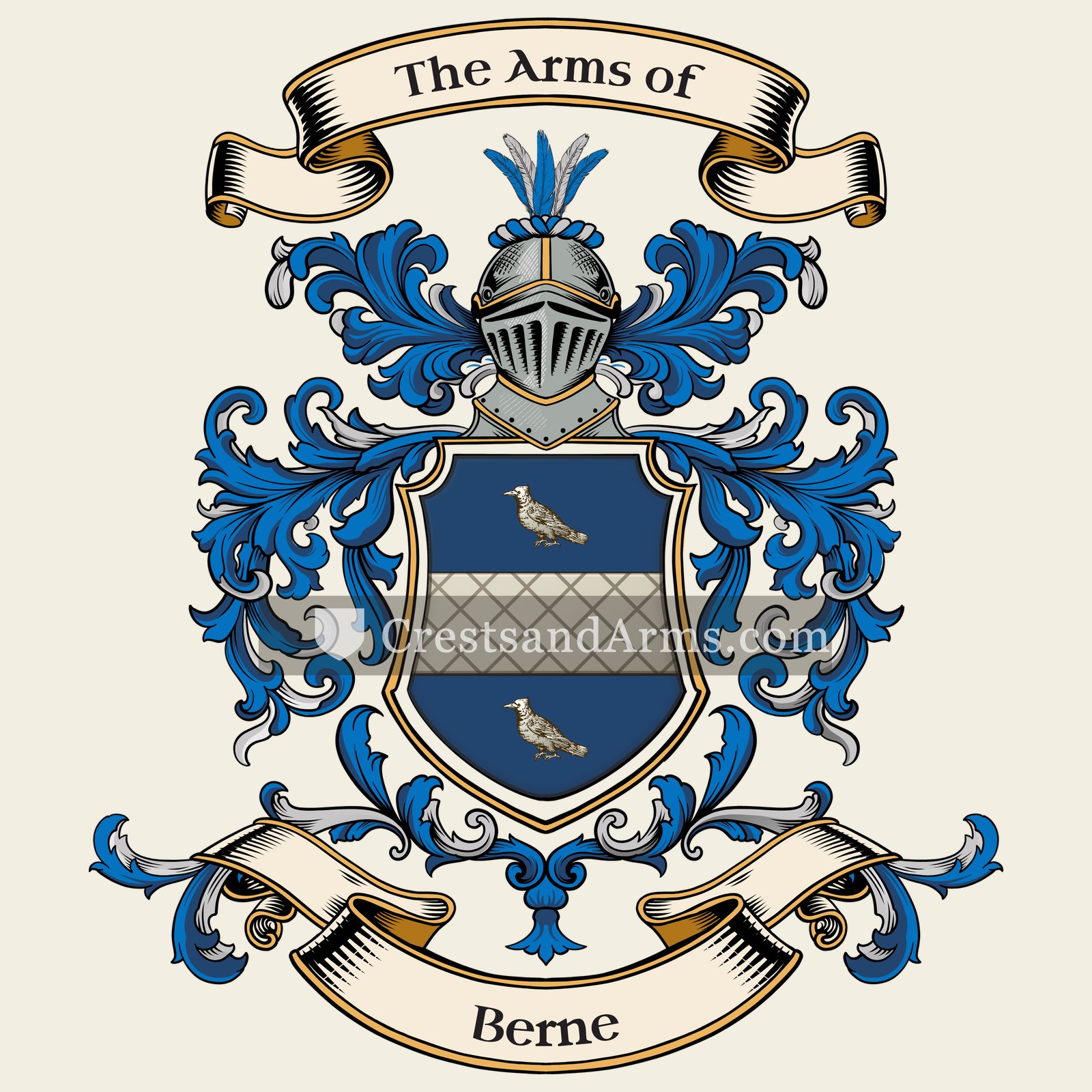


 cross symbolChristian faith and service