Map of France showing where the Berre arms are recorded
The Berre arms were recorded in Provence, c. 1663.
Provence was old country, with towns dating to the Romans and families who traced their land back nearly as far. Its gentry were many and long-settled, and long settlement is what fills a register.
This is where the arms were entered in the register. Families often moved to other parts of the country, so the same name can turn up in more than one region.
The body that granted and recorded arms in France in this period.
Louis XIV of France
Sovereign of the period
Louis XIV of France
1643–1715
Reigning in France when the Berre arms are first recorded.
How Arms Worked in France
In France, a coat of arms was a mark of honor that passed down through the male line to all legitimate descendants. Families often used the same shield without changes to show their shared heritage. If a branch wanted to stand out, they could add a small mark to their shield to show their specific place in the family tree.
Granting authority
The Juge d'armes de France acted as the official authority that regulated and verified coats of arms across the country.
How they got arms
Families typically inherited their arms from ancestors, though they could also receive them through royal grants or by proving their noble status.
Where arms were recorded
Coats of arms were officially recorded in the Armorial Général de France, which began its main collection in the year 1696.
The family's standing
Recorded among the armigerous families of Provence.
Origin & History of the Berre Family in France
The family name Berre finds its historical roots in the sun-drenched region of Provence in southern France. By the year 1663, records confirm that members of this family were already established residents within this culturally rich area. The name itself is closely tied to the geography of the region, as it shares its title with the Étang de Berre, a large saltwater lagoon located near the Mediterranean coast. In the seventeenth century, families in Provence often adopted surnames that reflected their connection to the local landscape or specific landmarks near their homes. As the Berre family grew, they became part of the social fabric of the Provençal countryside, living through a period of significant transition as the French monarchy consolidated its power over the southern provinces. Their presence in the region during this era suggests they were likely involved in the local agricultural or maritime traditions that defined life around the lagoon for centuries.
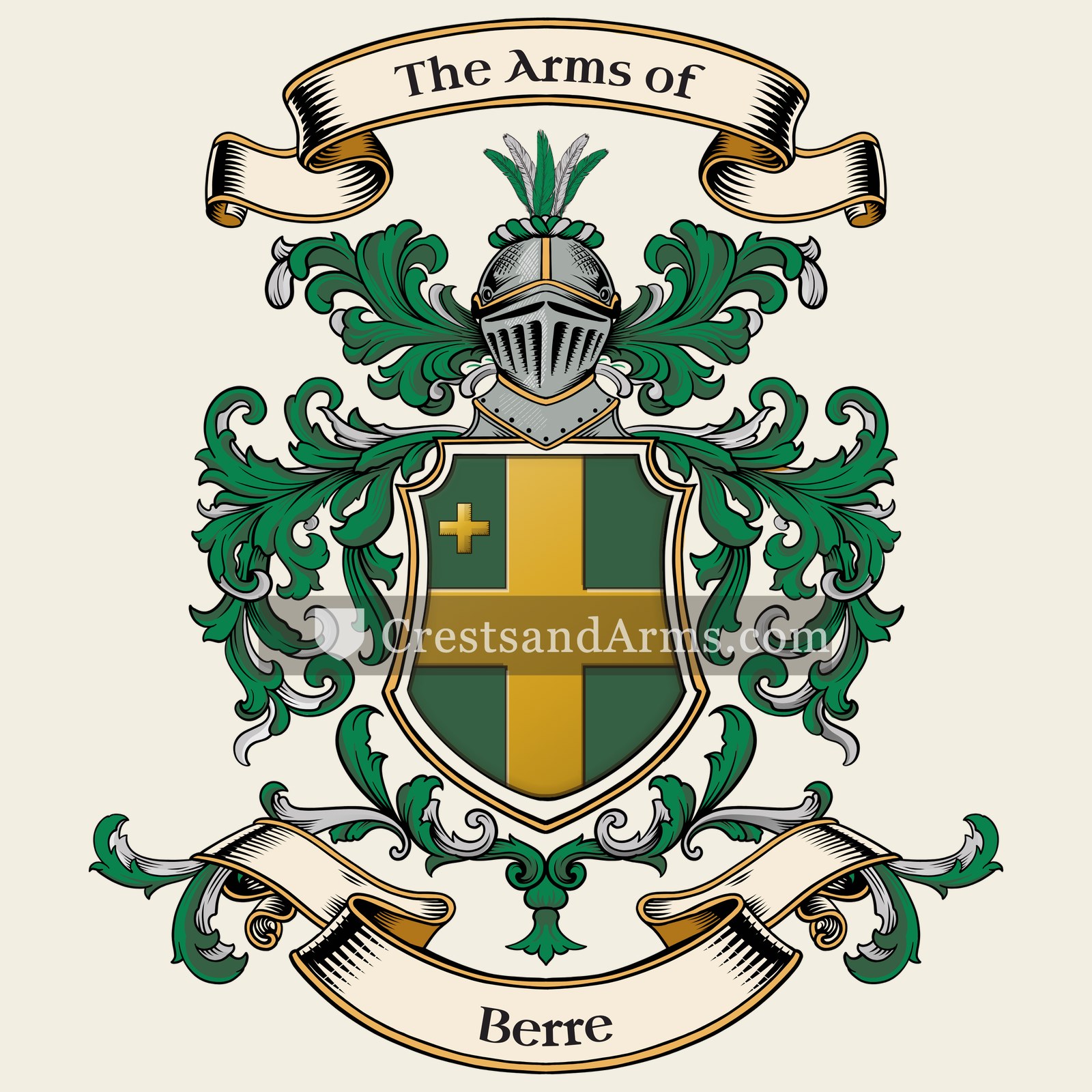
Coat of Arms & Family Crest Details
Symbols on this shield
cross symbolChristian faith and service
Colours
Green (Vert)Means: Hope
Gold (Or)Means: Generosity
Historical info
Source
Sir Bernard Burke, The General Armory of England, Scotland, Ireland and Wales, London: Harrison & Sons, 1884
Blazon (the actual original written record)
“Vert a cross bottonée or”
Irelandc. 1600
Digital archive packCoat of arms PNG, gold border print PDF, vector SVG and the certificate of authenticity. Sent to your email in minutes.
Map of Ireland showing where the Berre arms are recorded
The Berre arms were recorded in Ireland, c. 1600.
Arms such as these were typically recorded in Dublin.
Dublin was the seat of government in Ireland and the place where grants were sought and recorded. Families with business at the castle or the courts settled nearby, and settling there put their arms on record.
This is where the arms were entered in the register. Families often moved to other parts of the country, so the same name can turn up in more than one region.
The body that granted and recorded arms in Ireland in this period.
Elizabeth I of England
Sovereign of the period
Elizabeth I of England
1558–1603
Reigning in France when the Berre arms are first recorded.
How Arms Worked in Ireland
The Ulster King of Arms granted coats of arms to individuals who proved their social standing and good character. These symbols were typically inherited by all legitimate descendants of the original holder. If a family branch wanted a unique look, they could apply for a specific change to their design through the office to ensure their identity remained distinct.
Granting authority
The Ulster King of Arms acted as the official body that regulated and issued all coats of arms throughout Ireland.
How they got arms
Families obtained their arms through formal grants issued by the office after proving their eligibility and paying the required fees.
Where arms were recorded
All official grants were recorded in the registers held by the Ulster King of Arms starting from the year 1552.
The family's standing
Recorded among the armigerous families of Ireland.
Origin & History of the Berre Family in Ireland
The Berre family name established a notable presence in Dublin by the year 1600, emerging during a period of significant social and political transition in Ireland. During this era, the city functioned as a bustling hub of trade and administration, attracting families who often held roles in commerce or local governance. The name likely reflects the linguistic blending common in urban centers at the time, as families moved between administrative circles and the growing merchant classes. While historical records from the early seventeenth century are often fragmented, the presence of the Berre name in Dublin suggests that these individuals were integrated into the civic life of the capital. They lived through a time when Dublin was expanding its influence, and the family likely navigated the complexities of living in a city defined by shifting loyalties and evolving economic opportunities. By settling in such a central location, the early members of the Berre family became part of the foundational fabric of Dublin’s history.
Berre Meaning & Related Branches
Root word
Bera
A Germanic personal name derived from the word for bear.
This name
BerreA habitational name referring to someone from a place named Berre or a descendant of a bear-like ancestor.
also spelled
Beray
Ber
Berrie
Berry
Related arms
Berevariant spelling
Berryvariant spelling
Documented Sources
J. B. Rietstap, Armorial Général, Gouda: G. B. van Goor Zonen, 1884–87
Archives départementales des Bouches-du-Rhône, Registres paroissiaux et d'état civil de la commune de Berre-l'Étang, 1663
Boyer, Jean, La vie quotidienne en Provence au XVIIe siècle, 1972
Poupardin, René, Le royaume de Provence sous les Carolingiens, 1901
Digital archive packCoat of arms PNG, gold border print PDF, vector SVG and the certificate of authenticity. Sent to your email in minutes.


 bendDefence, and the scarf of a commander
 bendDefence, and the scarf of a commander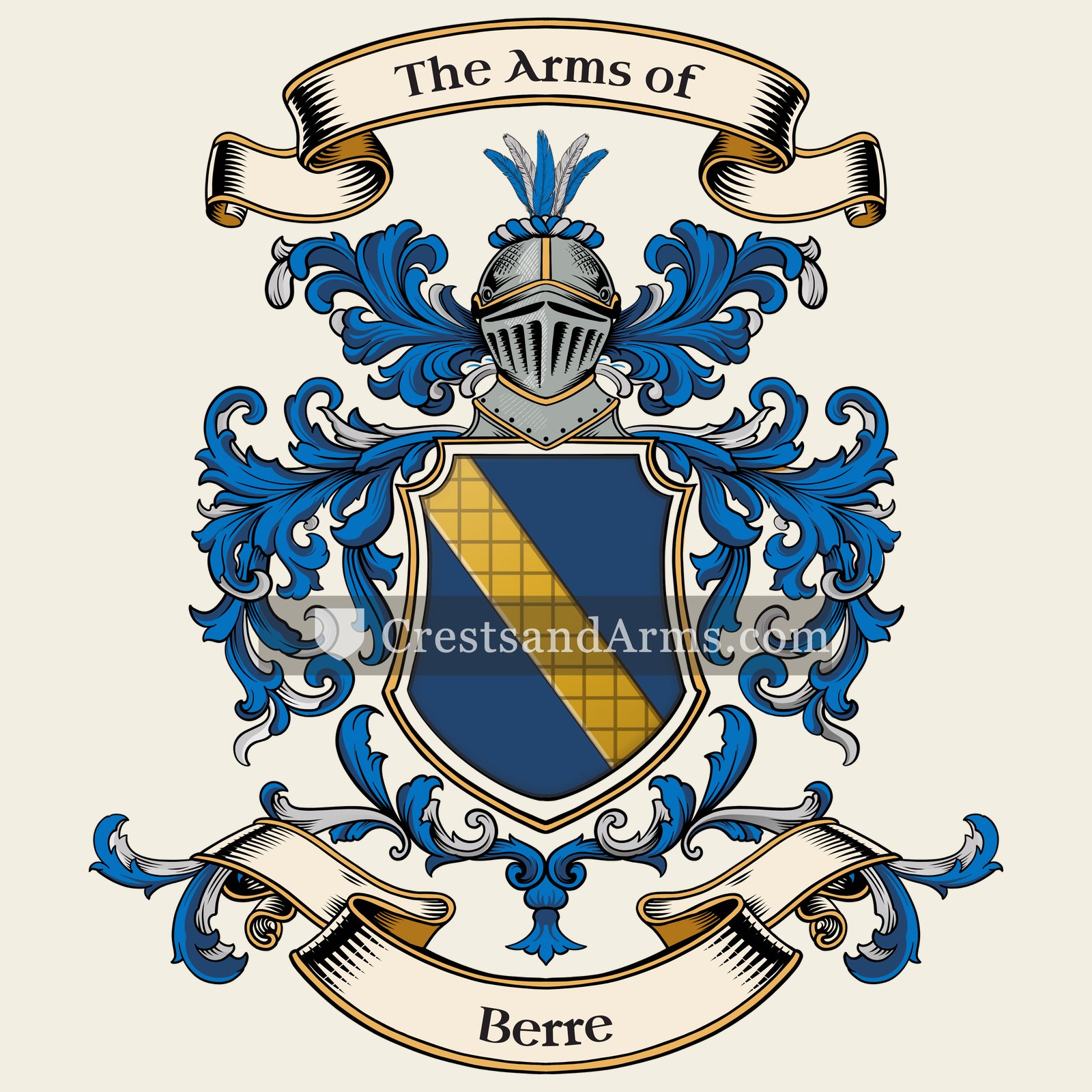


 cross symbolChristian faith and service