Map of France showing where the Bertrand arms are recorded
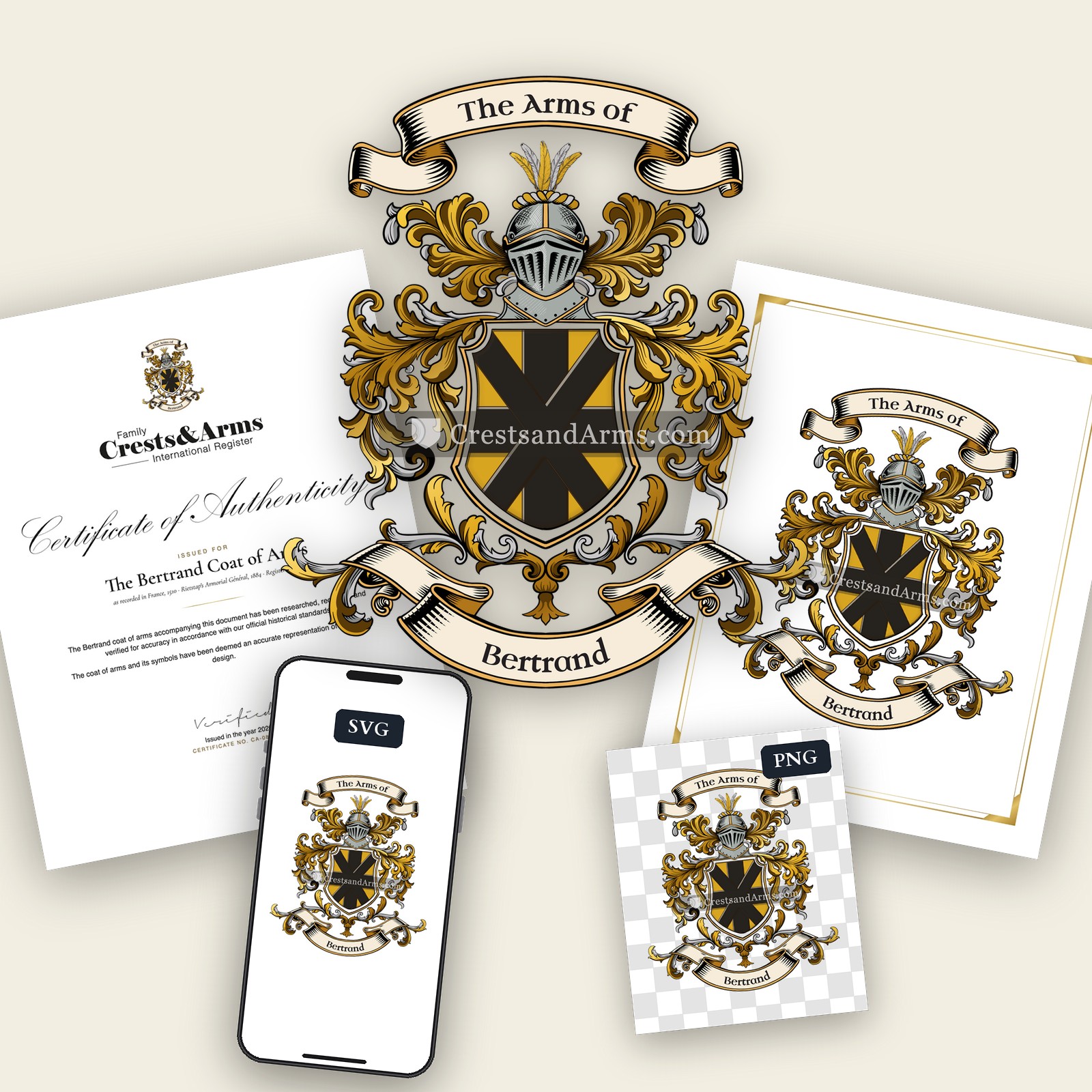
The Bertrand arms were recorded in Lorraine, c. 1510.
Lorraine sat on the border between France and the German lands, and border country bred soldiers. Families here held small estates and served in arms, and a fighting man was exactly the sort who carried a shield of his own.
This is where the arms were entered in the register. Families often moved to other parts of the country, so the same name can turn up in more than one region.
The body that granted and recorded arms in France in this period.
Louis XII of France
Sovereign of the period
Louis XII of France
1498–1515
Reigning in France when the Bertrand arms are first recorded.
How Arms Worked in France
In France, a coat of arms was a mark of honor that passed down through the male line to all legitimate descendants. Families often used the same shield without changes to show their shared heritage. If a branch wanted to stand out, they could add a small mark to their shield to show their specific place in the family tree.
Granting authority
The Juge d'armes de France acted as the official authority that regulated and verified coats of arms across the country.
How they got arms
Families typically inherited their arms from ancestors, though they could also receive them through royal grants or by proving their noble status.
Where arms were recorded
Coats of arms were officially recorded in the Armorial Général de France, which began its main collection in the year 1696.
The family's standing
Recorded among the armigerous families of Lorraine.
Origin & History of the Bertrand Family in France
The Bertrand name has deep roots in the historical landscape of France, evolving from the ancient Germanic personal name Berhtram, which combines the elements for bright and raven. By the early sixteenth century, the family established a notable presence in the Lorraine region, a territory defined by its complex position between the French kingdom and the Holy Roman Empire. During this era, families in Lorraine often navigated shifting political boundaries and the influence of the powerful Dukes of Lorraine. Members of the Bertrand family living in this area in 1510 were part of a society transitioning from the medieval period into the Renaissance. Their presence in this strategic borderland suggests they were likely involved in the local administrative, agricultural, or artisan networks that sustained the region during a time of significant cultural change. As the name spread across various French provinces, it remained tied to these early foundations of regional identity and local community life.
Coat of Arms & Family Crest Details
Symbols on this shield
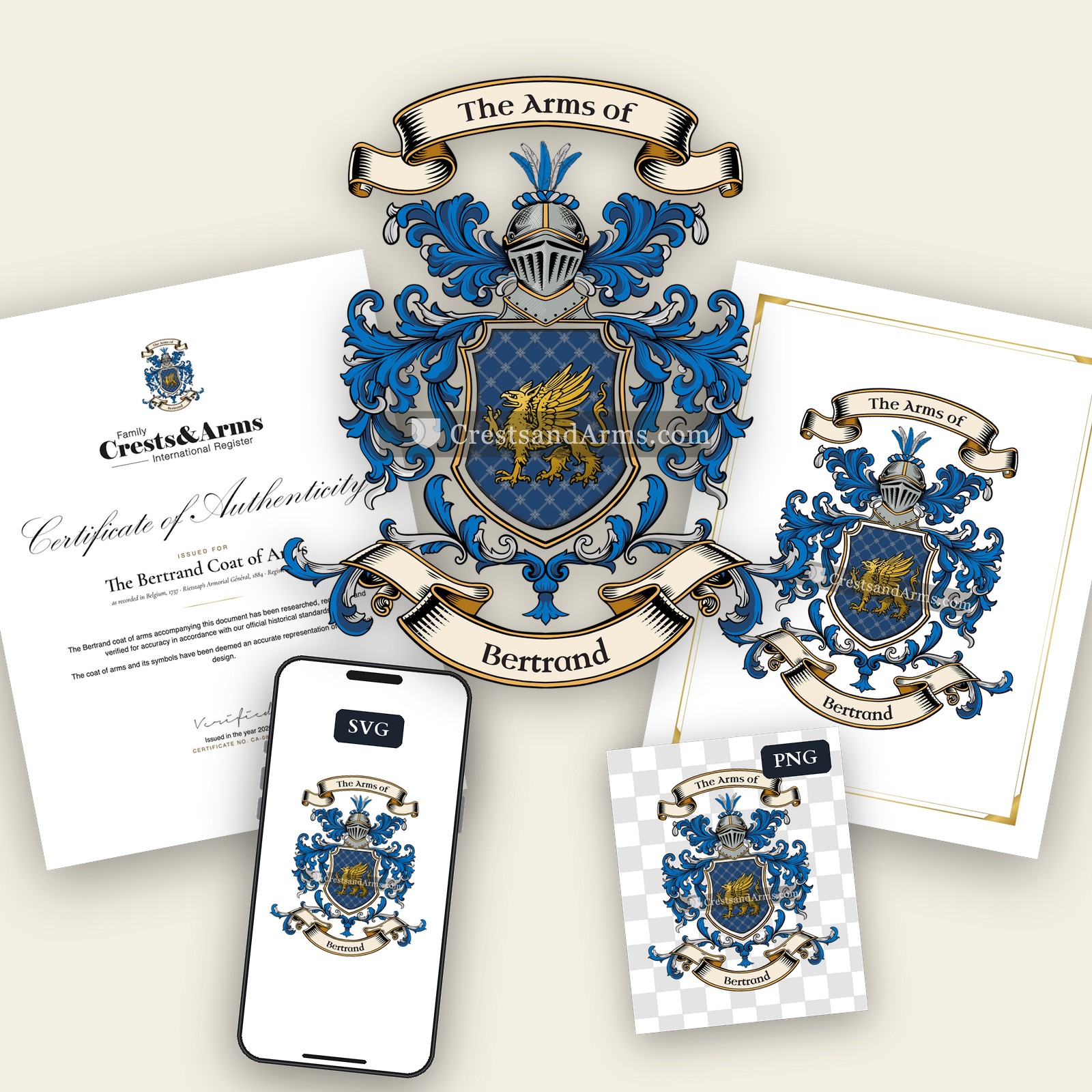
griffinValour and vigilance, guarding great treasure
Colours
Blue (Azure)Means: Loyalty and truth
Gold (Or)Means: Generosity
Historical info
Source
J. B. Rietstap, Armorial Général, Gouda: G. B. van Goor Zonen, 1884–87
Blazon (the actual original written record)
“D'azur à un griffon d'or.”
LiegeLiege, c. 1737
Digital archive packCoat of arms PNG, gold border print PDF, vector SVG and the certificate of authenticity. Sent to your email in minutes.
Map of Belgium showing where the Bertrand arms are recorded
The Bertrand arms were recorded in Liege, c. 1737.
Liege was a prosperous town and its surrounding country, living on metalworking and trade. Merchant families grew rich, bought land outside the walls, and took arms as landowners rather than tradesmen.
This is where the arms were entered in the register. Families often moved to other parts of the country, so the same name can turn up in more than one region.
The body that granted and recorded arms in Belgium in this period.
Charles VI, Holy Roman Emperor
Sovereign of the period
Charles VI, Holy Roman Emperor
1711–1740
Reigning in France when the Bertrand arms are first recorded.
How Arms Worked in Belgium
In Belgium, a coat of arms is considered personal property that is passed down through the male line to legitimate descendants. Families often use the same shield design across generations to show their shared heritage. If a branch of the family wants to change the design, they must apply for an official update to their specific version of the arms.
Granting authority
The Conseil héraldique is the official body that regulates and approves all coats of arms in Belgium.
How they got arms
Families obtain their coats of arms through formal royal grants or by confirming their historical right to use existing designs.
Where arms were recorded
All approved coats of arms are officially recorded in the public registers of the Conseil héraldique since 1844.
The family's standing
Recorded among the armigerous families of Liege.
Origin & History of the Bertrand Family in Belgium
The name Bertrand has deep roots in the region of Liège, where the family was well-established by the year 1737. The name itself is of Germanic origin and translates to bright raven, a combination that reflects the naming traditions common among the Frankish populations that settled in the Low Countries. During the eighteenth century, families in the Prince-Bishopric of Liège often lived in close-knit communities centered around trade and local craftsmanship. As the Bertrand family grew in this area, they became part of the social fabric that defined the industrial and cultural rise of the Meuse valley. By maintaining a presence in Liège, the family participated in a period of significant regional development, contributing to the local economy and the evolving identity of the Belgian people long before the modern nation was formally established.
Coat of Arms & Family Crest Details
Symbols on this shield
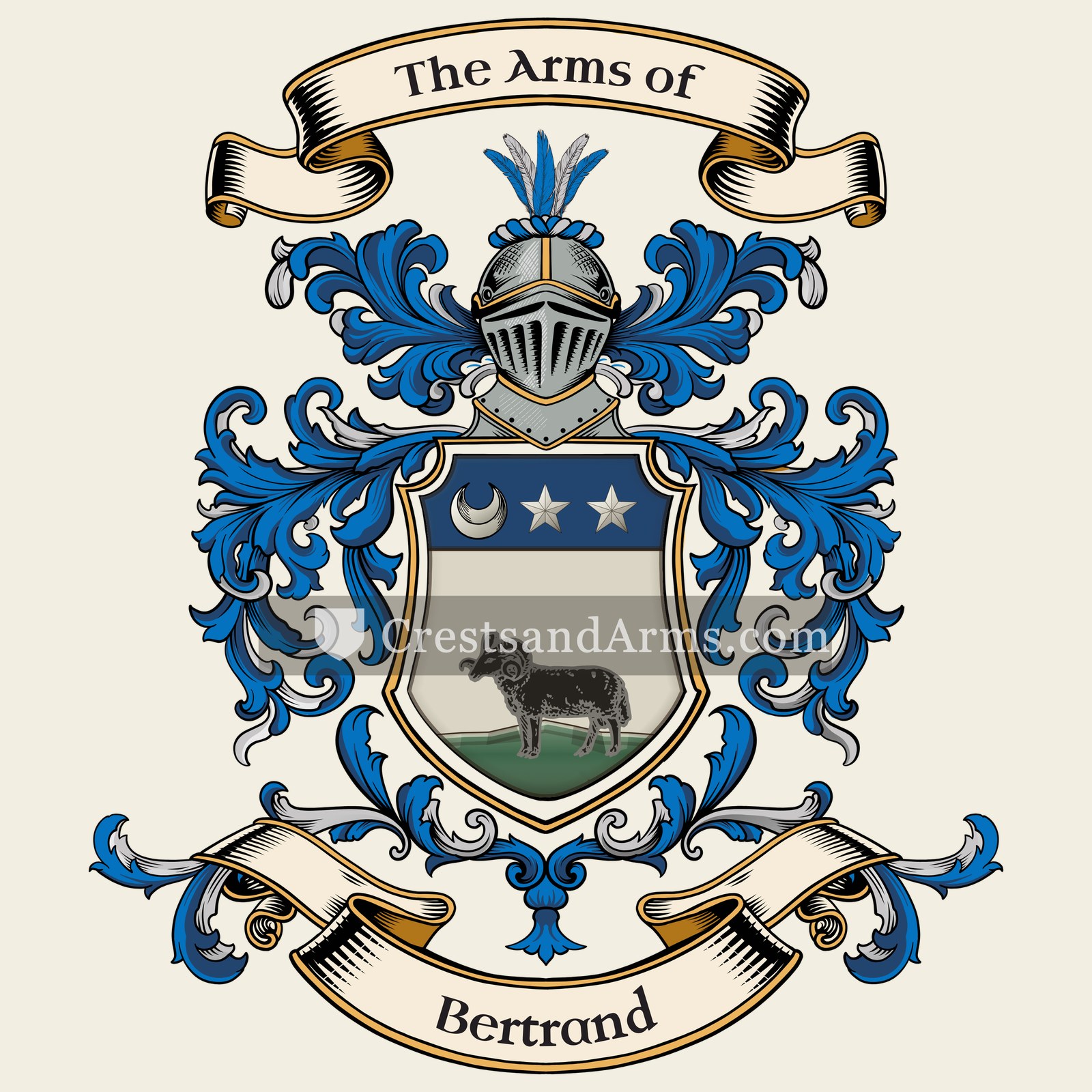
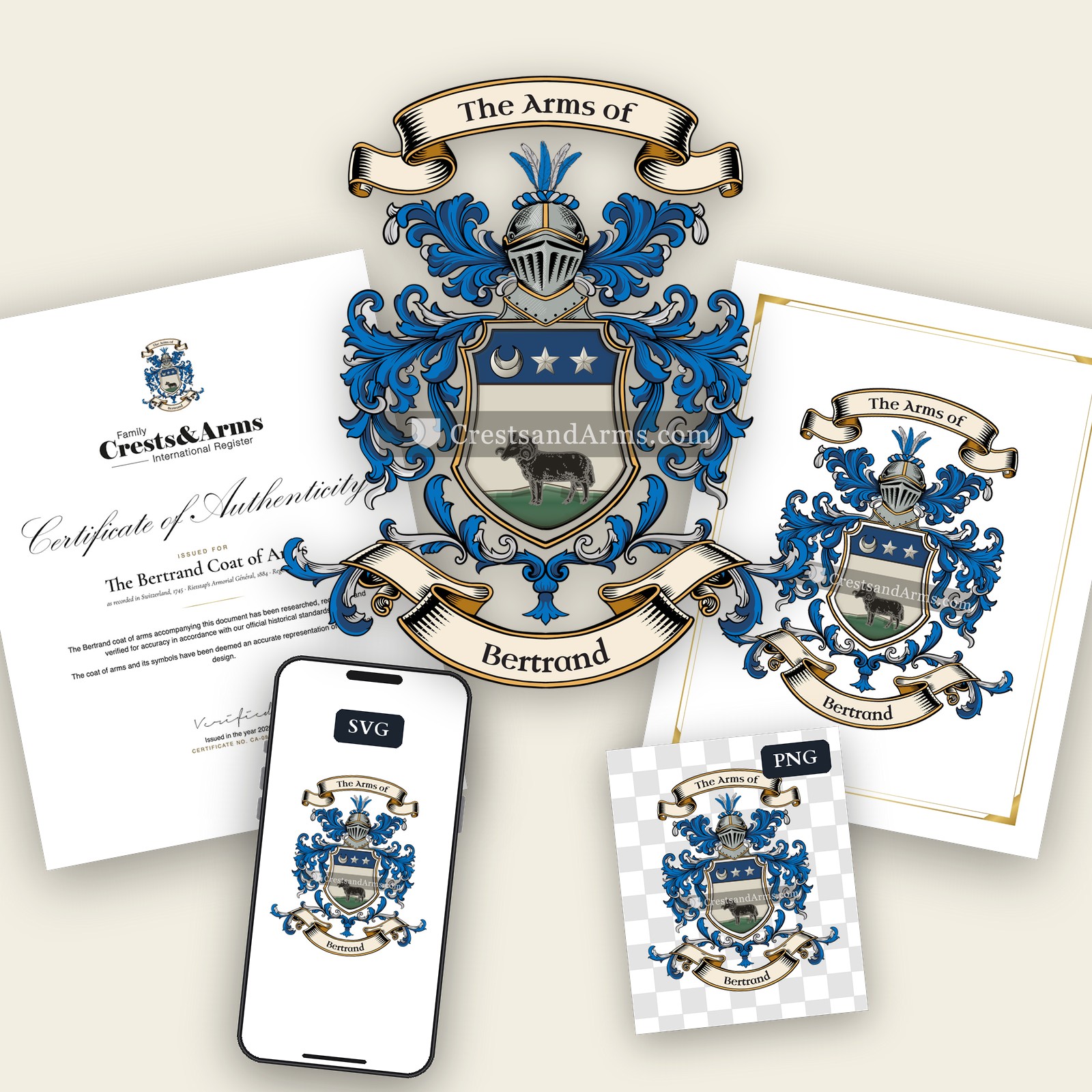
mountThe ground held, and steadfastness upon it
chiefAuthority, wisdom and dominion
ramLeadership and authority
crescentHonour by the sovereign, and the second son
mulletThe third son, and a divine quality from above
Colours
Silver (Argent)Means: Peace and sincerity
Blue (Azure)Means: Loyalty and truth
Green (Vert)Means: Hope
Black (Sable)Means: Constancy
Historical info
Source
J. B. Rietstap, Armorial Général, Gouda: G. B. van Goor Zonen, 1884–87
Blazon (the actual original written record)
“D'arg. à un bélier de sa., coll. et clariné d'or, pass. sur une terrasse de sin.; au chef d'azur, ch. d'un croiss. du champ entre deux étoiles (5) du même.”
SwitzerlandGenève, c. 1745
Digital archive packCoat of arms PNG, gold border print PDF, vector SVG and the certificate of authenticity. Sent to your email in minutes.
Map of Switzerland showing where the Bertrand arms are recorded
The Bertrand arms were recorded in Genève, c. 1745.
This is where the arms were entered in the register. Families often moved to other parts of the country, so the same name can turn up in more than one region.
The body that granted and recorded arms in Switzerland in this period.
How Arms Worked in Switzerland
In Switzerland, coats of arms were not restricted to the nobility and were often adopted by common citizens and families. These symbols were passed down through generations to show family identity. When branches of a family grew, they often changed small details of the design to distinguish their own line from the original group.
Granting authority
Cantonal and civic authorities managed the use of coats of arms within their specific regions and local jurisdictions.
How they got arms
Families typically assumed their own coats of arms based on local custom rather than receiving them from a central monarch.
Where arms were recorded
Arms were recorded in various cantonal and civic registers starting from the fourteenth century throughout the Swiss region.
The family's standing
Recorded among the armigerous families of Switzerland.
Origin & History of the Bertrand Family in Switzerland
The surname Bertrand has deep roots in the French-speaking regions of Switzerland, where it emerged from a Germanic given name meaning bright raven. By the middle of the eighteenth century, the family had established a firm presence in the city of Genève. Records from 1745 confirm that members of the Bertrand family were active participants in the local economy and social life of the city during this period. As residents of a major center for trade and intellectual exchange, these early family members often worked as skilled artisans or merchants. They integrated into the local community by adhering to the strict social structures of the Republic of Genève. Over time, the family name became synonymous with the industrious spirit of the region, reflecting the broader history of families who helped shape the cultural landscape of the Swiss cantons.
Bertrand Meaning & Related Branches
Root word
Berht-hramn
Derived from Germanic elements meaning bright and raven.
This name
BertrandA name signifying a bright or glorious raven, often associated with wisdom and protection.
also spelled
Bertran
Related arms
Ancel de Quinevillesimilar arms
Auvray des Montssimilar arms
Boudonvillesimilar arms
Bertranvariant spelling
Documented Sources
J. B. Rietstap, Armorial Général, Gouda: G. B. van Goor Zonen, 1884–87
Dauzat, Albert, Dictionnaire étymologique des noms et prénoms de France, 1951
Morlet, Marie-Thérèse, Dictionnaire étymologique des noms de famille, 1991
Archives départementales de Meurthe-et-Moselle, Série B: Cours et juridictions (Chambre des comptes de Lorraine)
Digital archive packCoat of arms PNG, gold border print PDF, vector SVG and the certificate of authenticity. Sent to your email in minutes.


 cross symbolChristian faith and service
 saltireResolution, and St Andrew's cross
 cross symbolChristian faith and service
 saltireResolution, and St Andrew's cross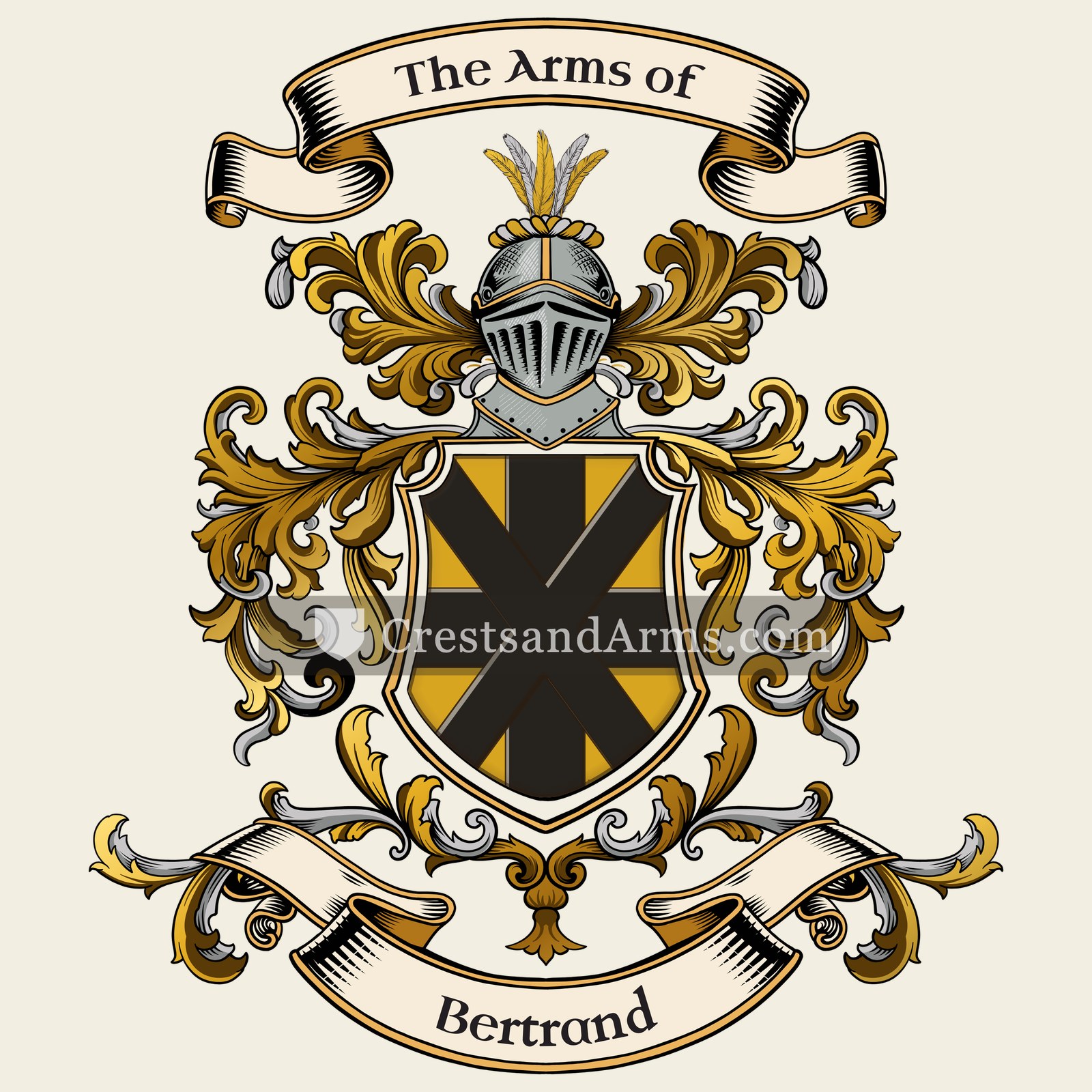


 griffinValour and vigilance, guarding great treasure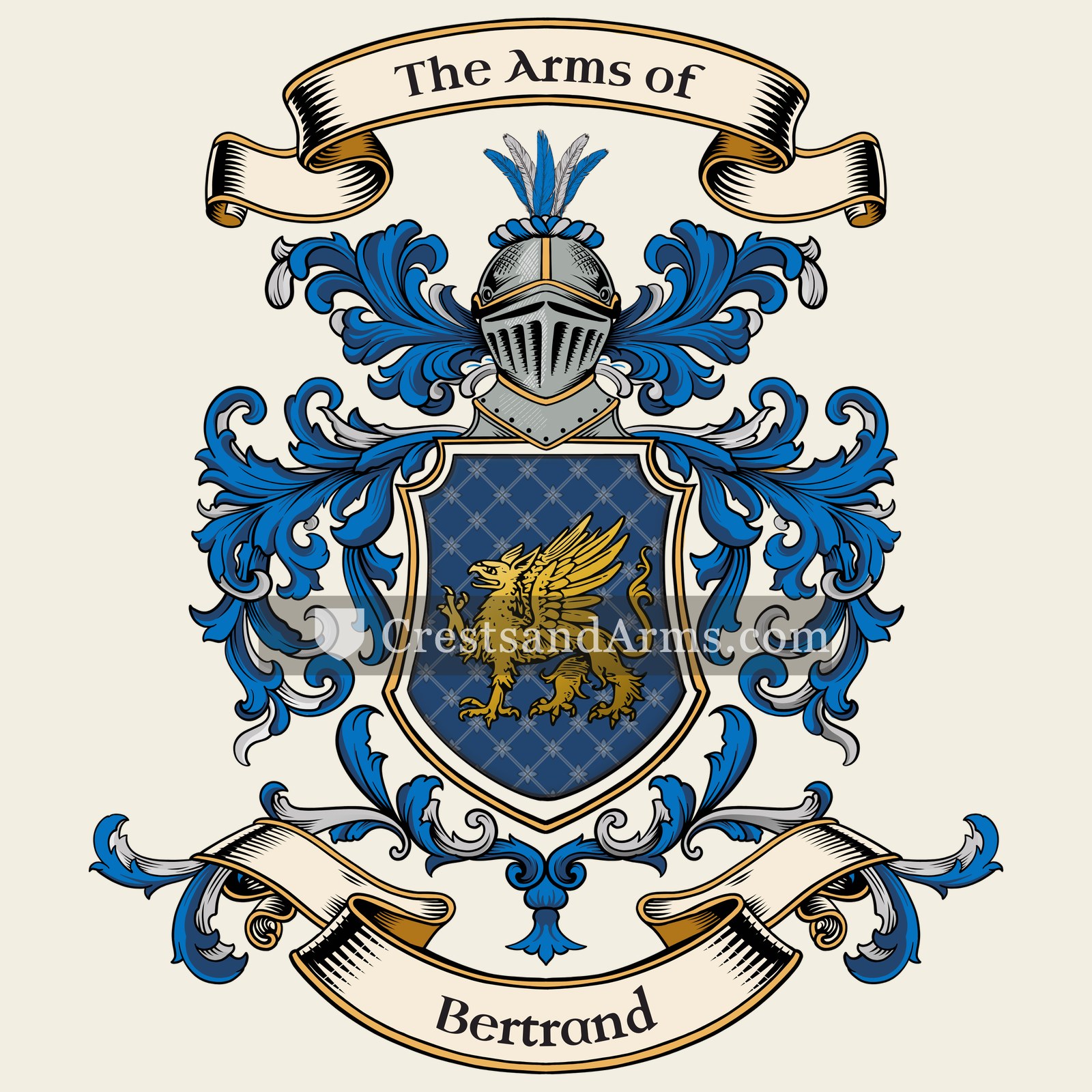


 mountThe ground held, and steadfastness upon it
 chiefAuthority, wisdom and dominion
 ramLeadership and authority
 crescentHonour by the sovereign, and the second son
 mulletThe third son, and a divine quality from above