Map of France showing where the Bettencourt arms are recorded
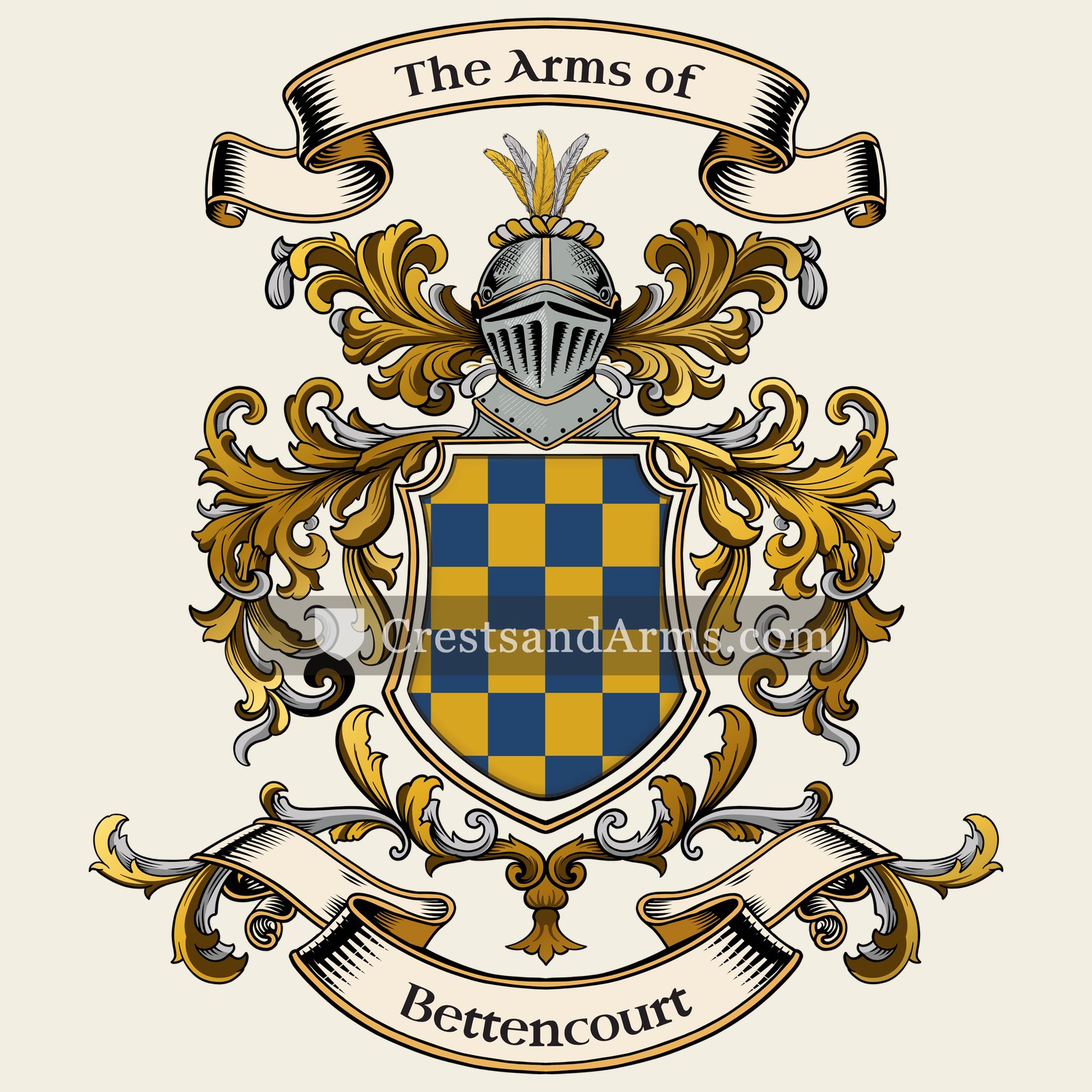
The Bettencourt arms were recorded in Artois, c. 1663.
Artois lay on the disputed ground between France and the Low Countries and was fought over for centuries. Families there held their land under arms, and a shield was how a fighting household was known.
This is where the arms were entered in the register. Families often moved to other parts of the country, so the same name can turn up in more than one region.
The body that granted and recorded arms in France in this period.
Louis XIV of France
Sovereign of the period
Louis XIV of France
1643–1715
Reigning in France when the Bettencourt arms are first recorded.
How Arms Worked in France
In France, a coat of arms was a mark of honor that passed down through the male line to all legitimate descendants. Families often used the same shield without changes to show their shared heritage. If a branch wanted to stand out, they could add a small mark to their shield to show their specific place in the family tree.
Granting authority
The Juge d'armes de France acted as the official authority that regulated and verified coats of arms across the country.
How they got arms
Families typically inherited their arms from ancestors, though they could also receive them through royal grants or by proving their noble status.
Where arms were recorded
Coats of arms were officially recorded in the Armorial Général de France, which began its main collection in the year 1696.
The family's standing
Recorded among the armigerous families of Artois.
Origin & History of the Bettencourt Family in France
The family name Bettencourt traces its roots to the northern regions of France, specifically the area of Artois. By the year 1663, records confirm that members of the family were well-established in this territory. The name itself is derived from a combination of Germanic and French linguistic roots, typically referring to a specific settlement or farmstead owned by an individual named Betto. As the family grew, they became deeply integrated into the local social and agricultural life of the region. Over time, the name spread beyond these original borders as family members moved to different parts of Europe and eventually to the Atlantic islands, carrying their history and identity with them.
Bettencourt Meaning & Related Branches
Root word
Betton
A Germanic personal name derived from the element bera meaning bear.
This name
BettencourtRefers to the estate or farmstead belonging to a person named Betton.
also spelled
Betencourt
Bethancourt
Betencort
Related arms
Bethancourtvariant spelling
Documented Sources
J. B. Rietstap, Armorial Général, Gouda: G. B. van Goor Zonen, 1884–87
Armitage-Smith, Sydney, John of Gaunt, 1904
Arquivo Regional e Biblioteca Pública da Madeira, Coleção de Documentos da Capitania do Funchal
Cordeiro, Luciano, Bettencourts na Madeira, 1881
Digital archive packCoat of arms PNG, gold border print PDF, vector SVG and the certificate of authenticity. Sent to your email in minutes.


 chequyConstancy, and the counting-board
 chequyConstancy, and the counting-board