Map of Netherlands showing where the Bex arms are recorded
The Bex arms were recorded in Pays-Bas, c. 1815.
Arms such as these were typically recorded in Friesland.
Friesland was low, wet country on the northern coast of the Netherlands, farmed by families who had held the same land for centuries. Free landholders were unusually common there, and a free landholder could carry arms.
This is where the arms were entered in the register. Families often moved to other parts of the country, so the same name can turn up in more than one region.
Region
Friesland
Town
Pays-Bas
First recorded
1815
Granting Authority for the Bex Arms
Hoge Raad van Adel
Photograph made by me · CC BY-SA 3.0
The body that granted and recorded arms in Netherlands in this period.
William I of the Netherlands
Sovereign of the period
William I of the Netherlands
1815–1840
Reigning in Netherlands when the Bex arms are first recorded.
How Arms Worked in Netherlands
In the Netherlands, coats of arms were often used by noble families and those who held specific public offices. These arms were passed down through the generations to legitimate descendants. Younger branches of a family usually kept the original design without needing to add special marks. This system ensured that the family identity remained clear and consistent over many years.
Granting authority
The Hoge Raad van Adel is the official body that regulates and manages noble titles and coats of arms in the Netherlands.
How they got arms
Families typically obtained their coats of arms through official royal grants or by proving their long-standing historical use of the symbols.
Where arms were recorded
Coats of arms are officially recorded in the registers held by the Hoge Raad van Adel, which began its work in 1814.
The family's standing
Recorded among the armigerous families of Netherlands.
Origin & History of the Bex Family in Netherlands
The surname Bex has deep roots in the northern regions of the Netherlands, particularly within the province of Friesland. By the early 19th century, records confirm that members of the family were well-established in this area. The name itself likely originated as a topographic or habitational name, which was a common way for families to identify themselves based on the land they worked or the specific villages where they resided. During the period around 1815, the Netherlands underwent significant administrative changes, including the formalization of civil registration. This process required families to adopt and maintain consistent surnames for official government records. As the family moved through the Frisian landscape, they contributed to the local agricultural and social fabric of the region, leaving behind a trail of documentation that reflects their transition into the modern era of Dutch record-keeping.
Coat of Arms & Family Crest Details
Symbols on this shield
cross symbolChristian faith and service
serpentWisdom, healing and prudence
Colours
Gold (Or)Means: Generosity
Red (Gules)Means: Military strength
Historical info
Source
J. B. Rietstap, Armorial Général, Gouda: G. B. van Goor Zonen, 1884–87
Blazon (the actual original written record)
“D'or à la croix gringolée de gu. C.: une tête et col de dragon de gu., vomissant des flammes. — (Ren. de nob., 5 mars 1670:) D'azur à la croix gringolée d'or, ch. en coeur d'un écusson d'arg. surch. de trois feuilles de tilleul de sin., les tiges en bas. Cq. cour. C.: une sirène au nat., tenant de sa main dextre un trèfle et de sa sen. une peigne. L. d'or et d'azur (La branche établie dans le Brab. sept. portait ces armes sans surtout, et pour D.: SOLA VIRTUS NOBILITAT.)”
Belgiumc. 1737
Digital archive packCoat of arms PNG, gold border print PDF, vector SVG and the certificate of authenticity. Sent to your email in minutes.
Map of Belgium showing where the Bex arms are recorded
The Bex arms were recorded in Belgium, c. 1737.
Arms such as these were typically recorded in Brabant.
Brabant lay at the heart of the Low Countries, where the trade routes met. Its towns were wealthy and its landowners many, and both kinds of family kept arms, which is why the region is so heavily represented.
This is where the arms were entered in the register. Families often moved to other parts of the country, so the same name can turn up in more than one region.
The body that granted and recorded arms in Belgium in this period.
Charles VI, Holy Roman Emperor
Sovereign of the period
Charles VI, Holy Roman Emperor
1711–1740
Reigning in Netherlands when the Bex arms are first recorded.
How Arms Worked in Belgium
In Belgium, a coat of arms is considered personal property that is passed down through the male line to legitimate descendants. Families often use the same shield design across generations to show their shared heritage. If a branch of the family wants to change the design, they must apply for an official update to their specific version of the arms.
Granting authority
The Conseil héraldique is the official body that regulates and approves all coats of arms in Belgium.
How they got arms
Families obtain their coats of arms through formal royal grants or by confirming their historical right to use existing designs.
Where arms were recorded
All approved coats of arms are officially recorded in the public registers of the Conseil héraldique since 1844.
The family's standing
Recorded among the armigerous families of Belgium.
Origin & History of the Bex Family in Belgium
The family name Bex has deep roots in the historical region of Brabant, where records confirm members of the family were living as early as 1737. During the eighteenth century, this area was part of the Southern Netherlands under Austrian rule, a period characterized by a stable agricultural society and the growth of local village communities. The name itself is likely a topographic or habitational surname, which was common in the Low Countries at the time. Families often took names based on the specific landscape features near their homes or the small hamlets where they resided. As the Bex family established themselves in the Brabant countryside, they became part of the local social fabric, likely working in trades or farming that sustained the regional economy. By tracing their presence back to this era, we see a family that was deeply connected to the development of rural life in what would eventually become modern-day Belgium.
Coat of Arms & Family Crest Details
Symbols on this shield
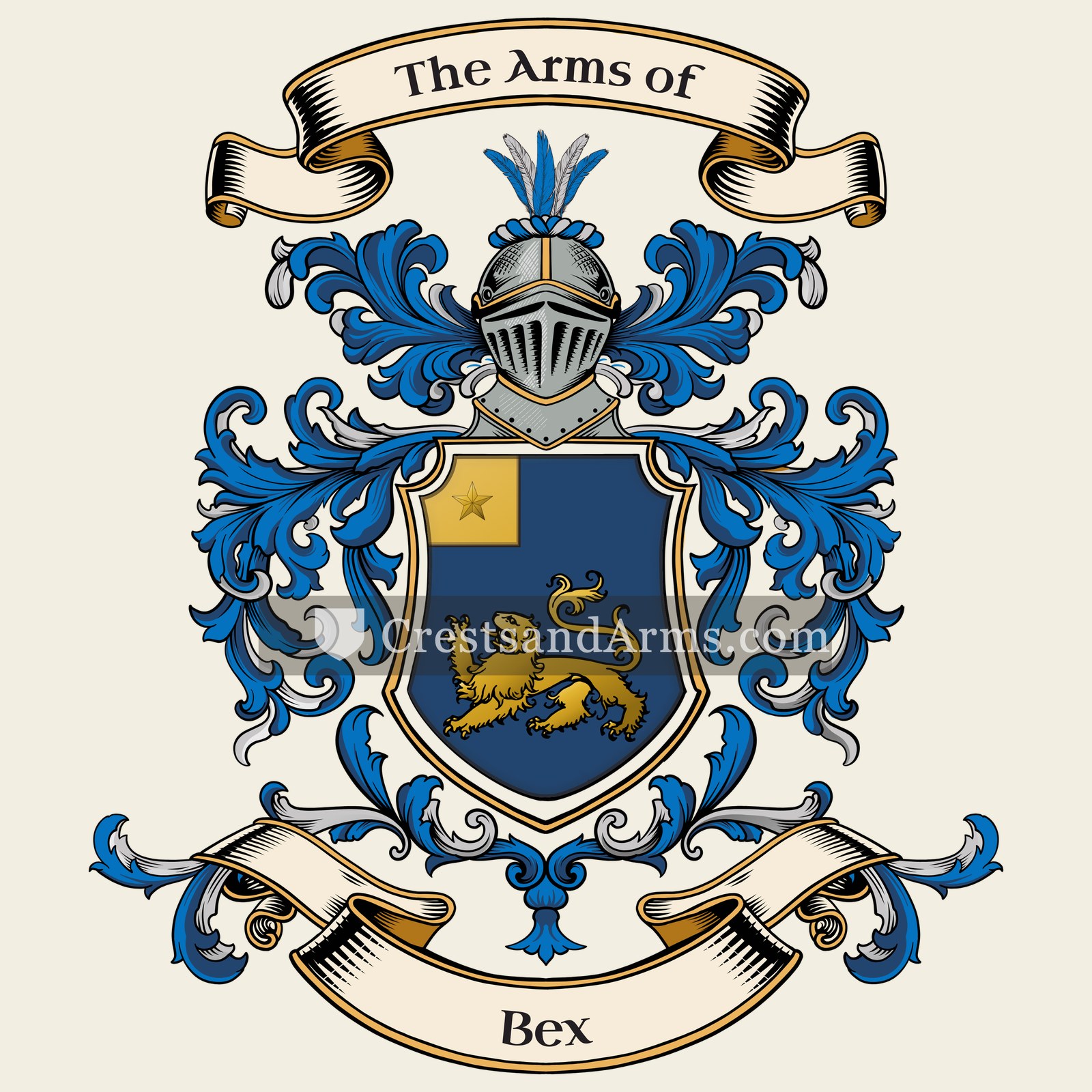
cantonA mark of honour granted by the sovereign
lionCourage, strength and royalty
mulletThe third son, and a divine quality from above
Colours
Blue (Azure)Means: Loyalty and truth
Gold (Or)Means: Generosity
Historical info
Source
J. B. Rietstap, Armorial Général, Gouda: G. B. van Goor Zonen, 1884–87
Blazon (the actual original written record)
“D'azur au lion d'or, acc. au canton dextre du chef d'une étoile (5) du même”
Switzerlandc. 1745
Digital archive packCoat of arms PNG, gold border print PDF, vector SVG and the certificate of authenticity. Sent to your email in minutes.
Map of Switzerland showing where the Bex arms are recorded
The Bex arms were recorded in Switzerland, c. 1745.
Arms such as these were typically recorded in Bern.
Bern was the largest of the Swiss cantons and ran itself, with its own council and its own courts. Its governing families held office for generations, and office of that kind carried a shield with it.
This is where the arms were entered in the register. Families often moved to other parts of the country, so the same name can turn up in more than one region.
The body that granted and recorded arms in Switzerland in this period.
How Arms Worked in Switzerland
In Switzerland, coats of arms were not restricted to the nobility and were often adopted by common citizens and families. These symbols were passed down through generations to show family identity. When branches of a family grew, they often changed small details of the design to distinguish their own line from the original group.
Granting authority
Cantonal and civic authorities managed the use of coats of arms within their specific regions and local jurisdictions.
How they got arms
Families typically assumed their own coats of arms based on local custom rather than receiving them from a central monarch.
Where arms were recorded
Arms were recorded in various cantonal and civic registers starting from the fourteenth century throughout the Swiss region.
The family's standing
Recorded among the armigerous families of Switzerland.
Origin & History of the Bex Family in Switzerland
The family name Bex has deep roots in the historical landscape of Switzerland, particularly within the canton of Bern. By the mid-eighteenth century, records confirm that members of the family were well-established residents of the city of Bern by 1745. The name itself is often linked to the town of Bex, located in the French-speaking Vaud region, which suggests that the family may have originally migrated from that area into the German-speaking heartland of Bern. During this period, families often moved between Swiss regions to pursue new trade opportunities or to seek better social standing within the growing urban centers. As the family settled into life in Bern, they became part of the local social fabric, contributing to the administrative and economic activities that defined the city during the Enlightenment era. This transition from the Vaud region to Bern highlights the mobility of Swiss families who helped shape the cultural identity of their new communities over several generations.
Bex Meaning & Related Branches
Root word
Beck
A small stream or brook of Germanic origin.
This name
BexA topographic name for someone who lived near a small stream.
also spelled
Bexx
Related arms
Routartsame arms
Baldingersimilar arms
Montrougesimilar arms
Beckxvariant spelling
Documented Sources
J. B. Rietstap, Armorial Général, Gouda: G. B. van Goor Zonen, 1884–87
Centraal Bureau voor Genealogie, Bevolkingsregisters van Friesland
Tresoar, Burgerlijke Stand van Friesland
Meertens Instituut, Nederlandse Familienamenbank
Digital archive packCoat of arms PNG, gold border print PDF, vector SVG and the certificate of authenticity. Sent to your email in minutes.


 leafHappiness and abundance
 leafHappiness and abundance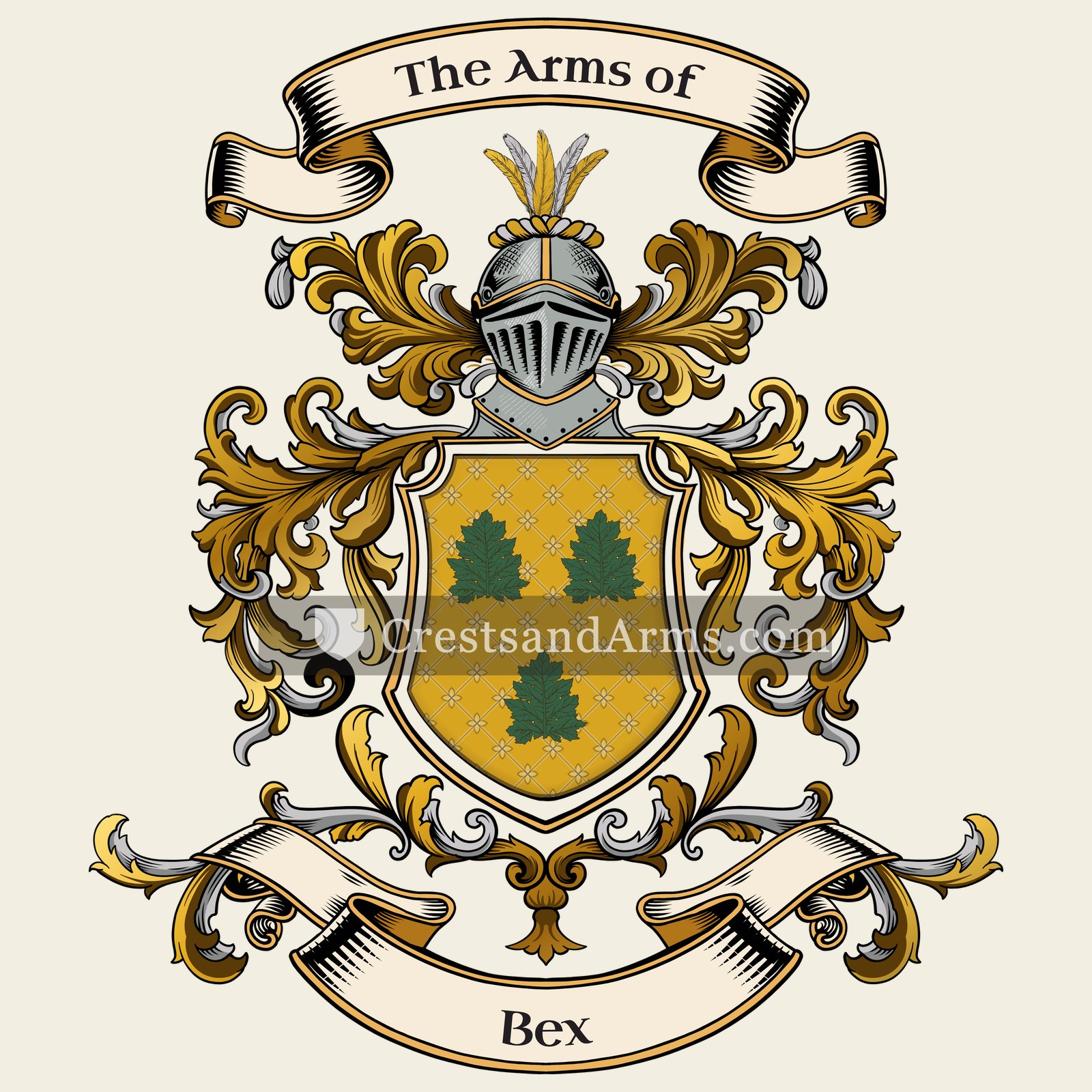


 cross symbolChristian faith and service
 serpentWisdom, healing and prudence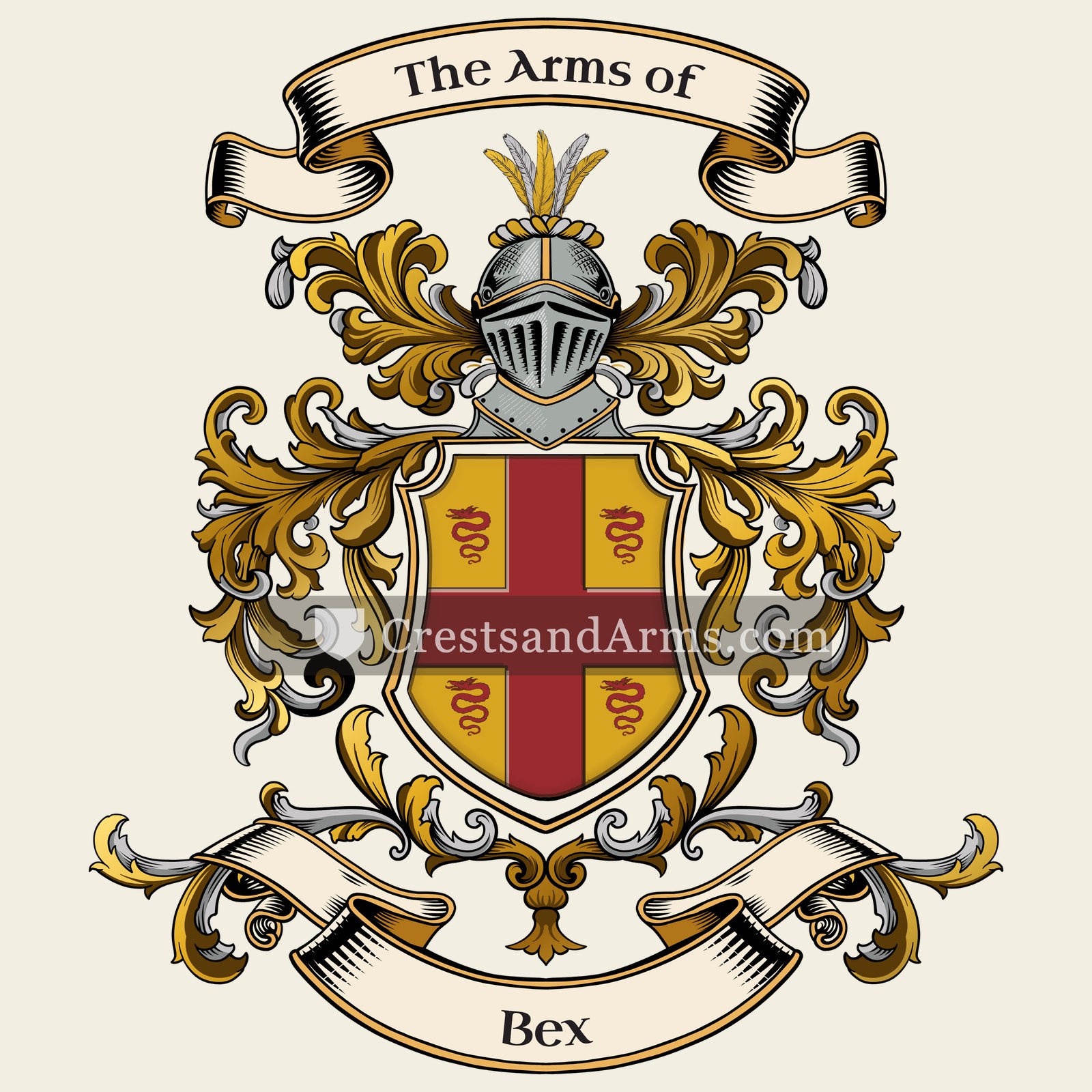


 cantonA mark of honour granted by the sovereign
 lionCourage, strength and royalty
 mulletThe third son, and a divine quality from above