Map of Spain showing where the Bezerra arms are recorded
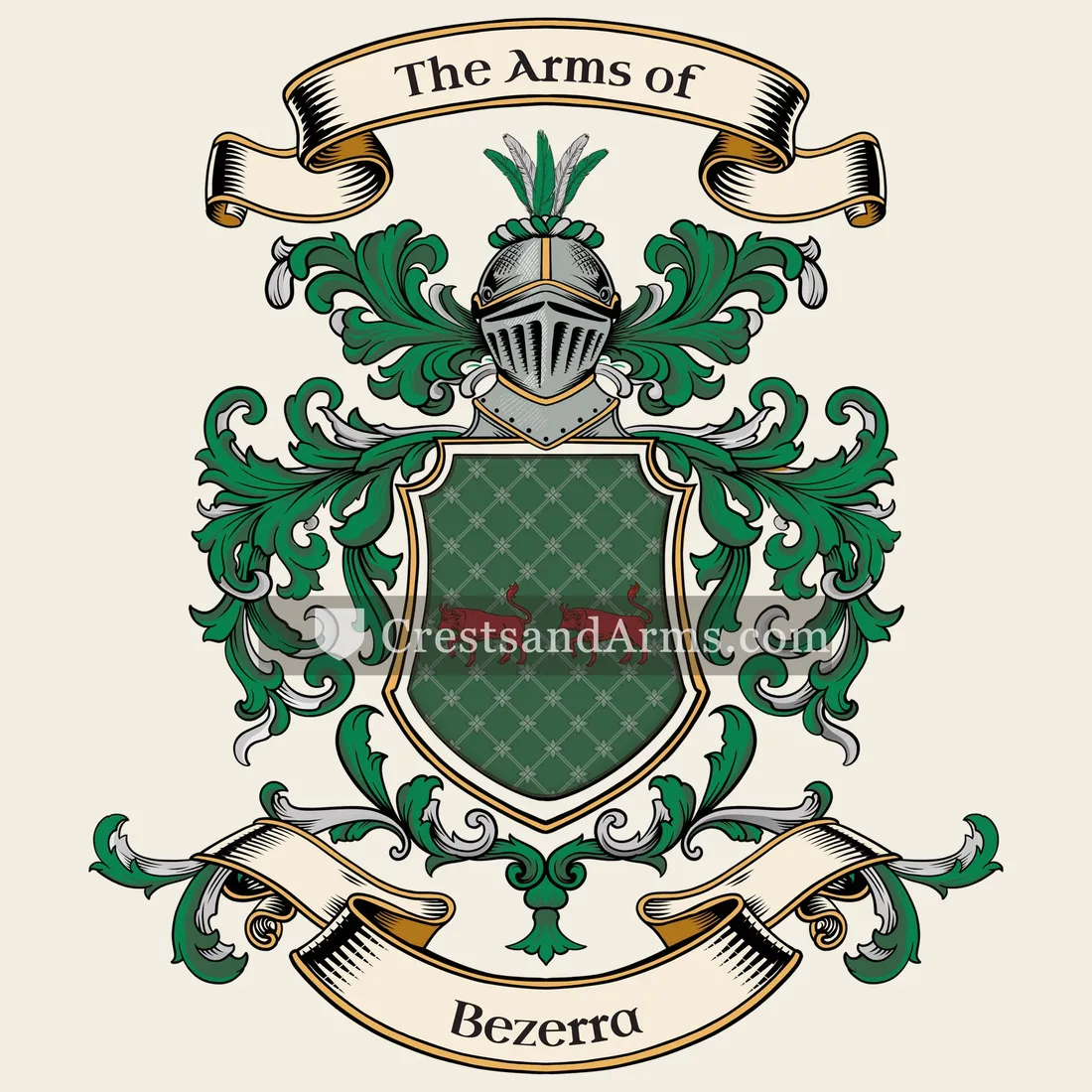
The Bezerra arms were recorded in Estrémadure, c. 1722.
This is where the arms were entered in the register. Families often moved to other parts of the country, so the same name can turn up in more than one region.
The body that granted and recorded arms in Spain in this period.
Philip V of Spain
Sovereign of the period
Philip V of Spain
1714–1724
Reigning in Spain when the Bezerra arms are first recorded.
How Arms Worked in Spain
In Spain, a coat of arms was considered a form of property that belonged to the entire family line. These arms were passed down from a father to all his children equally. Younger branches of the family usually kept the original design without needing to add any special marks to distinguish their specific line.
Granting authority
The Cronista Rey de Armas was the official body that regulated and granted coats of arms throughout Spain.
How they got arms
Families often obtained their arms through royal grants or by proving their noble status to the official heraldic authority.
Where arms were recorded
Coats of arms were officially recorded in the registers of the Cronista Rey de Armas starting in 1496.
The family's standing
Recorded among the armigerous families of Spain.
Origin & History of the Bezerra Family in Spain
The Bezerra family name carries a history deeply rooted in the Iberian Peninsula, with significant records placing early members in the region of Extremadura by the year 1722. The name itself is derived from the Portuguese and Spanish word "bezerro," which translates to a young calf or bull. Historically, surnames of this type were often occupational or descriptive, likely identifying families who worked in cattle ranching or lived in areas known for livestock farming. As the family established itself in Extremadura, they became part of the local social fabric during a period of transition in Spanish rural life. Over time, members of the family migrated across borders and oceans, carrying the name from its agricultural origins in the Spanish interior to new territories in the Americas. This movement helped the name evolve from a local identifier into a recognized lineage that spans several centuries and continents.
Bezerra Meaning & Related Branches
Root word
becerra
A young female calf or heifer.
This name
BezerraA topographic or occupational surname referring to a person who raised or herded young cattle.
also spelled
Becera
Besera
Documented Sources
J. B. Rietstap, Armorial Général, Gouda: G. B. van Goor Zonen, 1884–87
Archivo Histórico Provincial de Badajoz, Protocolos Notariales
Archivo Diocesano de Plasencia, Libros Sacramentales
Moll, Francesc de Borja, Els llinatges catalans: Catalunya, País Valencià i les Illes, 1959
Faure, Roberto, Diccionario de apellidos españoles, 2001
Digital archive packCoat of arms PNG, gold border print PDF, vector SVG and the certificate of authenticity. Sent to your email in minutes.


 bullValour and generosity
 bullValour and generosity