Map of France showing where the Bharucha arms are recorded
The Bharucha arms were recorded in France, c. 1663.
Arms such as these were typically recorded in Bretagne.
More families held coats of arms in Bretagne than anywhere else in France. The land was divided into many small estates rather than a few large ones, so far more households counted as gentry, and each needed a shield of its own to be told apart.
This is where the arms were entered in the register. Families often moved to other parts of the country, so the same name can turn up in more than one region.
The body that granted and recorded arms in France in this period.
Louis XIV of France
Sovereign of the period
Louis XIV of France
1643–1715
Reigning in France when the Bharucha arms are first recorded.
How Arms Worked in France
In France, a coat of arms was a mark of honor that passed down through the male line to all legitimate descendants. Families often used the same shield without changes to show their shared heritage. If a branch wanted to stand out, they could add a small mark to their shield to show their specific place in the family tree.
Granting authority
The Juge d'armes de France acted as the official authority that regulated and verified coats of arms across the country.
How they got arms
Families typically inherited their arms from ancestors, though they could also receive them through royal grants or by proving their noble status.
Where arms were recorded
Coats of arms were officially recorded in the Armorial Général de France, which began its main collection in the year 1696.
The family's standing
Recorded among the armigerous families of France.
Origin & History of the Bharucha Family in France
The family name Bharucha first appears in the historical record of Bretagne, France, during the year 1663. While the name is often associated with later migrations to India, its presence in seventeenth-century France suggests that early family members were integrated into the local social and economic structures of the region. During this period, Bretagne was a hub for maritime trade and regional administration, which likely provided opportunities for families to settle and establish roots. These early individuals were part of a complex landscape of movement and cultural exchange that defined coastal French life. By documenting their presence in local registers, these ancestors left behind a clear trail of their integration into the community. Their history in France serves as a testament to the long-standing mobility of families who navigated the changing borders and societies of early modern Europe.
Meaning of the Bharucha family crest colors & symbols
Symbols on this shield
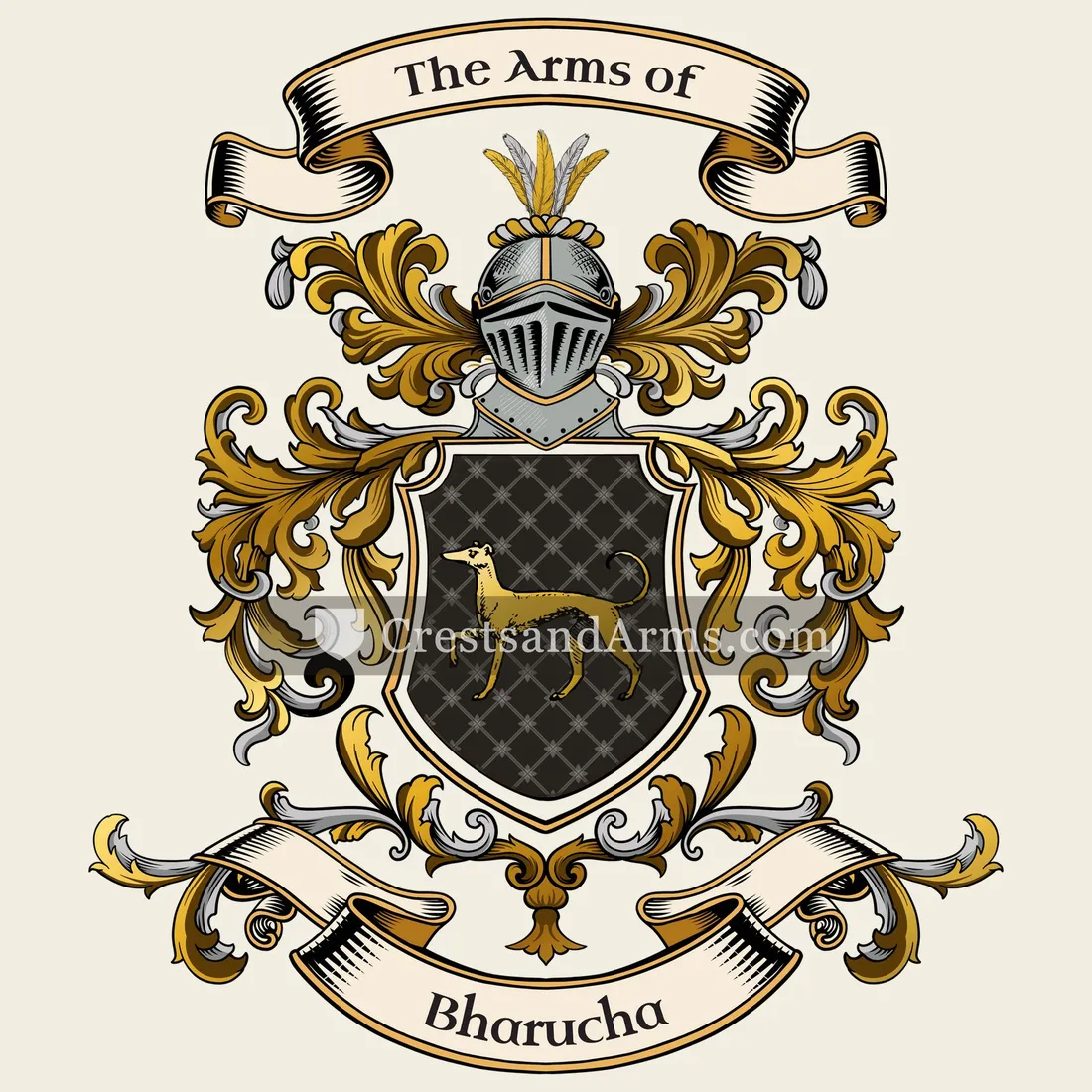
greyhoundCourage, vigilance and loyalty
Colours
Black (Sable)Means: Constancy
Gold (Or)Means: Generosity
Historical info
Source
J. B. Rietstap, Armorial Général, Gouda: G. B. van Goor Zonen, 1884–87
Blazon (the actual original written record)
“De sa. semé de bill. d'or; au chien braque pass. du même. Cq. cour. C.: le chien, entre un vol de sa., semé de bill. d'or.”
WestphaliaWestphalia, c. 1765
Digital archive packCoat of arms PNG, gold border print PDF, vector SVG and the certificate of authenticity. Sent to your email in minutes.
Map of Germany showing where the Bharucha arms are recorded
The Bharucha arms were recorded in Westphalia, c. 1765.
Westphalia was a land of small estates and fortified farmhouses in western Germany. Its families were numerous and not especially rich, but each held its own ground, and holding ground was what brought arms.
This is where the arms were entered in the register. Families often moved to other parts of the country, so the same name can turn up in more than one region.
The body that granted and recorded arms in Germany in this period.
Francis I, Holy Roman Emperor
Sovereign of the period
Francis I, Holy Roman Emperor
1745–1765
Reigning in France when the Bharucha arms are first recorded.
How Arms Worked in Germany
In the Holy Roman Empire, coats of arms were often granted to individuals by the Emperor or his representatives. These arms were then passed down through the generations to all legitimate descendants of the original holder. Younger branches of a family usually kept the same shield design without needing to change it, as the arms belonged to the entire lineage.
Granting authority
The Holy Roman Emperor held the sole power to grant new coats of arms throughout his vast imperial territories.
How they got arms
Families typically obtained their coats of arms through a formal imperial grant or by proving their noble status to the authorities.
Where arms were recorded
These grants were officially recorded in the Imperial Chancery registers, which began keeping formal records of such honors during the Middle Ages.
The family's standing
Recorded among the armigerous families of Westphalia.
Origin & History of the Bharucha Family in Germany
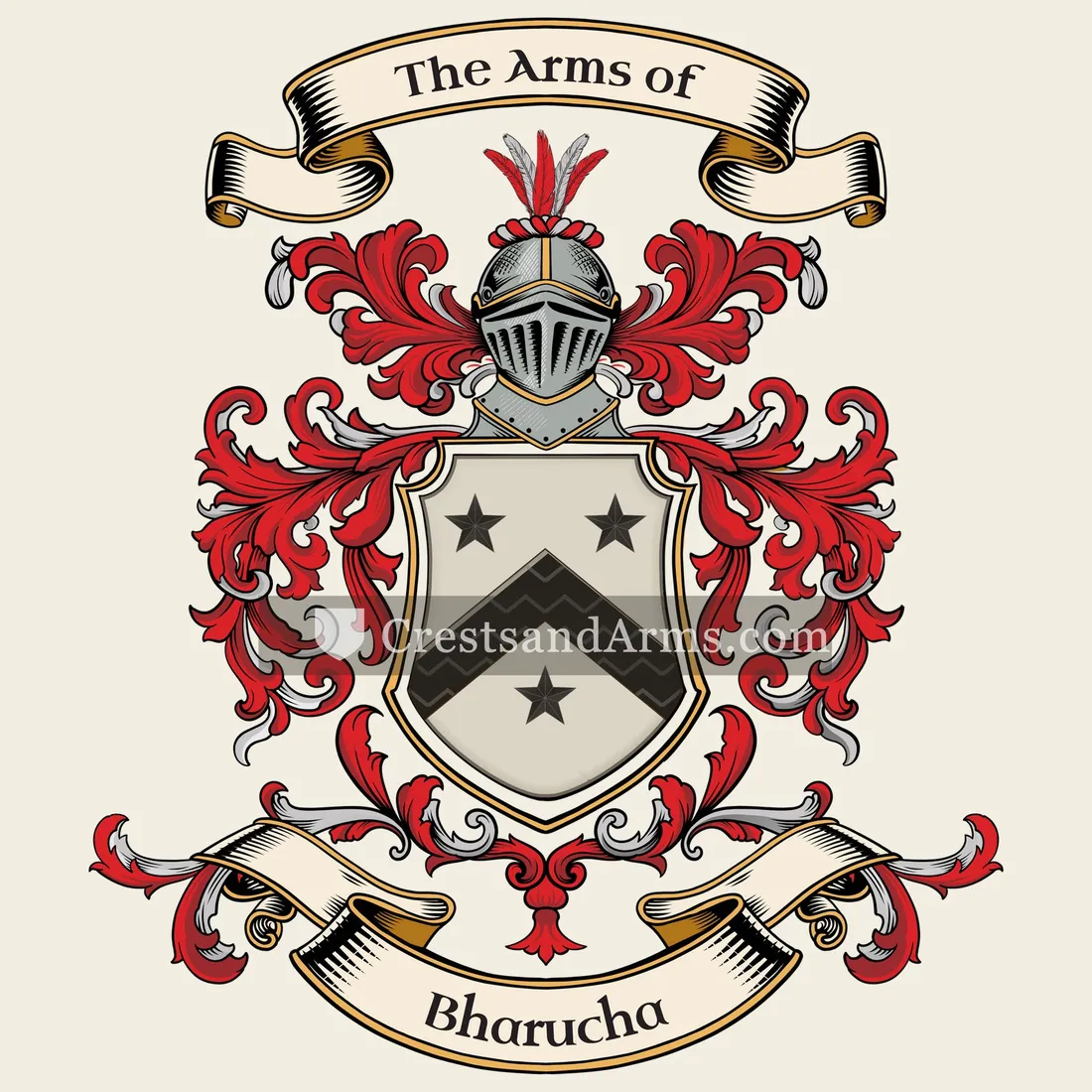
The history of the Bharucha family in Germany begins in the mid-eighteenth century, specifically appearing in the records of Westphalia by 1765. During this period, Westphalia was a region defined by its complex network of trade routes and its integration into the Holy Roman Empire. The presence of the family name in this area suggests that early members were likely involved in the merchant classes or skilled trades that moved goods between the Rhine valley and the northern territories. Because the name is distinct from typical local surnames of that era, it indicates that the family may have been part of a small group of travelers or specialized professionals who settled in the region to take advantage of the growing economic opportunities in local towns. By establishing themselves in Westphalia during the 1760s, these early ancestors became part of the social fabric of the region, contributing to the local community long before the industrial shifts of the nineteenth century changed the landscape of the area forever.
Meaning of the Bharucha family crest colors & symbols
Symbols on this shield
chevronProtection, and faithful service completed
mulletThe third son, and a divine quality from above
Colours
Silver (Argent)Means: Peace and sincerity
Black (Sable)Means: Constancy
Historical info
Source
Sir Bernard Burke, The General Armory of England, Scotland, Ireland and Wales, London: Harrison & Sons, 1884
Blazon (the actual original written record)
“Ar. a chev. betw. three mullets sa”
LancashireBruch · Lancashire, c. 1620
Digital archive packCoat of arms PNG, gold border print PDF, vector SVG and the certificate of authenticity. Sent to your email in minutes.
Map of England showing where the Bharucha arms are recorded
The Bharucha arms were recorded in Lancashire, c. 1620.
This is where the arms were entered in the register. Families often moved to other parts of the country, so the same name can turn up in more than one region.
The body that granted and recorded arms in England in this period.
James VI and I
Sovereign of the period
James VI and I
1603–1625
Reigning in France when the Bharucha arms are first recorded.
How Arms Worked in England
English heraldry allowed arms to be shared by all legitimate descendants of the original owner. These symbols were treated as personal property that moved through the generations to all children. While the eldest son kept the original design, other family members could use the same shield without needing to change it or register their own unique versions.
Granting authority
The College of Arms in London has regulated the use of coats of arms throughout England and Wales since 1484.
How they got arms
Families typically obtained their coats of arms through a formal grant from the Crown or by proving their ancient right to them.
Where arms were recorded
All official coats of arms are recorded in the registers kept at the College of Arms, which date back to the fifteenth century.
The family's standing
Recorded among the armigerous families of Lancashire.
Origin & History of the Bharucha Family in England
The history of the Bharucha family in England begins with a surprising presence in Lancashire as early as 1620. While the name is traditionally associated with the Parsi community of India, its appearance in northern England during the seventeenth century suggests that early family members were part of the small but significant network of merchants and travelers moving between the East India Company outposts and British ports. These early settlers likely arrived as traders or skilled intermediaries, navigating the complex social landscape of the Stuart era while maintaining their distinct cultural identity. Living in Lancashire, a region rapidly industrializing and expanding its global trade reach, these individuals would have been among the first people of their heritage to establish a foothold in the English countryside. Their presence highlights the long and often overlooked history of global migration that shaped English society centuries before the modern era.
Bharucha Meaning & Related Branches
Root word
Baruch
Hebrew origin meaning blessed or fortunate.
This name
BharuchaA surname of Parsi origin denoting a descendant of one who is blessed.
also spelled
Bruck
Brook
Brukh
Documented Sources
J. B. Rietstap, Armorial Général, Gouda: G. B. van Goor Zonen, 1884–87
Archives départementales du Finistère, Série B (Cours et juridictions)
Archives départementales d'Ille-et-Vilaine, Série E (Familles et notaires)
Gautier, Hervé, Histoire de la Bretagne et des Bretons, 1990
Le Gall, Jean-Marie, Les Bretons et la mer, 2005
Digital archive packCoat of arms PNG, gold border print PDF, vector SVG and the certificate of authenticity. Sent to your email in minutes.


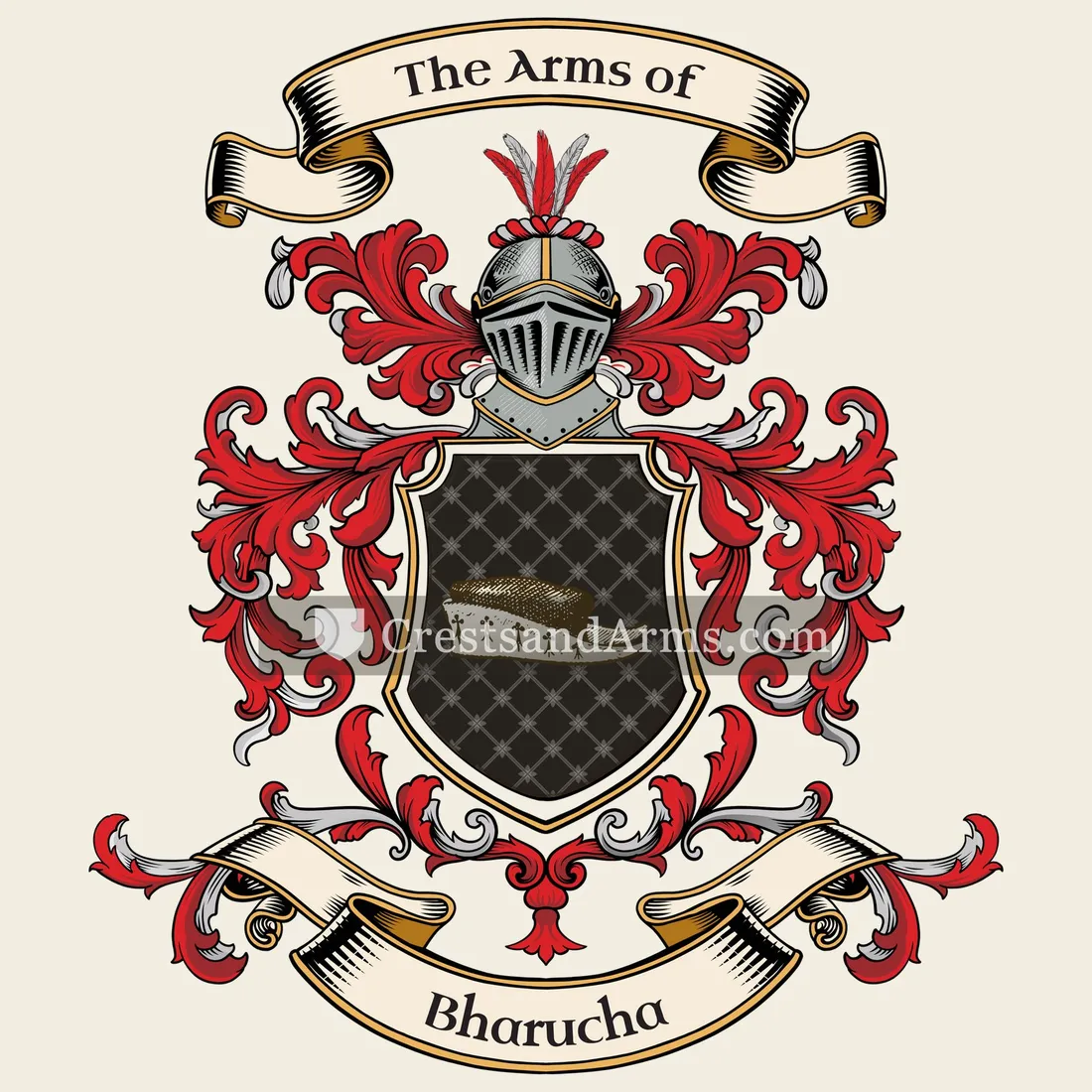
 hat or capDignity, and the honour of office
 hat or capDignity, and the honour of office


 greyhoundCourage, vigilance and loyalty


 chevronProtection, and faithful service completed
 mulletThe third son, and a divine quality from above