Map of France showing where the Biese arms are recorded
The Biese arms were recorded in Flandre, c. 1663.
Flandre grew rich on cloth, and its towns were among the busiest in Europe. Merchant families bought land with their profits and took arms to go with it, so trade put as many names in the registers here as land did.
This is where the arms were entered in the register. Families often moved to other parts of the country, so the same name can turn up in more than one region.
The body that granted and recorded arms in France in this period.
Louis XIV of France
Sovereign of the period
Louis XIV of France
1643–1715
Reigning in France when the Biese arms are first recorded.
How Arms Worked in France
In France, a coat of arms was a mark of honor that passed down through the male line to all legitimate descendants. Families often used the same shield without changes to show their shared heritage. If a branch wanted to stand out, they could add a small mark to their shield to show their specific place in the family tree.
Granting authority
The Juge d'armes de France acted as the official authority that regulated and verified coats of arms across the country.
How they got arms
Families typically inherited their arms from ancestors, though they could also receive them through royal grants or by proving their noble status.
Where arms were recorded
Coats of arms were officially recorded in the Armorial Général de France, which began its main collection in the year 1696.
The family's standing
Recorded among the armigerous families of Flandre.
Origin & History of the Biese Family in France
The history of the Biese family in France is deeply tied to the shifting borders of the seventeenth century, particularly within the region of Flandre. By 1663, records confirm the presence of family members in this area, which was a cultural crossroads between French and Flemish influences. During this period, the region was transitioning under the rule of King Louis XIV, as France sought to expand its northern territories through military campaigns and treaties. Families living in Flandre at this time often navigated a complex landscape of changing loyalties and administrative shifts as the crown integrated these lands into the French state. The name Biese likely reflects the linguistic blend of the region, where Germanic and Romance language roots met in daily life. As the family established their roots in these northern territories, they became part of a frontier society that was essential to the development of the French borderlands.
Coat of Arms & Family Crest Details
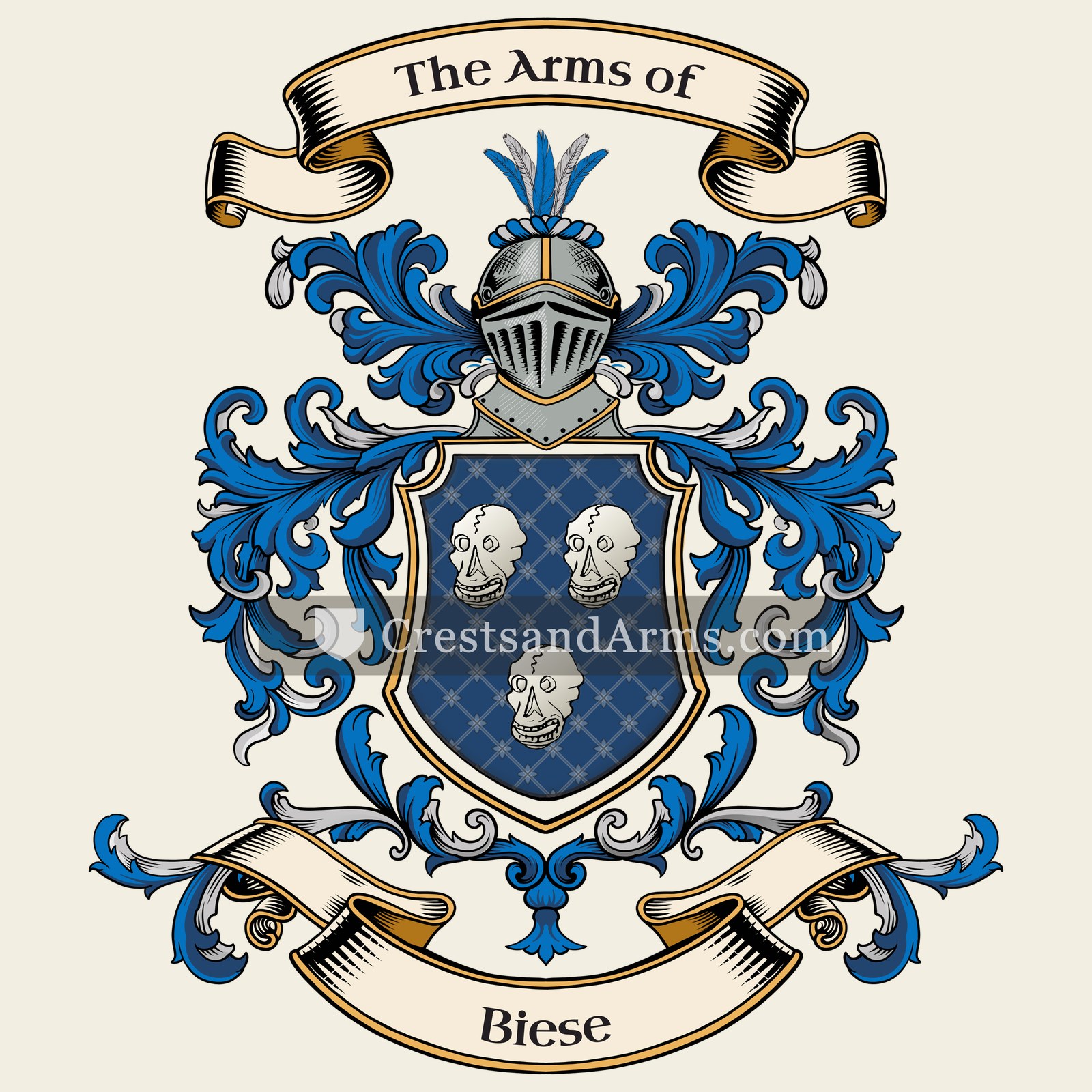
Symbols on this shield
skullMortality remembered, and courage in the face of death
Colours
Blue (Azure)Means: Loyalty and truth
Silver (Argent)Means: Peace and sincerity
Historical info
Source
J. B. Rietstap, Armorial Général, Gouda: G. B. van Goor Zonen, 1884–87
Blazon (the actual original written record)
“D'azur à trois têtes de mort d'arg. C.: un soleil d'or.”
BelgiumGand, c. 1737
Digital archive packCoat of arms PNG, gold border print PDF, vector SVG and the certificate of authenticity. Sent to your email in minutes.
Map of Belgium showing where the Biese arms are recorded
The Biese arms were recorded in Gand, c. 1737.
This is where the arms were entered in the register. Families often moved to other parts of the country, so the same name can turn up in more than one region.
The body that granted and recorded arms in Belgium in this period.
Charles VI, Holy Roman Emperor
Sovereign of the period
Charles VI, Holy Roman Emperor
1711–1740
Reigning in France when the Biese arms are first recorded.
How Arms Worked in Belgium
In Belgium, a coat of arms is considered personal property that is passed down through the male line to legitimate descendants. Families often use the same shield design across generations to show their shared heritage. If a branch of the family wants to change the design, they must apply for an official update to their specific version of the arms.
Granting authority
The Conseil héraldique is the official body that regulates and approves all coats of arms in Belgium.
How they got arms
Families obtain their coats of arms through formal royal grants or by confirming their historical right to use existing designs.
Where arms were recorded
All approved coats of arms are officially recorded in the public registers of the Conseil héraldique since 1844.
The family's standing
Recorded among the armigerous families of Belgium.
Origin & History of the Biese Family in Belgium
The history of the Biese family in Belgium is deeply rooted in the urban landscape of Ghent, where records confirm their presence as early as 1737. During the eighteenth century, Ghent was a major center for the textile industry and trade, which likely influenced the daily lives and occupations of early family members living in the city. The name itself is thought to be linked to the Middle Dutch word "bies," which refers to a type of rush or reed plant that grew in the marshy wetlands common to the Flemish countryside. Families often adopted these types of names to describe the specific landscape where they lived or worked. As the Biese family established themselves in Ghent, they became part of a vibrant society defined by its guild traditions and local commerce. By settling in such a prominent trade hub, the family was positioned at the heart of the social and economic changes that shaped the region during the late Enlightenment period.
Biese Meaning & Related Branches
Root word
bise
Old French term for the cold north wind.
This name
BieseA topographic name for someone living in a cold or windy location.
also spelled
Byese
Beeza
Beese
Documented Sources
J. B. Rietstap, Armorial Général, Gouda: G. B. van Goor Zonen, 1884–87
Archives départementales du Nord, Série B: Cours et juridictions
Lottin, Alain, Histoire des provinces françaises du Nord, 1989
Petitfils, Jean-Christian, Louis XIV, 1995
Digital archive packCoat of arms PNG, gold border print PDF, vector SVG and the certificate of authenticity. Sent to your email in minutes.


 bendDefence, and the scarf of a commander
 lozengeHonour and nobility, and the arms of a woman
 escallopThe pilgrim's shell, and a long journey made
 bendDefence, and the scarf of a commander
 lozengeHonour and nobility, and the arms of a woman
 escallopThe pilgrim's shell, and a long journey made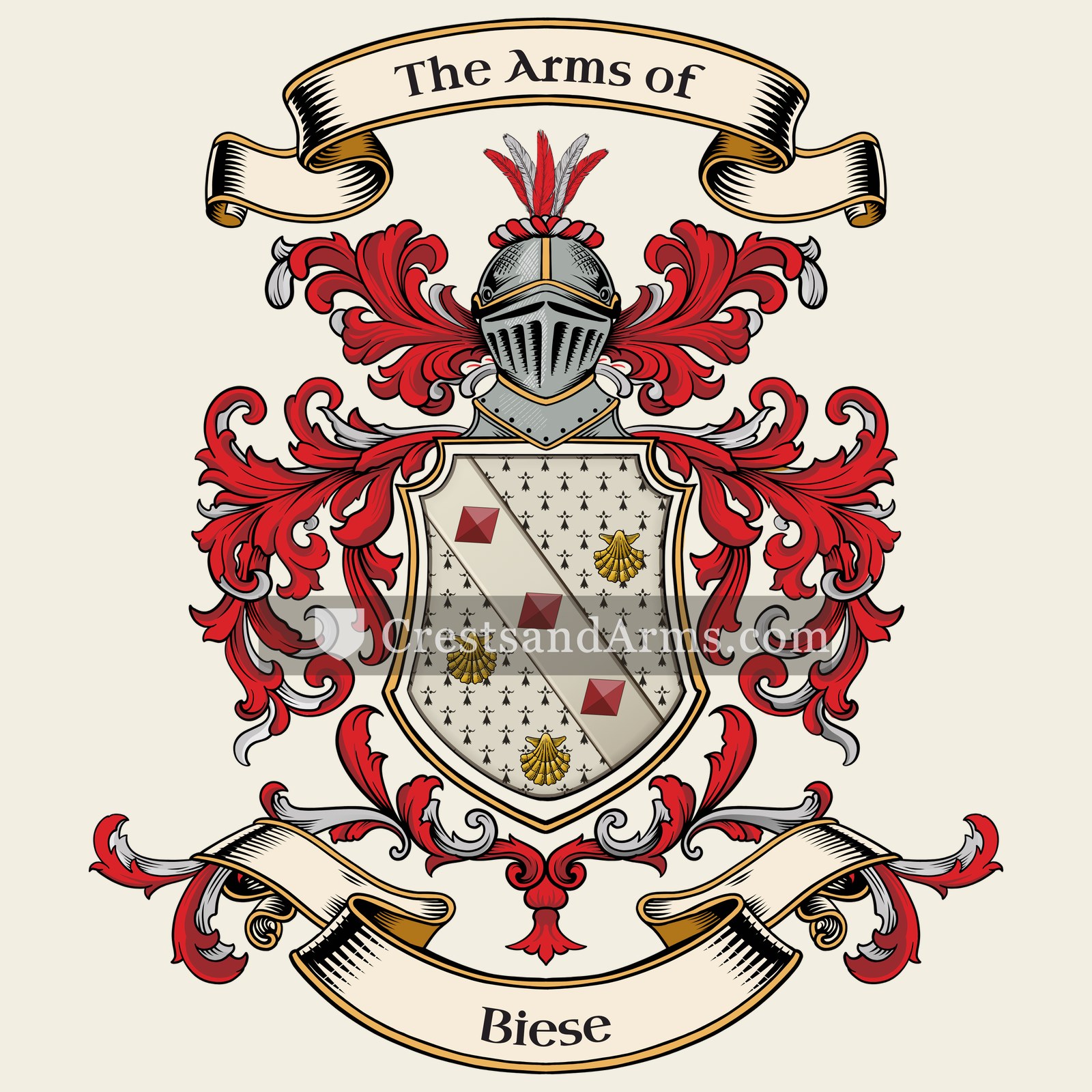


 skullMortality remembered, and courage in the face of death