Map of Denmark showing where the Biewald arms are recorded
The Biewald arms were recorded in Denmark, c. 1722.
Arms such as these were typically recorded in Sjaælland.
Zealand held the Danish court, the crown's offices and Copenhagen itself. Families who served the king kept estates within reach of it, and royal service was the ordinary route to a coat of arms.
This is where the arms were entered in the register. Families often moved to other parts of the country, so the same name can turn up in more than one region.
The body that granted and recorded arms in Denmark in this period.
Frederik IV of Denmark
Sovereign of the period
Frederik IV of Denmark
1699–1730
Reigning in Denmark when the Biewald arms are first recorded.
How Arms Worked in Denmark
Danish heraldry during this period was closely tied to noble status and royal favor rather than being open to all citizens. Arms were typically granted by the monarch to individuals, and these symbols were then shared by all members of the noble house. If a family line died out, the right to use those specific arms ended with them.
Granting authority
The Danish royal chancery held the power to issue and regulate official coats of arms for the kingdom.
How they got arms
Families usually received their arms through a formal royal grant that confirmed their noble status and rights.
Where arms were recorded
These grants were officially recorded in the Danish Royal Chancery records starting in the sixteenth century.
The family's standing
Recorded among the armigerous families of Denmark.
Origin & History of the Biewald Family in Denmark
The Biewald family name first appears in the historical records of Sjælland in 1722, marking a significant point for genealogical research in Denmark. During this period, the region was characterized by strict social structures where most families lived and worked within the rural manorial system. The name itself follows linguistic patterns common to the Baltic and North German regions, suggesting that the family may have arrived in Denmark through trade routes or labor migration across the Baltic Sea. By the early 18th century, members of the family were integrated into the local parish life of Sjælland, where they were recorded in church registers that tracked baptisms, marriages, and burials. These early ancestors were likely part of the growing class of tenant farmers or skilled craftsmen who helped shape the local economy of the island. Their presence in the official records of 1722 provides a clear starting point for understanding how the family established roots in the Danish landscape during a time of great social change.
Meaning of the Biewald family crest colors & symbols
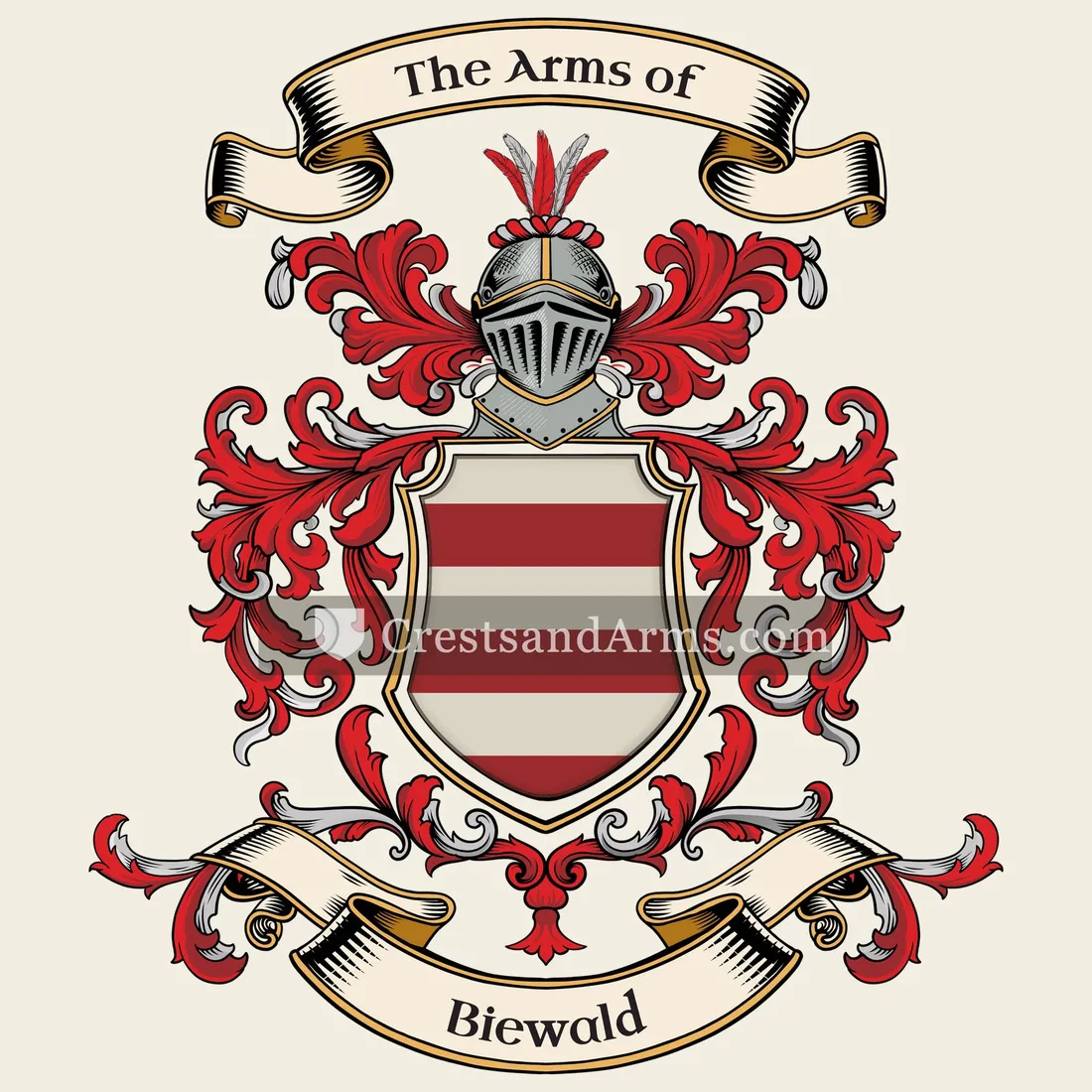
Symbols on this shield
fessThe military belt, and readiness to serve
Colours
Red (Gules)Means: Military strength
Silver (Argent)Means: Peace and sincerity
Historical info
Source
J. B. Rietstap, Armorial Général, Gouda: G. B. van Goor Zonen, 1884–87
Blazon (the actual original written record)
“Fascé contre-fascé de gu. et d'arg., de quatre pièces. C.: deux prob. fascées de quatre pièces, celle à dextre de gu. et d'arg., celle à sen. d'arg. et de gu.”
SilesiaSilesia, c. 1765
Digital archive packCoat of arms PNG, gold border print PDF, vector SVG and the certificate of authenticity. Sent to your email in minutes.
Map of Germany showing where the Biewald arms are recorded
The Biewald arms were recorded in Silesia, c. 1765.
Silesia was farming country in the east of the German lands, held in large estates by families who stayed put for generations. Owning land was what entitled a family to arms, so the region fills a good deal of the register.
This is where the arms were entered in the register. Families often moved to other parts of the country, so the same name can turn up in more than one region.
The body that granted and recorded arms in Germany in this period.
Francis I, Holy Roman Emperor
Sovereign of the period
Francis I, Holy Roman Emperor
1745–1765
Reigning in Denmark when the Biewald arms are first recorded.
How Arms Worked in Germany
In the Holy Roman Empire, coats of arms were often granted to individuals by the Emperor or his representatives. These arms were then passed down through the generations to all legitimate descendants of the original holder. Younger branches of a family usually kept the same shield design without needing to change it, as the arms belonged to the entire lineage.
Granting authority
The Holy Roman Emperor held the sole power to grant new coats of arms throughout his vast imperial territories.
How they got arms
Families typically obtained their coats of arms through a formal imperial grant or by proving their noble status to the authorities.
Where arms were recorded
These grants were officially recorded in the Imperial Chancery registers, which began keeping formal records of such honors during the Middle Ages.
The family's standing
Recorded among the armigerous families of Silesia.
Origin & History of the Biewald Family in Germany
The family name Biewald traces its roots to the historical region of Silesia, a territory that was part of the Prussian Kingdom during the eighteenth century. Linguistic analysis suggests the name is of German origin, likely derived from a combination of terms relating to the landscape, such as a dweller near a specific forest or woodland area. By 1765, records confirm that members of the Biewald family were established within this region, which was a crossroads for trade and agriculture between Central and Eastern Europe. During this era, families often settled in rural communities where their surname served as a practical identifier based on their proximity to local landmarks. As the family grew, they became part of the social fabric of Silesian village life, contributing to the local economy and the cultural development of the Prussian frontier before later migrations spread the name further across the German-speaking world.
Biewald Meaning & Related Branches
Root word
Bi-wald
Bee or honey combined with forest or ruler of the woods.
This name
BiewaldA topographic or occupational name referring to a dweller near a bee-filled forest.
also spelled
Byelde
Beelde
Documented Sources
J. B. Rietstap, Armorial Général, Gouda: G. B. van Goor Zonen, 1884–87
Rigsarkivet (The Danish National Archives), Kirkebøger (Parish Registers), Sjælland Stift
Trap, J.P., Statistisk-topographisk Beskrivelse af Kongeriget Danmark, 1858
Digital archive packCoat of arms PNG, gold border print PDF, vector SVG and the certificate of authenticity. Sent to your email in minutes.


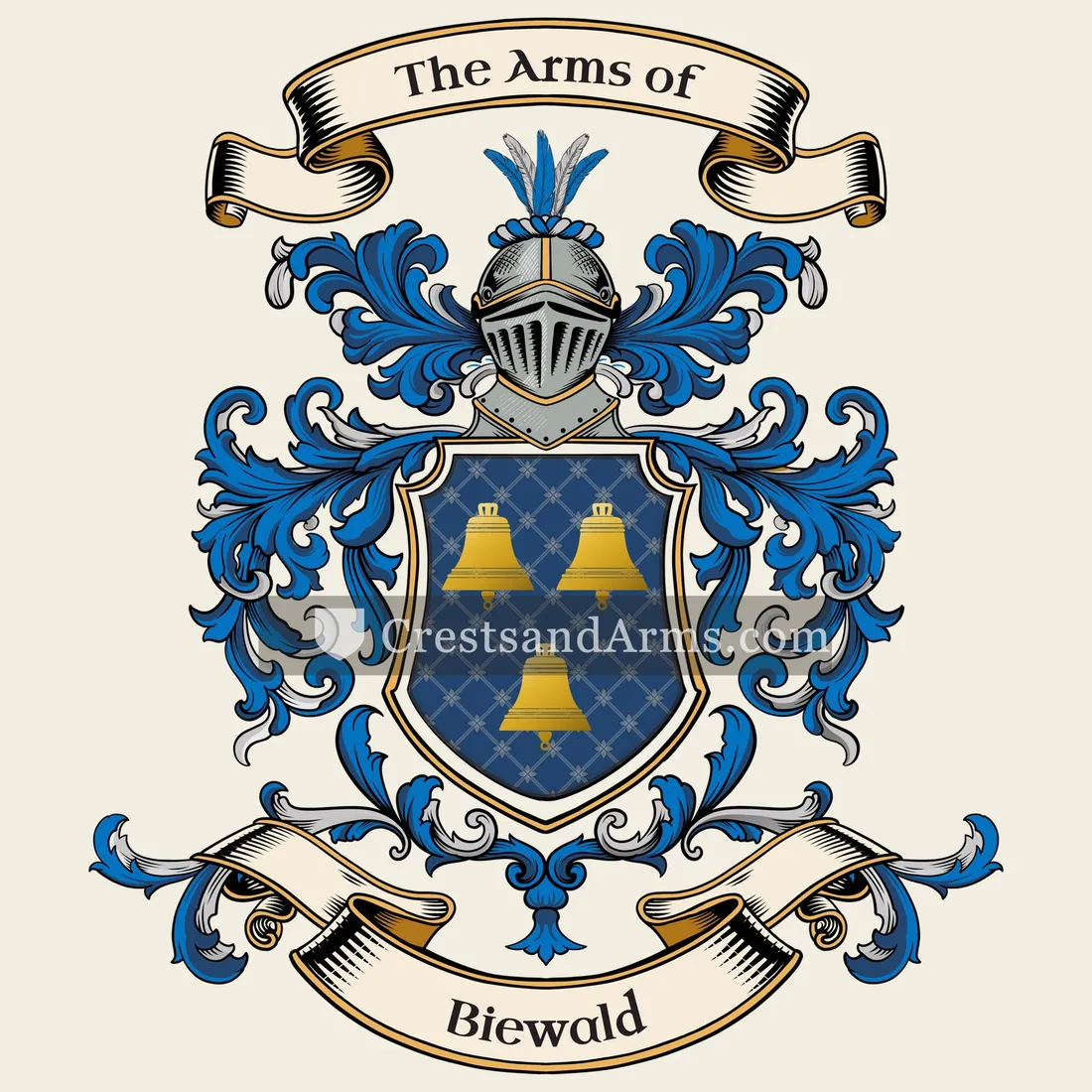
 bellA call to prayer, and a warning given
 bellA call to prayer, and a warning given


 fessThe military belt, and readiness to serve