Map of Denmark showing where the Biörn arms are recorded
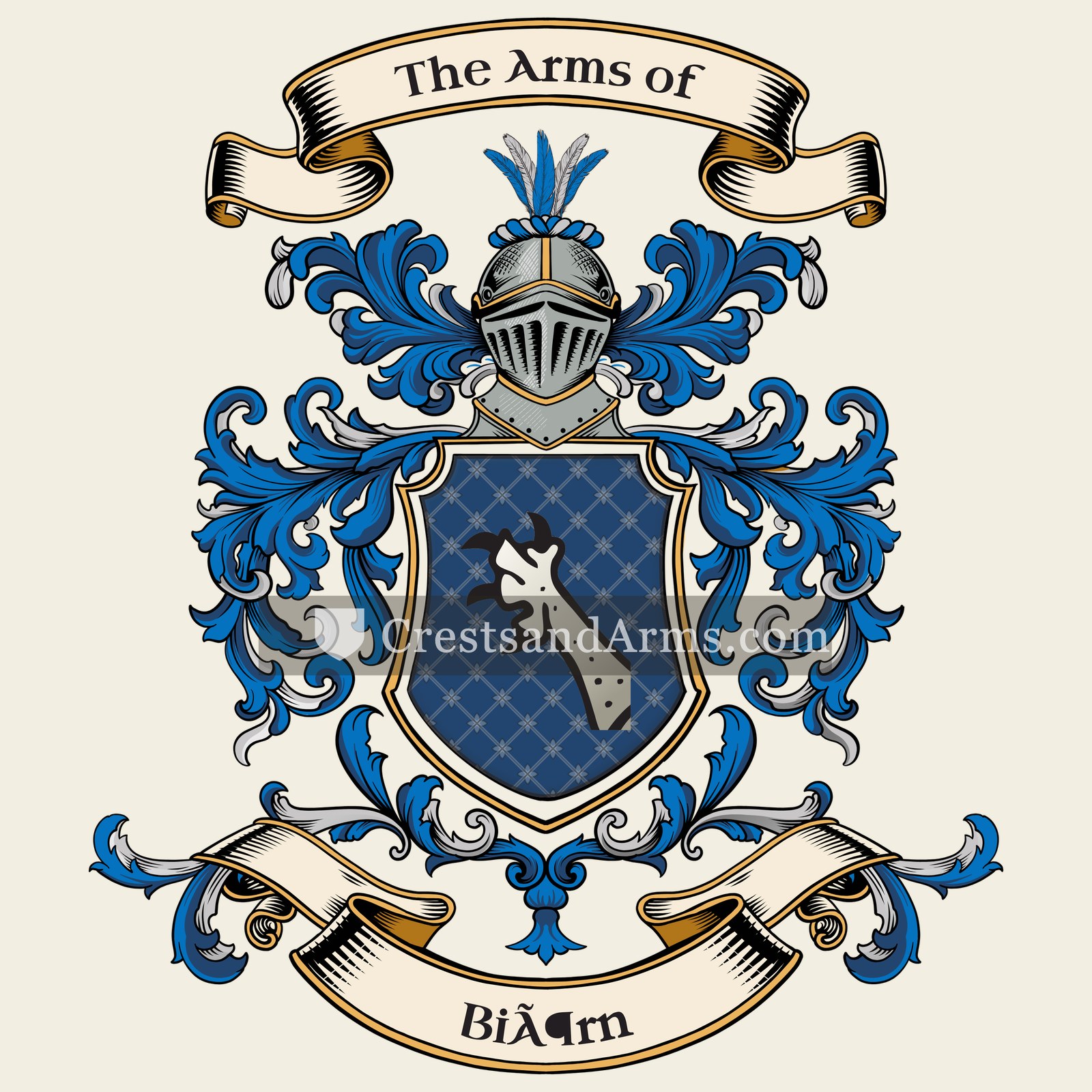
The Biörn arms were recorded in Denmark, c. 1722.
Arms such as these were typically recorded in Sjaælland.
Zealand held the Danish court, the crown's offices and Copenhagen itself. Families who served the king kept estates within reach of it, and royal service was the ordinary route to a coat of arms.
This is where the arms were entered in the register. Families often moved to other parts of the country, so the same name can turn up in more than one region.
The body that granted and recorded arms in Denmark in this period.
Frederik IV of Denmark
Sovereign of the period
Frederik IV of Denmark
1699–1730
Reigning in Denmark when the Biörn arms are first recorded.
How Arms Worked in Denmark
Danish heraldry during this period was closely tied to noble status and royal favor rather than being open to all citizens. Arms were typically granted by the monarch to individuals, and these symbols were then shared by all members of the noble house. If a family line died out, the right to use those specific arms ended with them.
Granting authority
The Danish royal chancery held the power to issue and regulate official coats of arms for the kingdom.
How they got arms
Families usually received their arms through a formal royal grant that confirmed their noble status and rights.
Where arms were recorded
These grants were officially recorded in the Danish Royal Chancery records starting in the sixteenth century.
The family's standing
Recorded among the armigerous families of Denmark.
Origin & History of the Biörn Family in Denmark
The name Biörn is deeply rooted in Old Norse traditions, originating from the word for bear, which was a symbol of strength and protection in early Scandinavian culture. By the time the family was documented in Sjælland in 1722, the name had evolved from an ancient given name into a hereditary surname used to identify specific family lines. During the early eighteenth century, families in Denmark often lived in rural farming communities where they relied on local parish records to track their lineage. The presence of the Biörn family in Sjælland suggests they were part of the stable agrarian society that defined the region during the late absolute monarchy period. As they established themselves in these local parishes, the family name became a permanent marker of their identity and their connection to the history of the Danish islands.
Biörn Meaning & Related Branches
Root word
bjorn
Old Norse word for the animal bear.
This name
BiörnA Scandinavian name derived from the word for bear, symbolizing strength and courage.
also spelled
Bjorn
Byorn
Documented Sources
J. B. Rietstap, Armorial Général, Gouda: G. B. van Goor Zonen, 1884–87
Hansen, J. V., Danske slægtsnavne gennem tiderne, 1985
Jensen, K. M., Sjællandske bønder i det 18. århundrede, 1992
Rigsarkivet (Danish National Archives), Kirkebøger fra Sjællands Stift (Parish registers)
Rigsarkivet (Danish National Archives), Folketællinger og lægdsruller (Census and conscription records)
Digital archive packCoat of arms PNG, gold border print PDF, vector SVG and the certificate of authenticity. Sent to your email in minutes.


 pawStrength held ready, the beast's power in a single limb
 pawStrength held ready, the beast's power in a single limb