A record of documented arms, meaning and origin, researched for the Birch family lines. Documented in 3 countries.
Reg. 3628 · French, A–C
Coat of Arms & Family Crest Details
Symbols on this shield
chiefAuthority, wisdom and dominion
hunting horn stringedOne who delights in the chase
wreathHonour, and a victory crowned
wyvernValour and protection, and victory over the plague
crescentHonour by the sovereign, and the second son
Colours
Silver (Argent)Means: Peace and sincerity
Blue (Azure)Means: Loyalty and truth
Red (Gules)Means: Military strength
Gold (Or)Means: Generosity
Black (Sable)Means: Constancy
Historical info
Source
J. B. Rietstap, Armorial Général, Gouda: G. B. van Goor Zonen, 1884–87
Blazon (the actual original written record)
“Parti: au 1 d'arg. à une amphiptère de sa.; au 2 d'azur à un croiss. tourné d'arg. Au chef de l'écu de gu., br. sur le parti et ch. d'une trompette d'or, passée en barre dans une couronne de laurier de gu. C.: l'amphiptère.”
Francec. 1663
Digital archive packCoat of arms PNG, gold border print PDF, vector SVG and the certificate of authenticity. Sent to your email in minutes.
Map of France showing where the Birch arms are recorded
The Birch arms were recorded in France, c. 1663.
Arms such as these were typically recorded in Bretagne.
More families held coats of arms in Bretagne than anywhere else in France. The land was divided into many small estates rather than a few large ones, so far more households counted as gentry, and each needed a shield of its own to be told apart.
This is where the arms were entered in the register. Families often moved to other parts of the country, so the same name can turn up in more than one region.
The body that granted and recorded arms in France in this period.
Louis XIV of France
Sovereign of the period
Louis XIV of France
1643–1715
Reigning in France when the Birch arms are first recorded.
How Arms Worked in France
In France, a coat of arms was a mark of honor that passed down through the male line to all legitimate descendants. Families often used the same shield without changes to show their shared heritage. If a branch wanted to stand out, they could add a small mark to their shield to show their specific place in the family tree.
Granting authority
The Juge d'armes de France acted as the official authority that regulated and verified coats of arms across the country.
How they got arms
Families typically inherited their arms from ancestors, though they could also receive them through royal grants or by proving their noble status.
Where arms were recorded
Coats of arms were officially recorded in the Armorial Général de France, which began its main collection in the year 1696.
The family's standing
Recorded among the armigerous families of France.
Origin & History of the Birch Family in France
The family name Birch, while often associated with English roots, holds a distinct chapter in the historical landscape of seventeenth-century France. By 1663, records confirm that members of the family were established in the region of Bretagne. During this period, Bretagne was a province with a unique cultural identity and a strong tradition of maritime and agricultural life. Families living in this area often adapted their names to fit the local linguistic patterns or social structures of the time. The presence of the Birch name in this coastal region suggests that these early ancestors were likely integrated into the local community, perhaps working as skilled tradespeople or landowners within the rural parishes. Their survival and documentation in the regional registers reflect the broader movement of families across European borders during an era of significant social change.
Coat of Arms & Family Crest Details
Symbols on this shield
chevronProtection, and faithful service completed
mulletThe third son, and a divine quality from above
Colours
Silver (Argent)Means: Peace and sincerity
Black (Sable)Means: Constancy
Historical info
Source
Sir Bernard Burke, The General Armory of England, Scotland, Ireland and Wales, London: Harrison & Sons, 1884
Blazon (the actual original written record)
“Ar. a chev. betw. three mullets sa”
LancasterBirch · Lancaster, c. 1620
Digital archive packCoat of arms PNG, gold border print PDF, vector SVG and the certificate of authenticity. Sent to your email in minutes.
Map of England showing where the Birch arms are recorded
The Birch arms were recorded in Lancaster, c. 1620.
Lancashire was divided among a great many small landed families, more than most northern counties. Estates were passed down whole rather than split up, so the same names hold the same ground for centuries in the records.
This is where the arms were entered in the register. Families often moved to other parts of the country, so the same name can turn up in more than one region.
The body that granted and recorded arms in England in this period.
James VI and I
Sovereign of the period
James VI and I
1603–1625
Reigning in France when the Birch arms are first recorded.
How Arms Worked in England
English heraldry allowed arms to be shared by all legitimate descendants of the original owner. These symbols were treated as personal property that moved through the generations to all children. While the eldest son kept the original design, other family members could use the same shield without needing to change it or register their own unique versions.
Granting authority
The College of Arms in London has regulated the use of coats of arms throughout England and Wales since 1484.
How they got arms
Families typically obtained their coats of arms through a formal grant from the Crown or by proving their ancient right to them.
Where arms were recorded
All official coats of arms are recorded in the registers kept at the College of Arms, which date back to the fifteenth century.
The family's standing
Recorded among the armigerous families of Lancaster.
Origin & History of the Birch Family in England
The surname Birch is a classic example of a topographical name, which means it was originally given to people based on the landscape where they lived. In medieval England, families often took their names from prominent natural features near their homes, and those living near a cluster of birch trees became known as "at the Birch." By the time the family was firmly established in Lancaster by 1620, the name had already been in use for several centuries across various English counties. These early ancestors were likely part of the growing class of landowners and tradespeople who helped shape the local economy of Lancashire. Because the birch tree was highly valued for its wood and medicinal properties, the name carried a sense of connection to the practical and resilient nature of the English countryside. Over generations, the name transitioned from a simple way to describe a neighbor's location into a permanent family identity that persisted through the social and political changes of the seventeenth century.
Coat of Arms & Family Crest Details
Symbols on this shield
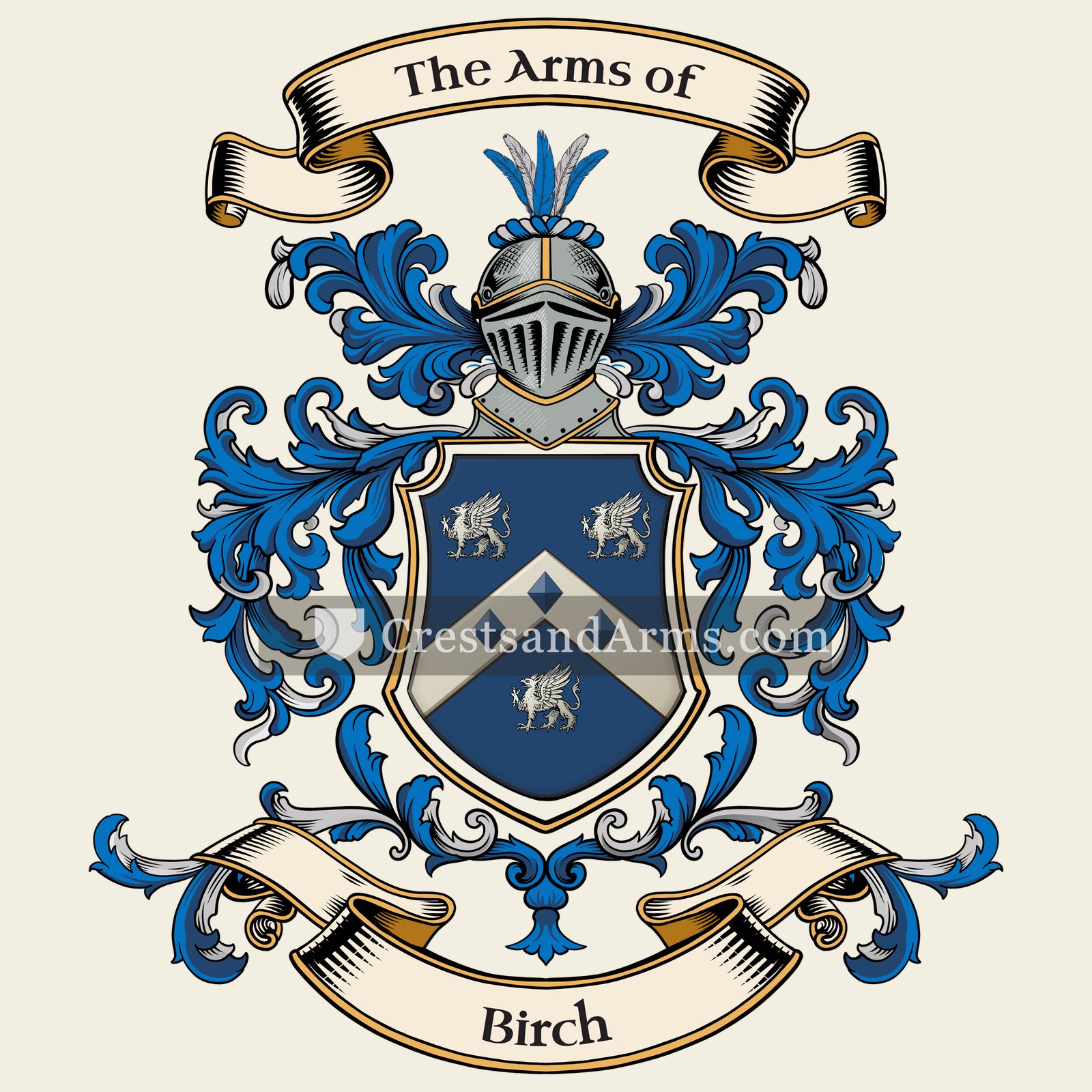
chevronProtection, and faithful service completed
griffinValour and vigilance, guarding great treasure
lozengeHonour and nobility, and the arms of a woman
Colours
Blue (Azure)Means: Loyalty and truth
Silver (Argent)Means: Peace and sincerity
Historical info
Source
Sir Bernard Burke, The General Armory of England, Scotland, Ireland and Wales, London: Harrison & Sons, 1884
Blazon (the actual original written record)
“Az. on a chev. betw. three griffins' heads ar. as many lozenges of the first”
Irelandc. 1691
Digital archive packCoat of arms PNG, gold border print PDF, vector SVG and the certificate of authenticity. Sent to your email in minutes.
Map of Ireland showing where the Birch arms are recorded
The Birch arms were recorded in Ireland, c. 1691.
Arms such as these were typically recorded in Dublin.
Dublin was the seat of government in Ireland and the place where grants were sought and recorded. Families with business at the castle or the courts settled nearby, and settling there put their arms on record.
This is where the arms were entered in the register. Families often moved to other parts of the country, so the same name can turn up in more than one region.
The body that granted and recorded arms in Ireland in this period.
Mary II of England
Sovereign of the period
Mary II of England
1689–1694
Reigning in France when the Birch arms are first recorded.
How Arms Worked in Ireland
The Ulster King of Arms granted coats of arms to individuals who proved their social standing and good character. These symbols were typically inherited by all legitimate descendants of the original holder. If a family branch wanted a unique look, they could apply for a specific change to their design through the office to ensure their identity remained distinct.
Granting authority
The Ulster King of Arms acted as the official body that regulated and issued all coats of arms throughout Ireland.
How they got arms
Families obtained their arms through formal grants issued by the office after proving their eligibility and paying the required fees.
Where arms were recorded
All official grants were recorded in the registers held by the Ulster King of Arms starting from the year 1552.
The family's standing
Recorded among the armigerous families of Ireland.
Origin & History of the Birch Family in Ireland
The history of the Birch family in Ireland is closely tied to the shifting political landscape of the late seventeenth century. While the name has deep roots in England, records confirm that members of the family were firmly established in Dublin by 1691. This period followed the conclusion of the Williamite War, a time when many individuals from across the Irish Sea moved to the capital to participate in the city's growing administration and trade networks. Settling in Dublin during this era often meant that families were involved in the professional or merchant classes that helped rebuild the city after years of conflict. Over the following decades, the Birch name became integrated into the urban fabric of Dublin, reflecting the broader movement of people who sought new opportunities in the wake of significant national change. By establishing themselves in the capital during this pivotal year, the family secured a place in the documented history of Ireland’s most influential city.
Birch Meaning & Related Branches
Root word
Betula
Latin term for the birch tree genus.
This name
BirchA topographic name for someone who lived near a birch tree or a birch forest.
also spelled
Byrch
Berch
Burch
Byrche
Related arms
Hughessimilar arms
Berchvariant spelling
Burchvariant spelling
Byrchvariant spelling
Documented Sources
J. B. Rietstap, Armorial Général, Gouda: G. B. van Goor Zonen, 1884–87
Archives départementales d'Ille-et-Vilaine, Série B: Cours et juridictions
Galllouédec, Louis, La Bretagne, 1917
Le Moyne de La Borderie, Arthur, Histoire de Bretagne, 1896
Digital archive packCoat of arms PNG, gold border print PDF, vector SVG and the certificate of authenticity. Sent to your email in minutes.


 chiefAuthority, wisdom and dominion
 hunting horn stringedOne who delights in the chase
 wreathHonour, and a victory crowned
 wyvernValour and protection, and victory over the plague
 crescentHonour by the sovereign, and the second son
 chiefAuthority, wisdom and dominion
 hunting horn stringedOne who delights in the chase
 wreathHonour, and a victory crowned
 wyvernValour and protection, and victory over the plague
 crescentHonour by the sovereign, and the second son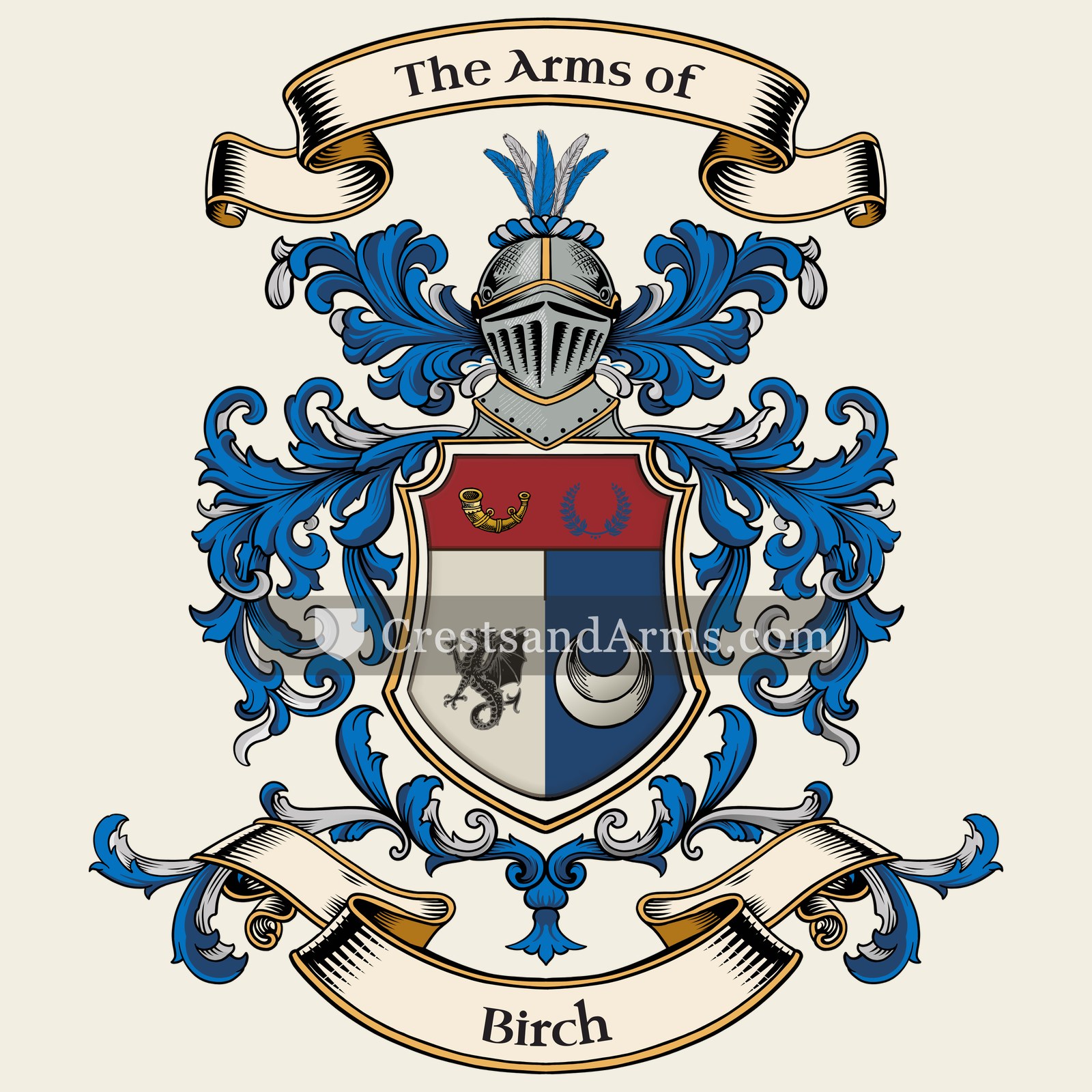


 chevronProtection, and faithful service completed
 mulletThe third son, and a divine quality from above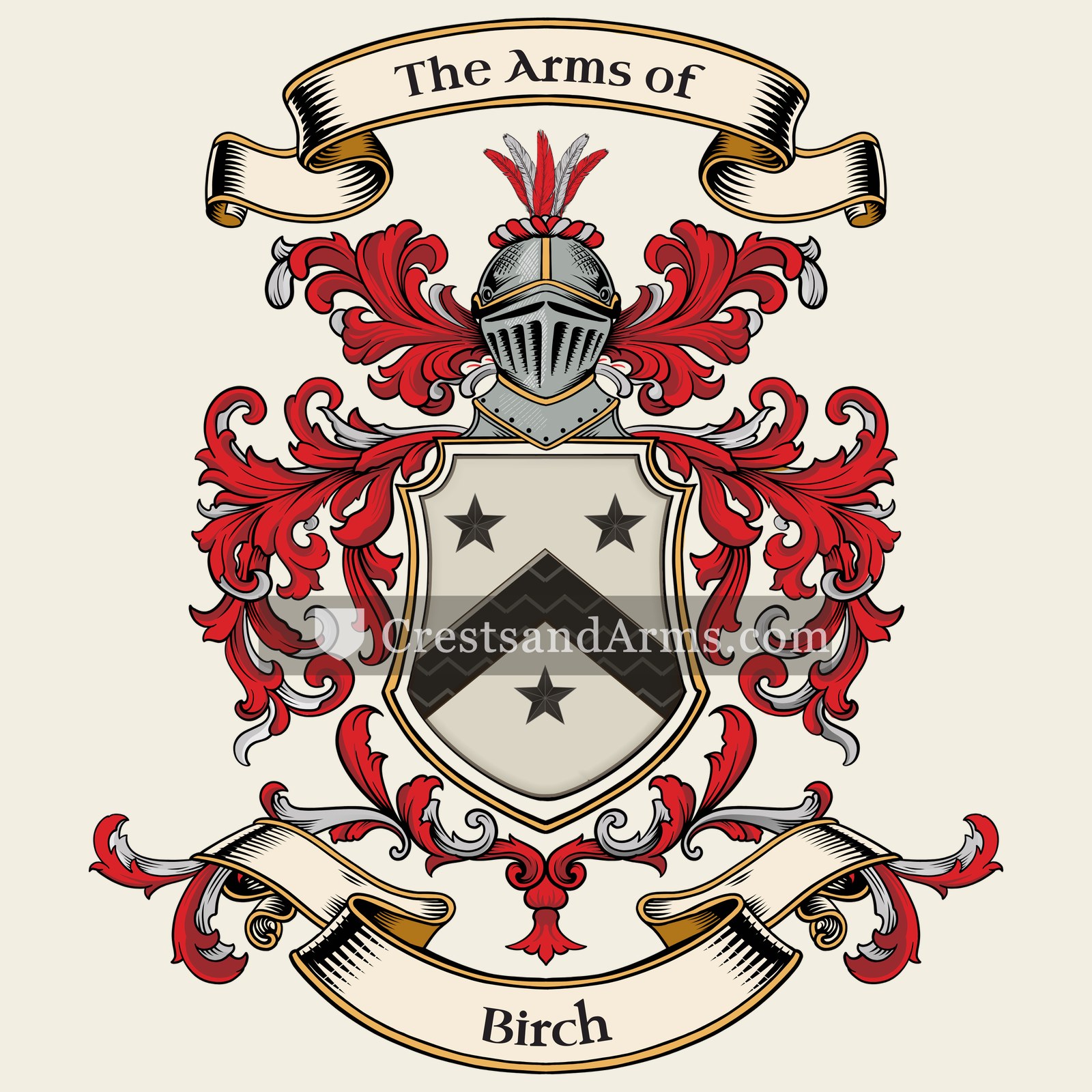


 griffinValour and vigilance, guarding great treasure
 lozengeHonour and nobility, and the arms of a woman