Map of Germany showing where the Blanck arms are recorded
The Blanck arms were recorded in Germany, c. 1765.
Arms such as these were typically recorded in Bavaria.
Bavaria was a country of old landed families and walled market towns. Estates passed down the same line for centuries, and both the landowners and the leading townsmen kept arms, which is why so many Bavarian names sit in the registers.
This is where the arms were entered in the register. Families often moved to other parts of the country, so the same name can turn up in more than one region.
The body that granted and recorded arms in Germany in this period.
Francis I, Holy Roman Emperor
Sovereign of the period
Francis I, Holy Roman Emperor
1745–1765
Reigning in Germany when the Blanck arms are first recorded.
How Arms Worked in Germany
In the Holy Roman Empire, coats of arms were often granted to individuals by the Emperor or his representatives. These arms were then passed down through the generations to all legitimate descendants of the original holder. Younger branches of a family usually kept the same shield design without needing to change it, as the arms belonged to the entire lineage.
Granting authority
The Holy Roman Emperor held the sole power to grant new coats of arms throughout his vast imperial territories.
How they got arms
Families typically obtained their coats of arms through a formal imperial grant or by proving their noble status to the authorities.
Where arms were recorded
These grants were officially recorded in the Imperial Chancery registers, which began keeping formal records of such honors during the Middle Ages.
The family's standing
Recorded among the armigerous families of Germany.
Origin & History of the Blanck Family in Germany
The surname Blanck finds its roots in the linguistic landscape of medieval Germany, where it functioned as a descriptive nickname. Derived from the Middle High German word *blanc*, the name originally referred to someone with fair hair, a pale complexion, or a bright and shining appearance. By the time the family was firmly established in the Bavarian region during the mid-eighteenth century, the name had evolved from a simple descriptor into a formal hereditary surname. In 1765, records indicate that members of the Blanck family were active participants in the social and economic life of Bavaria, a period characterized by the transition from rural agrarian traditions to more structured village administrations. These early ancestors were likely craftsmen or farmers who lived within the tight-knit communities of the Holy Roman Empire, where their name served as a permanent link to their physical traits and their place in the local history of southern Germany.
Coat of Arms & Family Crest Details
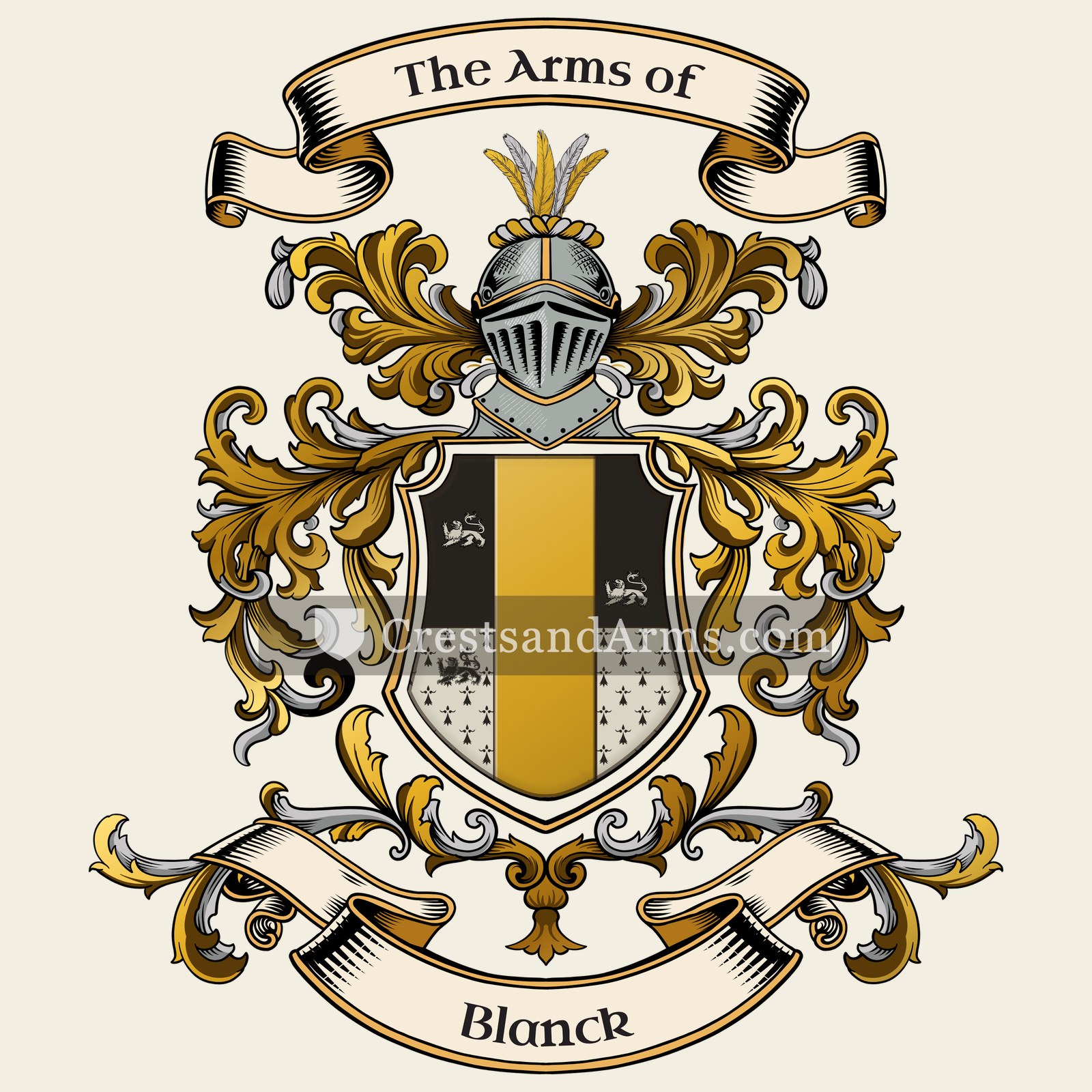
Symbols on this shield
paleMilitary strength, and a fortified defence
lionCourage, strength and royalty
Colours
Black (Sable)Means: Constancy
ErmineMeans: Dignity
Gold (Or)Means: Generosity
Historical info
Source
Sir Bernard Burke, The General Armory of England, Scotland, Ireland and Wales, London: Harrison & Sons, 1884
Blazon (the actual original written record)
“Per fess sa. and erm. a pale counterchanged, three demi lions ramp. or”
SurreyGuilford · Surrey, c. 1620
Digital archive packCoat of arms PNG, gold border print PDF, vector SVG and the certificate of authenticity. Sent to your email in minutes.
Map of England showing where the Blanck arms are recorded
The Blanck arms were recorded in Surrey, c. 1620.
Surrey sat just south of London and filled up with families who had made money in the City. Buying an estate there was the usual next step, and an estate was the usual reason to take arms.
This is where the arms were entered in the register. Families often moved to other parts of the country, so the same name can turn up in more than one region.
The body that granted and recorded arms in England in this period.
James VI and I
Sovereign of the period
James VI and I
1603–1625
Reigning in Germany when the Blanck arms are first recorded.
How Arms Worked in England
English heraldry allowed arms to be shared by all legitimate descendants of the original owner. These symbols were treated as personal property that moved through the generations to all children. While the eldest son kept the original design, other family members could use the same shield without needing to change it or register their own unique versions.
Granting authority
The College of Arms in London has regulated the use of coats of arms throughout England and Wales since 1484.
How they got arms
Families typically obtained their coats of arms through a formal grant from the Crown or by proving their ancient right to them.
Where arms were recorded
All official coats of arms are recorded in the registers kept at the College of Arms, which date back to the fifteenth century.
The family's standing
Recorded among the armigerous families of Surrey.
Origin & History of the Blanck Family in England
The family name Blanck has roots that stretch back to the early seventeenth century in the county of Surrey, England. During this period, the name was often associated with individuals who lived in rural parishes where they worked as farmers or tradespeople. The name itself is thought to be a descriptive term, likely referring to someone with fair hair or a pale complexion, which was a common way to distinguish neighbors in small communities before formal surnames became strictly standardized. By 1620, records indicate that members of the Blanck family were firmly established in Surrey, participating in the local customs and legal life of the region. As these families grew, they helped shape the local identity of the English countryside, leaving behind traces in parish registers and tax documents that provide a glimpse into their daily lives during the reign of King James I.
Blanck Meaning & Related Branches
Root word
blancus
A Latin term meaning white, fair, or pale.
This name
BlanckA descriptive nickname for someone with a pale complexion or light-colored hair.
also spelled
Blancke
Blanckk
Blank
Blanke
Related arms
Raschärsimilar arms
Rossetisimilar arms
Schmöger auf Adeishausensimilar arms
Blancvariant spelling
Documented Sources
J. B. Rietstap, Armorial Général, Gouda: G. B. van Goor Zonen, 1884–87
Bahlow, Hans, Deutsches Namenlexikon: Familien- und Vornamen nach Ursprung und Sinn erklärt, 1967
Heintze, Albert, Die deutschen Familien-Namen: geschichtlich, geographisch, sprachlich, 1903


 chequyConstancy, and the counting-board
 chequyConstancy, and the counting-board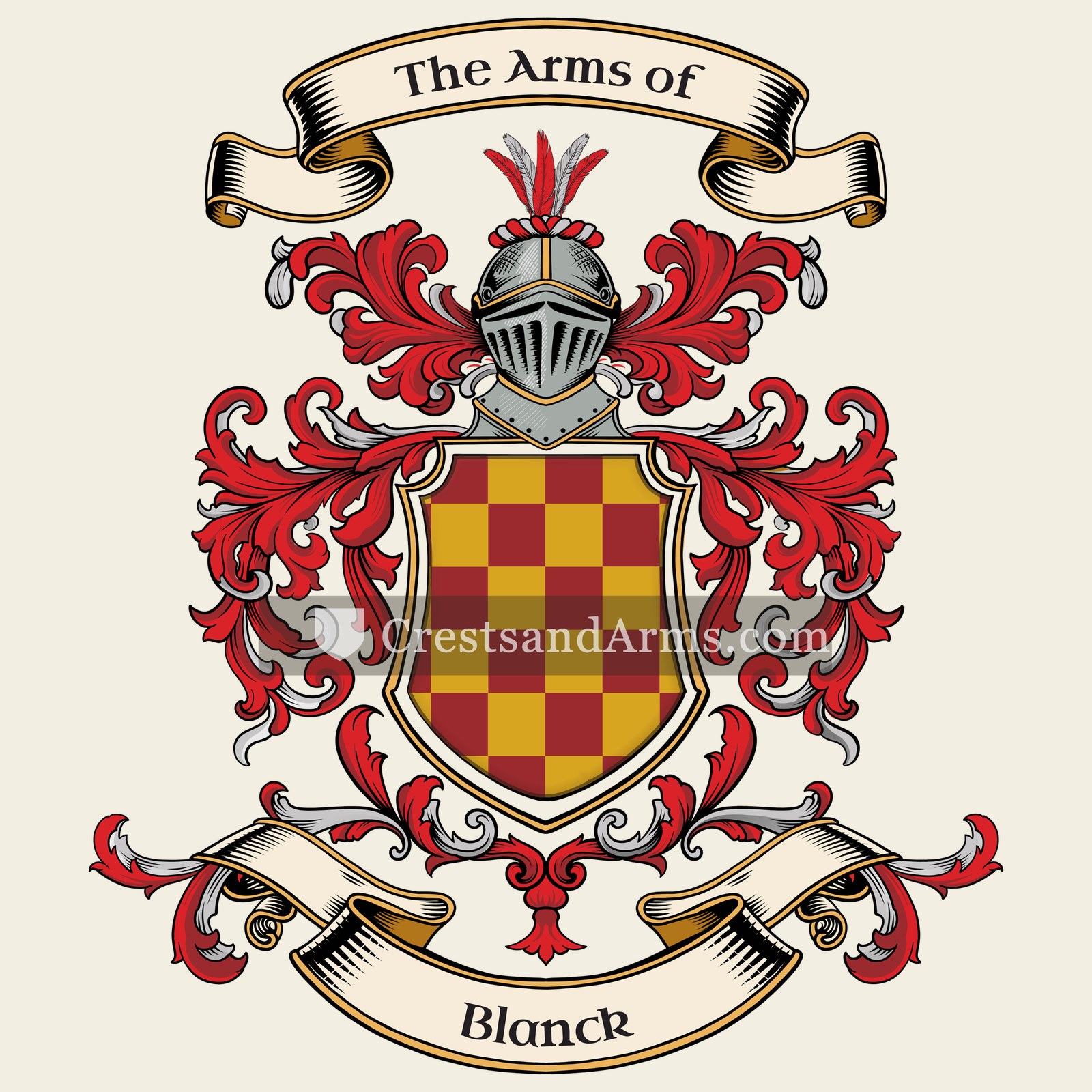


 paleMilitary strength, and a fortified defence
 lionCourage, strength and royalty