Map of Netherlands showing where the Blank arms are recorded
The Blank arms were recorded in Netherlands, c. 1815.
Arms such as these were typically recorded in Friesland.
Friesland was low, wet country on the northern coast of the Netherlands, farmed by families who had held the same land for centuries. Free landholders were unusually common there, and a free landholder could carry arms.
This is where the arms were entered in the register. Families often moved to other parts of the country, so the same name can turn up in more than one region.
Region
Friesland
First recorded
1815
Granting Authority for the Blank Arms
Hoge Raad van Adel
Photograph made by me · CC BY-SA 3.0
The body that granted and recorded arms in Netherlands in this period.
William I of the Netherlands
Sovereign of the period
William I of the Netherlands
1815–1840
Reigning in Netherlands when the Blank arms are first recorded.
How Arms Worked in Netherlands
In the Netherlands, coats of arms were often used by noble families and those who held specific public offices. These arms were passed down through the generations to legitimate descendants. Younger branches of a family usually kept the original design without needing to add special marks. This system ensured that the family identity remained clear and consistent over many years.
Granting authority
The Hoge Raad van Adel is the official body that regulates and manages noble titles and coats of arms in the Netherlands.
How they got arms
Families typically obtained their coats of arms through official royal grants or by proving their long-standing historical use of the symbols.
Where arms were recorded
Coats of arms are officially recorded in the registers held by the Hoge Raad van Adel, which began its work in 1814.
The family's standing
Recorded among the armigerous families of Netherlands.
Origin & History of the Blank Family in Netherlands
The surname Blank is a descriptive name that emerged from the Germanic languages, historically referring to someone with a fair complexion, light hair, or perhaps a bright and shining personality. In the context of the Netherlands, the name reflects the common practice of using physical traits to distinguish individuals within growing communities. By the early 19th century, records confirm that families bearing this name were well-established in the northern province of Friesland. This region was known for its distinct linguistic and cultural identity, and the presence of the Blank family there by 1815 suggests they were part of the local agricultural or maritime workforce that defined the Frisian economy at the time. As the Netherlands moved toward standardized civil registration during the Napoleonic era, families like the Blanks solidified their identity in official records, transitioning from local community members into documented citizens of the newly formed Kingdom of the Netherlands.
Meaning of the Blank family crest colors & symbols
Symbols on this shield
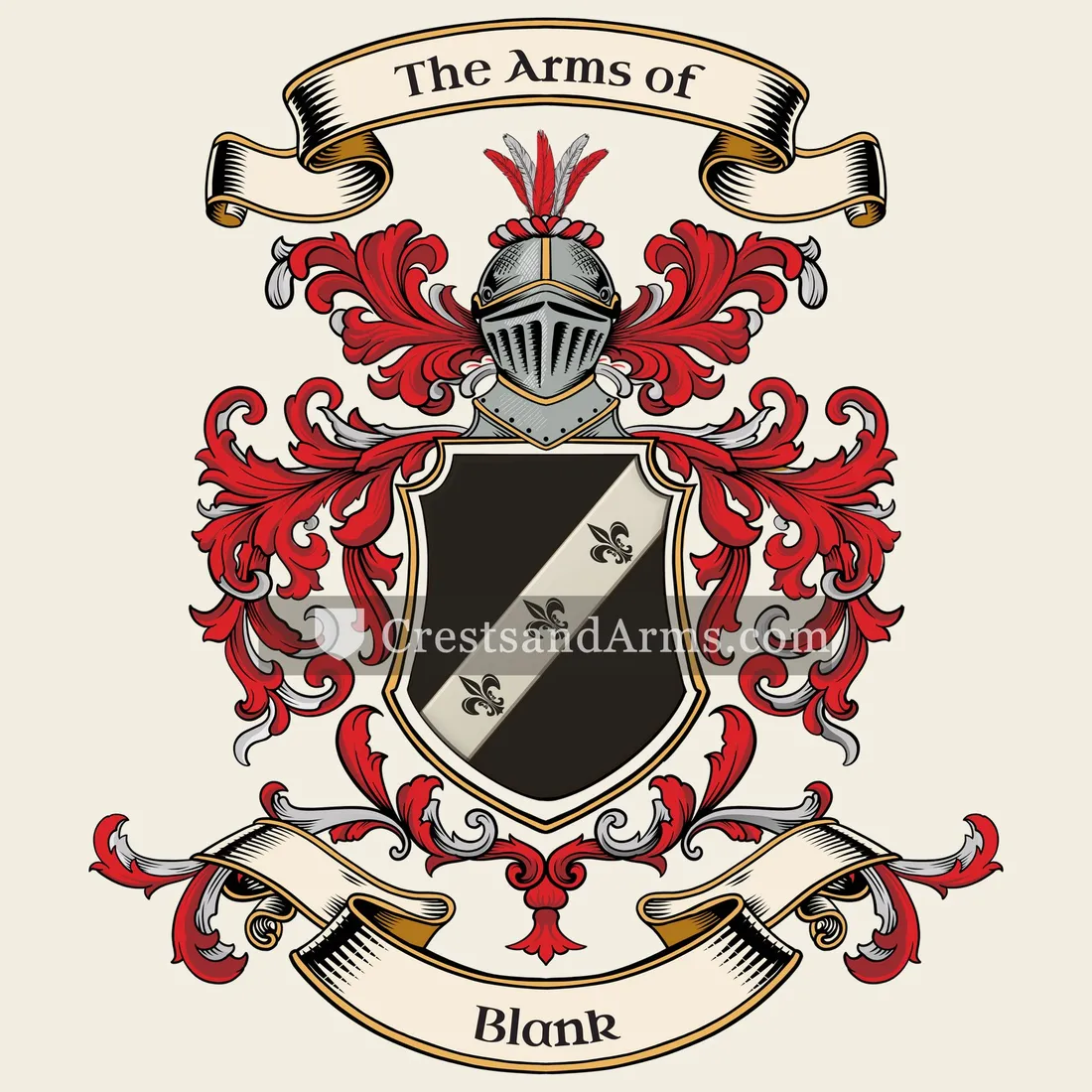
bendDefence, and the scarf of a commander
fleur de lisPurity, light, and the sixth son
Colours
Black (Sable)Means: Constancy
Silver (Argent)Means: Peace and sincerity
Historical info
Source
J. B. Rietstap, Armorial Général, Gouda: G. B. van Goor Zonen, 1884–87
Blazon (the actual original written record)
“De sa. à la bande d'arg., ch. de trois fleurs-de-lis du champ, posées chacune en barre.”
BavariaBavaria, c. 1765
Digital archive packCoat of arms PNG, gold border print PDF, vector SVG and the certificate of authenticity. Sent to your email in minutes.
Map of Germany showing where the Blank arms are recorded
The Blank arms were recorded in Bavaria, c. 1765.
Bavaria was a country of old landed families and walled market towns. Estates passed down the same line for centuries, and both the landowners and the leading townsmen kept arms, which is why so many Bavarian names sit in the registers.
This is where the arms were entered in the register. Families often moved to other parts of the country, so the same name can turn up in more than one region.
The body that granted and recorded arms in Germany in this period.
Francis I, Holy Roman Emperor
Sovereign of the period
Francis I, Holy Roman Emperor
1745–1765
Reigning in Netherlands when the Blank arms are first recorded.
How Arms Worked in Germany
In the Holy Roman Empire, coats of arms were often granted to individuals by the Emperor or his representatives. These arms were then passed down through the generations to all legitimate descendants of the original holder. Younger branches of a family usually kept the same shield design without needing to change it, as the arms belonged to the entire lineage.
Granting authority
The Holy Roman Emperor held the sole power to grant new coats of arms throughout his vast imperial territories.
How they got arms
Families typically obtained their coats of arms through a formal imperial grant or by proving their noble status to the authorities.
Where arms were recorded
These grants were officially recorded in the Imperial Chancery registers, which began keeping formal records of such honors during the Middle Ages.
The family's standing
Recorded among the armigerous families of Bavaria.
Origin & History of the Blank Family in Germany
The surname Blank originated in the German-speaking regions of Europe as a descriptive nickname. During the Middle Ages, people often received names based on their physical appearance or personal traits. The name Blank comes from the Middle High German word "blanc," which meant bright, shining, or fair. It was likely used to describe someone with light-colored hair or a pale complexion. By the time members of the family were recorded in Bavaria in 1765, the name had become a stable hereditary surname passed down through generations. These early ancestors in Bavaria were part of a society transitioning from feudal traditions to more structured local record-keeping. As the family established their roots in the region, they contributed to the local agricultural and craft-based economy that defined rural life in southern Germany during the eighteenth century.
Meaning of the Blank family crest colors & symbols
Symbols on this shield
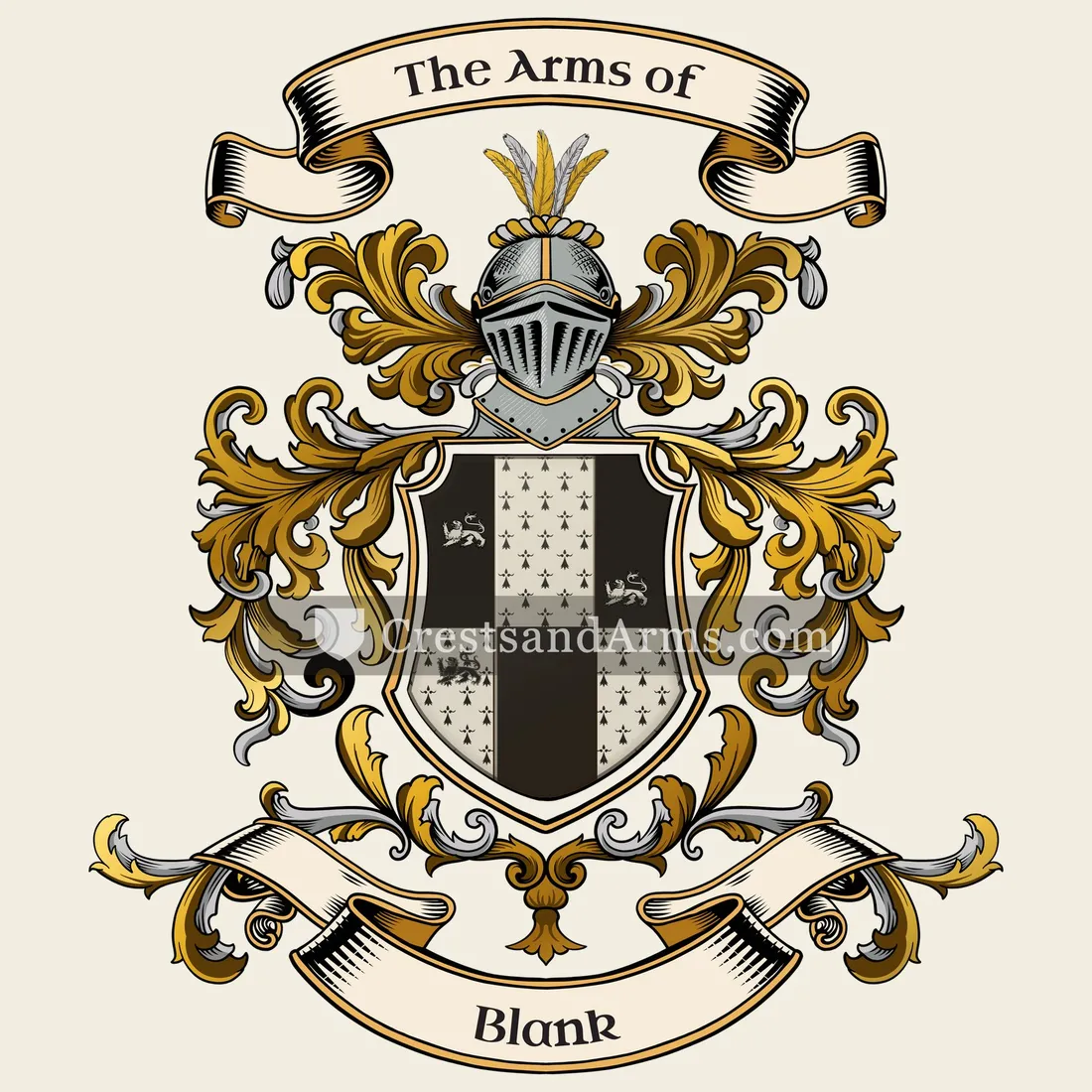
paleMilitary strength, and a fortified defence
lionCourage, strength and royalty
Colours
Black (Sable)Means: Constancy
ErmineMeans: Dignity
Gold (Or)Means: Generosity
Historical info
Source
Sir Bernard Burke, The General Armory of England, Scotland, Ireland and Wales, London: Harrison & Sons, 1884
Blazon (the actual original written record)
“Per fesse sa. and erm. a pale counterchanged three demi lions ramp. or”
EnglandLondon, c. 1572
Digital archive packCoat of arms PNG, gold border print PDF, vector SVG and the certificate of authenticity. Sent to your email in minutes.
Map of England showing where the Blank arms are recorded
The Blank arms were recorded in London, c. 1572.
This is where the arms were entered in the register. Families often moved to other parts of the country, so the same name can turn up in more than one region.
The body that granted and recorded arms in England in this period.
Elizabeth I of England
Sovereign of the period
Elizabeth I of England
1558–1603
Reigning in Netherlands when the Blank arms are first recorded.
How Arms Worked in England
English heraldry allowed arms to be shared by all legitimate descendants of the original owner. These symbols were treated as personal property that moved through the generations to all children. While the eldest son kept the original design, other family members could use the same shield without needing to change it or register their own unique versions.
Granting authority
The College of Arms in London has regulated the use of coats of arms throughout England and Wales since 1484.
How they got arms
Families typically obtained their coats of arms through a formal grant from the Crown or by proving their ancient right to them.
Where arms were recorded
All official coats of arms are recorded in the registers kept at the College of Arms, which date back to the fifteenth century.
The family's standing
Recorded among the armigerous families of England.
Origin & History of the Blank Family in England
The surname Blank emerged in England as a descriptive name, likely originating from the Middle English word "blank," which meant white, pale, or fair. By the time the family was firmly established in London during the year 1572, the city was a bustling center of trade and social change. Families with this name were often integrated into the urban fabric of the capital, participating in the merchant classes or local parish life during the reign of Queen Elizabeth I. Because the name was tied to a physical characteristic, it was common for it to be used as a nickname that eventually became a permanent family identifier. As the family grew within London, they became part of the diverse population that helped shape the city’s economic and cultural identity during the late sixteenth century.
Blank Meaning & Related Branches
Root word
blanc
A Germanic or Old French term meaning white or pale.
This name
BlankA descriptive nickname for someone with a pale complexion or light-colored hair.
also spelled
Blanck
Blanke
Blankk
Blancke
Related arms
Alfreysimilar arms
Allfreysimilar arms
Blanckvariant spelling
Documented Sources
J. B. Rietstap, Armorial Général, Gouda: G. B. van Goor Zonen, 1884–87
AlleFriezen, Burgerlijke Stand Friesland 1811-1950
Nationaal Archief, Registers van de Burgerlijke Stand
Van der Schaar, J., Woordenboek van voornamen, 1964
Meertens, P.J., De betekenis van Nederlandse familienamen, 1948
Digital archive packCoat of arms PNG, gold border print PDF, vector SVG and the certificate of authenticity. Sent to your email in minutes.


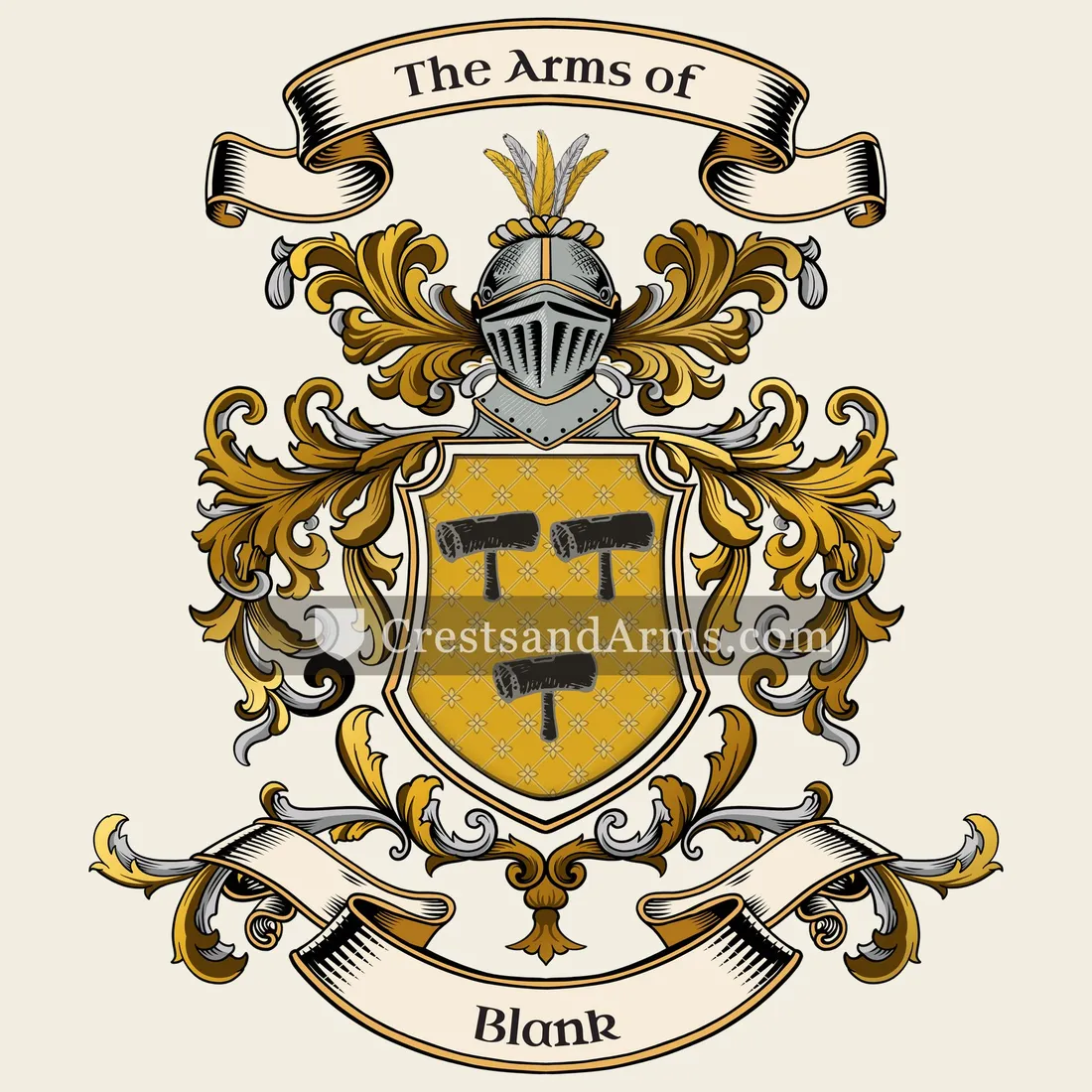
 hammerHonest labour, and the smith's craft
 hammerHonest labour, and the smith's craft


 bendDefence, and the scarf of a commander
 fleur de lisPurity, light, and the sixth son


 paleMilitary strength, and a fortified defence
 lionCourage, strength and royalty