Map of Netherlands showing where the Bloem arms are recorded
The Bloem arms were recorded in Amsterdam, c. 1815.
This is where the arms were entered in the register. Families often moved to other parts of the country, so the same name can turn up in more than one region.
Region
Amsterdam
Town
Amsterdam
First recorded
1815
Granting Authority for the Bloem Arms
Hoge Raad van Adel
Photograph made by me · CC BY-SA 3.0
The body that granted and recorded arms in Netherlands in this period.
William I of the Netherlands
Sovereign of the period
William I of the Netherlands
1815–1840
Reigning in Netherlands when the Bloem arms are first recorded.
How Arms Worked in Netherlands
In the Netherlands, coats of arms were often used by noble families and those who held specific public offices. These arms were passed down through the generations to legitimate descendants. Younger branches of a family usually kept the original design without needing to add special marks. This system ensured that the family identity remained clear and consistent over many years.
Granting authority
The Hoge Raad van Adel is the official body that regulates and manages noble titles and coats of arms in the Netherlands.
How they got arms
Families typically obtained their coats of arms through official royal grants or by proving their long-standing historical use of the symbols.
Where arms were recorded
Coats of arms are officially recorded in the registers held by the Hoge Raad van Adel, which began its work in 1814.
The family's standing
Recorded among the armigerous families of Netherlands.
Origin & History of the Bloem Family in Netherlands
The surname Bloem is a classic example of a topographical or descriptive name rooted in the Dutch language, where it literally translates to flower or blossom. During the early nineteenth century, the family established a notable presence in Amsterdam, a city defined by its bustling trade and rapid growth following the end of the Napoleonic era. In 1815, the Netherlands was transitioning into the United Kingdom of the Netherlands, and families like the Bloems were often part of the growing urban middle class that helped shape the city’s identity. Because the name is tied to nature, it likely originated as a nickname for someone who lived near a flower garden or perhaps a merchant who dealt in floral goods or botanical products. By the time the family appeared in the 1815 Amsterdam records, they were part of a society that was beginning to standardize civil registration, ensuring that their family history would be preserved for future generations in the city’s official archives.
Coat of Arms & Family Crest Details
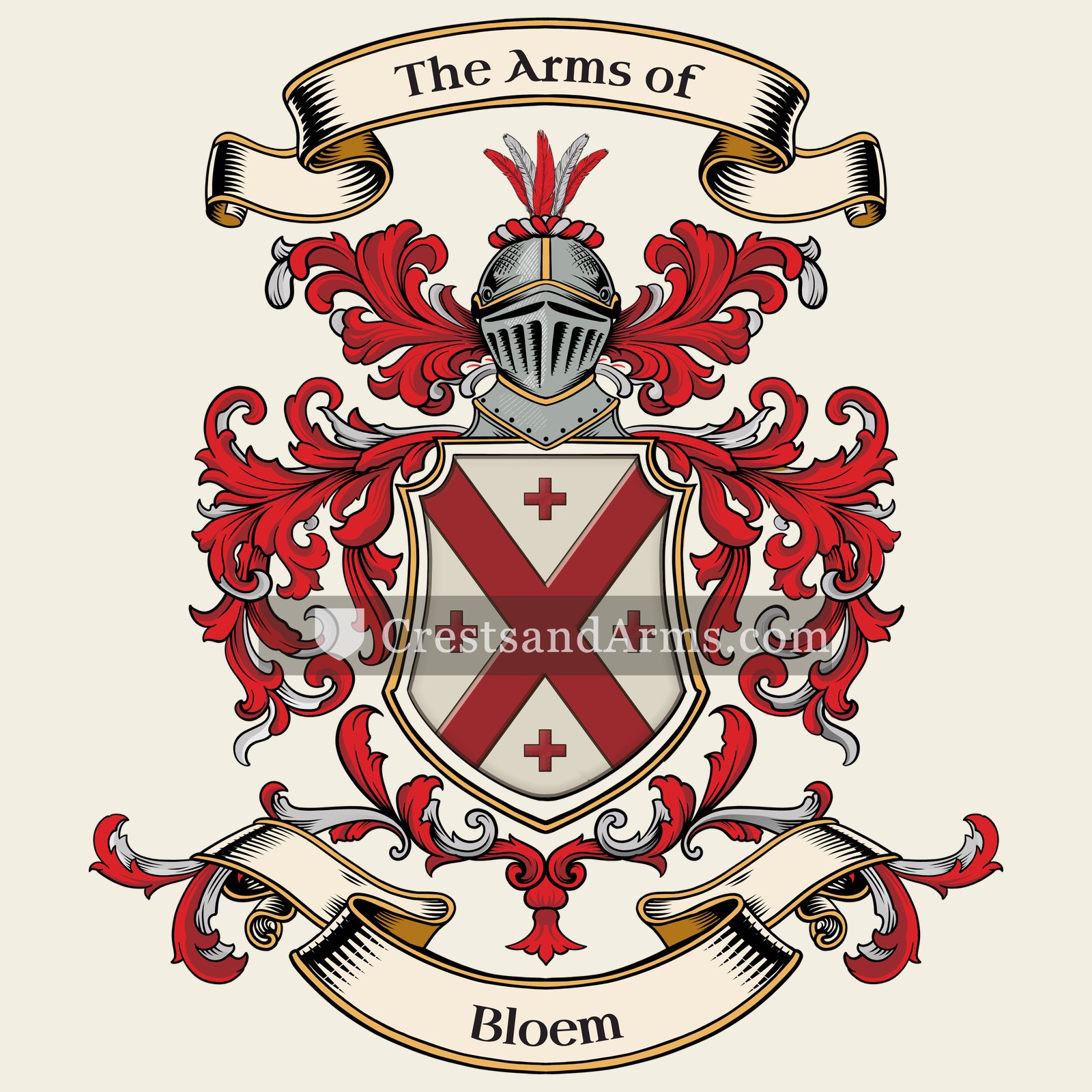
Symbols on this shield
saltireResolution, and St Andrew's cross
cross symbolChristian faith and service
Colours
Silver (Argent)Means: Peace and sincerity
Red (Gules)Means: Military strength
Historical info
Source
J. B. Rietstap, Armorial Général, Gouda: G. B. van Goor Zonen, 1884–87
Blazon (the actual original written record)
“D'arg. au saut. de gu., cant. de quatre croisettes du même.”
PoitouPoitou, c. 1663
Digital archive packCoat of arms PNG, gold border print PDF, vector SVG and the certificate of authenticity. Sent to your email in minutes.
Map of France showing where the Bloem arms are recorded
The Bloem arms were recorded in Poitou, c. 1663.
Poitou was western French farming country, divided among a large number of small landed families. Its gentry were numerous and modest, and even a small estate was enough to justify a shield.
This is where the arms were entered in the register. Families often moved to other parts of the country, so the same name can turn up in more than one region.
The body that granted and recorded arms in France in this period.
Louis XIV of France
Sovereign of the period
Louis XIV of France
1643–1715
Reigning in Netherlands when the Bloem arms are first recorded.
How Arms Worked in France
In France, a coat of arms was a mark of honor that passed down through the male line to all legitimate descendants. Families often used the same shield without changes to show their shared heritage. If a branch wanted to stand out, they could add a small mark to their shield to show their specific place in the family tree.
Granting authority
The Juge d'armes de France acted as the official authority that regulated and verified coats of arms across the country.
How they got arms
Families typically inherited their arms from ancestors, though they could also receive them through royal grants or by proving their noble status.
Where arms were recorded
Coats of arms were officially recorded in the Armorial Général de France, which began its main collection in the year 1696.
The family's standing
Recorded among the armigerous families of Poitou.
Origin & History of the Bloem Family in France
The family name Bloem carries a rich history that traces back to the western region of France known as Poitou. By the year 1663, records confirm that members of this family were already established within the local community. The name itself is rooted in Germanic origins, meaning flower, and it likely arrived in France through the movement of people across borders during periods of migration and trade. Families in seventeenth-century Poitou often lived in rural areas where they worked as farmers or skilled craftspeople. Because the region was a crossroads for different cultures, the Bloem family would have been part of a diverse society that valued regional traditions and strong community ties. Over time, these early ancestors helped shape the local culture of Poitou before their descendants eventually moved to other parts of the world.
Related Branches & Arms
Root word
Blome
Middle Dutch word referring to a flower or blossom.
This name
BloemA topographic name for someone living near a flower garden or a habitational name for a house sign.
also spelled
Blomm
Bloem
Blome
Bloom
Documented Sources
J. B. Rietstap, Armorial Général, Gouda: G. B. van Goor Zonen, 1884–87
Beekman, A. A., Geschiedkundige atlas van Nederland, 1913
Noordkerk, H., Handvesten; ofte privilegien ende octroyen, mitsgaders willekeuren, verordeningen en gebruiken der stad Amsterdam, 1748


 roseThe seventh son, and beauty with grace
 roseThe seventh son, and beauty with grace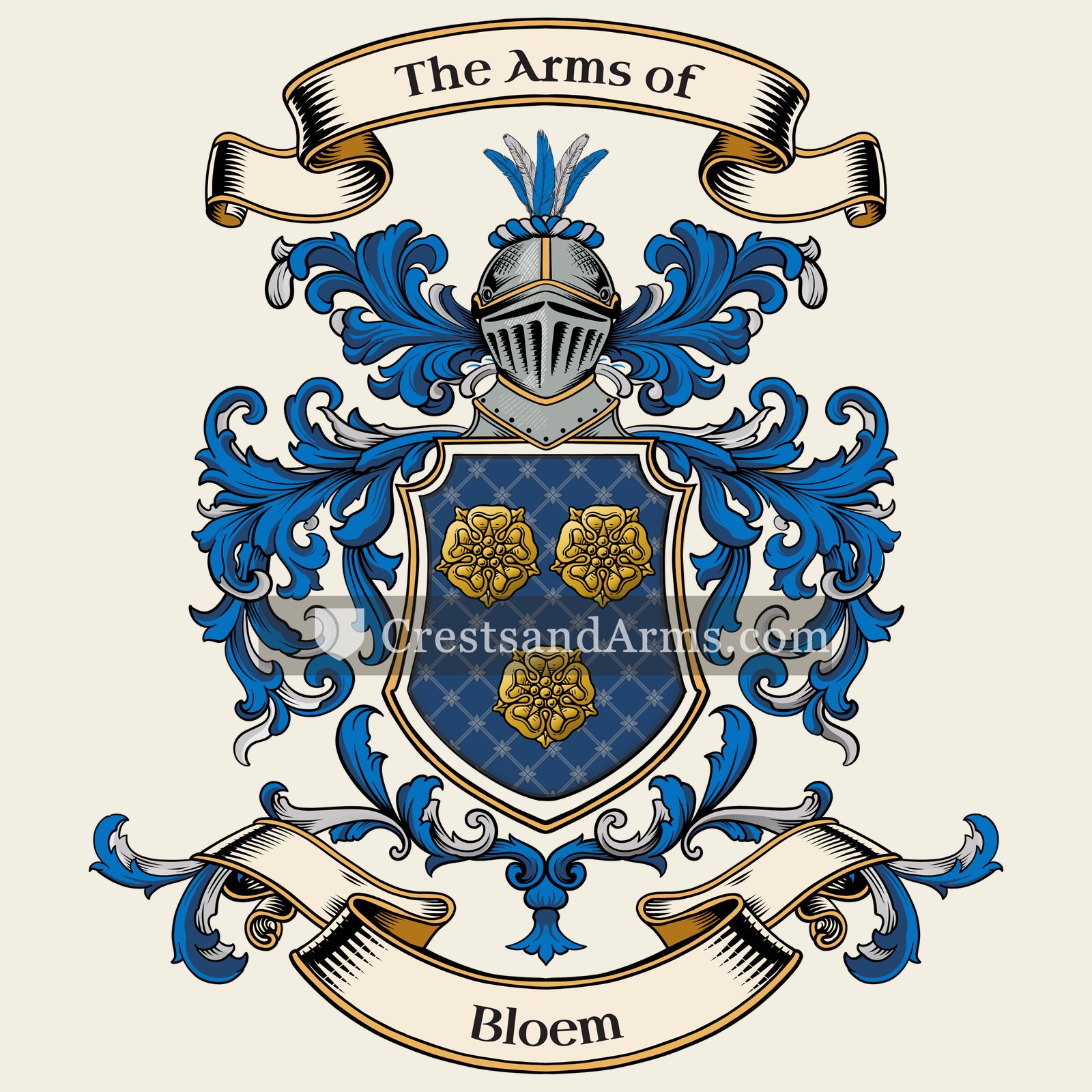


 saltireResolution, and St Andrew's cross
 cross symbolChristian faith and service