Map of Netherlands showing where the Blok arms are recorded
The Blok arms were recorded in Netherlands, c. 1815.
Arms such as these were typically recorded in Friesland.
Friesland was low, wet country on the northern coast of the Netherlands, farmed by families who had held the same land for centuries. Free landholders were unusually common there, and a free landholder could carry arms.
This is where the arms were entered in the register. Families often moved to other parts of the country, so the same name can turn up in more than one region.
Region
Friesland
First recorded
1815
Granting Authority for the Blok Arms
Hoge Raad van Adel
Photograph made by me · CC BY-SA 3.0
The body that granted and recorded arms in Netherlands in this period.
William I of the Netherlands
Sovereign of the period
William I of the Netherlands
1815–1840
Reigning in Netherlands when the Blok arms are first recorded.
How Arms Worked in Netherlands
In the Netherlands, coats of arms were often used by noble families and those who held specific public offices. These arms were passed down through the generations to legitimate descendants. Younger branches of a family usually kept the original design without needing to add special marks. This system ensured that the family identity remained clear and consistent over many years.
Granting authority
The Hoge Raad van Adel is the official body that regulates and manages noble titles and coats of arms in the Netherlands.
How they got arms
Families typically obtained their coats of arms through official royal grants or by proving their long-standing historical use of the symbols.
Where arms were recorded
Coats of arms are officially recorded in the registers held by the Hoge Raad van Adel, which began its work in 1814.
The family's standing
Recorded among the armigerous families of Netherlands.
Origin & History of the Blok Family in Netherlands
The surname Blok is a classic example of a descriptive name that originated in the Low Countries during the Middle Ages. In the Dutch language, the word "blok" refers to a solid piece of wood or a heavy block, and it was often used as a nickname for someone who was sturdy, thick-set, or perhaps worked as a woodcutter or carpenter. By the time formal record-keeping became more common in the northern provinces, the name had established a strong presence in Friesland. While the family was clearly rooted in the Frisian landscape by 1815, the name itself likely emerged centuries earlier as people began adopting fixed surnames to distinguish themselves in growing communities. Because the name is tied to physical traits and common trades, it appeared independently in various regions across the Netherlands, reflecting the practical and grounded nature of Dutch naming traditions.
Coat of Arms & Family Crest Details
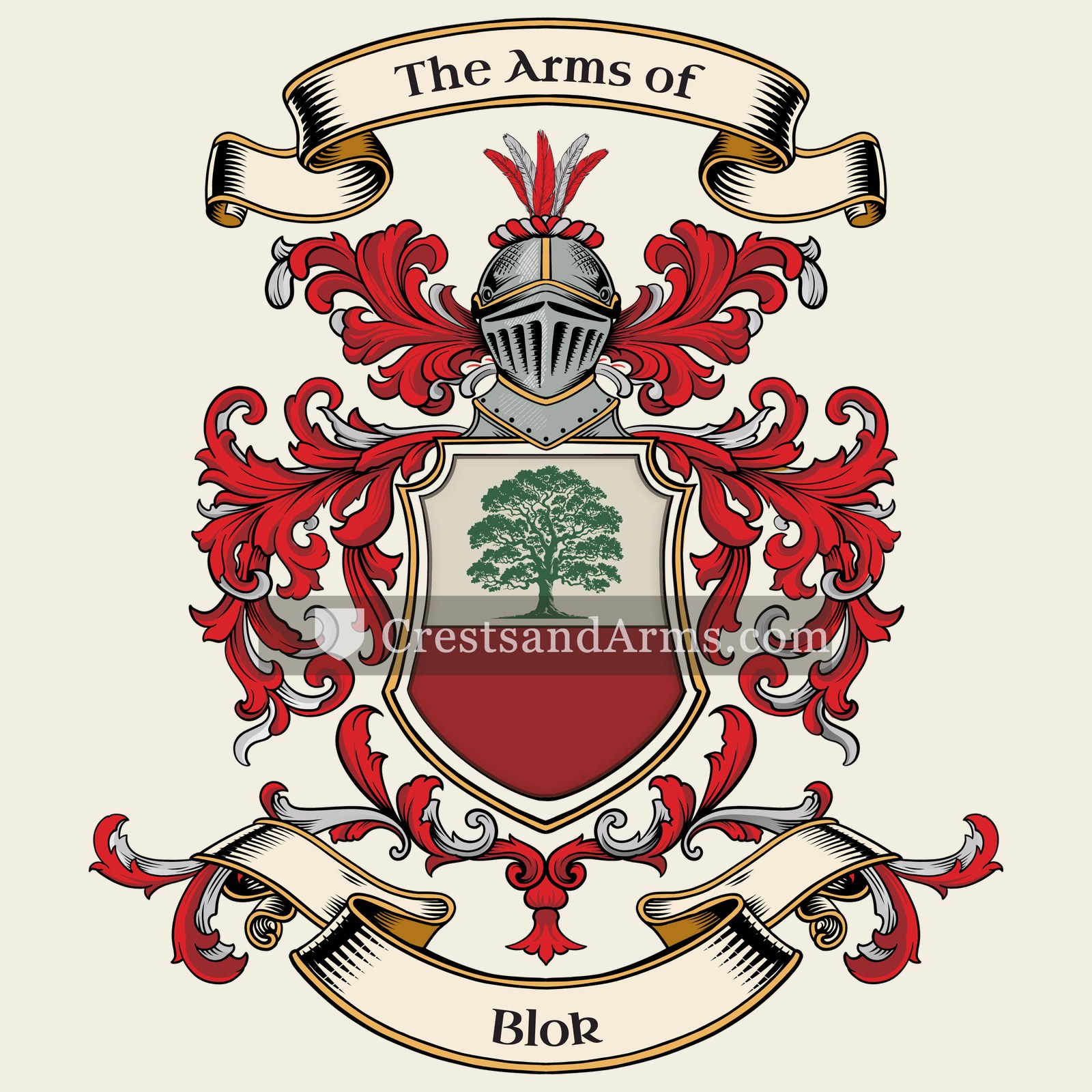
Symbols on this shield
treeLife, endurance and deep roots
Colours
Silver (Argent)Means: Peace and sincerity
Red (Gules)Means: Military strength
Green (Vert)Means: Hope
Historical info
Source
J. B. Rietstap, Armorial Général, Gouda: G. B. van Goor Zonen, 1884–87
Blazon (the actual original written record)
“Coupé d'arg. sur gu.; au chicot de sin., en fasce, posé sur le gu., poussant une feuille de sin. sur l'arg.”
Denmarkc. 1722
Digital archive packCoat of arms PNG, gold border print PDF, vector SVG and the certificate of authenticity. Sent to your email in minutes.
Map of Denmark showing where the Blok arms are recorded
The Blok arms were recorded in Denmark, c. 1722.
Arms such as these were typically recorded in Sjaælland.
Zealand held the Danish court, the crown's offices and Copenhagen itself. Families who served the king kept estates within reach of it, and royal service was the ordinary route to a coat of arms.
This is where the arms were entered in the register. Families often moved to other parts of the country, so the same name can turn up in more than one region.
The body that granted and recorded arms in Denmark in this period.
Frederik IV of Denmark
Sovereign of the period
Frederik IV of Denmark
1699–1730
Reigning in Netherlands when the Blok arms are first recorded.
How Arms Worked in Denmark
Danish heraldry during this period was closely tied to noble status and royal favor rather than being open to all citizens. Arms were typically granted by the monarch to individuals, and these symbols were then shared by all members of the noble house. If a family line died out, the right to use those specific arms ended with them.
Granting authority
The Danish royal chancery held the power to issue and regulate official coats of arms for the kingdom.
How they got arms
Families usually received their arms through a formal royal grant that confirmed their noble status and rights.
Where arms were recorded
These grants were officially recorded in the Danish Royal Chancery records starting in the sixteenth century.
The family's standing
Recorded among the armigerous families of Denmark.
Origin & History of the Blok Family in Denmark
The family name Blok has deep roots in the Danish landscape, with documented evidence placing members of the family on the island of Sjaelland as early as 1722. During the eighteenth century, the name was often associated with individuals who lived in rural parishes and worked as skilled tradespeople or farmers. In the Danish language, the word "blok" historically referred to a solid piece of wood or a heavy pulley, which suggests that the earliest ancestors to carry this name may have been woodworkers, shipbuilders, or laborers who relied on heavy tools for their daily tasks. As the family established themselves in Sjaelland, they became part of the local community structure, often appearing in church records that tracked baptisms, marriages, and burials. These early generations helped shape the identity of the name by integrating into the social and economic life of the region long before the formal standardization of surnames became common across the country.
Blok Meaning & Related Branches
Root word
blok
A heavy piece of wood or a solid block.
This name
BlokA topographic name for someone living near a wooden block or a sturdy structure.
also spelled
Block
Related arms
Brochsimilar arms
Blochvariant spelling
Blockvariant spelling
van den Blockvariant spelling
Documented Sources
J. B. Rietstap, Armorial Général, Gouda: G. B. van Goor Zonen, 1884–87
Meertens, P.J., De betekenis van Nederlandse familienamen, 1970
Van der Schaar, J., Woordenboek van voornamen, 1988
Tresoar (Fries Historisch en Letterkundig Centrum), Burgerlijke Stand Friesland (1811–1950)
Digital archive packCoat of arms PNG, gold border print PDF, vector SVG and the certificate of authenticity. Sent to your email in minutes.


 chevronProtection, and faithful service completed
 chevronProtection, and faithful service completed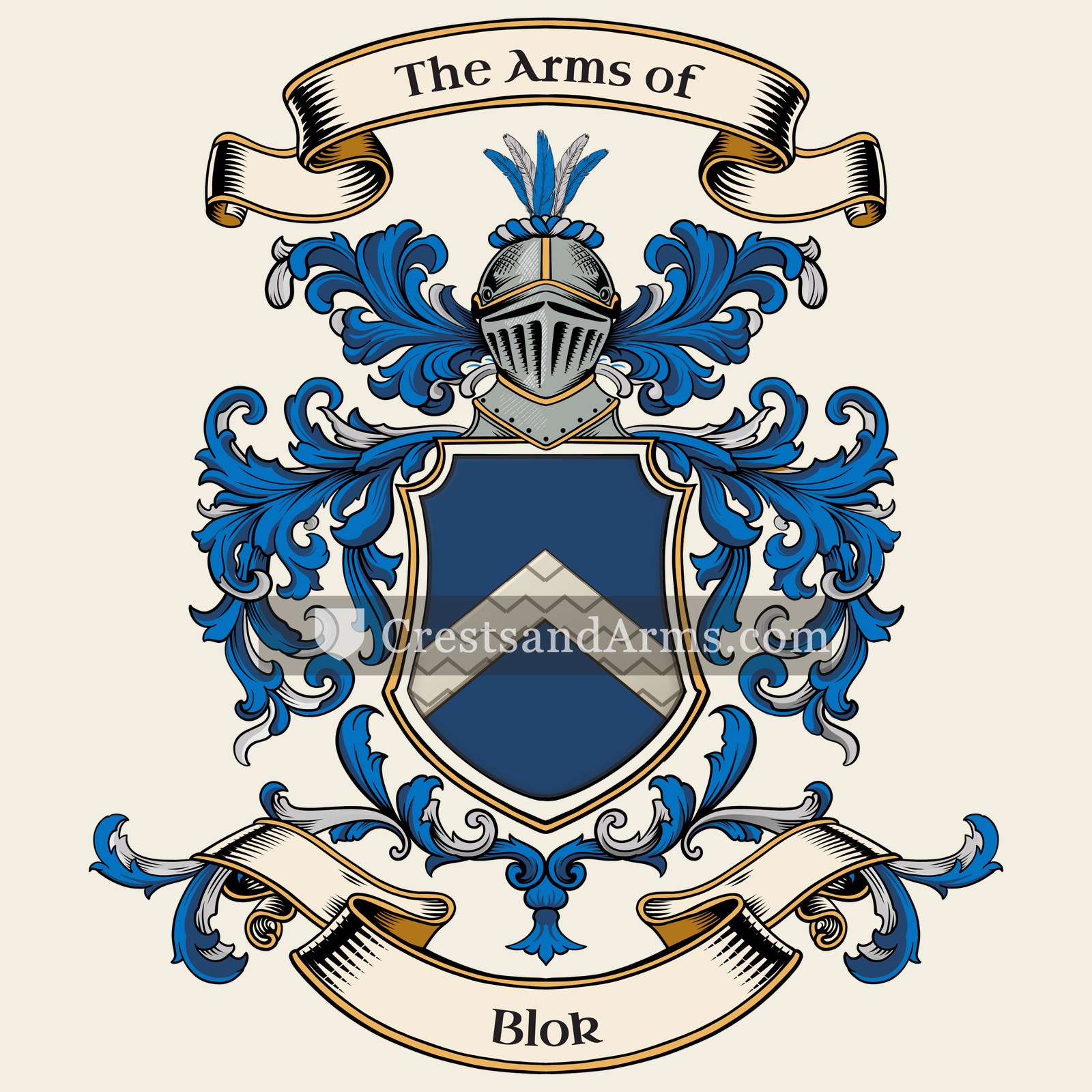


 treeLife, endurance and deep roots