Map of Netherlands showing where the Blunk arms are recorded
The Blunk arms were recorded in Netherlands, c. 1815.
Arms such as these were typically recorded in Friesland.
Friesland was low, wet country on the northern coast of the Netherlands, farmed by families who had held the same land for centuries. Free landholders were unusually common there, and a free landholder could carry arms.
This is where the arms were entered in the register. Families often moved to other parts of the country, so the same name can turn up in more than one region.
Region
Friesland
First recorded
1815
Granting Authority for the Blunk Arms
Hoge Raad van Adel
Photograph made by me · CC BY-SA 3.0
The body that granted and recorded arms in Netherlands in this period.
William I of the Netherlands
Sovereign of the period
William I of the Netherlands
1815–1840
Reigning in Netherlands when the Blunk arms are first recorded.
How Arms Worked in Netherlands
In the Netherlands, coats of arms were often used by noble families and those who held specific public offices. These arms were passed down through the generations to legitimate descendants. Younger branches of a family usually kept the original design without needing to add special marks. This system ensured that the family identity remained clear and consistent over many years.
Granting authority
The Hoge Raad van Adel is the official body that regulates and manages noble titles and coats of arms in the Netherlands.
How they got arms
Families typically obtained their coats of arms through official royal grants or by proving their long-standing historical use of the symbols.
Where arms were recorded
Coats of arms are officially recorded in the registers held by the Hoge Raad van Adel, which began its work in 1814.
The family's standing
Recorded among the armigerous families of Netherlands.
Origin & History of the Blunk Family in Netherlands
The surname Blunk has deep roots in the northern regions of the Netherlands, particularly within the province of Friesland. By the early 19th century, records confirm that families bearing this name were well-established in Frisian communities. The name itself is thought to be descriptive, likely originating from Middle Low German terms that referred to someone with a pale or fair complexion. During this period, Friesland was a region defined by its unique language and strong sense of local identity, which often influenced how family names were recorded in official registers. As the Netherlands moved toward standardized civil registration in 1811, families like the Blunks were formally documented in local population records. These early ancestors were typically involved in the agricultural and maritime trades that sustained the coastal economy of the northern provinces. Their presence in the 1815 records highlights a period of transition where families became permanently linked to specific towns and parish registers, solidifying the Blunk name as a recognized part of the Frisian landscape.
Coat of Arms & Family Crest Details
Symbols on this shield
bendDefence, and the scarf of a commander
fleur de lisPurity, light, and the sixth son
Colours
Black (Sable)Means: Constancy
Silver (Argent)Means: Peace and sincerity
Historical info
Source
J. B. Rietstap, Armorial Général, Gouda: G. B. van Goor Zonen, 1884–87
Blazon (the actual original written record)
“De sa. à la bande d'arg., ch. de trois fleurs-de-lis du champ, posées chacune en barre.”
BavariaBavaria, c. 1765
Digital archive packCoat of arms PNG, gold border print PDF, vector SVG and the certificate of authenticity. Sent to your email in minutes.
Map of Germany showing where the Blunk arms are recorded
The Blunk arms were recorded in Bavaria, c. 1765.
Bavaria was a country of old landed families and walled market towns. Estates passed down the same line for centuries, and both the landowners and the leading townsmen kept arms, which is why so many Bavarian names sit in the registers.
This is where the arms were entered in the register. Families often moved to other parts of the country, so the same name can turn up in more than one region.
The body that granted and recorded arms in Germany in this period.
Francis I, Holy Roman Emperor
Sovereign of the period
Francis I, Holy Roman Emperor
1745–1765
Reigning in Netherlands when the Blunk arms are first recorded.
How Arms Worked in Germany
In the Holy Roman Empire, coats of arms were often granted to individuals by the Emperor or his representatives. These arms were then passed down through the generations to all legitimate descendants of the original holder. Younger branches of a family usually kept the same shield design without needing to change it, as the arms belonged to the entire lineage.
Granting authority
The Holy Roman Emperor held the sole power to grant new coats of arms throughout his vast imperial territories.
How they got arms
Families typically obtained their coats of arms through a formal imperial grant or by proving their noble status to the authorities.
Where arms were recorded
These grants were officially recorded in the Imperial Chancery registers, which began keeping formal records of such honors during the Middle Ages.
The family's standing
Recorded among the armigerous families of Bavaria.
Origin & History of the Blunk Family in Germany
The family name Blunk has deep roots in the German-speaking regions of Europe, with historical records placing members of the family in Bavaria by the year 1765. The name is believed to be topographic or descriptive in origin, likely derived from Middle Low German terms related to light, pale colors, or specific landscape features. During the eighteenth century, families with this surname were typically integrated into the agrarian society of southern Germany, where they lived as farmers or skilled tradespeople. Life in Bavaria during this period was defined by local parish communities and the influence of the Holy Roman Empire, which shaped how families recorded their births, marriages, and deaths. As the family moved and grew throughout the German states, the name remained a consistent marker of their regional identity and their connection to the social structures of the time.
Coat of Arms & Family Crest Details
Symbols on this shield
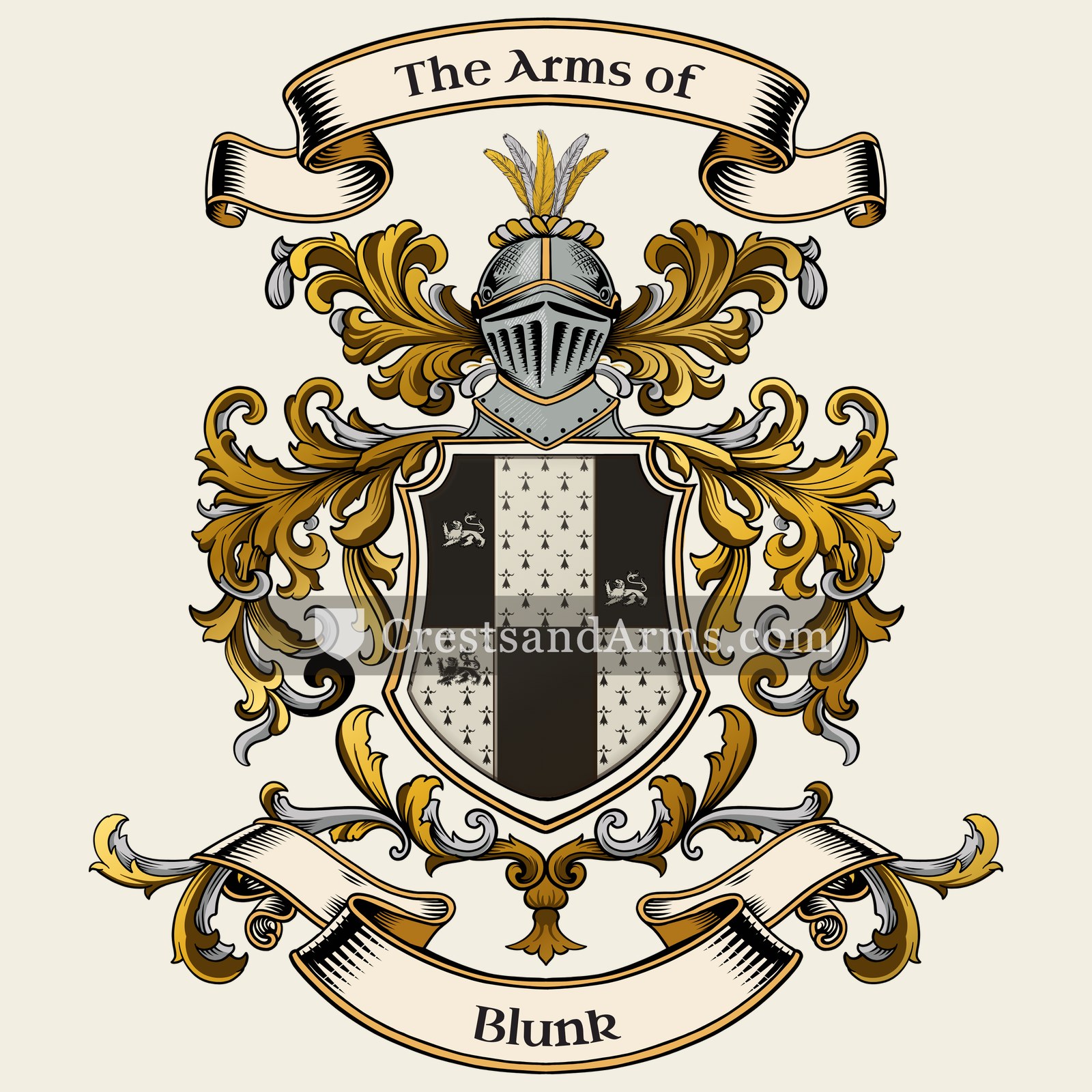
fessThe military belt, and readiness to serve
paleMilitary strength, and a fortified defence
lionCourage, strength and royalty
Colours
Black (Sable)Means: Constancy
ErmineMeans: Dignity
Gold (Or)Means: Generosity
Historical info
Source
Sir Bernard Burke, The General Armory of England, Scotland, Ireland and Wales, London: Harrison & Sons, 1884
Blazon (the actual original written record)
“Per fesse sa. and erm. a pale counterchanged three demi lions ramp. or”
EnglandLondon, c. 1572
Digital archive packCoat of arms PNG, gold border print PDF, vector SVG and the certificate of authenticity. Sent to your email in minutes.
Map of England showing where the Blunk arms are recorded
The Blunk arms were recorded in London, c. 1572.
This is where the arms were entered in the register. Families often moved to other parts of the country, so the same name can turn up in more than one region.
The body that granted and recorded arms in England in this period.
Elizabeth I of England
Sovereign of the period
Elizabeth I of England
1558–1603
Reigning in Netherlands when the Blunk arms are first recorded.
How Arms Worked in England
English heraldry allowed arms to be shared by all legitimate descendants of the original owner. These symbols were treated as personal property that moved through the generations to all children. While the eldest son kept the original design, other family members could use the same shield without needing to change it or register their own unique versions.
Granting authority
The College of Arms in London has regulated the use of coats of arms throughout England and Wales since 1484.
How they got arms
Families typically obtained their coats of arms through a formal grant from the Crown or by proving their ancient right to them.
Where arms were recorded
All official coats of arms are recorded in the registers kept at the College of Arms, which date back to the fifteenth century.
The family's standing
Recorded among the armigerous families of England.
Origin & History of the Blunk Family in England
The family name Blunk has roots that trace back to the bustling streets of sixteenth-century London. Historical records confirm that members of the family were living in the city as early as 1572, a time when London was rapidly expanding as a center for trade and commerce. During this era, surnames were often tied to a person's trade, physical traits, or the specific neighborhood where they resided. The name likely emerged during a period of significant social change in England, as families began to settle into more permanent roles within the urban landscape. By establishing themselves in London during the Elizabethan age, the early Blunk family became part of the city's vibrant history, contributing to the diverse population that defined the capital at the dawn of the modern era.
Related Branches & Arms
Root word
Blonc
Old French or Germanic term referring to a pale or fair complexion.
This name
BlunkA descriptive surname historically used to identify someone with light-colored hair or fair skin.
also spelled
Blanck
Blanke
Blankk
Blancke
Documented Sources
J. B. Rietstap, Armorial Général, Gouda: G. B. van Goor Zonen, 1884–87
Tresoar (Fries Historisch en Letterkundig Centrum), Burgerlijke Stand van Friesland
Van der Aa, A.J., Biographisch Woordenboek der Nederlanden, 1852
Meertens Instituut, Nederlandse Familienamenbank, 2010
Digital archive packCoat of arms PNG, gold border print PDF, vector SVG and the certificate of authenticity. Sent to your email in minutes.


 hammerHonest labour, and the smith's craft
 hammerHonest labour, and the smith's craft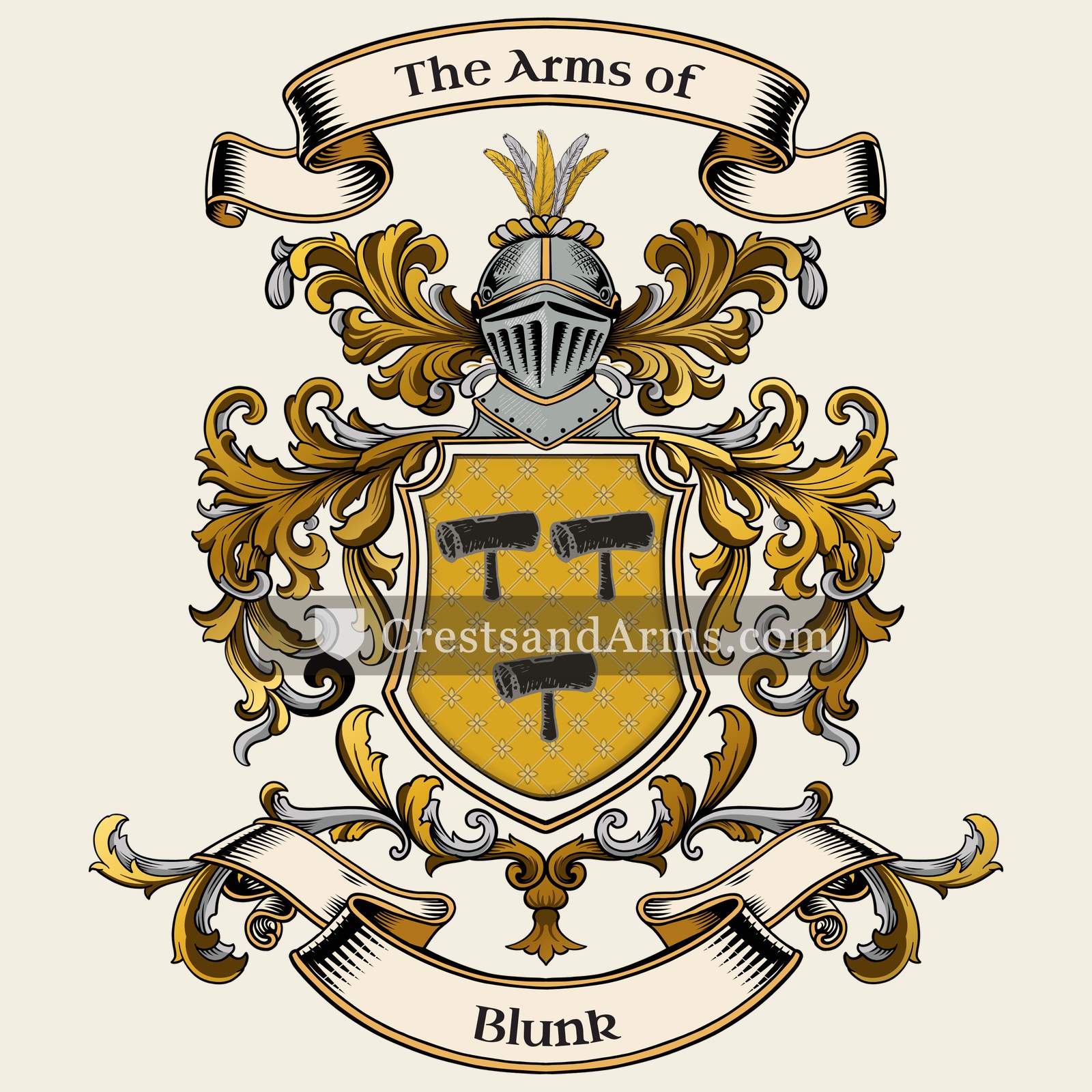


 bendDefence, and the scarf of a commander
 fleur de lisPurity, light, and the sixth son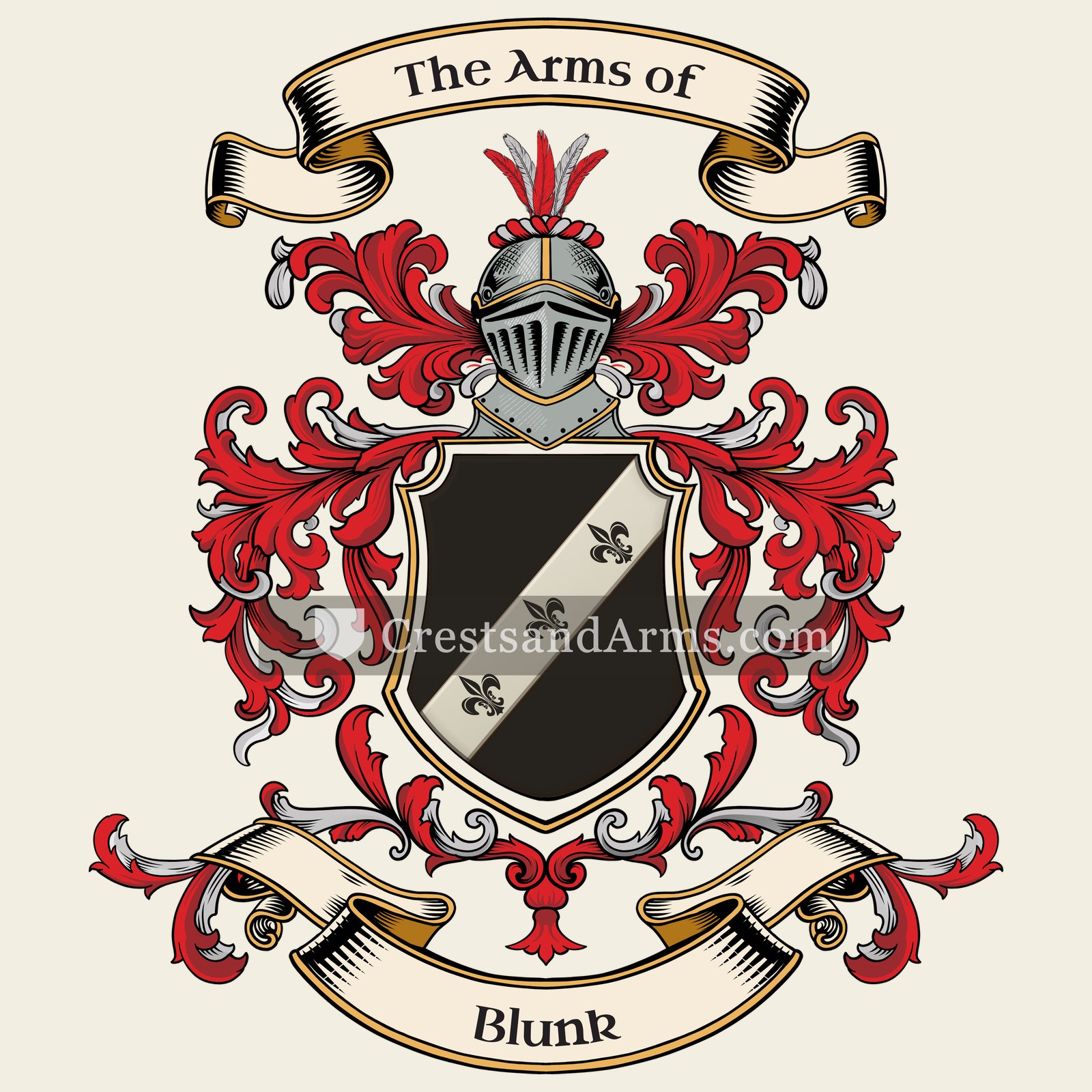


 fessThe military belt, and readiness to serve
 paleMilitary strength, and a fortified defence
 lionCourage, strength and royalty