Map of Germany showing where the Blute arms are recorded
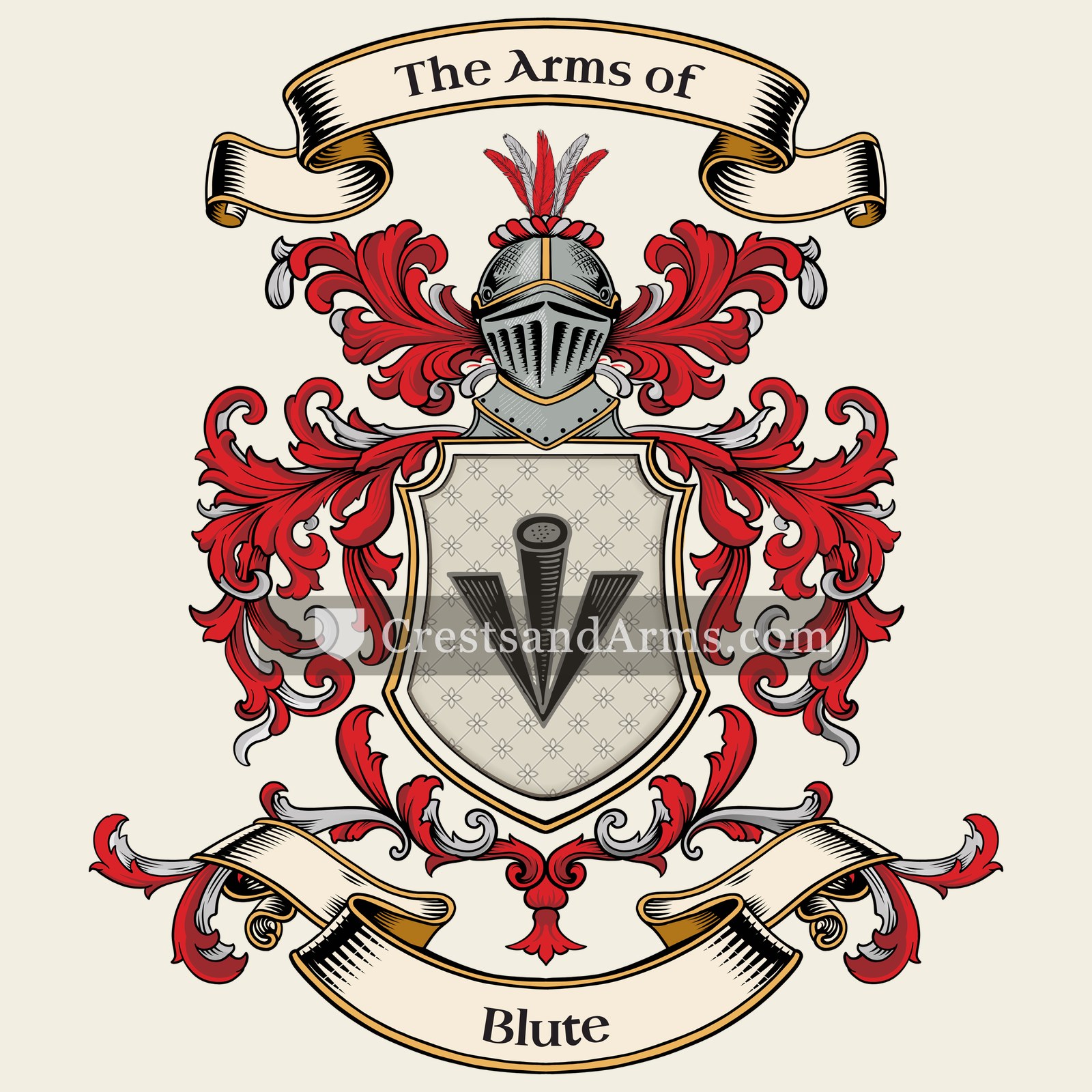
The Blute arms were recorded in Mecklenburg, c. 1796.
Mecklenburg was farming country in the north of Germany, held by a small number of families who kept their estates for generations. Owning land was what entitled a family to arms, so a great many Mecklenburg names ended up in the registers.
This is where the arms were entered in the register. Families often moved to other parts of the country, so the same name can turn up in more than one region.
The body that granted and recorded arms in Germany in this period.
Francis II, Holy Roman Emperor
Sovereign of the period
Francis II, Holy Roman Emperor
1792–1806
Reigning in Germany when the Blute arms are first recorded.
How Arms Worked in Germany
In the Holy Roman Empire, coats of arms were often granted to individuals by the Emperor or his representatives. These arms were then passed down through the generations to all legitimate descendants of the original holder. Younger branches of a family usually kept the same shield design without needing to change it, as the arms belonged to the entire lineage.
Granting authority
The Holy Roman Emperor held the sole power to grant new coats of arms throughout his vast imperial territories.
How they got arms
Families typically obtained their coats of arms through a formal imperial grant or by proving their noble status to the authorities.
Where arms were recorded
These grants were officially recorded in the Imperial Chancery registers, which began keeping formal records of such honors during the Middle Ages.
The family's standing
Recorded among the armigerous families of Mecklenburg.
Origin & History of the Blute Family in Germany
The family name Blute has deep roots in the Mecklenburg region of northern Germany, where records confirm members of the family were established by at least 1796. During this period, the area was characterized by a rural economy focused on agriculture and small-scale trade, which likely shaped the daily lives of early ancestors. The name itself is thought to be linked to regional linguistic patterns common in Low German dialects, which were the primary languages spoken in the Baltic coastal regions at the time. Families in this part of Germany often lived in tight-knit village communities, maintaining strong ties to the land and local parish churches. As the nineteenth century progressed, the social structure of Mecklenburg began to shift, and many families with deep local histories like the Blutes navigated the transition from traditional feudal labor systems toward more modern industrial and urban opportunities.
Related Branches & Arms
Root word
Blut
German word for blood or a reference to a ruddy complexion.
This name
BluteA descriptive nickname for a person with a red face or a fiery temperament.
also spelled
Boltt
Boltee
Bolteh
Bolty
Documented Sources
J. B. Rietstap, Armorial Général, Gouda: G. B. van Goor Zonen, 1884–87
Lisch, Georg Christian Friedrich, Mecklenburgische Urkunden und Daten, 1860


 arrowReadiness for battle, and affliction endured
 arrowReadiness for battle, and affliction endured