A record of documented arms, meaning and origin, researched for the Böhem family lines. Documented in 2 countries.
Reg. 7793 · German, A–C
Coat of Arms & Family Crest Details
Symbols on this shield
mountThe ground held, and steadfastness upon it
Colours
Blue (Azure)Means: Loyalty and truth
Green (Vert)Means: Hope
Historical info
Source
J. B. Rietstap, Armorial Général, Gouda: G. B. van Goor Zonen, 1884–87
Blazon (the actual original written record)
“D'azur à un paysan, hab. d'une veste de gu., d'un haut-de-chausses et de souliers de sa., de bas d'arg., coiffé d'un chapeau du même, tenant un long bâton à la main et posé sur une terrasse de sin. C.: une grue avec sa vigilance d'arg. L. d'arg. et d'azur.”
GermanyNuremberg, c. 1765
Digital archive packCoat of arms PNG, gold border print PDF, vector SVG and the certificate of authenticity. Sent to your email in minutes.
Map of Germany showing where the Böhem arms are recorded
The Böhem arms were recorded in Nuremberg, c. 1765.
This is where the arms were entered in the register. Families often moved to other parts of the country, so the same name can turn up in more than one region.
The body that granted and recorded arms in Germany in this period.
Francis I, Holy Roman Emperor
Sovereign of the period
Francis I, Holy Roman Emperor
1745–1765
Reigning in Germany when the Böhem arms are first recorded.
How Arms Worked in Germany
In the Holy Roman Empire, coats of arms were often granted to individuals by the Emperor or his representatives. These arms were then passed down through the generations to all legitimate descendants of the original holder. Younger branches of a family usually kept the same shield design without needing to change it, as the arms belonged to the entire lineage.
Granting authority
The Holy Roman Emperor held the sole power to grant new coats of arms throughout his vast imperial territories.
How they got arms
Families typically obtained their coats of arms through a formal imperial grant or by proving their noble status to the authorities.
Where arms were recorded
These grants were officially recorded in the Imperial Chancery registers, which began keeping formal records of such honors during the Middle Ages.
The family's standing
Recorded among the armigerous families of Germany.
Origin & History of the Böhem Family in Germany
The surname Böhem is a topographic name that identifies a person who originated from the region of Bohemia. In the German language, the name serves as a historical marker for families who migrated from the lands of the modern-day Czech Republic into the German-speaking territories. By the mid-18th century, the family had established a notable presence in the city of Nuremberg. During this period, Nuremberg was a bustling center of trade and craftsmanship, making it a common destination for families seeking new opportunities. Records from 1765 confirm that members of the Böhem family were integrated into the social and economic fabric of this city. Their presence in such a prominent urban center suggests that they were likely involved in the skilled trades or merchant networks that defined Nuremberg during the Enlightenment era. This migration pattern reflects the broader movement of people across Central Europe, where surnames often acted as a permanent record of a family’s ancestral roots in a different land.
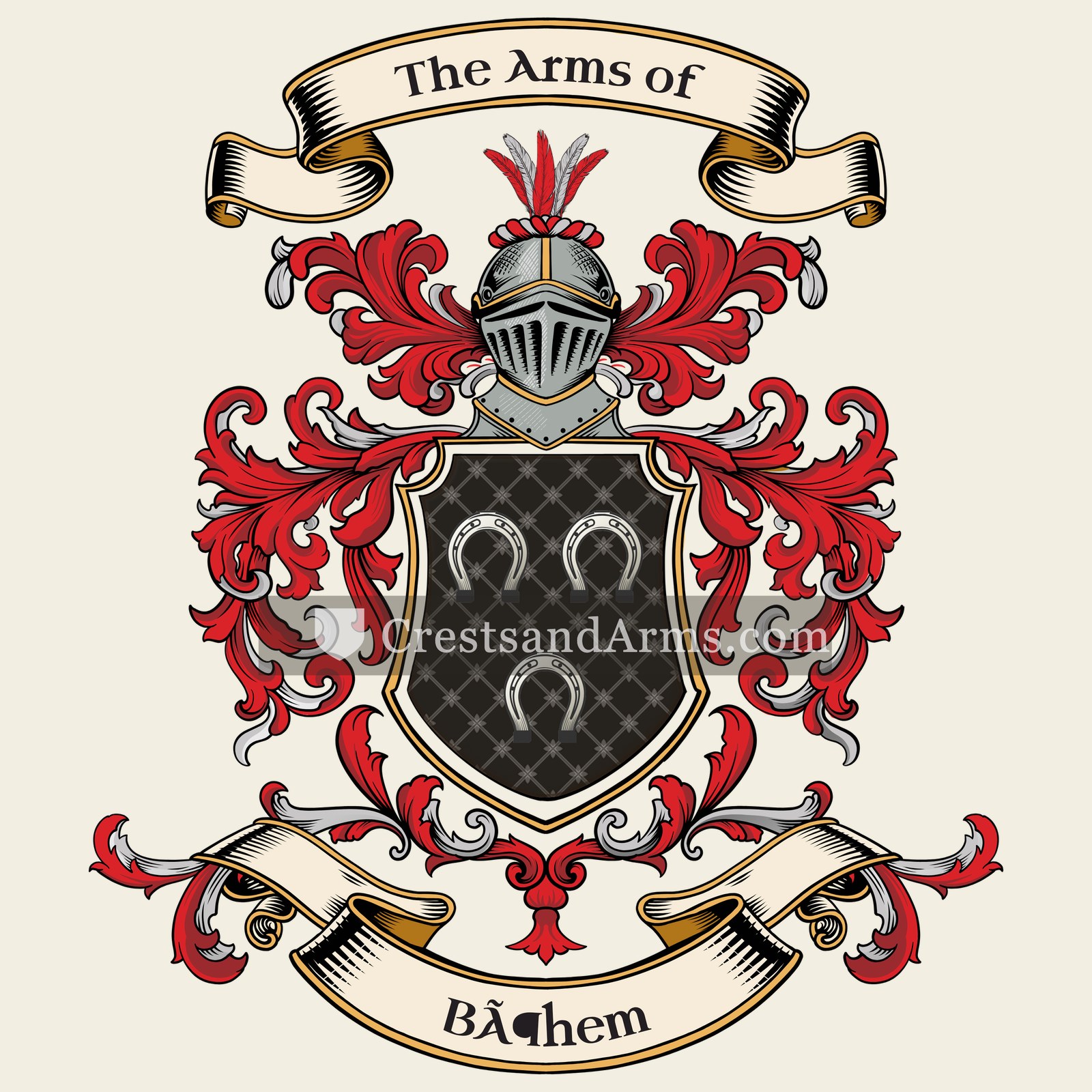
Coat of Arms & Family Crest Details
Symbols on this shield
horseshoeGood fortune and protection from harm
Colours
Black (Sable)Means: Constancy
Silver (Argent)Means: Peace and sincerity
Historical info
Source
Sir Bernard Burke, The General Armory of England, Scotland, Ireland and Wales, London: Harrison & Sons, 1884
Blazon (the actual original written record)
“Sa. three horseshoes ar. two and one”
EnglandLondon, c. 1620
Digital archive packCoat of arms PNG, gold border print PDF, vector SVG and the certificate of authenticity. Sent to your email in minutes.
Map of England showing where the Böhem arms are recorded
The Böhem arms were recorded in London, c. 1620.
This is where the arms were entered in the register. Families often moved to other parts of the country, so the same name can turn up in more than one region.
The body that granted and recorded arms in England in this period.
James VI and I
Sovereign of the period
James VI and I
1603–1625
Reigning in Germany when the Böhem arms are first recorded.
How Arms Worked in England
English heraldry allowed arms to be shared by all legitimate descendants of the original owner. These symbols were treated as personal property that moved through the generations to all children. While the eldest son kept the original design, other family members could use the same shield without needing to change it or register their own unique versions.
Granting authority
The College of Arms in London has regulated the use of coats of arms throughout England and Wales since 1484.
How they got arms
Families typically obtained their coats of arms through a formal grant from the Crown or by proving their ancient right to them.
Where arms were recorded
All official coats of arms are recorded in the registers kept at the College of Arms, which date back to the fifteenth century.
The family's standing
Recorded among the armigerous families of England.
Origin & History of the Böhem Family in England
The name Böhem arrived in England during a period of significant movement across Europe, with records confirming the presence of family members in London by 1620. This surname is an occupational or locative identifier that links the family to the historical region of Bohemia, which is modern-day Czechia. During the early seventeenth century, London served as a bustling hub for international merchants and skilled artisans who traveled from Central Europe to seek new opportunities in the English capital. Families bearing this name often integrated into the city’s growing trade networks, contributing to the diverse cultural landscape of the era. By settling in London, these early ancestors helped establish a lineage that bridged the traditions of their continental heritage with the evolving social fabric of England.
Böhem Meaning & Related Branches
Root word
Boiohaemum
The ancient Germanic land of the Boii tribe.
This name
BöhemA person who originated from the region of Bohemia.
also spelled
Boehem
Boheam
Bohemme
Documented Sources
J. B. Rietstap, Armorial Général, Gouda: G. B. van Goor Zonen, 1884–87
Bahlow, Hans, Deutsches Namenlexikon: Familien- und Vornamen nach Ursprung und Sinn erklärt, 1967
Heintze, Albert, Die deutschen Familiennamen: geschichtlich, geographisch, sprachlich, 1903
Stadtarchiv Nürnberg, Bürgerbücher der Stadt Nürnberg, 1765
Digital archive packCoat of arms PNG, gold border print PDF, vector SVG and the certificate of authenticity. Sent to your email in minutes.


 mountThe ground held, and steadfastness upon it
 mountThe ground held, and steadfastness upon it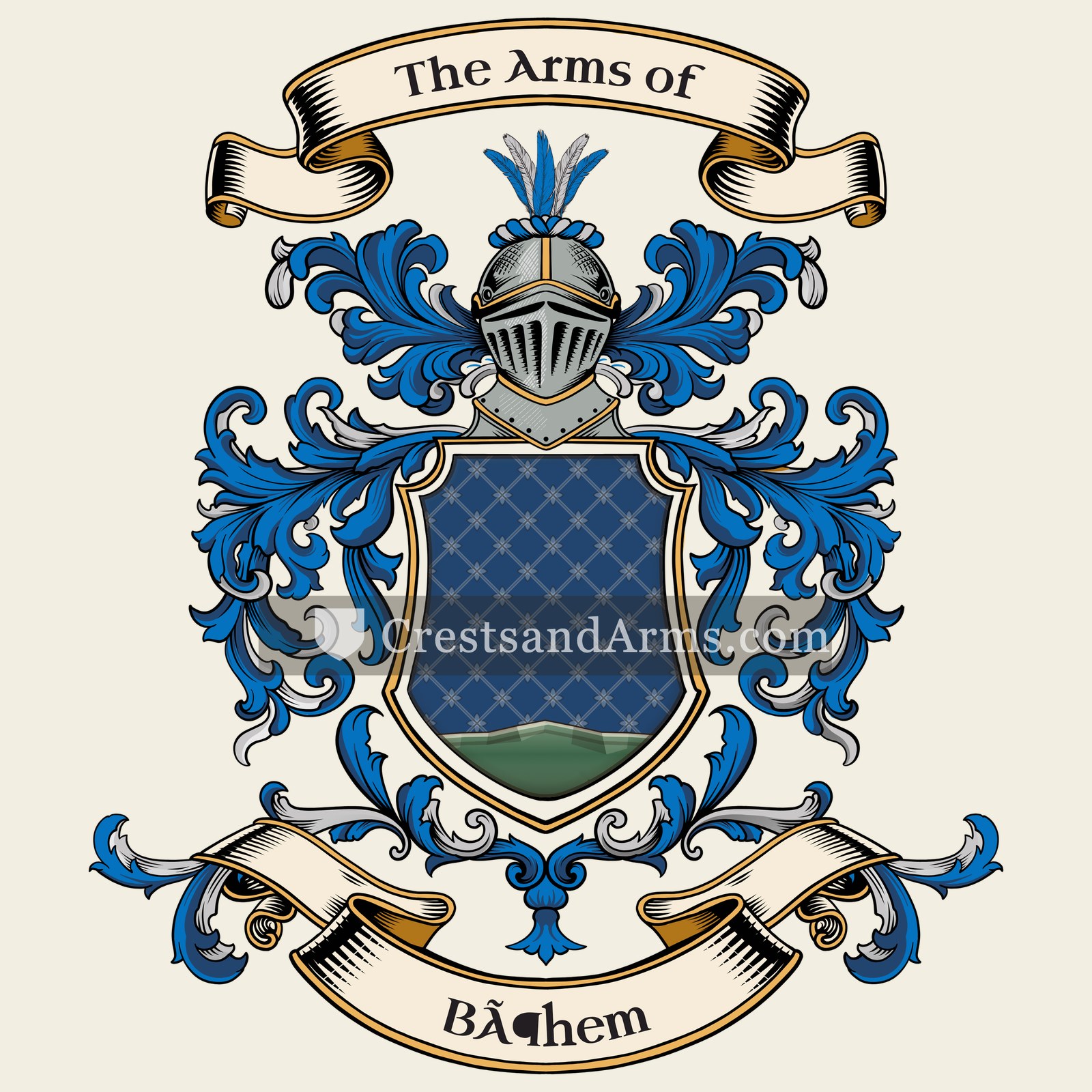


 horseshoeGood fortune and protection from harm