Map of Switzerland showing where the Bohl arms are recorded
The Bohl arms were recorded in Bâle, c. 1745.
This is where the arms were entered in the register. Families often moved to other parts of the country, so the same name can turn up in more than one region.
The body that granted and recorded arms in Switzerland in this period.
How Arms Worked in Switzerland
In Switzerland, coats of arms were not restricted to the nobility and were often adopted by common citizens and families. These symbols were passed down through generations to show family identity. When branches of a family grew, they often changed small details of the design to distinguish their own line from the original group.
Granting authority
Cantonal and civic authorities managed the use of coats of arms within their specific regions and local jurisdictions.
How they got arms
Families typically assumed their own coats of arms based on local custom rather than receiving them from a central monarch.
Where arms were recorded
Arms were recorded in various cantonal and civic registers starting from the fourteenth century throughout the Swiss region.
The family's standing
Recorded among the armigerous families of Switzerland.
Origin & History of the Bohl Family in Switzerland
The surname Bohl has deep roots in the German-speaking regions of Switzerland, where it emerged as a descriptive name linked to the landscape and local geography. By the middle of the eighteenth century, the family had established a notable presence in the city of Bâle, which served as a major cultural and economic hub. During this era, families with this name were often integrated into the urban fabric of the city, participating in the trade and craft guilds that defined Swiss social life. The name itself likely originated from the Middle High German word "bol," which referred to a rounded hill or a piece of land, suggesting that the earliest ancestors were farmers or landowners who identified their home by the shape of the terrain. As the family settled in Bâle by 1745, they became part of a long tradition of Swiss citizens who contributed to the growth of the region through commerce and civic engagement. This transition from rural life to the bustling environment of Bâle reflects the broader movement of families across the Swiss cantons during the eighteenth century.
Coat of Arms & Family Crest Details
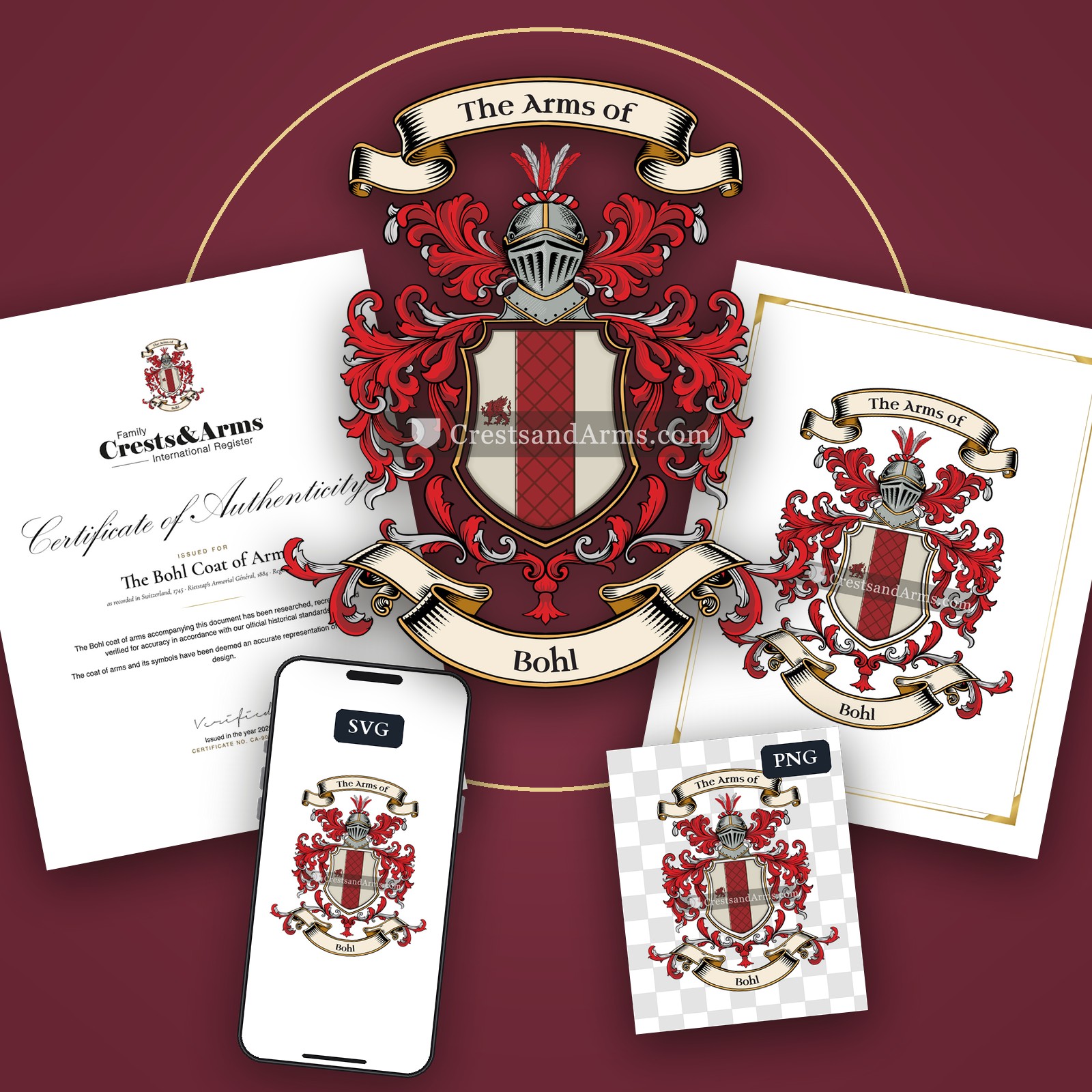
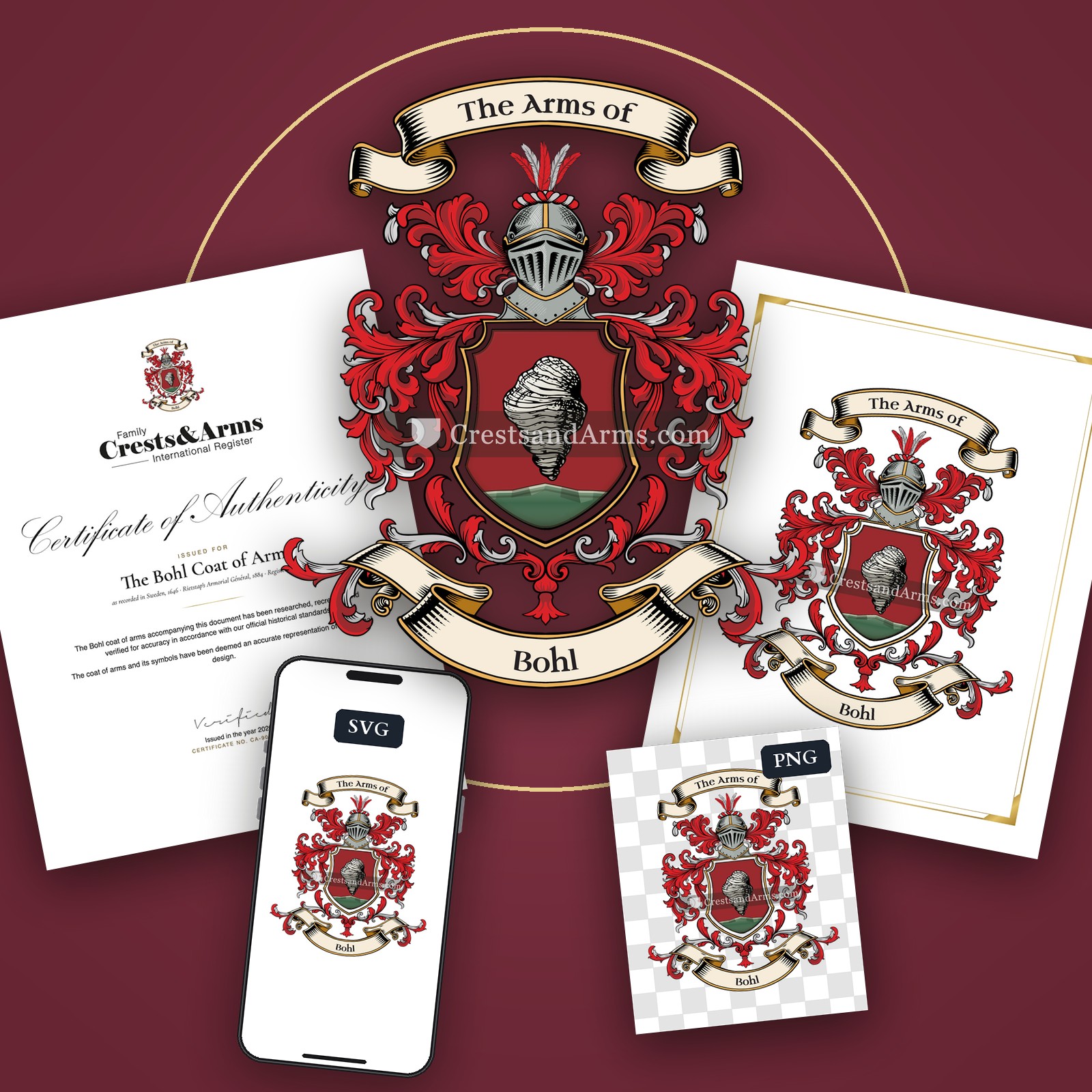
Symbols on this shield
mountThe ground held, and steadfastness upon it
whelkThe pilgrim's shell, and safe travel
Colours
Red (Gules)Means: Military strength
Green (Vert)Means: Hope
Silver (Argent)Means: Peace and sincerity
Historical info
Source
J. B. Rietstap, Armorial Général, Gouda: G. B. van Goor Zonen, 1884–87
Blazon (the actual original written record)
“De gu. à un limaçon d'arg. avec sa coquille du même, la tête levée, sur une terrasse de sin. C.: une tête de Janus, au nat.”
Swedenc. 1646
Digital archive packCoat of arms PNG, gold border print PDF, vector SVG and the certificate of authenticity. Sent to your email in minutes.
Map of Sweden showing where the Bohl arms are recorded
The Bohl arms were recorded in Sweden, c. 1646.
Arms such as these were typically recorded in Stockholm.
Stockholm held the Swedish court and the House of Nobility, where every noble family's arms were entered and kept. Families ennobled for service registered there, which is why so many are recorded around the city.
This is where the arms were entered in the register. Families often moved to other parts of the country, so the same name can turn up in more than one region.
The body that granted and recorded arms in Sweden in this period.
Christina of Sweden
Sovereign of the period
Christina of Sweden
1632–1654
Reigning in Switzerland when the Bohl arms are first recorded.
How Arms Worked in Sweden
In Sweden, a coat of arms belonged to a noble family as a whole rather than just one individual. These arms were passed down through the generations to all legitimate descendants. Younger branches of the family used the same shield without needing to change it. This system ensured that the entire lineage shared the same identity and status under the law.
Granting authority
The Riddarhuset, or House of Nobility, regulated all noble coats of arms in Sweden under royal authority.
How they got arms
Families received their coats of arms through royal grants of nobility which were then officially registered with the House.
Where arms were recorded
Coats of arms were officially recorded in the Swedish House of Nobility register starting in the year 1626.
The family's standing
Recorded among the armigerous families of Sweden.
Origin & History of the Bohl Family in Sweden
The Bohl family name emerged within the bustling urban environment of seventeenth-century Stockholm, where records confirm their presence as early as 1646. During this era, Sweden was rapidly transforming into a major European power, and Stockholm served as a central hub for merchants, skilled craftsmen, and administrative officials. The name Bohl likely arrived in the city through the movement of people across the Baltic Sea, reflecting the strong trade connections between Sweden and the German-speaking regions of Northern Europe. Families like the Bohls often integrated into the city’s growing middle class by contributing to the specialized labor and commerce that fueled Sweden’s expansion. By establishing themselves in the capital during the mid-1600s, the early members of the Bohl family became part of the social fabric of a nation undergoing significant political and economic modernization.
Coat of Arms & Family Crest Details
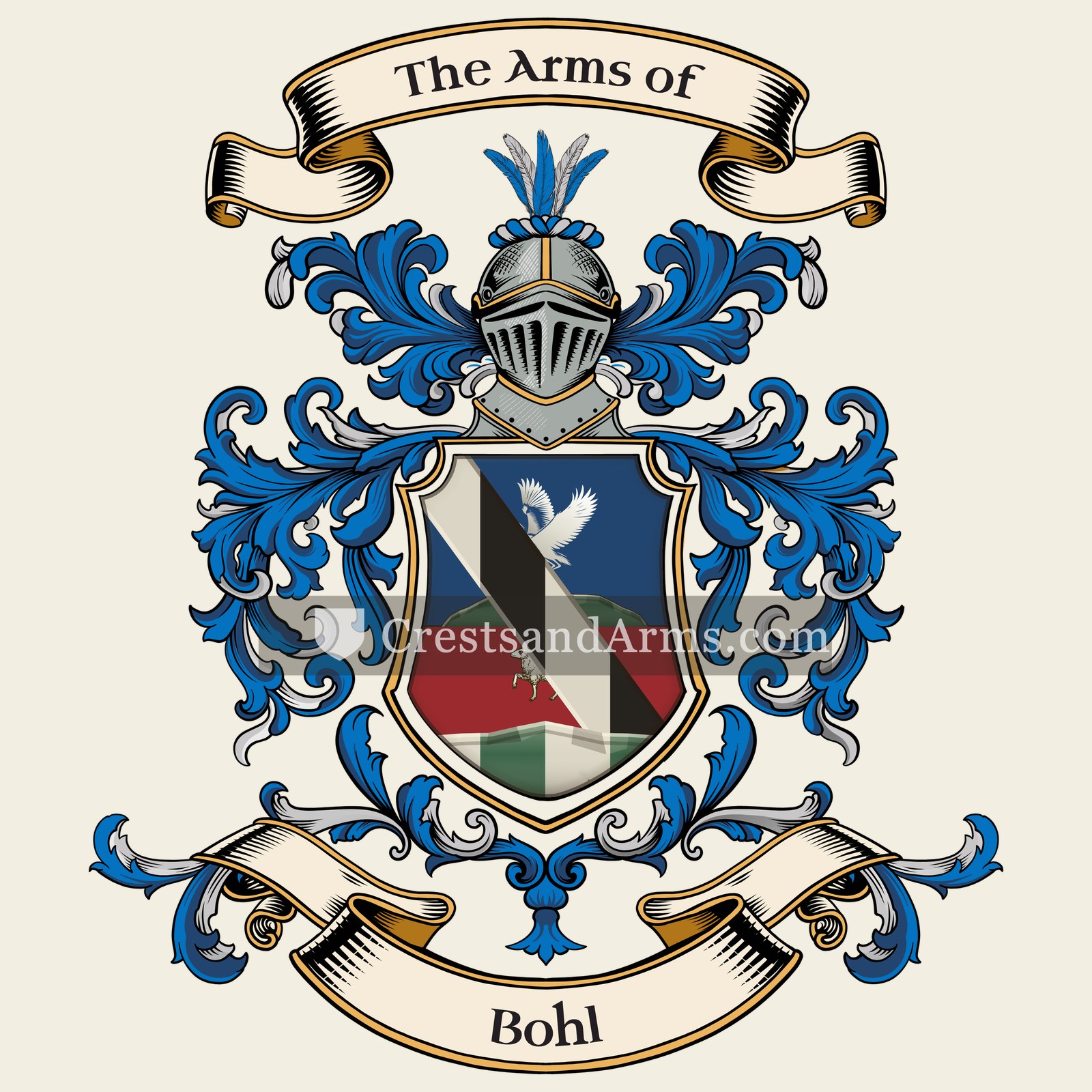
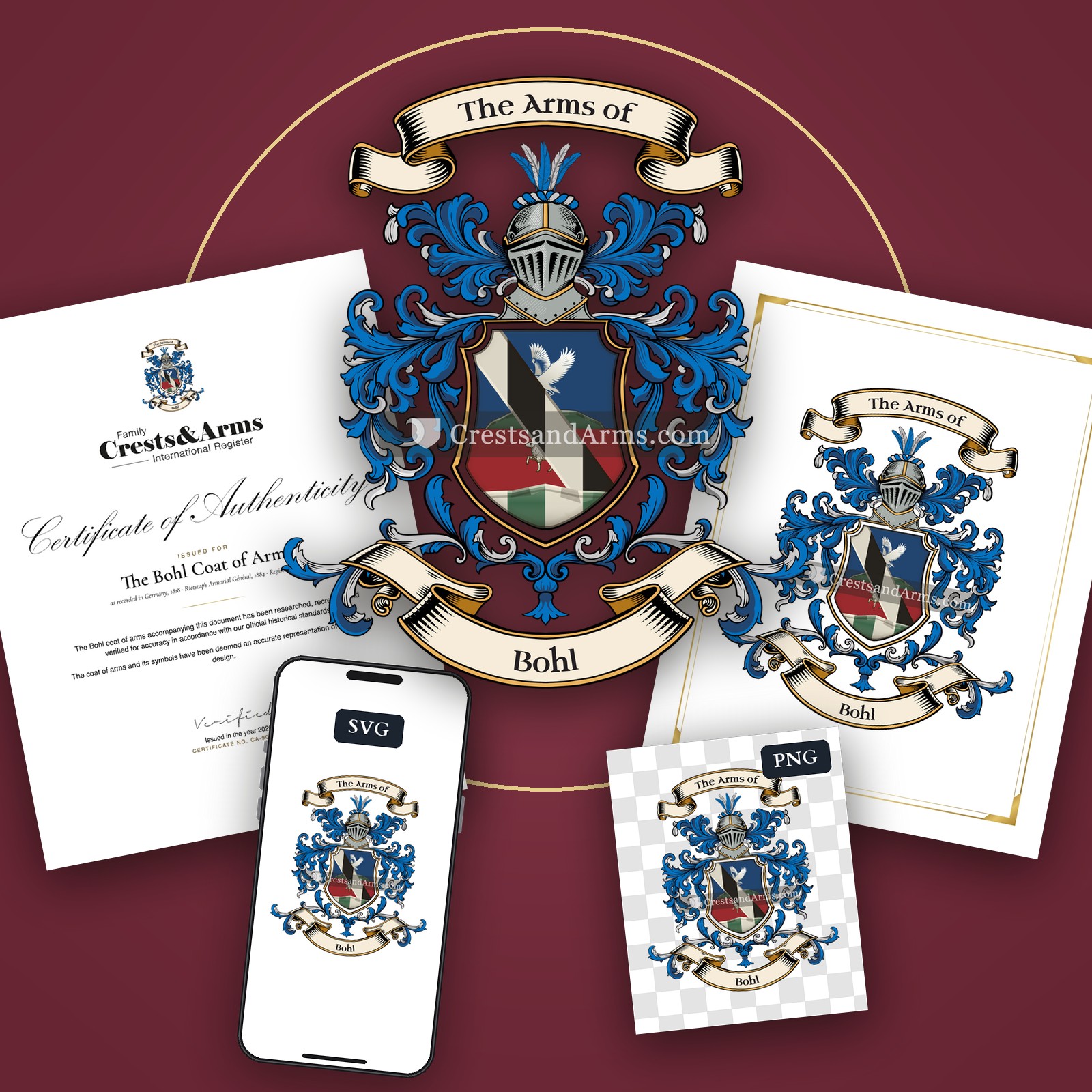
Symbols on this shield
mountThe ground held, and steadfastness upon it
bendDefence, and the scarf of a commander
heronPatience and quiet watchfulness
lambGentleness, patience and faith
Colours
Blue (Azure)Means: Loyalty and truth
Red (Gules)Means: Military strength
Black (Sable)Means: Constancy
Silver (Argent)Means: Peace and sincerity
Green (Vert)Means: Hope
Historical info
Source
J. B. Rietstap, Armorial Général, Gouda: G. B. van Goor Zonen, 1884–87
Blazon (the actual original written record)
“Coupé: au 1 parti: a. d'azur à la grue cont. avec sa vigilance d'arg., posée sur un tertre de sin.; b. de gu. à l'agneau pascal d'arg., pass. sur une terrasse de sin.; au 2 d'or à la bande de sa., bordée d'arg., ch.”
MecklenburgMecklenburg, c. 1818
Digital archive packCoat of arms PNG, gold border print PDF, vector SVG and the certificate of authenticity. Sent to your email in minutes.
Map of Germany showing where the Bohl arms are recorded
The Bohl arms were recorded in Mecklenburg, c. 1818.
Mecklenburg was farming country in the north of Germany, held by a small number of families who kept their estates for generations. Owning land was what entitled a family to arms, so a great many Mecklenburg names ended up in the registers.
This is where the arms were entered in the register. Families often moved to other parts of the country, so the same name can turn up in more than one region.
The body that granted and recorded arms in Germany in this period.
Frederick William III of Prussia
Sovereign of the period
Frederick William III of Prussia
1797–1840
Reigning in Switzerland when the Bohl arms are first recorded.
How Arms Worked in Germany
Prussian heraldry was strictly tied to social rank and noble status rather than being a free choice for every citizen. These symbols were treated as permanent family property that moved through the generations to all legitimate heirs. If a family branch wanted to change their design to stand out, they had to apply for official permission to alter their specific version of the shield.
Granting authority
The Prussian Heroldsamt acted as the central state office that managed and strictly controlled all noble titles and coats of arms.
How they got arms
Families usually obtained their arms through formal royal grants or by proving their long-standing noble status to the state authorities.
Where arms were recorded
All official coats of arms were kept in the rolls of the Prussian Heroldsamt, which functioned from 1706 until 1918.
The family's standing
Recorded among the armigerous families of Mecklenburg.
Origin & History of the Bohl Family in Germany
The family name Bohl has deep roots in the northern regions of Germany, particularly within the historic state of Mecklenburg. During the early nineteenth century, the name was already well-established in this area, as evidenced by records confirming family members living there by 1818. The name itself is thought to be a variation of the Middle Low German word "bole," which often referred to a wooden plank or a specific type of timber construction. This suggests that the earliest ancestors to carry the name may have been associated with forestry, carpentry, or perhaps lived near a prominent wooden structure or a boundary marked by timber. As the family grew, they became part of the social fabric of Mecklenburg, a region defined by its vast estates and agricultural traditions. By the time of the 1818 records, the Bohl family was likely integrated into the local village life, living through a period of significant social change as the region transitioned toward modern administrative systems.
Bohl Meaning & Related Branches
Root word
Bolle
A Middle High German term referring to a bulb or round object.
This name
BohlA topographic name for someone living near a rounded hill or a nickname for a stout person.
also spelled
Bohle
Bohll
Bohlle
Documented Sources
J. B. Rietstap, Armorial Général, Gouda: G. B. van Goor Zonen, 1884–87
Bahlow, Hans, Deutsches Namenlexikon: Familien- und Vornamen nach Ursprung und Sinn erklärt, 1967
Heer, Gottlieb Heinrich, Basel: Das Werden einer Stadt, 1950
Staatsarchiv Basel-Stadt, Bürgerregister der Stadt Basel
Digital archive packCoat of arms PNG, gold border print PDF, vector SVG and the certificate of authenticity. Sent to your email in minutes.


 paleMilitary strength, and a fortified defence
 griffinValour and vigilance, guarding great treasure
 paleMilitary strength, and a fortified defence
 griffinValour and vigilance, guarding great treasure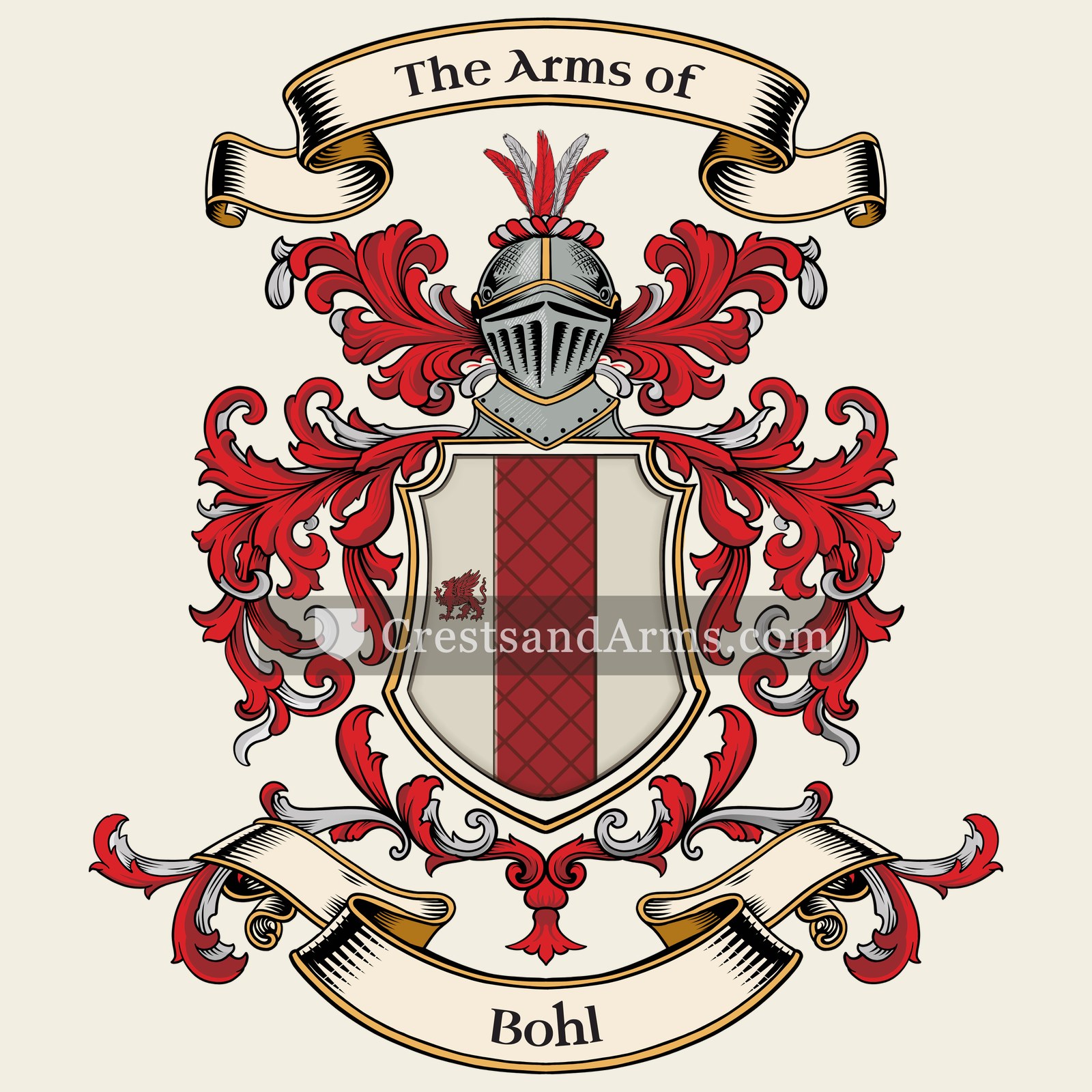

 mountThe ground held, and steadfastness upon it
 whelkThe pilgrim's shell, and safe travel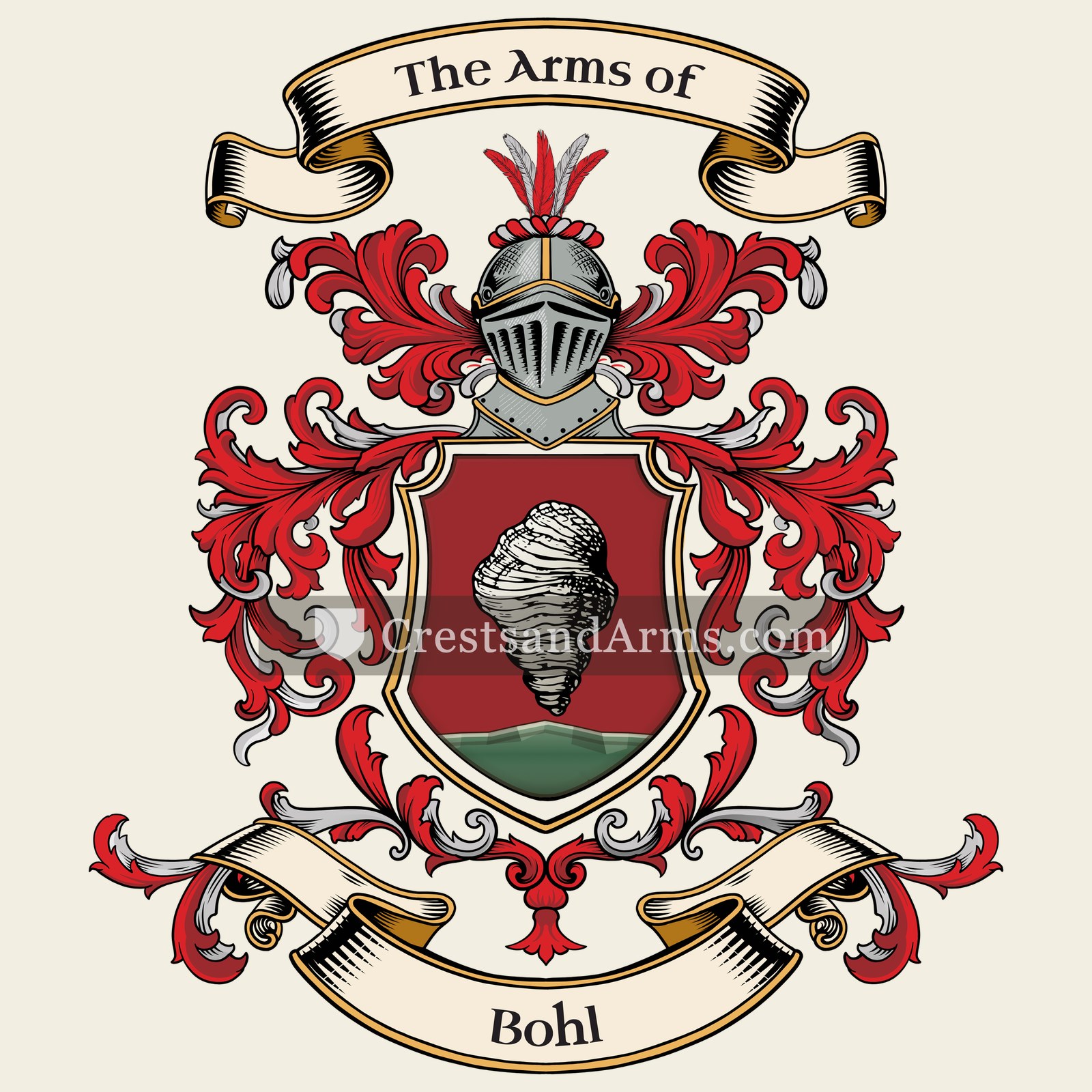


 bendDefence, and the scarf of a commander
 heronPatience and quiet watchfulness
 lambGentleness, patience and faith