Map of Netherlands showing where the Bohnen arms are recorded
The Bohnen arms were recorded in Dordrecht, c. 1815.
This is where the arms were entered in the register. Families often moved to other parts of the country, so the same name can turn up in more than one region.
Region
Dordrecht
Town
Dordrecht
First recorded
1815
Granting Authority for the Bohnen Arms
Hoge Raad van Adel
Photograph made by me · CC BY-SA 3.0
The body that granted and recorded arms in Netherlands in this period.
William I of the Netherlands
Sovereign of the period
William I of the Netherlands
1815–1840
Reigning in Netherlands when the Bohnen arms are first recorded.
How Arms Worked in Netherlands
In the Netherlands, coats of arms were often used by noble families and those who held specific public offices. These arms were passed down through the generations to legitimate descendants. Younger branches of a family usually kept the original design without needing to add special marks. This system ensured that the family identity remained clear and consistent over many years.
Granting authority
The Hoge Raad van Adel is the official body that regulates and manages noble titles and coats of arms in the Netherlands.
How they got arms
Families typically obtained their coats of arms through official royal grants or by proving their long-standing historical use of the symbols.
Where arms were recorded
Coats of arms are officially recorded in the registers held by the Hoge Raad van Adel, which began its work in 1814.
The family's standing
Recorded among the armigerous families of Netherlands.
Origin & History of the Bohnen Family in Netherlands
The family name Bohnen has deep roots in the Dutch landscape, with historical records confirming the presence of the family in the city of Dordrecht by 1815. During this era, Dordrecht served as a vital hub for trade and river transport, which likely influenced the movement and professional lives of early family members. The name itself is thought to be occupational or descriptive in origin, often linked to the cultivation or trade of beans, which were a staple crop in the fertile lowlands of the Netherlands. As the family established their lives in Dordrecht, they became part of the local urban fabric during a time of significant political transition as the Netherlands emerged as a modern kingdom. By studying the civil registers of this period, we can see how the Bohnen family integrated into the social and economic life of the region, contributing to the growth of one of the oldest cities in the country.
Meaning of the Bohnen family crest colors & symbols
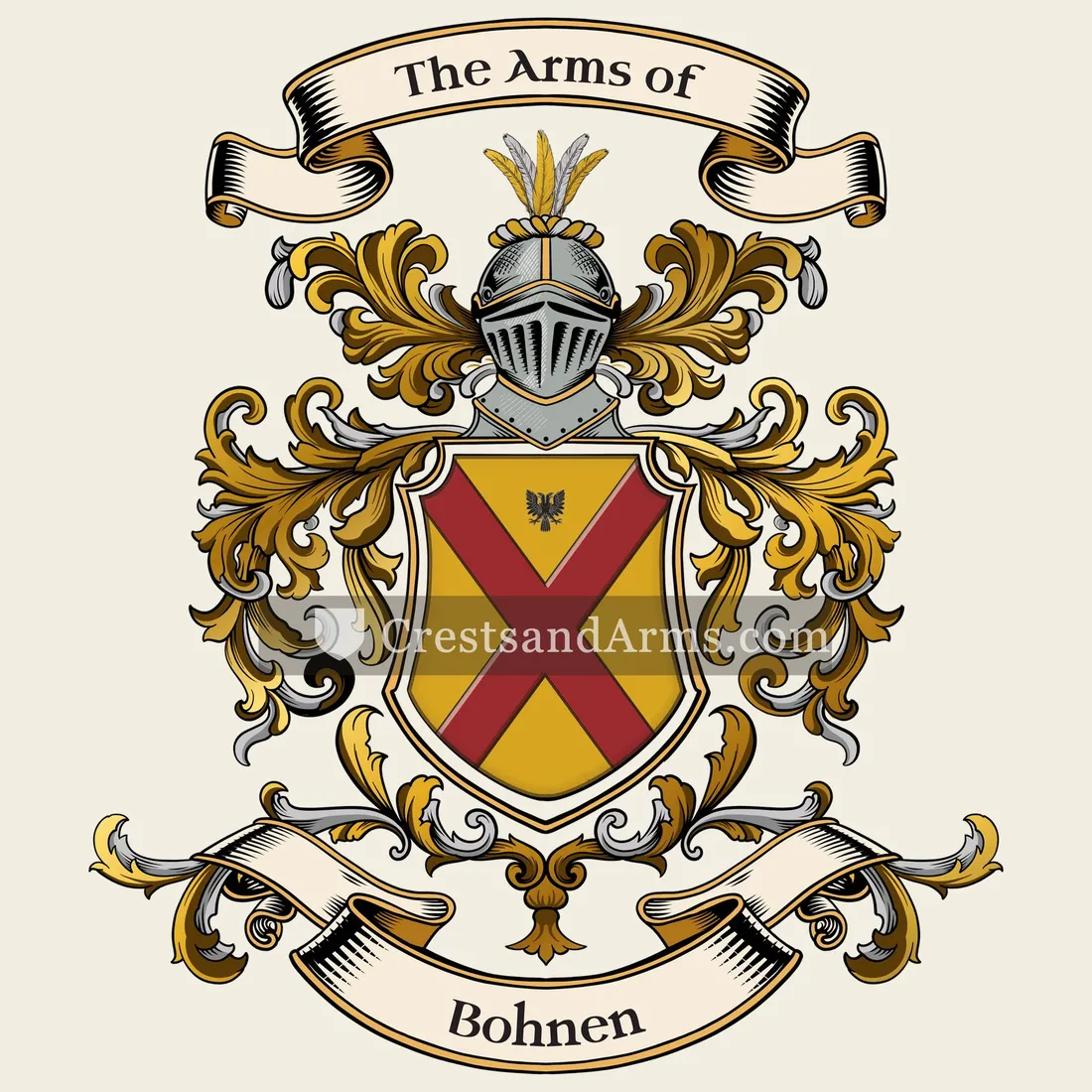
Symbols on this shield
saltireResolution, and St Andrew's cross
eagleNobility, strength and a keen mind
Colours
Gold (Or)Means: Generosity
Red (Gules)Means: Military strength
Black (Sable)Means: Constancy
Historical info
Source
J. B. Rietstap, Armorial Général, Gouda: G. B. van Goor Zonen, 1884–87
Blazon (the actual original written record)
“D'or au saut. de gu., rempli d'arg., acc. en chef d'une aigle de sa., bq. et m. de gu. C.: un buste de prêtre, hab. d'un pluvial d'or, enrichi de pierreries.”
BrabantBrabant, c. 1737
Digital archive packCoat of arms PNG, gold border print PDF, vector SVG and the certificate of authenticity. Sent to your email in minutes.
Map of Belgium showing where the Bohnen arms are recorded
The Bohnen arms were recorded in Brabant, c. 1737.
Brabant lay at the heart of the Low Countries, where the trade routes met. Its towns were wealthy and its landowners many, and both kinds of family kept arms, which is why the region is so heavily represented.
This is where the arms were entered in the register. Families often moved to other parts of the country, so the same name can turn up in more than one region.
The body that granted and recorded arms in Belgium in this period.
Charles VI, Holy Roman Emperor
Sovereign of the period
Charles VI, Holy Roman Emperor
1711–1740
Reigning in Netherlands when the Bohnen arms are first recorded.
How Arms Worked in Belgium
In Belgium, a coat of arms is considered personal property that is passed down through the male line to legitimate descendants. Families often use the same shield design across generations to show their shared heritage. If a branch of the family wants to change the design, they must apply for an official update to their specific version of the arms.
Granting authority
The Conseil héraldique is the official body that regulates and approves all coats of arms in Belgium.
How they got arms
Families obtain their coats of arms through formal royal grants or by confirming their historical right to use existing designs.
Where arms were recorded
All approved coats of arms are officially recorded in the public registers of the Conseil héraldique since 1844.
The family's standing
Recorded among the armigerous families of Brabant.
Origin & History of the Bohnen Family in Belgium
The family name Bohnen has deep roots in the historical region of Brabant, where records confirm the presence of family members as early as 1737. During this period, the name was closely tied to the agricultural traditions of the Low Countries. In the local dialect, the term "bohne" refers to the bean, suggesting that the name likely originated as a descriptive nickname for a farmer or a merchant who specialized in the cultivation and trade of legumes. As the family established itself within the towns and rural parishes of Brabant, they became part of a society defined by complex land management and local trade guilds. By the mid-18th century, the Bohnen family was well-integrated into the social fabric of the region, contributing to the local economy through their work in the fertile fields that characterized the Belgian landscape. This early history reflects a life defined by hard work and a strong connection to the land that sustained their community for generations.
Bohnen Meaning & Related Branches
Root word
boon
A Middle Dutch term referring to a bean or legume.
This name
BohnenA topographic or occupational name for someone who grew or sold beans.
also spelled
Bonen
Documented Sources
J. B. Rietstap, Armorial Général, Gouda: G. B. van Goor Zonen, 1884–87


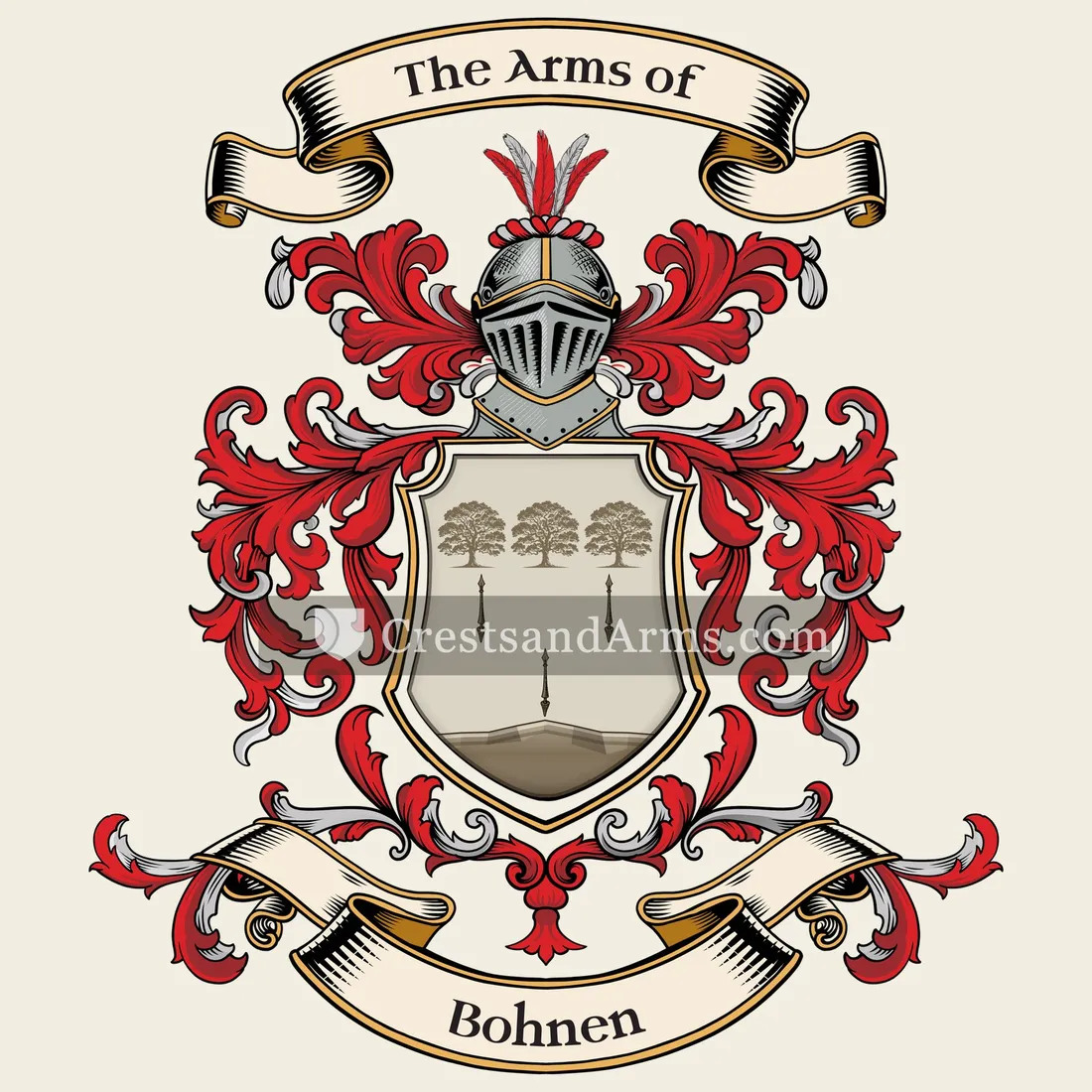
 mountThe ground held, and steadfastness upon it
 treeLife, endurance and deep roots
 lanceKnightly service and the tilt
 mountThe ground held, and steadfastness upon it
 treeLife, endurance and deep roots
 lanceKnightly service and the tilt


 saltireResolution, and St Andrew's cross
 eagleNobility, strength and a keen mind