Map of Netherlands showing where the Bohrs arms are recorded
The Bohrs arms were recorded in Amsterdam, c. 1815.
This is where the arms were entered in the register. Families often moved to other parts of the country, so the same name can turn up in more than one region.
Region
Amsterdam
Town
Amsterdam
First recorded
1815
Granting Authority for the Bohrs Arms
Hoge Raad van Adel
Photograph made by me · CC BY-SA 3.0
The body that granted and recorded arms in Netherlands in this period.
William I of the Netherlands
Sovereign of the period
William I of the Netherlands
1815–1840
Reigning in Netherlands when the Bohrs arms are first recorded.
How Arms Worked in Netherlands
In the Netherlands, coats of arms were often used by noble families and those who held specific public offices. These arms were passed down through the generations to legitimate descendants. Younger branches of a family usually kept the original design without needing to add special marks. This system ensured that the family identity remained clear and consistent over many years.
Granting authority
The Hoge Raad van Adel is the official body that regulates and manages noble titles and coats of arms in the Netherlands.
How they got arms
Families typically obtained their coats of arms through official royal grants or by proving their long-standing historical use of the symbols.
Where arms were recorded
Coats of arms are officially recorded in the registers held by the Hoge Raad van Adel, which began its work in 1814.
The family's standing
Recorded among the armigerous families of Netherlands.
Origin & History of the Bohrs Family in Netherlands
The family name Bohrs first appears in the historical records of Amsterdam during the early nineteenth century, a period defined by the city’s recovery after the Napoleonic Wars. By 1815, the name was established within the urban landscape of the Netherlands, a time when the Dutch government began formalizing civil registration and standardized naming practices for all citizens. Given the linguistic roots of the name, it likely emerged from a combination of regional Germanic influences and the specific phonetic shifts common in the Low Countries during that era. As Amsterdam transformed into a bustling center of trade and migration, the Bohrs family became part of the city’s growing middle class. They navigated the changing social structures of the newly formed United Kingdom of the Netherlands, contributing to the local economy and the evolving identity of the capital city.
Coat of Arms & Family Crest Details
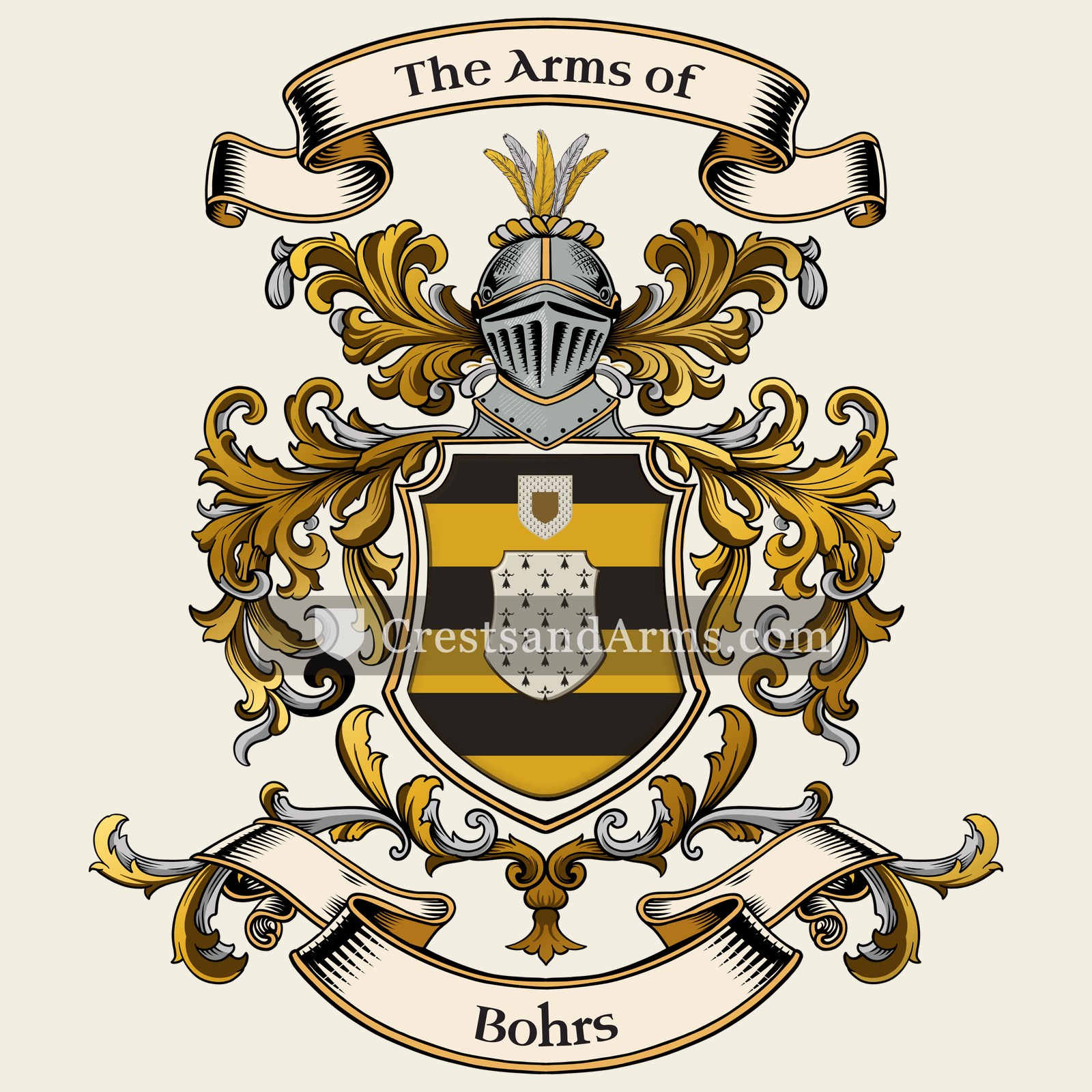
Symbols on this shield
escutcheonA shield within a shield, and a claim inherited
Colours
Gold (Or)Means: Generosity
ErmineMeans: Dignity
Black (Sable)Means: Constancy
Historical info
Source
Sir Bernard Burke, The General Armory of England, Scotland, Ireland and Wales, London: Harrison & Sons, 1884
Blazon (the actual original written record)
“Barry of six, or and sa. an inescutcheon erm”
Englandc. 1620
Digital archive packCoat of arms PNG, gold border print PDF, vector SVG and the certificate of authenticity. Sent to your email in minutes.
Map of England showing where the Bohrs arms are recorded
The Bohrs arms were recorded in England, c. 1620.
Arms such as these were typically recorded in York.
Yorkshire is the largest of the English counties, and it held more gentry families than any other. Land there was split among a great many households rather than a few, so a great many of them carried arms.
This is where the arms were entered in the register. Families often moved to other parts of the country, so the same name can turn up in more than one region.
The body that granted and recorded arms in England in this period.
James VI and I
Sovereign of the period
James VI and I
1603–1625
Reigning in Netherlands when the Bohrs arms are first recorded.
How Arms Worked in England
English heraldry allowed arms to be shared by all legitimate descendants of the original owner. These symbols were treated as personal property that moved through the generations to all children. While the eldest son kept the original design, other family members could use the same shield without needing to change it or register their own unique versions.
Granting authority
The College of Arms in London has regulated the use of coats of arms throughout England and Wales since 1484.
How they got arms
Families typically obtained their coats of arms through a formal grant from the Crown or by proving their ancient right to them.
Where arms were recorded
All official coats of arms are recorded in the registers kept at the College of Arms, which date back to the fifteenth century.
The family's standing
Recorded among the armigerous families of England.
Origin & History of the Bohrs Family in England
The family name Bohrs has roots that trace back to the historic city of York, where records confirm members of the family were living as early as 1620. During the seventeenth century, York was a bustling center of trade and religion, and families like the Bohrs were often integrated into the local merchant or craft guilds that defined the city’s economy. The name itself likely evolved from older Germanic or Northern European linguistic roots, reflecting the movement of people across the North Sea into the coastal regions of Northern England. As residents of a major administrative hub, the early Bohrs family would have navigated the social shifts of the Stuart era, living through a time of significant political change and urban growth. Their presence in the city archives suggests they were part of the steady, working population that helped maintain the infrastructure and commerce of York during a period when the city was transitioning from its medieval foundations into a more modern regional capital.
Related Branches & Arms
Root word
Bohr
Derived from the Middle Low German word for a peasant or farmer.
This name
BohrsA topographic or occupational surname referring to a person who lived or worked on a farm.
also spelled
Borse
Borss
Borsse
Documented Sources
J. B. Rietstap, Armorial Général, Gouda: G. B. van Goor Zonen, 1884–87


 boarA fierce fighter who battles to the end
 boarA fierce fighter who battles to the end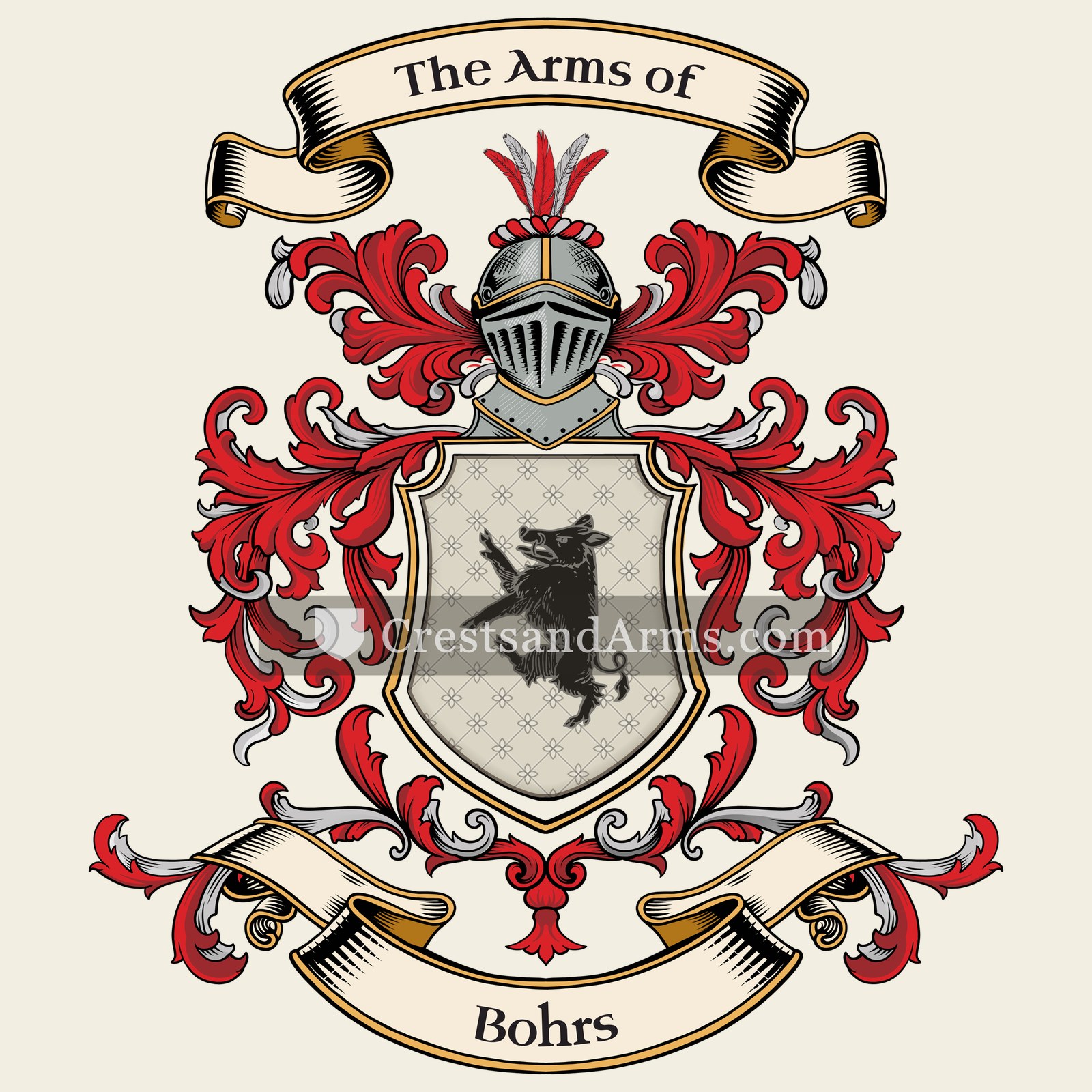


 escutcheonA shield within a shield, and a claim inherited