Map of France showing where the Boissière arms are recorded
The Boissière arms were recorded in Languedoc, c. 1474.
Languedoc stretched across the south of France, a country of small towns, vineyards and old local families. Its gentry were numerous rather than grand, and a great many of them held arms even where their estates were modest.
This is where the arms were entered in the register. Families often moved to other parts of the country, so the same name can turn up in more than one region.
The body that granted and recorded arms in France in this period.
Louis XI of France
Sovereign of the period
Louis XI of France
1461–1483
Reigning in France when the Boissière arms are first recorded.
How Arms Worked in France
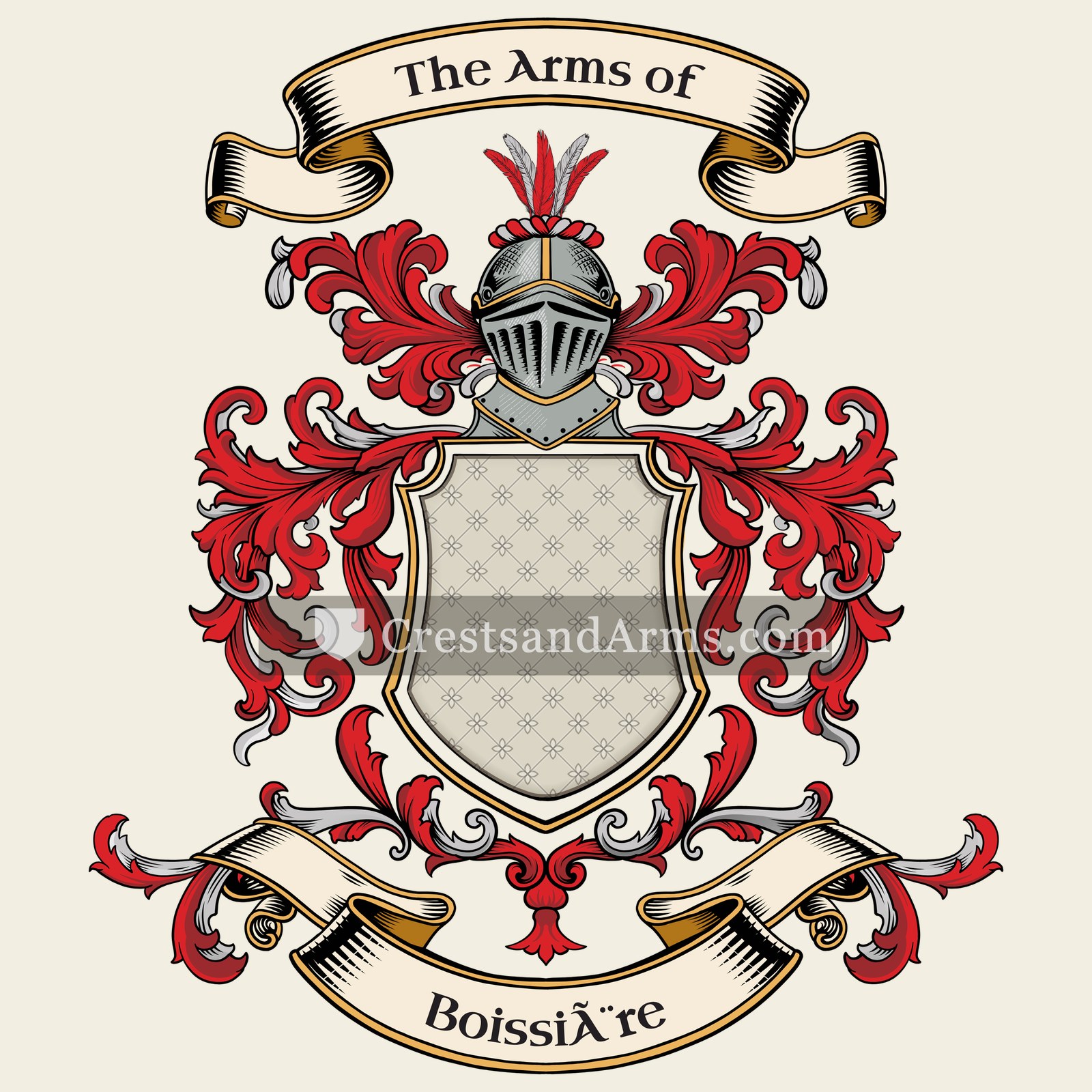
In France, a coat of arms was a mark of honor that passed down through the male line to all legitimate descendants. Families often used the same shield without changes to show their shared heritage. If a branch wanted to stand out, they could add a small mark to their shield to show their specific place in the family tree.
Granting authority
The Juge d'armes de France acted as the official authority that regulated and verified coats of arms across the country.
How they got arms
Families typically inherited their arms from ancestors, though they could also receive them through royal grants or by proving their noble status.
Where arms were recorded
Coats of arms were officially recorded in the Armorial Général de France, which began its main collection in the year 1696.
The family's standing
Recorded among the armigerous families of Languedoc.
Origin & History of the Boissière Family in France
The family name Boissière finds its roots in the historical region of Languedoc, where members of the family were documented as early as 1474. The name itself is derived from the Old French word *boissiere*, which refers to a place where boxwood trees grow. This suggests that the family likely took their name from a specific piece of land or a wooded area they inhabited or managed during the late Middle Ages. By settling in the Languedoc region, these early ancestors became part of a complex social landscape defined by rural agriculture and local governance. Over time, the name transitioned from a simple geographic descriptor into a formal surname that identified the family as they moved through the social and economic structures of southern France.
Boissière Meaning & Related Branches
Root word
Buxus
A Latin term referring to the boxwood evergreen shrub or tree.
This name
BoissièreA topographic name for someone who lived near a grove or thicket of boxwood trees.
also spelled
Bwaseeyair
Related arms
Lattre de Tassignysimilar arms
Pleuxsimilar arms
Boessièrevariant spelling
Boissiervariant spelling
Documented Sources
J. B. Rietstap, Armorial Général, Gouda: G. B. van Goor Zonen, 1884–87
Archives départementales de l'Hérault, Série E, Inventaire sommaire des archives civiles antérieures à 1790, 1905
Boutaric, Edgar, Actes du Parlement de Paris, 1863
Lauriol, Claude, Languedoc et Roussillon au Moyen Âge, 1982
Digital archive packCoat of arms PNG, gold border print PDF, vector SVG and the certificate of authenticity. Sent to your email in minutes.