Map of Switzerland showing where the Bôle arms are recorded
The Bôle arms were recorded in Neufchâtel, c. 1745.
This is where the arms were entered in the register. Families often moved to other parts of the country, so the same name can turn up in more than one region.
The body that granted and recorded arms in Switzerland in this period.
How Arms Worked in Switzerland
In Switzerland, coats of arms were not restricted to the nobility and were often adopted by common citizens and families. These symbols were passed down through generations to show family identity. When branches of a family grew, they often changed small details of the design to distinguish their own line from the original group.
Granting authority
Cantonal and civic authorities managed the use of coats of arms within their specific regions and local jurisdictions.
How they got arms
Families typically assumed their own coats of arms based on local custom rather than receiving them from a central monarch.
Where arms were recorded
Arms were recorded in various cantonal and civic registers starting from the fourteenth century throughout the Swiss region.
The family's standing
Recorded among the armigerous families of Switzerland.
Origin & History of the Bôle Family in Switzerland
The family name Bôle traces its deep roots to the mountainous region of Neuchâtel in Switzerland. By the year 1745, records confirm that members of the family were well-established residents within this area. The name itself is likely linked to the local geography, as the word "bôle" historically refers to a small, rounded hill or a specific type of depression in the landscape common to the Jura Mountains. Early generations of the family were deeply connected to the rural economy of the region, often working as skilled craftsmen or farmers who navigated the challenging terrain of the Swiss highlands. As the family grew, they became integrated into the social and civic life of their local parishes, leaving behind a legacy of endurance and adaptation that defined life in the Neuchâtel mountains during the eighteenth century.
Bôle Meaning & Related Branches
Root word
Bolla
A Latin term referring to a rounded knob, seal, or bubble.
This name
BôleDerived from a topographic descriptor for someone living near a rounded hill or a bubble-like spring.
also spelled
Boll
Boole
Related arms
Trouilleur de la Rochettesame arms
Bollvariant spelling
Documented Sources
J. B. Rietstap, Armorial Général, Gouda: G. B. van Goor Zonen, 1884–87
Jean-Pierre Jelmini, Neuchâtel 1707-2007: 300 ans de vie neuchâteloise, 2007
Archives de l'État de Neuchâtel, Fonds des registres paroissiaux de Neuchâtel, 1745
Digital archive packCoat of arms PNG, gold border print PDF, vector SVG and the certificate of authenticity. Sent to your email in minutes.


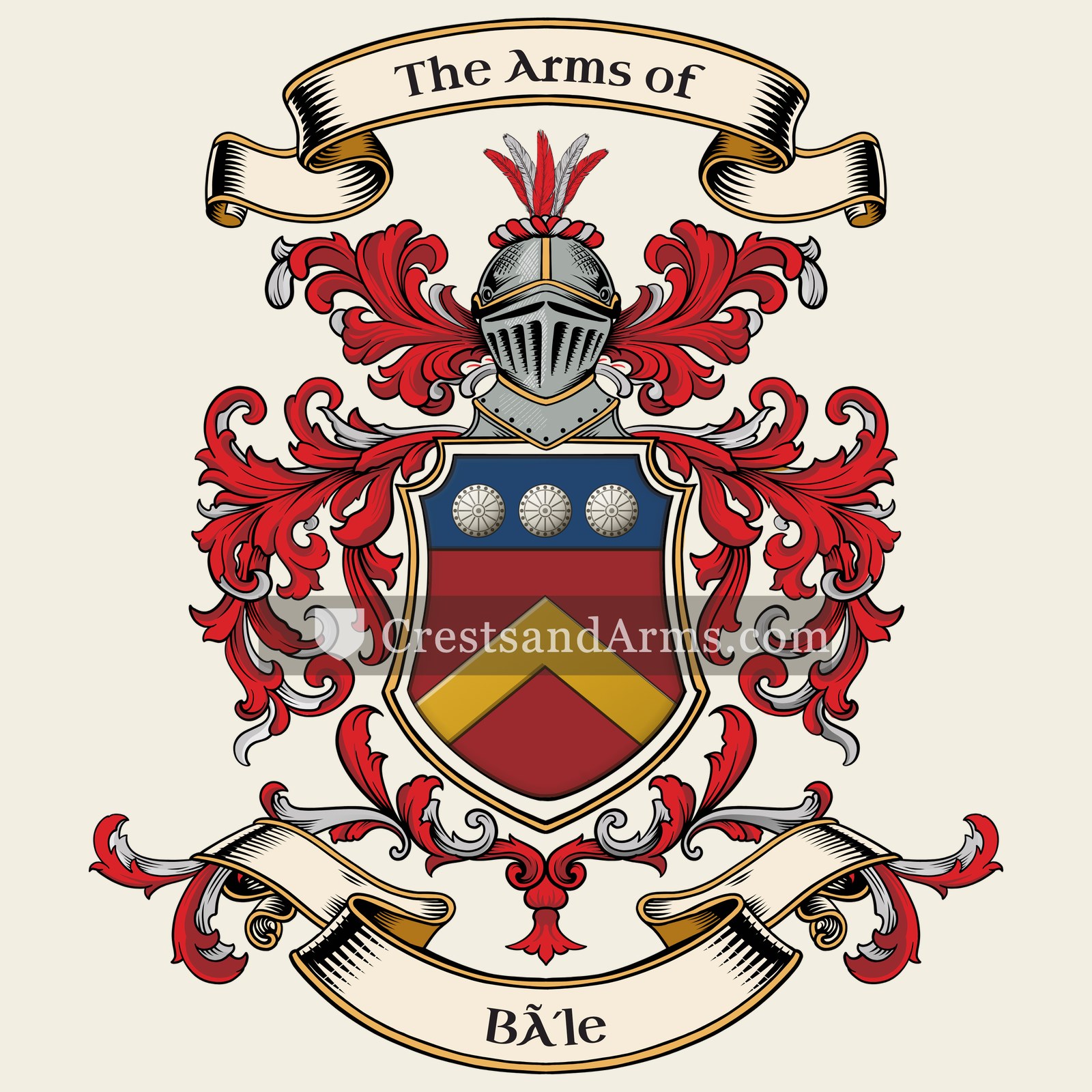
 chevronProtection, and faithful service completed
 chiefAuthority, wisdom and dominion
 roundelA coin, and one who has been to the crusades
 chevronProtection, and faithful service completed
 chiefAuthority, wisdom and dominion
 roundelA coin, and one who has been to the crusades