Map of Netherlands showing where the Bon arms are recorded
The Bon arms were recorded in Amsterdam, c. 1815.
This is where the arms were entered in the register. Families often moved to other parts of the country, so the same name can turn up in more than one region.
Region
Amsterdam
Town
Amsterdam
First recorded
1815
Granting Authority for the Bon Arms
Hoge Raad van Adel
Photograph made by me · CC BY-SA 3.0
The body that granted and recorded arms in Netherlands in this period.
William I of the Netherlands
Sovereign of the period
William I of the Netherlands
1815–1840
Reigning in Netherlands when the Bon arms are first recorded.
How Arms Worked in Netherlands
In the Netherlands, coats of arms were often used by noble families and those who held specific public offices. These arms were passed down through the generations to legitimate descendants. Younger branches of a family usually kept the original design without needing to add special marks. This system ensured that the family identity remained clear and consistent over many years.
Granting authority
The Hoge Raad van Adel is the official body that regulates and manages noble titles and coats of arms in the Netherlands.
How they got arms
Families typically obtained their coats of arms through official royal grants or by proving their long-standing historical use of the symbols.
Where arms were recorded
Coats of arms are officially recorded in the registers held by the Hoge Raad van Adel, which began its work in 1814.
The family's standing
Recorded among the armigerous families of Netherlands.
Origin & History of the Bon Family in Netherlands
The surname Bon has deep roots in the Netherlands, where it functioned as a descriptive name often linked to the French word for good. By the early 19th century, members of the Bon family were well-established residents of Amsterdam. During this period, the city was transitioning from the chaos of the Napoleonic era into a new age of economic growth under the United Kingdom of the Netherlands. Families like the Bons were part of the urban fabric that helped rebuild the city’s trade and social life after years of foreign occupation. Records from 1815 show that these individuals were integrated into the local community, often working in the skilled trades or merchant sectors that defined Amsterdam’s identity. As the Dutch government began to standardize civil records during this time, the name became permanently fixed in the official registers of the city, marking the family as a stable part of the Dutch population during the birth of the modern kingdom.
Coat of Arms & Family Crest Details
Symbols on this shield
swordJustice, and military honour
mulletThe third son, and a divine quality from above
Colours
Red (Gules)Means: Military strength
Silver (Argent)Means: Peace and sincerity
Gold (Or)Means: Generosity
Historical info
Source
J. B. Rietstap, Armorial Général, Gouda: G. B. van Goor Zonen, 1884–87
Blazon (the actual original written record)
“De gu. à une serpette d'arg., en pal, acc. en chef de deux étoiles d'or.”
LorraineLorraine, c. 1556
Digital archive packCoat of arms PNG, gold border print PDF, vector SVG and the certificate of authenticity. Sent to your email in minutes.
Map of France showing where the Bon arms are recorded
The Bon arms were recorded in Lorraine, c. 1556.
Lorraine sat on the border between France and the German lands, and border country bred soldiers. Families here held small estates and served in arms, and a fighting man was exactly the sort who carried a shield of his own.
This is where the arms were entered in the register. Families often moved to other parts of the country, so the same name can turn up in more than one region.
The body that granted and recorded arms in France in this period.
Henry II of France
Sovereign of the period
Henry II of France
1547–1559
Reigning in Netherlands when the Bon arms are first recorded.
How Arms Worked in France
In France, a coat of arms was a mark of honor that passed down through the male line to all legitimate descendants. Families often used the same shield without changes to show their shared heritage. If a branch wanted to stand out, they could add a small mark to their shield to show their specific place in the family tree.
Granting authority
The Juge d'armes de France acted as the official authority that regulated and verified coats of arms across the country.
How they got arms
Families typically inherited their arms from ancestors, though they could also receive them through royal grants or by proving their noble status.
Where arms were recorded
Coats of arms were officially recorded in the Armorial Général de France, which began its main collection in the year 1696.
The family's standing
Recorded among the armigerous families of Lorraine.
Origin & History of the Bon Family in France
The surname Bon has deep roots in the historical region of Lorraine, where members of the family were documented as early as 1556. During this period, Lorraine was a vibrant crossroads of culture and trade situated between the French Kingdom and the Holy Roman Empire. Families with this name often lived in rural communities or small towns, where they likely worked as farmers, craftsmen, or local officials. The name itself is derived from the French word for good, which suggests that it may have originally functioned as a nickname for a person known for their kind nature or positive reputation. As the family grew, they became part of the social fabric of the region, navigating the complex political shifts and religious changes that defined life in eastern France during the sixteenth century. By settling in Lorraine, these early ancestors established a legacy that persisted through generations of regional development and social change.
Coat of Arms & Family Crest Details
Symbols on this shield
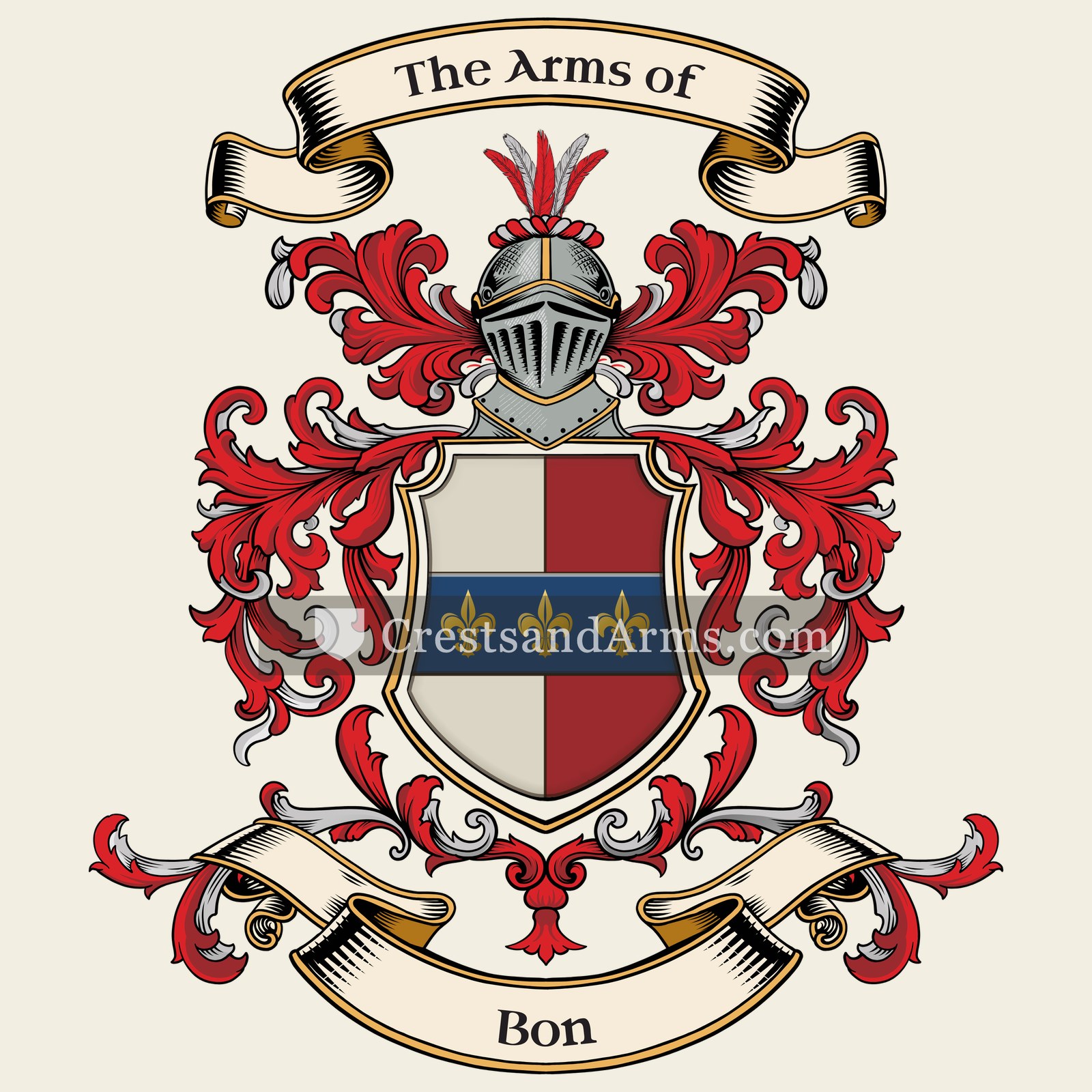
fessThe military belt, and readiness to serve
fleur de lisPurity, light, and the sixth son
Colours
Silver (Argent)Means: Peace and sincerity
Red (Gules)Means: Military strength
Blue (Azure)Means: Loyalty and truth
Gold (Or)Means: Generosity
Historical info
Source
J. B. Rietstap, Armorial Général, Gouda: G. B. van Goor Zonen, 1884–87
Blazon (the actual original written record)
“Parti d'arg. et de gu. [Une autre branche porte: Parti de gu. et d'arg., le gu. ch. d'une fasce d'azur surch. de trois fleurs-de-lis d'or.]”
VeniceVenice, c. 1775
Digital archive packCoat of arms PNG, gold border print PDF, vector SVG and the certificate of authenticity. Sent to your email in minutes.
Map of Italy showing where the Bon arms are recorded
The Bon arms were recorded in Venice, c. 1775.
Venice ran on trade, and its great families were merchants before they were anything else. The city kept a formal list of its noble houses, and a name on that list carried arms as a matter of record.
This is where the arms were entered in the register. Families often moved to other parts of the country, so the same name can turn up in more than one region.
The body that granted and recorded arms in Italy in this period.
Alvise Giovanni Mocenigo
Sovereign of the period
Alvise Giovanni Mocenigo
1763–1778
Reigning in Netherlands when the Bon arms are first recorded.
How Arms Worked in Italy
In the Italian states, coats of arms were often used by noble families to show their status and history. These symbols were passed down through the generations to all legitimate male descendants. Younger branches of a family usually kept the original design but sometimes added small changes to distinguish their specific line from the main branch.
Granting authority
Various local rulers and city governments controlled the use of coats of arms across the different Italian states.
How they got arms
Families often assumed their own arms or received them as official grants from local lords, popes, or city councils.
Where arms were recorded
Arms were recorded in local city archives or private family books rather than in one single national register.
The family's standing
Recorded among the armigerous families of Venice.
Origin & History of the Bon Family in Italy
The Bon family holds a significant place in the long history of Venice, where they were recognized as one of the original patrician families of the city. Historical records indicate that the family was part of the Venetian nobility as early as the tenth century, long before their presence was documented in the late 1700s. They were deeply integrated into the political and social life of the Venetian Republic, often serving in important administrative roles and contributing to the city's maritime success. Over many centuries, the family established themselves as influential landowners and merchants who helped shape the unique culture of the lagoon. By the time the family was active in the late eighteenth century, they were already part of a multi-generational legacy that had witnessed the rise and eventual transformation of the Venetian state. Their name remains tied to the architectural and historical fabric of Venice, reflecting a deep connection to the city's development over nearly a millennium.
Bon Meaning & Related Branches
Root word
Bonus
Latin term meaning good, virtuous, or excellent.
This name
BonA descriptive surname indicating a person of good character or high standing.
also spelled
Bonn
Bone
Boone
Related arms
St.-Andrésimilar arms
Documented Sources
J. B. Rietstap, Armorial Général, Gouda: G. B. van Goor Zonen, 1884–87
Stadsarchief Amsterdam, Bevolkingsregister van Amsterdam (1815)
Nationaal Archief, Burgerlijke Stand in Nederland (1811–1815)
Huizinga, A., Encyclopedie van namen (1955)
Van der Schaar, J., Woordenboek van voornamen (1964)
Digital archive packCoat of arms PNG, gold border print PDF, vector SVG and the certificate of authenticity. Sent to your email in minutes.


 chevronProtection, and faithful service completed
 crescentHonour by the sovereign, and the second son
 sunGlory, splendour and the source of life
 fleur de lisPurity, light, and the sixth son
 chevronProtection, and faithful service completed
 crescentHonour by the sovereign, and the second son
 sunGlory, splendour and the source of life
 fleur de lisPurity, light, and the sixth son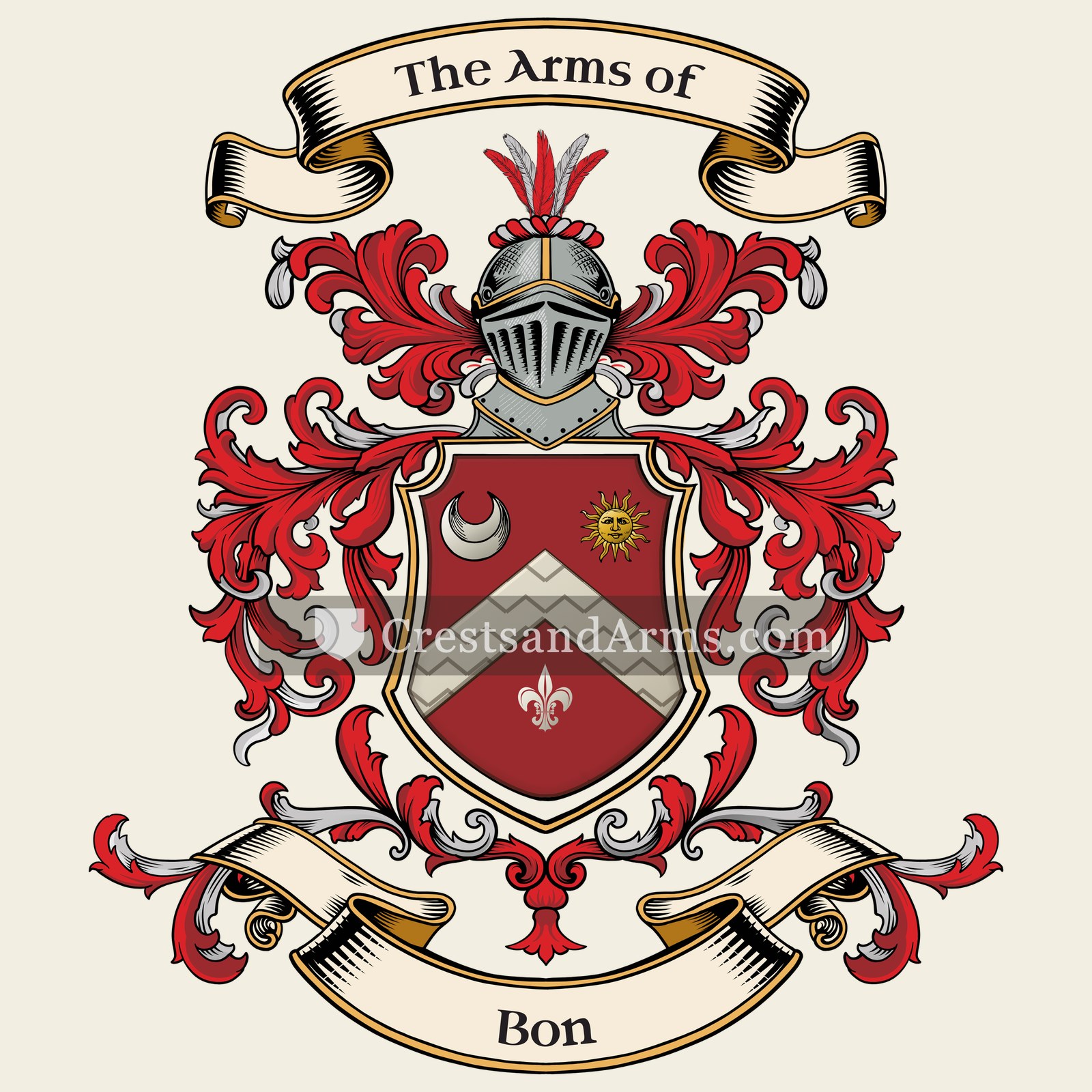


 swordJustice, and military honour
 mulletThe third son, and a divine quality from above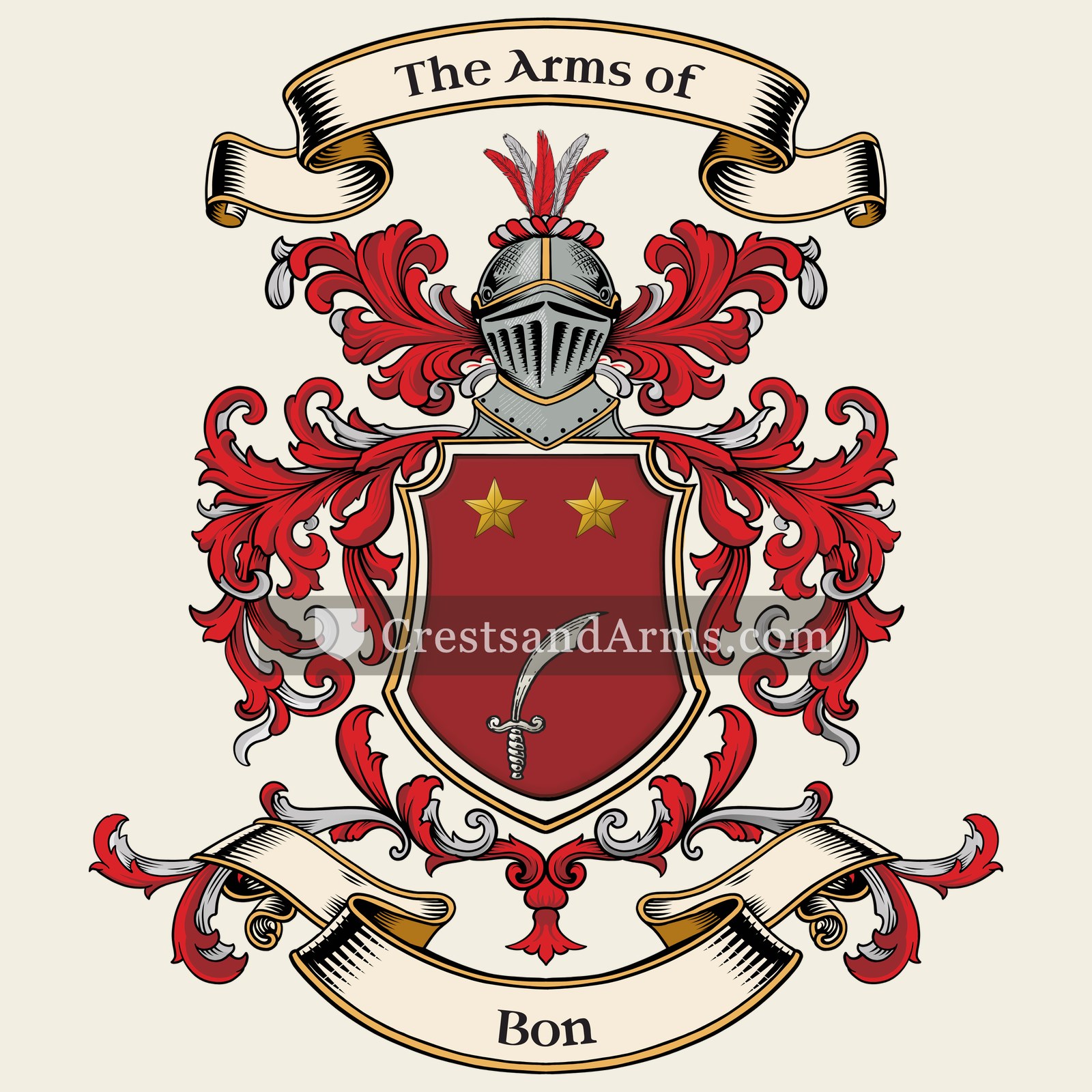


 fessThe military belt, and readiness to serve