Map of Netherlands showing where the Boner arms are recorded
The Boner arms were recorded in Netherlands, c. 1815.
Arms such as these were typically recorded in Friesland.
Friesland was low, wet country on the northern coast of the Netherlands, farmed by families who had held the same land for centuries. Free landholders were unusually common there, and a free landholder could carry arms.
This is where the arms were entered in the register. Families often moved to other parts of the country, so the same name can turn up in more than one region.
Region
Friesland
First recorded
1815
Granting Authority for the Boner Arms
Hoge Raad van Adel
Photograph made by me · CC BY-SA 3.0
The body that granted and recorded arms in Netherlands in this period.
William I of the Netherlands
Sovereign of the period
William I of the Netherlands
1815–1840
Reigning in Netherlands when the Boner arms are first recorded.
How Arms Worked in Netherlands
In the Netherlands, coats of arms were often used by noble families and those who held specific public offices. These arms were passed down through the generations to legitimate descendants. Younger branches of a family usually kept the original design without needing to add special marks. This system ensured that the family identity remained clear and consistent over many years.
Granting authority
The Hoge Raad van Adel is the official body that regulates and manages noble titles and coats of arms in the Netherlands.
How they got arms
Families typically obtained their coats of arms through official royal grants or by proving their long-standing historical use of the symbols.
Where arms were recorded
Coats of arms are officially recorded in the registers held by the Hoge Raad van Adel, which began its work in 1814.
The family's standing
Recorded among the armigerous families of Netherlands.
Origin & History of the Boner Family in Netherlands
The family name Boner has roots that trace back to the northern region of the Netherlands known as Friesland. By the early nineteenth century, records confirm that members of the family were established residents in this coastal area. The name itself likely originated as a descriptive term or a nickname used to identify a person based on their character or physical traits in the local Frisian dialect. During this period, the Netherlands underwent significant changes in how citizens registered their surnames due to new government requirements for civil documentation. Families in Friesland often lived in close-knit agricultural communities, and the Boner name became part of the local social fabric as these individuals participated in the trade and farming activities common to the region. As the family grew, they contributed to the unique cultural identity of the Frisian people, maintaining their presence in the province as the nation transitioned into the modern era.
Coat of Arms & Family Crest Details
Symbols on this shield
fleur de lisPurity, light, and the sixth son
Colours
Black (Sable)Means: Constancy
Silver (Argent)Means: Peace and sincerity
Historical info
Source
J. B. Rietstap, Armorial Général, Gouda: G. B. van Goor Zonen, 1884–87
Blazon (the actual original written record)
“Parti de sa. et d'arg.; à une fleur-de-lis de l'un en l'autre.”
SilesiaSilesia, c. 1670
Digital archive packCoat of arms PNG, gold border print PDF, vector SVG and the certificate of authenticity. Sent to your email in minutes.
Map of Germany showing where the Boner arms are recorded
The Boner arms were recorded in Silesia, c. 1670.
Silesia was farming country in the east of the German lands, held in large estates by families who stayed put for generations. Owning land was what entitled a family to arms, so the region fills a good deal of the register.
This is where the arms were entered in the register. Families often moved to other parts of the country, so the same name can turn up in more than one region.
The body that granted and recorded arms in Germany in this period.
Leopold I, Holy Roman Emperor
Sovereign of the period
Leopold I, Holy Roman Emperor
1658–1705
Reigning in Netherlands when the Boner arms are first recorded.
How Arms Worked in Germany
In the Holy Roman Empire, coats of arms were often granted to individuals by the Emperor or his representatives. These arms were then passed down through the generations to all legitimate descendants of the original holder. Younger branches of a family usually kept the same shield design without needing to change it, as the arms belonged to the entire lineage.
Granting authority
The Holy Roman Emperor held the sole power to grant new coats of arms throughout his vast imperial territories.
How they got arms
Families typically obtained their coats of arms through a formal imperial grant or by proving their noble status to the authorities.
Where arms were recorded
These grants were officially recorded in the Imperial Chancery registers, which began keeping formal records of such honors during the Middle Ages.
The family's standing
Recorded among the armigerous families of Silesia.
Origin & History of the Boner Family in Germany
The family name Boner has deep roots in the historical region of Silesia, where records confirm members of the family were living as early as 1670. During this period, Silesia was a crossroads of culture and trade, often influenced by the shifting borders of the Holy Roman Empire and the Kingdom of Poland. The name itself likely originated as a descriptive term or a nickname, which was a common practice for naming families in medieval German-speaking lands. As the family established itself in the region, they became part of the local social fabric, likely working in trades or agriculture that supported the growing towns of the era. By the late 17th century, the Boner family was already well-integrated into the local community, reflecting the broader migration and settlement patterns that defined the German territories of the time.
Coat of Arms & Family Crest Details
Symbols on this shield
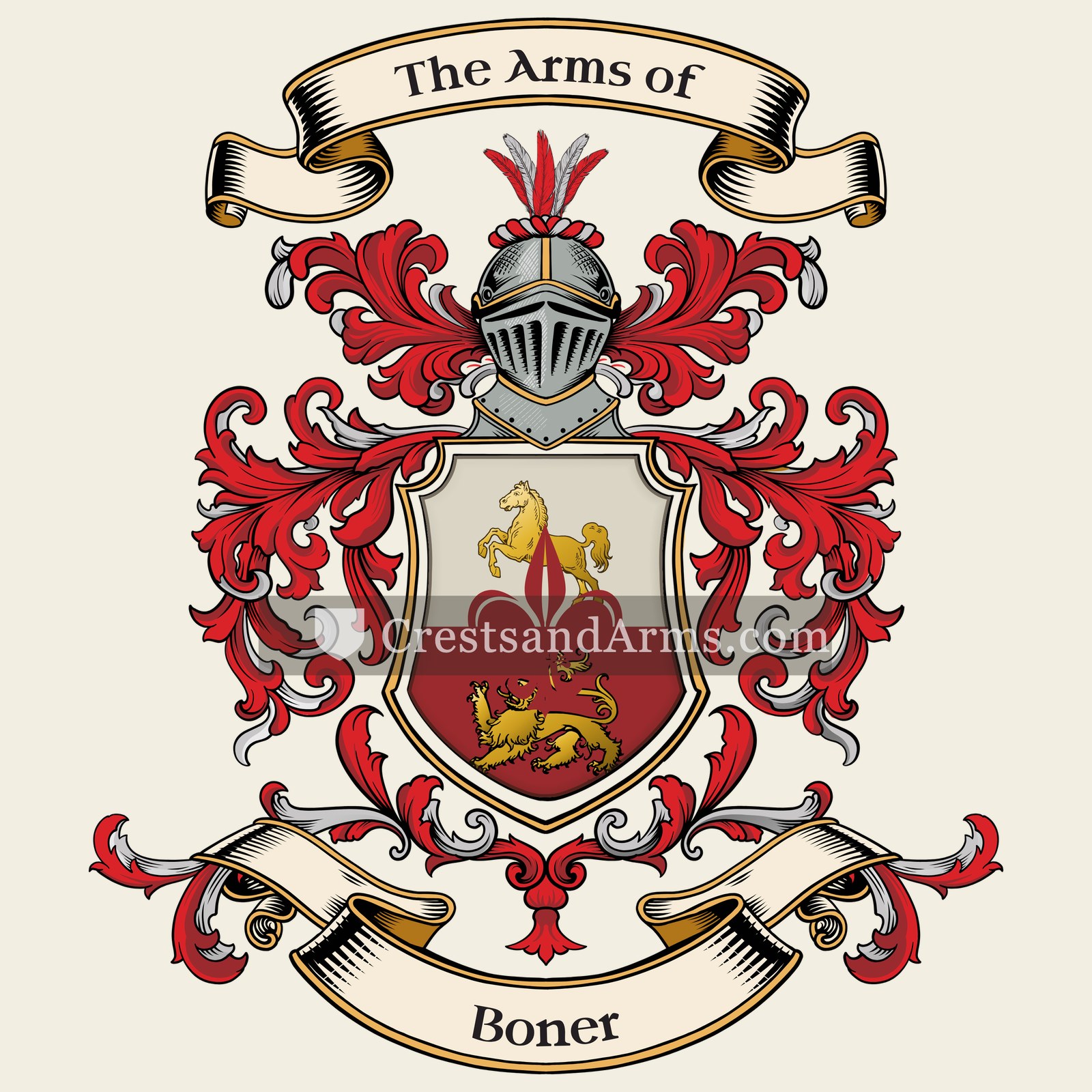
fleur de lisPurity, light, and the sixth son
horseReadiness to serve king and country
lionCourage, strength and royalty
Colours
Silver (Argent)Means: Peace and sincerity
Red (Gules)Means: Military strength
Gold (Or)Means: Generosity
Historical info
Source
J. B. Rietstap, Armorial Général, Gouda: G. B. van Goor Zonen, 1884–87
Blazon (the actual original written record)
“Coupé: au 1 d'arg. à un âne naiss. d'or, mouv. du coupé, embrassant une colonne du même; au 2 parti, de gu. à un lion naiss. d'or, mouv. du parti, et d'azur à une demi-fleur-de-lis d'arg., mouv. du parti. C.: les meubles du 2. L.: à dextre d'or et de gu., à sen. d'or et d'azur.”
SwitzerlandSoleure, c. 1745
Digital archive packCoat of arms PNG, gold border print PDF, vector SVG and the certificate of authenticity. Sent to your email in minutes.
Map of Switzerland showing where the Boner arms are recorded
The Boner arms were recorded in Soleure, c. 1745.
This is where the arms were entered in the register. Families often moved to other parts of the country, so the same name can turn up in more than one region.
The body that granted and recorded arms in Switzerland in this period.
How Arms Worked in Switzerland
In Switzerland, coats of arms were not restricted to the nobility and were often adopted by common citizens and families. These symbols were passed down through generations to show family identity. When branches of a family grew, they often changed small details of the design to distinguish their own line from the original group.
Granting authority
Cantonal and civic authorities managed the use of coats of arms within their specific regions and local jurisdictions.
How they got arms
Families typically assumed their own coats of arms based on local custom rather than receiving them from a central monarch.
Where arms were recorded
Arms were recorded in various cantonal and civic registers starting from the fourteenth century throughout the Swiss region.
The family's standing
Recorded among the armigerous families of Switzerland.
Origin & History of the Boner Family in Switzerland
The family name Boner has deep roots in the Swiss region of Soleure, where members of the family were documented as early as 1745. The name itself is likely derived from the Middle High German word "boner," which historically referred to a person who polished or smoothed surfaces, such as a floor polisher or a worker in a trade involving fine finishing. In the social structure of 18th-century Switzerland, families like the Boners were often part of the local artisan or burgher classes that helped maintain the stability of the cantons. By settling in Soleure, the family became part of a long tradition of Swiss citizens who contributed to the local economy and civic life during a period of significant regional development. Their presence in the official records of the time indicates that they were recognized members of the community who participated in the legal and social systems of the Old Swiss Confederacy.
Boner Meaning & Related Branches
Root word
Bona
Latin term meaning good, virtuous, or honest.
This name
BonerAn occupational or descriptive surname referring to a good or honest person.
also spelled
Bonner
Bonar
Related arms
Hoogmade (van) - Leydesame arms
Bonarvariant spelling
Bonorvariant spelling
Salis-Seewis-Grüschrecorded with Boner, same area
Documented Sources
J. B. Rietstap, Armorial Général, Gouda: G. B. van Goor Zonen, 1884–87
Tresoar, Bevolkingsregister van Friesland (1811–1825)
Meertens Instituut, Nederlandse Familienamenbank (2023)
Centraal Bureau voor Genealogie, Burgerlijke Stand van Friesland (1811–1900)
Digital archive packCoat of arms PNG, gold border print PDF, vector SVG and the certificate of authenticity. Sent to your email in minutes.


 fessThe military belt, and readiness to serve
 martletA younger son, who must win his own land
 fessThe military belt, and readiness to serve
 martletA younger son, who must win his own land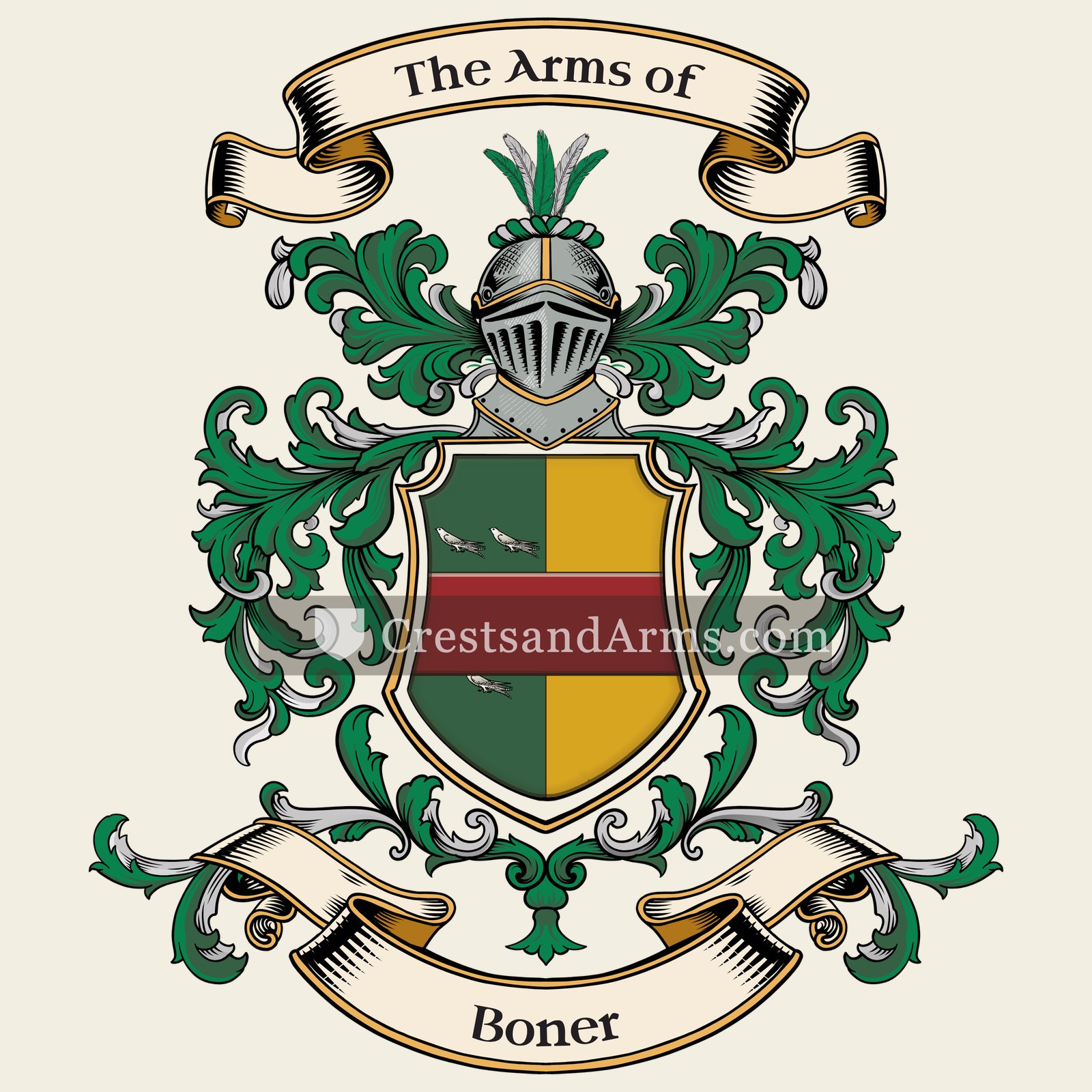


 fleur de lisPurity, light, and the sixth son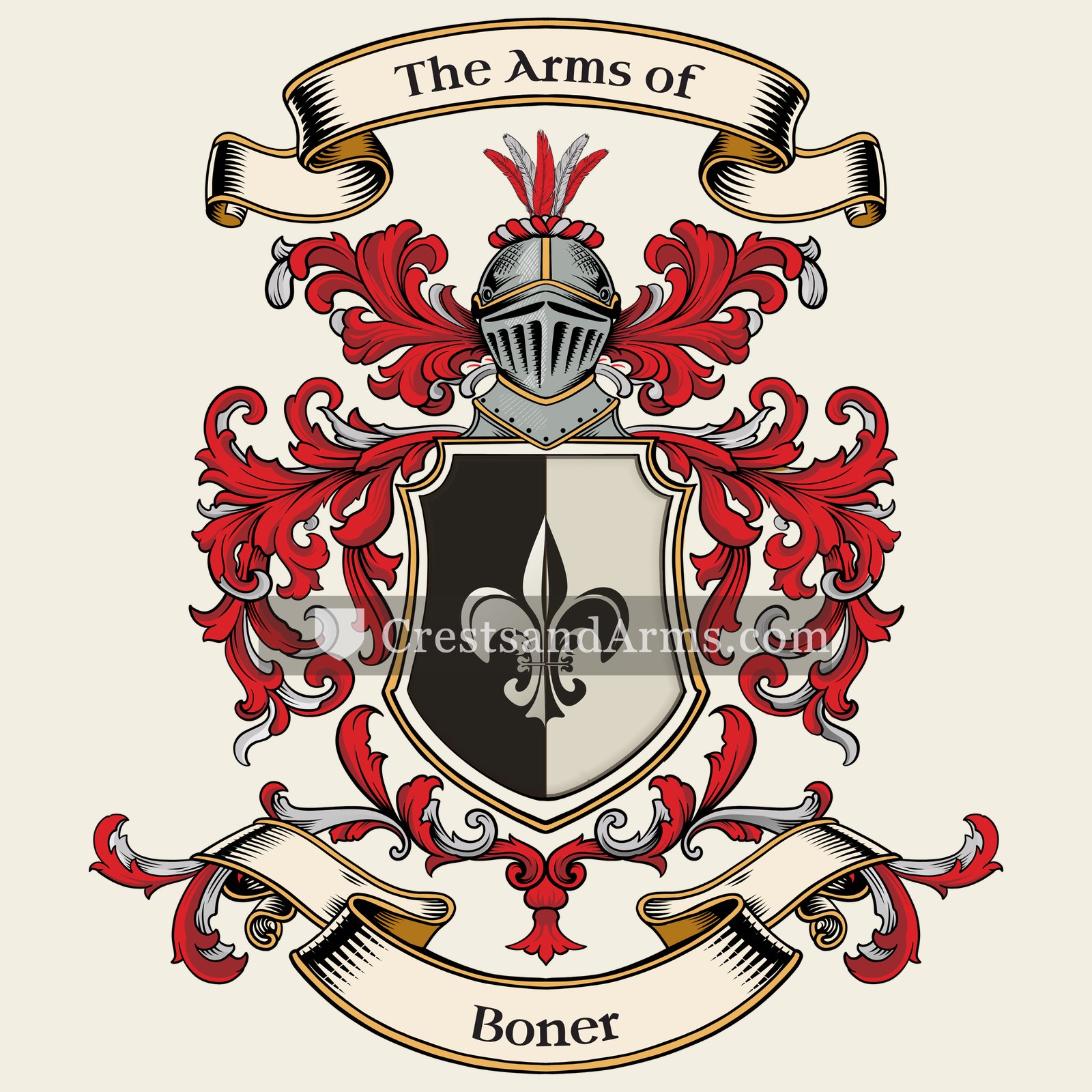


 horseReadiness to serve king and country
 lionCourage, strength and royalty