Map of Netherlands showing where the Bonti arms are recorded
The Bonti arms were recorded in Amsterdam, c. 1815.
This is where the arms were entered in the register. Families often moved to other parts of the country, so the same name can turn up in more than one region.
Region
Amsterdam
Town
Amsterdam
First recorded
1815
Granting Authority for the Bonti Arms
Hoge Raad van Adel
Photograph made by me · CC BY-SA 3.0
The body that granted and recorded arms in Netherlands in this period.
William I of the Netherlands
Sovereign of the period
William I of the Netherlands
1815–1840
Reigning in Netherlands when the Bonti arms are first recorded.
How Arms Worked in Netherlands
In the Netherlands, coats of arms were often used by noble families and those who held specific public offices. These arms were passed down through the generations to legitimate descendants. Younger branches of a family usually kept the original design without needing to add special marks. This system ensured that the family identity remained clear and consistent over many years.
Granting authority
The Hoge Raad van Adel is the official body that regulates and manages noble titles and coats of arms in the Netherlands.
How they got arms
Families typically obtained their coats of arms through official royal grants or by proving their long-standing historical use of the symbols.
Where arms were recorded
Coats of arms are officially recorded in the registers held by the Hoge Raad van Adel, which began its work in 1814.
The family's standing
Recorded among the armigerous families of Netherlands.
Origin & History of the Bonti Family in Netherlands
The Bonti family name established a documented presence in Amsterdam by 1815, a period defined by the transition of the Netherlands into a unified kingdom following the Napoleonic Wars. During this era, the city served as a bustling hub of commerce and maritime trade, which likely influenced the family's activities and social integration. The name itself reflects the linguistic diversity of the time, as Amsterdam was a melting pot for merchants and laborers arriving from across Europe. Early records from this period suggest that the family was part of the urban working class, contributing to the city's recovery and expansion during the nineteenth century. By settling in the capital, the Bonti family became part of the dense social fabric of a city that was rapidly modernizing its administrative and civil registration systems. This transition allowed for more consistent tracking of family lineages, marking the beginning of a clearer historical record for those bearing the name in the Dutch region.
Meaning of the Bonti family crest colors & symbols
Symbols on this shield
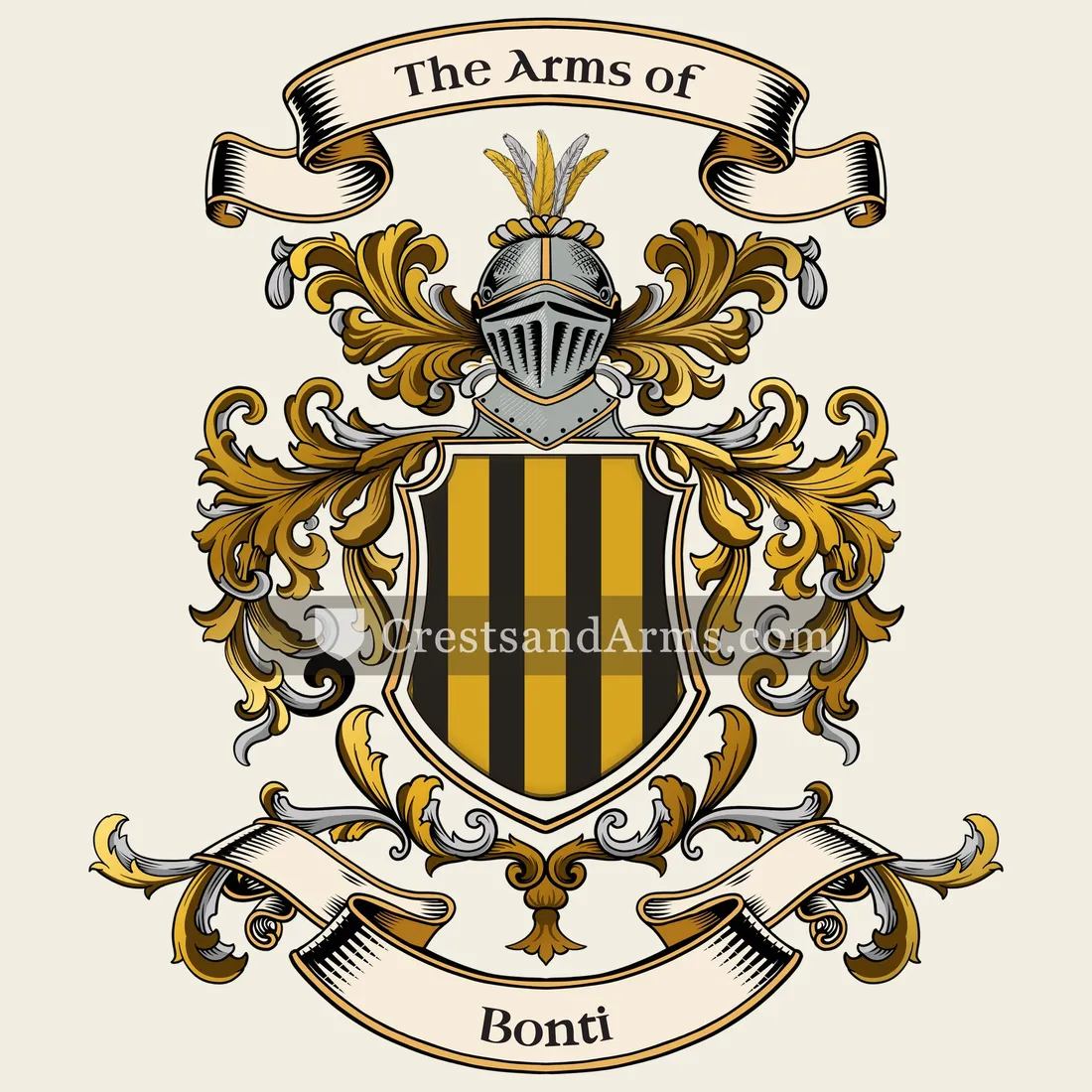
paleMilitary strength, and a fortified defence
Colours
Gold (Or)Means: Generosity
Black (Sable)Means: Constancy
Historical info
Source
J. B. Rietstap, Armorial Général, Gouda: G. B. van Goor Zonen, 1884–87
Blazon (the actual original written record)
“D'or à quatre pals de sa.”
BourgogneBourgogne, c. 1663
Digital archive packCoat of arms PNG, gold border print PDF, vector SVG and the certificate of authenticity. Sent to your email in minutes.
Map of France showing where the Bonti arms are recorded
The Bonti arms were recorded in Bourgogne, c. 1663.
Bourgogne was one of the richest parts of France, built on wine, wool and the roads that carried both. Wealth of that kind bought land, and land brought arms, so the region filled with armed families earlier than most of the country.
This is where the arms were entered in the register. Families often moved to other parts of the country, so the same name can turn up in more than one region.
The body that granted and recorded arms in France in this period.
Louis XIV of France
Sovereign of the period
Louis XIV of France
1643–1715
Reigning in Netherlands when the Bonti arms are first recorded.
How Arms Worked in France
In France, a coat of arms was a mark of honor that passed down through the male line to all legitimate descendants. Families often used the same shield without changes to show their shared heritage. If a branch wanted to stand out, they could add a small mark to their shield to show their specific place in the family tree.
Granting authority
The Juge d'armes de France acted as the official authority that regulated and verified coats of arms across the country.
How they got arms
Families typically inherited their arms from ancestors, though they could also receive them through royal grants or by proving their noble status.
Where arms were recorded
Coats of arms were officially recorded in the Armorial Général de France, which began its main collection in the year 1696.
The family's standing
Recorded among the armigerous families of Bourgogne.
Origin & History of the Bonti Family in France
The family name Bonti traces its early documented roots to the Bourgogne region of France during the mid-seventeenth century. By 1663, records confirm that members of the family were established within this historic province, which was then a prominent center for agriculture and trade. During this era, families in Bourgogne often lived in tight-knit rural communities where they contributed to the local economy through viticulture or craftsmanship. The name likely evolved as a regional identifier, reflecting the linguistic patterns common to the eastern parts of France at the time. As the family grew, they became part of the social fabric of the region, navigating the complex political changes that defined the reign of Louis XIV. By maintaining a presence in Bourgogne, the early Bonti family helped shape the local history of their community through their daily work and their connections to the surrounding parishes.
Bonti Meaning & Related Branches
Root word
Bon
Derived from the Latin word bonus meaning good or virtuous.
This name
BontiA patronymic or descriptive surname indicating a person of good character or standing.
also spelled
Bond
Documented Sources
J. B. Rietstap, Armorial Général, Gouda: G. B. van Goor Zonen, 1884–87
Stadsarchief Amsterdam, Bevolkingsregister 1815
Nationaal Archief, Burgerlijke Stand en Bevolking
Frijhoff, Willem, Wegen van Evert Willemsz: Een portret van de zeventiende-eeuwse Amsterdammer, 1995
Israel, Jonathan, The Dutch Republic: Its Rise, Greatness, and Fall 1477-1806, 1995
Digital archive packCoat of arms PNG, gold border print PDF, vector SVG and the certificate of authenticity. Sent to your email in minutes.


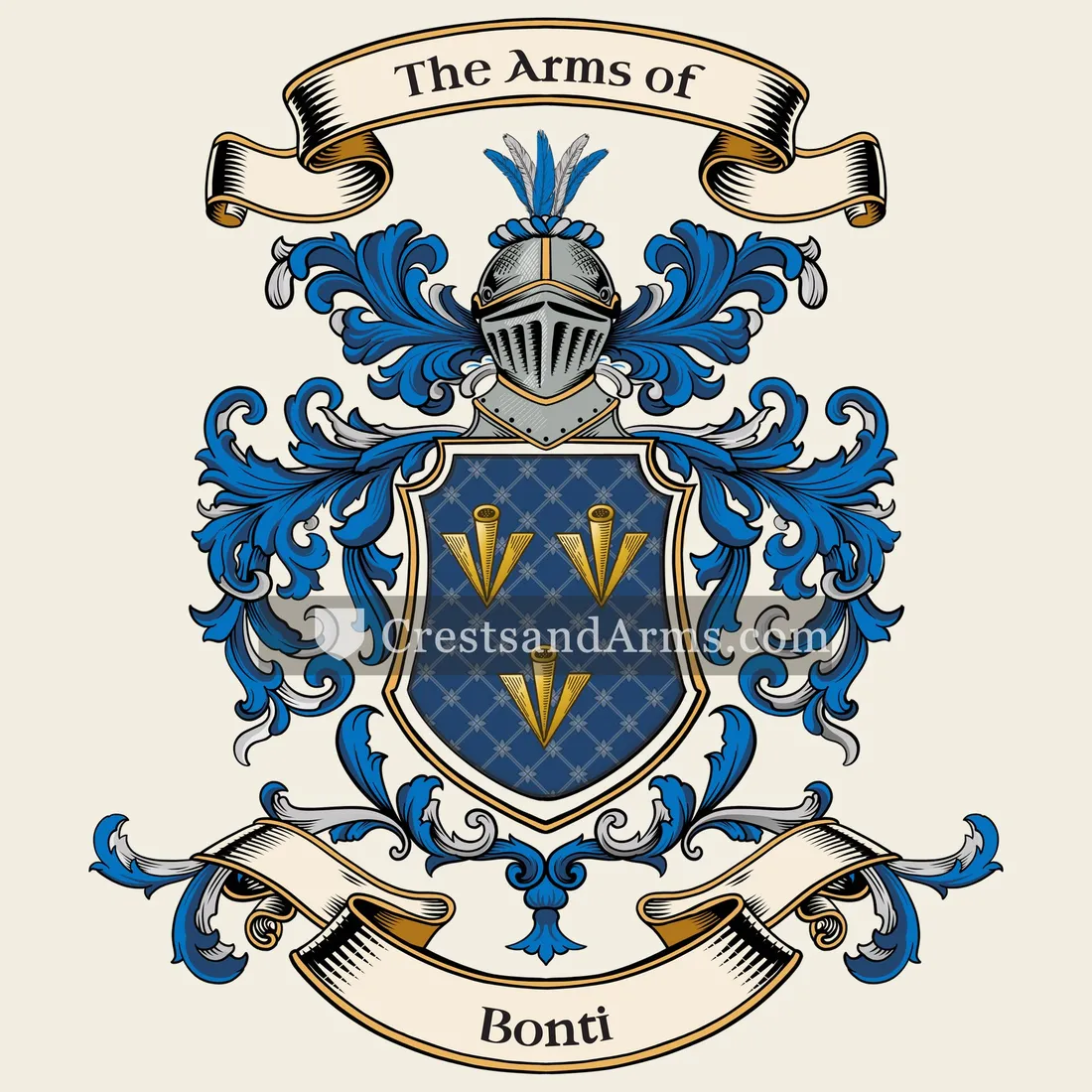
 arrowReadiness for battle, and affliction endured
 arrowReadiness for battle, and affliction endured


 paleMilitary strength, and a fortified defence